
Trust Inspect ($TRUST) vs Bitcoin/Altcoins: Correlation Trading Guide
What is Market Correlation in Cryptocurrency?
Market correlation in cryptocurrency refers to the statistical measure of how two or more digital assets move in relation to each other. Understanding this relationship is crucial for portfolio management, risk assessment, and developing effective trading strategies in the volatile crypto market. This concept has become increasingly important as the cryptocurrency ecosystem continues to expand and mature. When analyzing correlations, traders typically use the Pearson correlation coefficient, which ranges from -1 to +1. A coefficient of +1 indicates a perfect positive correlation, meaning the assets move in identical directions. Conversely, a coefficient of -1 represents a perfect negative correlation, where assets move in exactly opposite directions. A coefficient near 0 suggests no significant correlation between the assets' price movements. For cryptocurrency investors, understanding these correlations offers critical insights for portfolio diversification, better risk management during market volatility, and the ability to identify potential arbitrage opportunities across different trading pairs and exchanges.
Trust Inspect ($TRUST)'s Historical Correlation Patterns
Trust Inspect ($TRUST) has demonstrated evolving correlation patterns with major cryptocurrencies since its introduction. In its early trading history, $TRUST exhibited a strong positive correlation with Bitcoin, similar to many altcoins that tend to follow Bitcoin's market movements. Over time, as the project matured and underwent protocol updates, this correlation has shown periods of divergence, particularly during significant project milestones or broader market events. With Ethereum, $TRUST has generally maintained a moderate correlation, which is lower than its correlation with Bitcoin but still notable. These relationships have been especially pronounced during major market corrections, when $TRUST and other large-cap assets experienced similar drawdowns. During bull markets, $TRUST's correlation with major cryptocurrencies tends to weaken as investors focus more on project fundamentals. In contrast, during bear markets, $TRUST typically exhibits stronger correlations as broader market sentiment dominates individual token characteristics. Notable exceptions include periods following major project announcements or integrations, when $TRUST has temporarily decoupled from the broader cryptocurrency market.
Factors Influencing Trust Inspect ($TRUST)'s Market Correlations
Several key factors influence $TRUST's correlation with other digital assets. Technologically, $TRUST's unique protocol design and consensus mechanism can result in performance characteristics that differ from proof-of-work cryptocurrencies like Bitcoin. This distinction becomes more pronounced during periods of network congestion or scalability challenges across the crypto ecosystem. Market sentiment is another major driver; during periods of extreme market fear or greed, $TRUST tends to move more in unison with the broader market, regardless of its individual developments. This effect is most visible in short-term trading intervals but often dissipates over longer timeframes. Liquidity also plays a significant role. $TRUST's presence on MEXC, with sufficient trading volume and market depth, allows for price movements that can be more independent compared to smaller altcoins. However, during sudden market-wide liquidity crunches, correlations typically spike across all cryptocurrency assets, including $TRUST. Project-specific developments, such as major partnerships or protocol upgrades, have repeatedly caused $TRUST to temporarily break its usual correlation patterns. Regulatory news and macroeconomic factors can also create system-wide correlation shifts, especially when new frameworks or economic events impact the broader digital asset market.
Practical Applications of Correlation Analysis for Trust Inspect ($TRUST) Investors
Investors can leverage $TRUST's correlation data for effective portfolio diversification. By pairing $TRUST with assets that historically demonstrate low or negative correlation, such as certain privacy coins or specialized DeFi tokens, investors can potentially reduce overall portfolio volatility without necessarily sacrificing returns. This approach is particularly valuable during periods of extreme market uncertainty or downturns. For risk management, understanding $TRUST's correlations enables more sophisticated hedging strategies. When $TRUST shows strong correlation with a specific asset class, investors might establish strategic short positions in correlated assets or derivative markets to protect against downside risk while maintaining exposure to $TRUST's growth potential. Correlation changes often serve as important market signals. When $TRUST's historical correlation with Bitcoin suddenly weakens or strengthens significantly, this may indicate fundamental shifts in market perception or the emergence of new factors affecting $TRUST's valuation. Savvy investors watch for divergence between $TRUST's price action and its typically correlated assets as potential early signals of significant price movements. Common misconceptions about cryptocurrency correlations include the assumption that all correlations remain static over time. In reality, $TRUST's correlations are dynamic and evolve with market conditions, technological developments, and adoption patterns. Another misconception is that high correlation means identical percentage returns. Even with a correlation coefficient of 0.9, $TRUST may experience significantly different percentage gains or losses compared to correlated assets due to differences in volatility and market capitalization.
Conclusion
While understanding market correlations provides crucial insights into Trust Inspect ($TRUST)'s complex ecosystem, successful cryptocurrency investing requires more than theoretical knowledge. Are you ready to transform these analytical insights into actionable trading strategies? Our comprehensive Trust Inspect ($TRUST) Trading Complete Guide: From Getting Started to Hands-On Trading is your ultimate resource for turning correlation analysis into profitable investment decisions. Don't just understand the market—master it. Whether you're a beginner seeking foundational knowledge or an experienced trader looking to refine your approach, this guide is your blueprint for $TRUST trading success.
Popular Articles

USDC Staking: How to Earn Rewards on Your Stablecoin?
Stablecoin holders are discovering new ways to earn passive income without exposing themselves to crypto market volatility. USDC staking offers a straightforward method to generate returns on your dig

How to Stake Cardano? ADA Staking Guide for Beginners
Looking to earn passive income with your Cardano holdings? Staking ADA offers a straightforward way to generate rewards while supporting network security. This guide covers everything from basic staki

Lido Staking: Earn ETH Rewards Without Locking Your Assets
Want to earn passive income from your Ethereum holdings without giving up access to your funds?Lido staking solves the biggest problem with traditional ETH staking—locked assets and high entry barrier

How to Store Dogecoin (DOGE) Safely?Practical Wallet Guide & Risk Avoidance Tips
Securing your digital assets is the most critical step after acquiring cryptocurrency. For Dogecoin (DOGE) - a digital currency celebrated for its community-driven approach and ease of use - selecting
Hot Crypto Updates
Nine-Figure Net Worth: The New Milestone in Wealth Creation
The concept of nine-figure net worth, ranging from $100 million to just under $1 billion, marks a critical threshold in the modern economy distinguishing ultra-high-net-worth individuals (UHNWIs) from
Dogecoin (DOGE) Bullish Price Prediction
Introduction to Bullish DOGE OutlookOptimistic investors often look to bullish price predictions for Dogecoin (DOGE) to identify the coin's growth potential during favorable market cycles. A bullish o

Dogecoin (DOGE) 7-day Price Change
The Latest Dogecoin (DOGE) price has shown notable short-term fluctuations over the past week, reflecting shifting sentiment around meme coins and broader market conditions. In this article, we'll exa

BOB (BOB) Price Updates: Latest Market Movements and Cryptocurrency Trading Insights
Staying updated with the latest price updates of BOB (BOB) helps crypto traders and investors monitor market shifts, track cryptocurrency volatility, and make timely investment decisions in the crypto
Trending News

Federal Reserve Announces Rate Cut Amid Shifting Economic Risks
Detail: https://coincu.com/markets/fed-cuts-rates-economic-risks/

The U.S. Department of Justice files civil forfeiture lawsuit for over $225 million in crypto fraud funds
PANews reported on June 18 that according to an official announcement, the U.S. Department of Justice filed a civil forfeiture lawsuit in the U.S. District Court for the District of
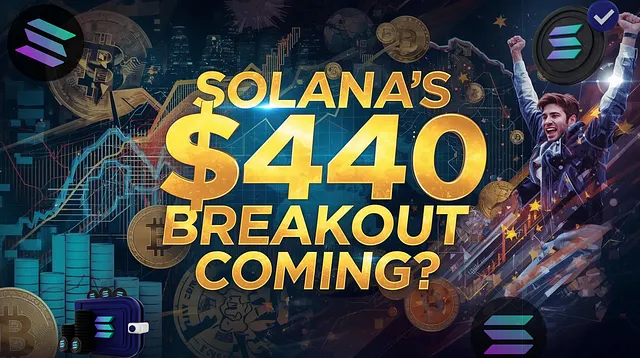
Could Solana Reach $440 by December 2025?
The Solana price prediction shows SOL could hit $440 by December. Here’s my analysis of why this crypto rally might happen.Continue reading on Coinmonks »

Japanese and South Korean stock markets opened lower across the board, with South Korea's KOSPI index falling 2.67%.
PANews reported on December 15 that the Nikkei 225 index opened down 404.45 points, or 0.80%, at 50432.10 on Monday, December 15. The South Korean KOSPI index opened
Related Articles
USDC Staking: How to Earn Rewards on Your Stablecoin?
Stablecoin holders are discovering new ways to earn passive income without exposing themselves to crypto market volatility. USDC staking offers a straightforward method to generate returns on your dig
How to Stake Cardano? ADA Staking Guide for Beginners
Looking to earn passive income with your Cardano holdings? Staking ADA offers a straightforward way to generate rewards while supporting network security. This guide covers everything from basic staki
Lido Staking: Earn ETH Rewards Without Locking Your Assets
Want to earn passive income from your Ethereum holdings without giving up access to your funds?Lido staking solves the biggest problem with traditional ETH staking—locked assets and high entry barrier
How to Store Dogecoin (DOGE) Safely?Practical Wallet Guide & Risk Avoidance Tips
Securing your digital assets is the most critical step after acquiring cryptocurrency. For Dogecoin (DOGE) - a digital currency celebrated for its community-driven approach and ease of use - selecting
