The PewBeam effect: like Nigeria’s fintech gold rush, a worship AI boom is coming
In the sprawling auditoriums across Nigeria, where Pentecostal megachurches routinely pack 10,000+ worshippers and clergymen number in the tens of thousands, religion isn’t just surviving; it’s the one sector visibly thriving.
Post-COVID, online ministries exploded. Pastor Jerry Eze’s New Season Prophetic Prayers and Declarations (NSPPD) and the Hallelujah Challenge with Nathaniel Bassey now command millions of global viewers through live streams and viral clips, turning midnight prayers into digital phenomena that outpace many secular entertainment platforms.
Yet, inside physical sanctuaries, the bottleneck remained painfully human: frantic media teams hunting Bible verses while pastors preached spontaneously amid choir noise and echoing halls.
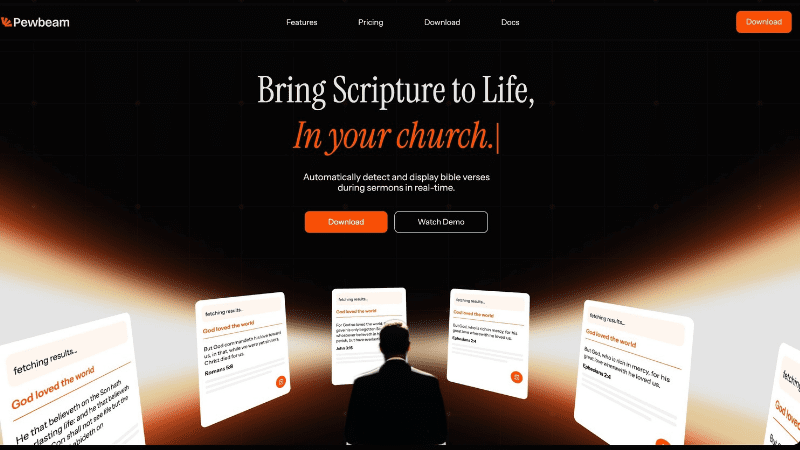
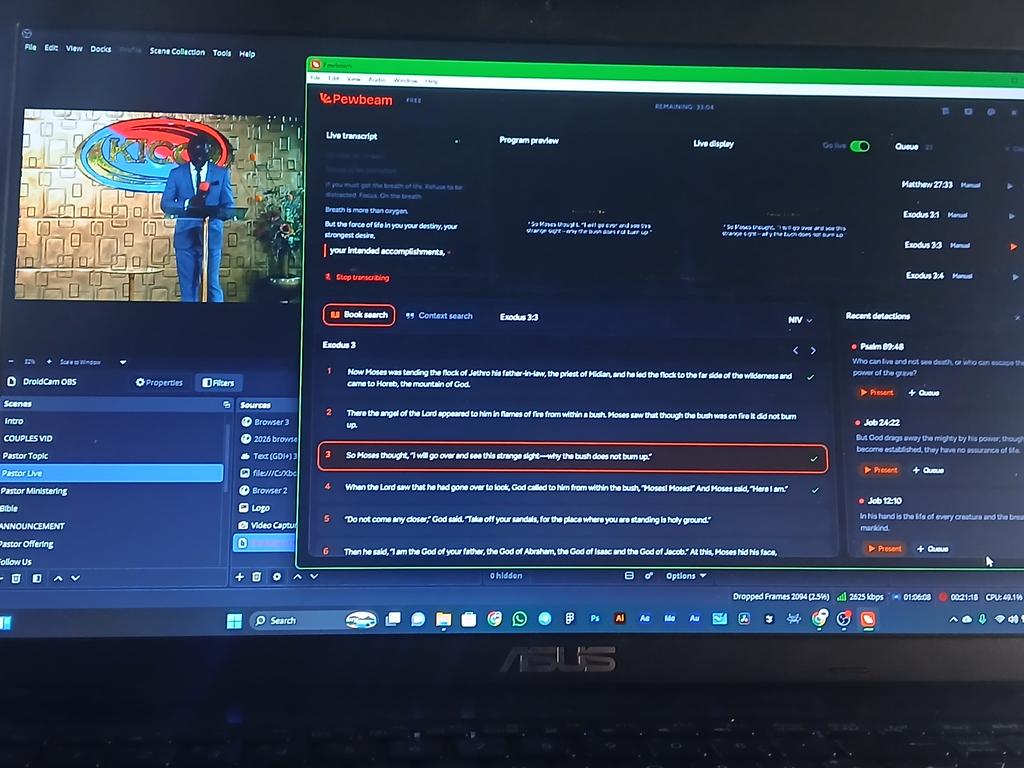
Enter PewBeam. Built in public by Nigerian developer Dára Sobaloju after an August 2025 X idea post, the AI-powered desktop app launched publicly in March 2026. It listens live via speech-to-text, detects direct quotes or paraphrases across 31,000+ verses, and projects the exact Scripture in under 80 milliseconds.
It is completely offline-capable with robust noise cancellation engineered for chaotic Nigerian services. Tested first at Celebration Church International in Ibadan, it’s now in hundreds of churches. The Free Starter tier (40 min/week transcription, basic themes) scales to $14–$30/month plans with NDI streaming and multi-device support. Pastors report zero awkward pauses; media teams can finally breathe.
Less than two weeks after PewBeam’s buzz hit critical mass on X, the clones landed. EasyBible AI promises identical 2-second real-time detection, plus live transcription (95%+ accuracy), automated key-point slides, dual-screen control, instant editing, and even social media asset generation, 100% free forever.
Scripture Listener, currently in beta, offers projector-ready instant verse display across KJV, NIV, ESV, and more, with one-click “Go Live” for streams and custom church-branded themes. Then came LogoAi, a direct rival built in days, incorporating worship lyrics alongside verses.
SmartVerses, predating PewBeam’s launch but gaining traction, pulls real-time scriptures and key points, integrates with ProPresenter, and went fully free/open-source.
Even earlier experiments like Spetra (offline-focused) and Sermon AI surfaced in Nigerian dev circles.
 PewBeam
This is the looming church/worship AI war: a brutal, low-barrier race in a global church-tech market already worth billions, turbocharged by Nigeria’s unique fusion of fervent faith and digital hunger.
Just as mobile money, cashless policies, and a massive unbanked population turned Lagos into Africa's fintech capital in the 2010s–2020s, with hundreds of startups and unicorns like Paystack and Flutterwave, followed by acquisitions by Stripe, regulatory crackdowns, and eventual consolidation into a few profitable giants, the church AI space is primed for the same cycle.
Nigeria’s megachurch density, Spirit-led spontaneity, and developer hunger make it ground zero again.
PewBeam: Here’s my 5-year prediction (2026–2031), anchored in the fintech playbook:
2026–2027: Everyone is building a Church AI
Fintech saw a frenzy where devs, banks, and telcos all launched wallets, POS apps, and lending platforms overnight. Church AI is already repeating it in real time: PewBeLogoAInches, LogoAi clones it in days, and X is flooded with posts from Nigerian churches testing both.
By the end of 2026, expect 15–25 direct competitors. Open-source forks of SmartVerses-style tools will explode on GitHub.
- Pricing wars: free starter tiers appear everywhere. EasyBible AI’s 100% free forever model forces PewBeam and others to drop to $5–10/month for basics. Enterprise features (NDI, multi-device, sermon archives, auto social clips) become the upsell.
- Adoption curve: Hundreds of Nigerian churches by mid-2026, thousands across Africa by 2027. Early global spillover to US Pentecostals and Latin American megachurches via YouTube/Instagram clips. Offline capability and noise cancellation remain PewBeam’s killer moats for rural/global South use.
- Funding: Faith-focused angels and small VCs pile in (think Christian accelerators and Nigerian tech funds). The first church tech unicorn valuations will appear by late 2027.
 PewBeam AI
This mirrors fintech’s 2018–2021 explosion: low barriers (cheap LLMs and speech-to-text like Whisper), a huge pain point (spontaneous preaching vs. pre-built slides), and a strong cultural fit.
2028–2029: The shakeout – Regulation, acquisitions, and blood on the floor
Fintech hit this hard: the CBN tightened rules (onboarding freezes and fraud crackdowns); a funding winter hit; weak players died or pivoted; and giants acquired smaller startups (e.g., Paystack to Stripe). Church AI will follow:
- Consolidation: 70%+ of the market share will be captured by 3–5 players. Expect acquisitions by established church software (ProPresenter, EasyWorship, and Planning Centre) or Bible giants (Logos Bible Software, which is already shipping AI sermon tools).
2030–2031: Maturity – A consolidated, multi-billion-dollar tech category
Fintech today consists of a handful of leaders (OPay, Moniepoint, and Flutterwave) dominating volume, emphasising profitability, expanding regionally, and building super-apps. Church AI will end up here.
By 2031, the war won’t be about whether AI belongs in sanctuaries. It will be about which Nigerian-built tool became invisible infrastructure for millions of worshippers worldwide, making the ancient Word visible faster than any human team ever could, while the heart of the service stays anchored in the text. Nigeria lit the fuse in fintech. It’s doing it again in faith tech.
The global church is about to get its own Paystack moment.
The post The PewBeam effect: like Nigeria’s fintech gold rush, a worship AI boom is coming first appeared on Technext.


You May Also Like
Stop Losing Sales in 2026: Build Better Funnels with Checkout Champ

Top Mistakes People Make When Choosing Web Hosting