

Trump’s Stark Warning: Iran Could Face Overnight Destruction, Possibly as Soon as Tonight
BitcoinWorld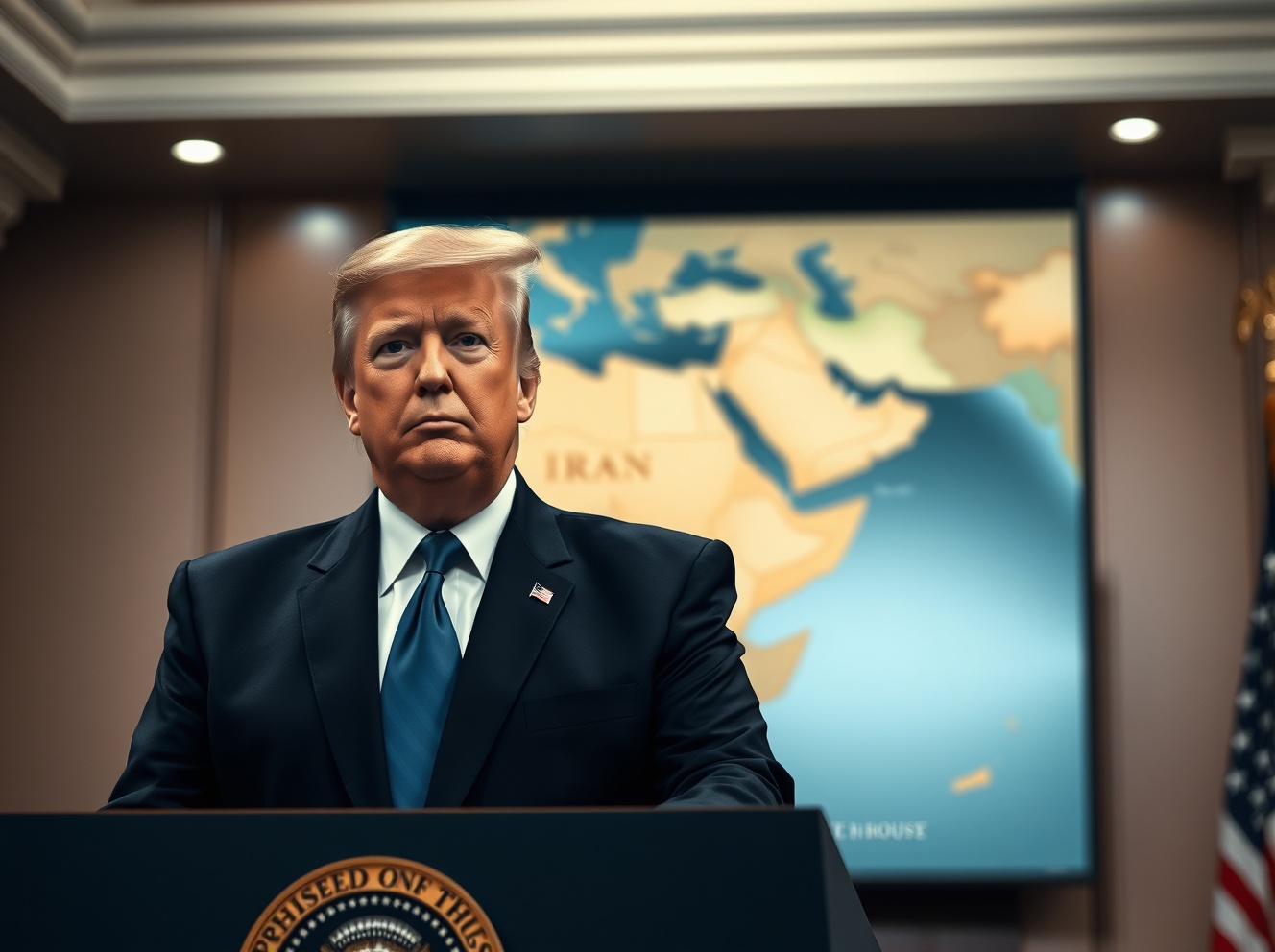
Trump’s Stark Warning: Iran Could Face Overnight Destruction, Possibly as Soon as Tonight
WASHINGTON, D.C., April 7 – In a statement that immediately escalated global tensions, U.S. President Donald Trump declared that Iran “could be destroyed overnight,” adding the potentially imminent timeframe of “as soon as tonight.” This direct warning represents a significant escalation in rhetoric between the two nations, coming amid ongoing regional instability and nuclear negotiations. Consequently, analysts worldwide are scrutinizing the statement’s implications for Middle Eastern security and international diplomacy.
Trump’s Iran Warning and Immediate Context
President Trump delivered his stark assessment during a press briefing at the White House. Furthermore, his comments followed weeks of increased military posturing in the Persian Gulf. The U.S. Navy recently deployed additional assets to the region. Meanwhile, Iran has continued its uranium enrichment activities, despite international agreements. This specific warning about overnight destruction marks a notable shift toward more explicit military language. Historically, U.S. presidents have typically employed more measured diplomatic language. Therefore, this statement breaks from established diplomatic norms.
The timing of the statement, specifying “tonight, April 7,” creates particular urgency. Intelligence agencies monitor Iranian military movements continuously. Additionally, regional allies like Israel and Saudi Arabia remain on high alert. The statement’s delivery lacked detailed operational specifics, however. Instead, it served as a broad strategic warning. Military experts note that such rhetoric often precedes policy announcements or sanctions. Alternatively, it may function as psychological pressure during negotiations.
Historical Background of US-Iran Relations
The relationship between the United States and Iran has remained fraught for decades. The 1979 Iranian Revolution fundamentally altered bilateral dynamics. Subsequently, the U.S. embassy hostage crisis created lasting diplomatic rupture. Throughout the 1980s, tensions persisted during the Iran-Iraq War. More recently, the 2015 Joint Comprehensive Plan of Action (JCPOA) provided temporary stability. President Trump withdrew from this nuclear agreement in 2018, however. Since then, a “maximum pressure” campaign has defined U.S. policy.
Key Events in Recent Escalation
Several critical incidents have brought relations to their current precarious state:
- 2019-2020: Attacks on oil tankers and Saudi facilities attributed to Iranian proxies
- January 2020: U.S. drone strike killed Iranian General Qasem Soleimani
- 2021-2023: Stalled nuclear negotiations in Vienna
- 2024: Iran increased uranium enrichment to 60% purity
- Early 2025: Repeated incidents involving Iranian drones in international waters
This historical context explains the current tense environment. Each escalation has reduced diplomatic maneuvering room. Additionally, domestic politics in both countries influence foreign policy decisions. In Iran, hardline factions have gained influence recently. Similarly, U.S. political dynamics affect Iran policy consistency. Consequently, miscalculation risks have increased substantially.
Military Capabilities and Strategic Balance
Analyzing the military balance provides crucial perspective. The United States maintains overwhelming conventional superiority. Its military assets in the region include:
| Asset Type | Regional Presence | Primary Function |
|---|---|---|
| Aircraft Carriers | 1-2 Carrier Strike Groups | Power Projection & Air Superiority |
| Stealth Aircraft | F-35 Squadrons | Precision Strike Capability |
| Missile Defense | Patriot & THAAD Batteries | Regional Ally Protection |
| Nuclear Submarines | Undisclosed Number | Strategic Deterrence |
Iran employs asymmetric warfare strategies as countermeasures. Its capabilities include:
- Largest missile arsenal in the Middle East
- Extensive proxy networks across the region
- Swarming tactics using small attack boats
- Cyber warfare capabilities against infrastructure
This asymmetric approach complicates any potential conflict scenario. Iran could target U.S. allies rather than engaging directly. Additionally, it might close the Strait of Hormuz, affecting global oil supplies. Therefore, “destruction” would require extensive military operations. Such operations would likely involve significant regional collateral damage.
International Reactions and Diplomatic Fallout
Global responses to President Trump’s statement emerged rapidly. European allies expressed deep concern about escalating rhetoric. The United Kingdom, France, and Germany issued a joint statement urging restraint. Meanwhile, Russia and China criticized what they termed “dangerous provocations.” Regional powers responded with heightened alert status. Israel reinforced its missile defense systems immediately. Saudi Arabia convened an emergency Gulf Cooperation Council meeting.
International organizations also reacted promptly. United Nations Secretary-General António Guterres called for immediate de-escalation. The International Atomic Energy Agency (IAEA) offered to facilitate dialogue. Additionally, economic markets showed immediate volatility. Oil prices jumped approximately 4% following the statement. Global stock indices experienced simultaneous declines. Consequently, the statement’s economic impact became immediately apparent.
Expert Analysis and Risk Assessment
Security analysts provide crucial perspective on the actual risks. Dr. Elena Rodriguez, Senior Fellow at the Center for Strategic Studies, notes: “While the U.S. possesses capability, the political and humanitarian costs would be enormous. Regional stability would collapse, creating refugee crises and economic disruption.” Similarly, former Pentagon official Mark Thompson emphasizes: “Such language may intend to strengthen negotiating positions. However, it also increases miscalculation probabilities during tense military standoffs.”
These expert assessments highlight several critical considerations:
- Military action would violate international law without UN Security Council authorization
- Regional allies might oppose direct invasion despite supporting pressure
- Iranian retaliation could extend beyond the Middle East to global targets
- Long-term occupation challenges would dwarf previous Middle Eastern conflicts
Legal and Humanitarian Implications
International law establishes clear frameworks for use of force. The United Nations Charter prohibits aggressive warfare. Exceptions exist only for self-defense or Security Council authorization. Preemptive strikes require demonstration of imminent threat. Legal scholars debate whether current intelligence meets this threshold. Additionally, proportionality principles would govern any response. The phrase “destroyed overnight” raises significant legal concerns.
Humanitarian consequences would be severe. Iran’s population exceeds 85 million people. Major urban centers include Tehran, Mashhad, and Isfahan. Conflict would inevitably cause massive civilian casualties. Furthermore, regional refugee flows would overwhelm neighboring countries. Iraq, Afghanistan, and Pakistan already host millions of refugees. Additional displacement could destabilize these nations completely. Therefore, humanitarian organizations prepare contingency plans continuously.
Conclusion
President Trump’s warning about Iran’s potential overnight destruction represents a critical moment in US-Iran relations. The statement’s specific timing reference to “tonight, April 7” creates unprecedented immediacy. While demonstrating U.S. military capability, it also escalates diplomatic tensions significantly. Regional stability now faces substantial testing. Global markets and international diplomacy respond to this heightened rhetoric. Ultimately, the coming hours and days will determine whether this warning precedes action or serves as negotiating pressure. The world watches closely as this dangerous geopolitical situation develops.
FAQs
Q1: What exactly did President Trump say about Iran?
President Trump stated that Iran “could be destroyed overnight” and added this could happen “as soon as tonight, April 7” during a White House briefing.
Q2: Has the United States taken military action against Iran following this statement?
As of initial reporting, no military action has occurred. The statement represents a warning, though regional forces remain on heightened alert status.
Q3: What capabilities would the U.S. use if conflict occurred?
The U.S. maintains extensive regional assets including carrier groups, stealth aircraft, and missile defense systems, though any operation would face complex challenges.
Q4: How have other countries responded to this warning?
European allies urged restraint, while Russia and China criticized the rhetoric. Regional powers like Israel and Saudi Arabia increased their military readiness levels.
Q5: What are the main obstacles to military action against Iran?
Major obstacles include international law restrictions, potential for regional escalation, humanitarian consequences, and the strategic challenges of Iran’s asymmetric warfare capabilities.
This post Trump’s Stark Warning: Iran Could Face Overnight Destruction, Possibly as Soon as Tonight first appeared on BitcoinWorld.


You May Also Like

Solana Price Sinks as Pepeto Tops $8.1M With Confirmed Binance Listing

Stablecoins dominate crypto trading volumes amid geopolitical tensions




