

Binance RWA Futures Volume Skyrockets, Grabbing 4.9% Share of Traditional Markets in Stunning Shift
BitcoinWorld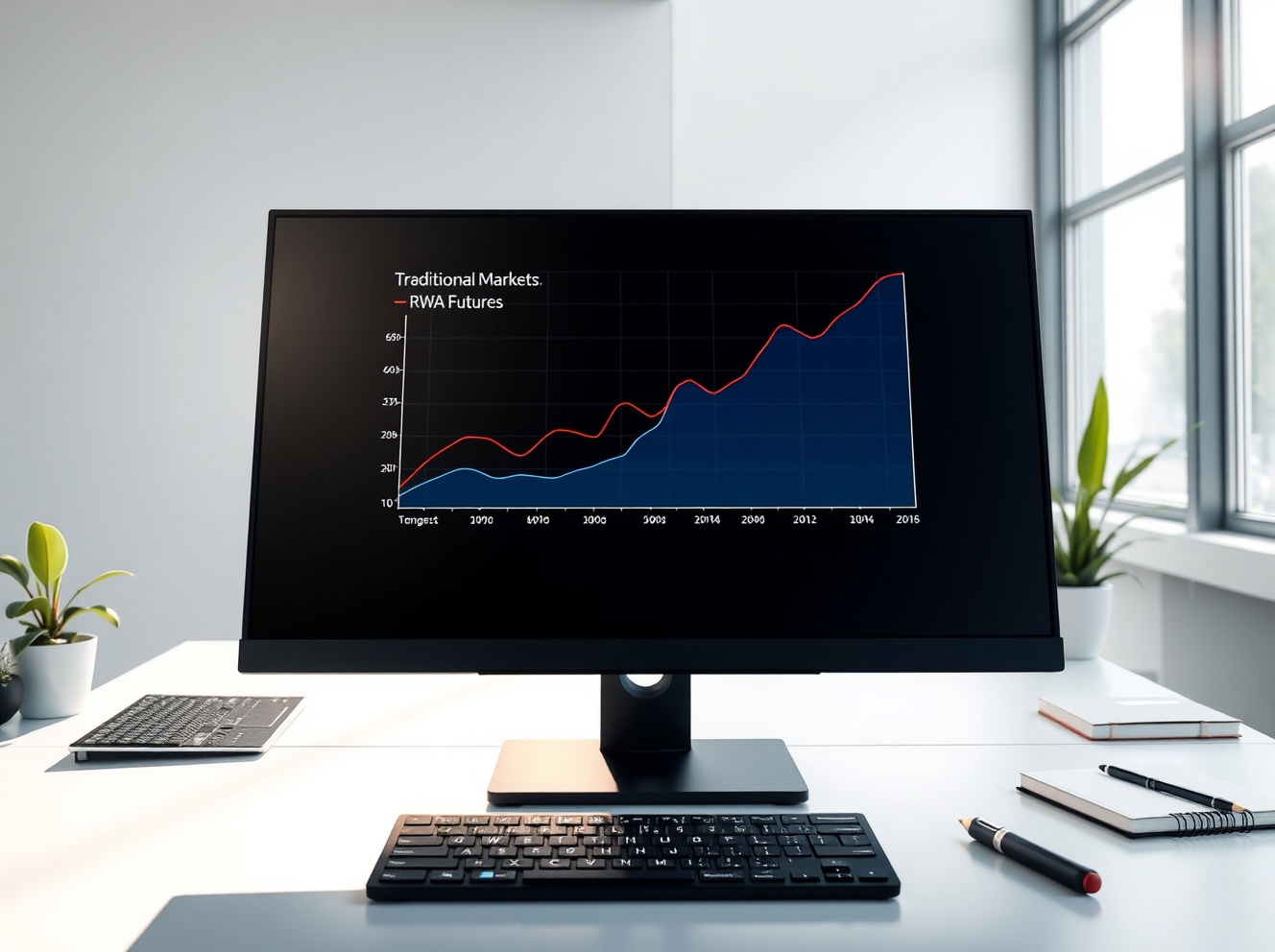
Binance RWA Futures Volume Skyrockets, Grabbing 4.9% Share of Traditional Markets in Stunning Shift
In a development that underscores the accelerating convergence of digital and traditional finance, Binance Research has reported a seismic surge in trading activity for Real World Asset (RWA) perpetual futures. Over the past 90 days, trading volume for these crypto-based derivatives has exploded from a mere 0.2% to a substantial 4.9% of the average volume seen in mainstream traditional futures markets. This remarkable growth, centered in global financial hubs, signals a potential paradigm shift in how asset prices are discovered worldwide.
Binance RWA Futures Volume Demonstrates Explosive Growth
The data from Binance Research reveals a trend that financial analysts are calling unprecedented. Specifically, the trading volume for RWA Silver perpetual futures on Binance momentarily peaked at 20.8% of the volume on the New York Mercantile Exchange (COMEX), a cornerstone of traditional commodities trading. Similarly, Binance’s RWA Gold futures volume reached a high of 8.3% of its traditional counterpart. This is not a minor blip but a sustained climb observed over a full quarter. Consequently, market observers now scrutinize whether cryptocurrency exchanges are beginning to challenge established financial venues for influence over global asset valuations.
Understanding Real World Asset (RWA) Futures
Real World Asset futures are cryptocurrency derivatives whose value is pegged to physical commodities or traditional financial instruments. Unlike trading the physical asset itself, these are perpetual futures contracts—derivatives with no expiry date that allow traders to speculate on price movements using cryptocurrency capital. This model provides several distinct advantages, including 24/7 market access, efficient cross-border settlement, and the ability to use crypto holdings as collateral. The primary assets tokenized in this manner include precious metals, treasury bonds, and real estate. The following table contrasts key features of traditional and crypto-based RWA futures:
| Feature | Traditional Futures (e.g., COMEX) | Crypto RWA Perpetual Futures (e.g., Binance) |
|---|---|---|
| Market Hours | Limited trading sessions | 24/7 operation |
| Settlement | Fiat currency, physical delivery possible | Cryptocurrency, cash-settled |
| Access Barrier | Often requires a brokerage account | Accessible via a crypto exchange account |
| Collateral | Typically fiat or government bonds | Cryptocurrencies like BTC or USDT |
The Mechanics Behind the Surge
Several interconnected factors are driving this volume migration. First, the infrastructure of centralized crypto exchanges offers a seamless user experience that appeals to a new generation of traders. Second, the inherent efficiency of blockchain-based settlement reduces counterparty risk and administrative friction. Furthermore, macroeconomic conditions, such as inflation concerns, have increased retail and institutional interest in commodities like gold and silver as hedges. Crypto-native investors, already comfortable with derivatives trading, are naturally extending their strategies to include tokenized versions of these assets. This convergence creates a powerful feedback loop that amplifies trading activity.
Implications for Global Price Discovery
Price discovery refers to the market process of determining the price of an asset through the interactions of buyers and sellers. For decades, established exchanges like COMEX and the Chicago Mercantile Exchange (CME) have been the undisputed leaders for commodities. However, the Binance report explicitly states that if the current trend continues, it “could lead to a significant shift in price discovery leadership.” In practical terms, this means that the trading activity and resulting price signals on Binance could start to influence, or even lead, prices on traditional venues. This would represent a fundamental reordering of financial market hierarchy. Such a shift would have profound effects on everyone from miners and refiners to institutional hedgers and central banks.
Expert Analysis on Market Structure Evolution
Financial technologists point to history for context. Similar disruptions have occurred before, such as when electronic trading overtook open outcry pits. The rise of crypto-based RWA futures represents the next logical step in market evolution—digitally native, globally accessible, and highly liquid. Analysts emphasize that this is not a zero-sum game. Instead, it could lead to a more robust, interconnected, and resilient global financial system. The increased arbitrage opportunities between traditional and crypto markets could enhance overall market efficiency. Nevertheless, regulators worldwide are closely monitoring this growth to ensure investor protection and market stability are maintained across both domains.
Regulatory Landscape and Future Trajectory
The dramatic growth of RWA futures does not exist in a regulatory vacuum. Jurisdictions like the European Union, with its MiCA framework, and the United States are actively shaping rules for crypto-assets and stablecoins, which are often integral to RWA trading pairs. Regulatory clarity, or the lack thereof, will be a primary determinant of whether this volume surge becomes a permanent feature. Key areas under scrutiny include:
- Consumer Protection: Ensuring transparent pricing and adequate risk disclosures.
- Market Integrity: Preventing manipulation and ensuring fair access.
- Financial Stability: Monitoring the linkages between crypto and traditional finance.
Simultaneously, traditional financial institutions are responding by exploring their own digital asset initiatives, potentially setting the stage for increased competition and collaboration in the RWA space.
Conclusion
The data is clear: Binance RWA futures volume is experiencing a monumental surge, capturing nearly 5% of traditional market activity in just three months. This movement is more than a metric; it is a strong indicator of the deepening integration between cryptocurrency and traditional finance. While it is too early to declare a complete transfer of price discovery leadership, the trend is undeniable and accelerating. The coming months will be critical in observing whether traditional markets adapt, regulators engage, and this new chapter in financial market structure is fully written. The growth of RWA futures represents a pivotal test case for the future of all asset trading.
FAQs
Q1: What are Real World Asset (RWA) futures?
RWA futures are cryptocurrency derivatives contracts whose value is derived from physical assets like gold, silver, or financial instruments. They allow traders to speculate on the price of these real-world assets using crypto capital on platforms like Binance, without needing to take physical delivery.
Q2: Why has Binance’s RWA futures volume grown so quickly?
The growth is driven by 24/7 market access, ease of use for crypto-native traders, increased demand for inflation hedges like precious metals, and the efficient settlement mechanics of blockchain-based trading systems compared to some traditional processes.
Q3: Does this mean crypto markets are replacing traditional futures exchanges?
Not necessarily replacing, but they are becoming a significant complementary venue. The report suggests crypto markets could gain influence in price discovery, meaning prices on Binance may start to impact prices on traditional exchanges like COMEX, creating a more interconnected system.
Q4: What does “4.9% of traditional markets” mean in practical terms?
It means that over the last 90 days, the average daily trading volume for RWA perpetual futures on Binance reached 4.9% of the average daily volume across major traditional futures markets for similar assets. This indicates a substantial and growing share of global trading activity.
Q5: What are the risks of trading RWA futures on a crypto exchange?
Risks include the high volatility typical of crypto markets, potential regulatory changes, counterparty risk associated with the exchange, and the complexity of derivatives products. They are different from the risks of holding physical gold or trading on a regulated commodities exchange.
This post Binance RWA Futures Volume Skyrockets, Grabbing 4.9% Share of Traditional Markets in Stunning Shift first appeared on BitcoinWorld.


You May Also Like

Lucky Secures $23M Series B Funding to Scale Credit Access Across North Africa
Iran threatens retaliation as Trump vows to “hit hard,” crypto market under stress




