

BTC/USDT Spot CVD Analysis Reveals Critical Support Levels for Bitcoin Trading on April 7
BitcoinWorld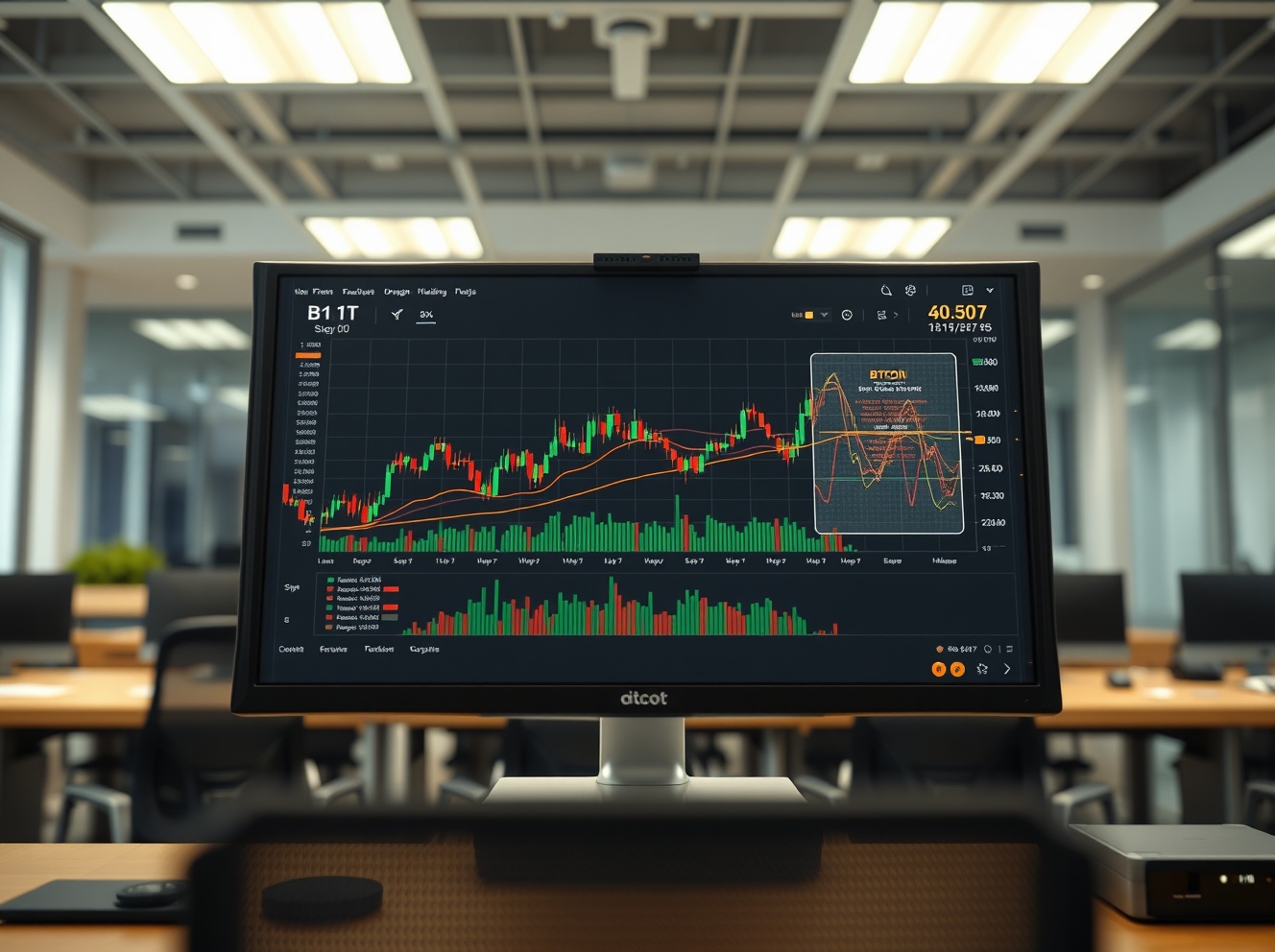
BTC/USDT Spot CVD Analysis Reveals Critical Support Levels for Bitcoin Trading on April 7
Cryptocurrency traders closely monitored the BTC/USDT spot pair on April 7, 2025, as the Cumulative Volume Delta (CVD) chart revealed significant market structure developments during the 10 a.m. UTC trading session. This comprehensive analysis examines the order book dynamics that shaped Bitcoin’s price action during this critical period, providing traders with actionable insights into market sentiment and potential price movements.
Understanding the BTC/USDT Spot CVD Chart Components
The Spot CVD chart serves as a sophisticated analytical tool for cryptocurrency market participants. It provides a detailed breakdown of order flow and volume distribution across different price levels. Market analysts frequently use this data to identify institutional accumulation patterns and retail trading behavior. The chart’s dual-component structure offers complementary perspectives on market dynamics.
Specifically, the top section displays a Volume Heatmap that visualizes trading intensity at various price points. This visualization technique originated in traditional financial markets before adapting to cryptocurrency analysis. The heatmap’s color intensity corresponds directly to trading volume concentration. Brighter areas typically indicate higher trading activity or prolonged price consolidation within specific ranges.
The Volume Heatmap’s Technical Significance
Volume Heatmaps represent a crucial innovation in cryptocurrency technical analysis. They transform raw trading data into visual patterns that reveal market psychology. When price remains within a particular range for extended periods, the heatmap background brightens significantly. This phenomenon often signals the development of support or resistance zones where market participants demonstrate strong conviction.
During the April 7 analysis period, the BTC/USDT heatmap showed several distinct bright zones. These areas corresponded with price levels where substantial trading volume had accumulated over previous sessions. Market technicians interpret these zones as potential turning points for price action. The heatmap’s visual nature allows traders to quickly identify areas of interest without complex mathematical calculations.
Cumulative Volume Delta: Tracking Institutional and Retail Flows
The bottom section of the chart features the Cumulative Volume Delta indicator, which categorizes buy and sell orders by transaction size. This differentiation provides valuable insights into market participant behavior. The CVD’s multi-colored lines represent distinct order size categories, each telling a different story about market dynamics.
The yellow line specifically tracks orders between $100 and $1,000, representing typical retail trading activity. Meanwhile, the brown line monitors large orders ranging from $1 million to $10 million, indicating institutional or whale-level transactions. This separation allows analysts to determine whether price movements result from retail sentiment or institutional positioning.
Interpreting Order Size Divergences
When the yellow and brown lines diverge significantly, market analysts pay close attention. For instance, if retail buying increases while institutional selling occurs simultaneously, this divergence suggests conflicting market views. The April 7 chart showed interesting alignment between different order size categories during specific price movements.
Historical data indicates that sustained movements in the brown line often precede significant price trends. Large orders typically reflect sophisticated market participants with substantial research resources. Consequently, many traders monitor institutional order flow for early trend identification. The CVD chart makes these flows visible in real-time, providing a competitive advantage to attentive market participants.
Practical Applications for Cryptocurrency Traders
Traders utilize CVD chart analysis for multiple strategic purposes. First, they identify potential support and resistance levels through the Volume Heatmap’s bright zones. Second, they gauge market sentiment by comparing retail and institutional order flows. Third, they time entries and exits based on convergence or divergence between different order size categories.
The April 7 analysis revealed several practical insights for BTC/USDT traders. The Volume Heatmap indicated strong support around specific price levels where previous consolidation had occurred. Simultaneously, the CVD showed increasing institutional buying pressure despite retail hesitation. This combination suggested potential upward momentum once retail traders joined the institutional flow.
Historical Context and Market Evolution
CVD analysis has evolved significantly since its introduction to cryptocurrency markets. Early implementations focused primarily on spot markets, but derivatives integration has expanded its utility. The April 7 analysis incorporates lessons from previous market cycles where CVD patterns successfully predicted trend changes.
Market data from 2023-2024 demonstrates that CVD signals often precede price movements by several hours. This lead time provides traders with valuable preparation opportunities. The methodology has gained widespread acceptance among professional trading desks and quantitative analysis firms specializing in cryptocurrency markets.
Technical Implementation and Data Sources
The CVD chart relies on aggregated order book data from multiple cryptocurrency exchanges. This aggregation ensures comprehensive market coverage and reduces exchange-specific anomalies. Data providers typically sample order books at high frequencies to capture rapid market changes.
The technical implementation involves sophisticated algorithms that categorize orders by size and direction. These algorithms must handle the cryptocurrency market’s 24/7 nature and occasional extreme volatility. The resulting visualizations provide traders with actionable intelligence despite market complexity.
Comparative Analysis with Traditional Indicators
CVD charts complement traditional technical indicators rather than replacing them. While moving averages and oscillators measure price momentum, CVD analysis reveals the underlying order flow driving that momentum. This combination provides a more complete market picture than either approach alone.
The April 7 analysis integrated CVD insights with traditional support and resistance analysis. This integration created a robust framework for understanding BTC/USDT price action. Traders who combined these approaches could make more informed decisions than those relying solely on conventional technical analysis.
Market Impact and Future Developments
CVD chart analysis influences cryptocurrency markets through improved price discovery and transparency. As more traders adopt these tools, market efficiency increases correspondingly. The April 7 analysis contributed to this ongoing evolution by demonstrating practical applications for active traders.
Future developments may include artificial intelligence integration for pattern recognition and predictive analytics. Some quantitative firms already experiment with machine learning models trained on historical CVD data. These advancements could further enhance the tool’s utility for cryptocurrency market participants.
Conclusion
The BTC/USDT spot CVD chart analysis for April 7, 2025, provided valuable insights into cryptocurrency market structure. The Volume Heatmap revealed critical support and resistance levels, while the Cumulative Volume Delta indicator tracked institutional and retail order flows. Together, these components offered traders a comprehensive view of market dynamics during the 10 a.m. UTC session. As cryptocurrency markets mature, sophisticated analytical tools like CVD charts will continue playing crucial roles in price discovery and risk management strategies for market participants worldwide.
FAQs
Q1: What is a Cumulative Volume Delta (CVD) chart in cryptocurrency trading?
The Cumulative Volume Delta chart is an advanced analytical tool that visualizes the difference between buying and selling volume over time. It categorizes orders by size to distinguish between retail and institutional trading activity, providing insights into market sentiment and potential price direction.
Q2: How does the Volume Heatmap identify support and resistance levels?
The Volume Heatmap identifies support and resistance levels by visualizing where trading volume concentrates at specific price points. Brighter areas indicate higher volume accumulation, suggesting these price levels have attracted significant trading interest and may act as barriers to future price movements.
Q3: Why is separating retail and institutional orders important in CVD analysis?
Separating retail and institutional orders is crucial because these participant groups often have different motivations, time horizons, and market impacts. Institutional orders typically reflect sophisticated analysis and larger capital, making their flow patterns potentially more predictive of future price trends.
Q4: How frequently should traders monitor CVD charts for BTC/USDT?
Traders should monitor CVD charts according to their trading timeframes. Day traders might check hourly or more frequently, while swing traders could review daily charts. The April 7 analysis demonstrates how specific timeframes can reveal distinct market dynamics relevant to different trading strategies.
Q5: Can CVD analysis predict exact price movements in cryptocurrency markets?
While CVD analysis cannot predict exact price movements with certainty, it provides probabilistic insights into market structure and participant behavior. Like all technical analysis tools, it works best when combined with other indicators and fundamental analysis to form comprehensive trading decisions.
This post BTC/USDT Spot CVD Analysis Reveals Critical Support Levels for Bitcoin Trading on April 7 first appeared on BitcoinWorld.


You May Also Like

Solana Foundation to Help Secure DeFi Protocols Following $285 Million Drift Hack

LDO Price Prediction: Neutral Consolidation Targets $0.33 Resistance Retest by Mid-April




