

REST vs. GraphQL vs. Async: The Best API Strategy for 2025

Intro:
APIs are the backbone of the digital economy. Every ride you book on Uber, every movie streamed on Netflix, every online payment made through Stripe — all of it happens because of APIs. Yet despite powering trillion-dollar companies, APIs are still often designed as afterthoughts. The wrong approach can mean slow apps, frustrated developers, and fragile systems.
I’ve seen APIs make or break entire fintech products. At a payments startup, our REST endpoints couldn’t keep up with real-time fraud monitoring — so we introduced GraphQL to aggregate risk signals in a single query. Later, while scaling a cross-border remittance app, async patterns (Kafka + webhooks) ensured transaction confirmations were reliable even during peak loads. \n \n Years earlier, I worked with a bank that rushed a REST API for its mobile ticketing/payments service. It worked fine in UAT, but on the first payday traffic surge, the API collapsed within minutes. Angry customers flooded call centers, and regulators started asking questions. That’s the real cost of fragile API design in fintech: loss of trust, user churn, and sometimes compliance exposure. \n \n In 2025, the question in fintech isn’t whether you need APIs — every payment, transfer, or KYC check depends on them — it’s which model you’ll bet on, and when.
REST: The Reliable Workhorse
If the internet were a city, REST would be the highways — mature, well-paved, and everywhere. Since the early 2000s, REST has been the default for web APIs.
Why Developers Love REST
- Simple: Just a URL and HTTP method (GET, POST, PUT, DELETE).
- Caching: Works out of the box with CDNs and proxies.
- Universal: Every language and tool supports it.
REST shines because of its predictability. Developers can onboard quickly, and tooling is rich. GitHub’s public API is still REST-based, and millions of integrations depend on it. Twitter also built its platform on REST, enabling a whole ecosystem of apps and services.
The Catch
- Over-fetching: Asking for user/123 returns 20 fields when you need two.
- Under-fetching: Getting user data and orders takes multiple calls.
- Versioning pain: Clients lag behind API updates.
REST is also harder to evolve at scale. Mobile apps can lag behind the latest API version, leaving product teams stuck maintaining old endpoints.
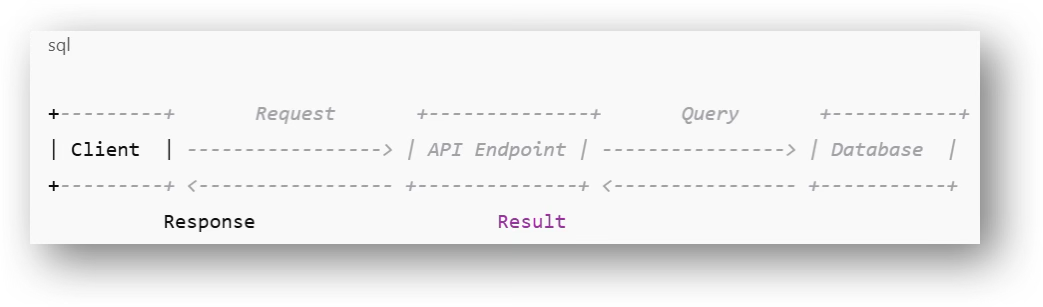
Industry Example
Stripe’s early REST APIs won developer love for predictability and ease. But as they scaled, Stripe adopted GraphQL-like querying internally to cut down version sprawl. Similarly, PayPal’s APIs are still REST-first for compatibility but increasingly incorporate async elements for real-time notifications.
GraphQL: The Buffet Line
If REST is a static menu, GraphQL is a buffet — take exactly what you need, no more and no less.
Why Developers Love GraphQL
- One query, many resources: Fetch user, cart, and orders in a single call.
- Frontend freedom: Clients define the shape of their response.
- Strong tooling: Introspection, type safety, GraphiQL playground.
GraphQL empowers frontend teams. Mobile developers can trim payload sizes, saving battery and bandwidth. Web apps can fetch complex data in fewer requests. GitHub adopted GraphQL for its v4 API, enabling developers to ask for only the fields they care about.
The Catch
- Harder caching: No simple HTTP cache, Need smarter strategies
- Server load: Poor queries can hammer the database.
- Governance: Without limits, clients can over-request.
Industry Example
Facebook built GraphQL to power the News Feed. Shopify cut payload sizes by up to 60% by moving storefront APIs to GraphQL, making storefronts faster. Airbnb, too, has embraced GraphQL to support its complex search and booking flows across multiple platforms.

Async APIs: The Real-Time Highway
REST and GraphQL are conversations — you ask, they answer. But what if you need updates the moment something changes? Async APIs are like live radio: the server broadcasts events as they happen.
Why Developers Love Async
- Real-time by default: Great for chat, IoT, payments, dashboards.
- Scalable: Pub/sub systems handle millions of events.
- Loose coupling: Publishers don’t care who subscribes.
Async patterns make sense when latency matters. Gaming companies rely on event-driven APIs to update scores and match data instantly. Ride-hailing apps broadcast driver and rider locations in real time. Trading platforms push stock price updates to thousands of clients simultaneously.
The Catch
- Debugging: Tracing through Kafka or RabbitMQ can be painful.
- Infra-heavy: Needs brokers, queues, monitoring.
- Steep learning curve: Junior teams struggle.
Industry Example
Netflix uses event-driven APIs to handle recommendations and alerts in real time. Fraud detection in fintech relies on async to catch suspicious activity in milliseconds. Slack uses a mix of REST and event-driven APIs so bots and integrations can react instantly to messages.

Infrastructure Choices
Popular options include Apache Kafka, RabbitMQ, AWS SNS/SQS, and Google Pub/Sub. Each comes with trade-offs in complexity, cost, and observability. Teams adopting async APIs often need better logging, monitoring, and tracing — otherwise, debugging becomes guesswork.
Comparison Table
| Aspect | REST | GraphQL | Async/Event-Driven | |----|----|----|----| | Core Model | Request → Response | Query → Resolver → Response | Publish → Subscribe | | Best For | Simple CRUD apps, MVPs | Complex UIs, multiple clients | Real-time systems (chat, IoT, payments) | | Strengths | Simple, cacheable, universal | Flexible, reduces round trips | Real-time, scalable, loosely coupled | | Weaknesses | Over/under-fetching, versioning | Caching hard, governance needed | Debugging hard, infra-heavy |
This table isn’t about picking winners. It’s about recognizing trade-offs. REST is great for speed and simplicity, GraphQL for flexibility, and Async for immediacy. Mature products often combine all three.
Case Studies:
Fintech Payments:
A startup began with REST. But fraud detection demanded sub-second alerts. REST lagged, so they migrated to Kafka streams. Suspicious transactions now trigger instant SMS alerts, cutting fraud resolution times from hours to seconds.
Nonprofit Modernization:
One nonprofit used REST for donor data. But their real-time dashboard lagged, and staff were frustrated. Switching to GraphQL cut load times by 60% and made data instantly accessible to staff. Donors saw real-time campaign progress, boosting transparency and trust.
Big Tech:
Google still uses REST for public APIs, but inside Gmail and YouTube? Event-driven all the way.
- Netflix mixes async for streaming + REST for metadata + GraphQL for frontend queries.
- Stripe built REST APIs developers love but added webhooks (async) for real-time eventslike payments and disputes.
Actionable Takeaways
- Start simple: REST is perfect for MVPs. Junior teams can ship fast without over-architecting.
- Use GraphQL for scale: When multiple clients demand different data slices, GraphQL reduces backend strain.
- Go async when real time matters: Payments, chat, logistics, IoT — async shines here.
- Hybrid is reality: REST for stability, GraphQL for flexibility, async for events.
- Invest in governance early: Schema validation, monitoring, and rate limits keep APIs sustainable.
Closing Thoughts
If I had to boil it down from experience:
- REST gets you moving — it’s simple, predictable, and fast to implement.
- GraphQL helps when complexity hits — especially in fintech dashboards, compliance portals, or apps pulling many slices of user data.
- Async is non-negotiable for real time — fraud detection, settlements, and trading platforms demand it. Most fintech systems I’ve worked on don’t choose one API style — they blend them.
A payment gateway might expose REST for onboarding, GraphQL for internal dashboards, and async for fraud alerts. That hybrid reality is where stability meets innovation.
In the next decade, API-first design won’t just be a “best practice” — it will underpin entire industries. Cloud-native forced a mindset change for infrastructure. API-first will do the same for products. The teams that treat APIs as first-class products — reliable, observable, and designed with developer empathy are the ones that win in the long run.
\


You May Also Like
Here’s Why Pi Network Coin Price Remains Under Pressure Despite Upgrades

Gold rises on softer US Dollar, traders await Trump’s address on Iran war



