

Morgan Stanley Bitcoin ETF Draws $34M in Day-One Inflows
Morgan Stanley’s new spot Bitcoin ETF pulled in roughly $34 million on its first day of trading, marking one of the more notable ETF debuts in the digital asset space this year as institutional players continue to expand their crypto product lineups.
The Morgan Stanley Bitcoin Trust, trading under the ticker MSBT on NYSE Arca, saw more than 1.6 million shares change hands during its April 8 launch session. The fund tracks the CoinDesk Bitcoin Benchmark 4 PM New York Settlement Rate and charges a 0.14% annualized delegated sponsor fee, positioning it as one of the lowest-cost spot Bitcoin ETFs available.
The fee structure is confirmed in MSBT’s SEC 424B3 prospectus, which details how the sponsor fee accrues daily against net asset value. At 0.14%, Morgan Stanley is undercutting several existing spot BTC ETF providers in a market where BlackRock’s IBIT alone holds over $53 billion in assets.
$34 Million in Context: Solid but Not a Blockbuster
First-day inflow figures serve as an early demand signal for new ETF listings, though they rarely predict long-term trajectory on their own. The $34 million opening puts MSBT in respectable territory, a meaningful showing that reflects existing Morgan Stanley client interest in regulated Bitcoin exposure.
Spot Bitcoin ETF flows have become a closely watched proxy for institutional and financial advisor appetite. Strong debuts can shape short-term sentiment around Bitcoin exposure products, particularly when they come from a wirehouse with Morgan Stanley’s distribution reach across wealth management channels.
The launch arrives during a period when Bitcoin’s broader rebound looks fragile amid geopolitical uncertainty. BTC traded at $70,939 at press time, down roughly 1.4% over the prior 24 hours, with total market capitalization near $1.42 trillion.
Institutional Demand Meets Extreme Fear
What makes the MSBT launch particularly notable is the sentiment backdrop. The Fear & Greed Index sat at 14 at the time of launch, deep in “Extreme Fear” territory. Institutional product launches attracting capital during risk-off conditions suggest a layer of demand that operates independently of retail sentiment cycles.
Derivatives positioning around Bitcoin reflects the cautious mood across the broader market. Liquidation activity and funding rates point to a market where leverage is being used carefully, with traders reluctant to take outsized directional bets.
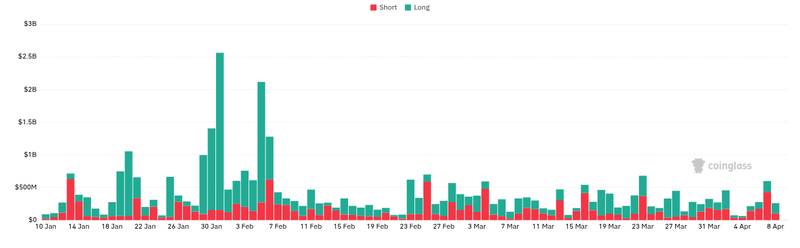 CoinGlass derivatives screen showing the positioning backdrop around bitcoin.
On-chain exchange reserves have also been a point of discussion, with flows into and out of centralized platforms offering clues about whether holders are positioning for sales or accumulating. The dynamic is relevant for understanding whether ETF-driven demand translates into actual spot market pressure.
 CryptoQuant on-chain context supporting the network-flow discussion around bitcoin.
The divergence between institutional product launches and retail fear readings echoes patterns seen during previous ETF expansion phases. Capital from advisory channels tends to move on longer time horizons than the sentiment indexes capture, which largely reflect social media and search activity.
What Traders and Investors Should Watch Next
The next three to five trading sessions will determine whether MSBT’s opening-day demand reflects sustained interest or a one-time allocation event. Multi-day net flow data, once available from ETF flow trackers, will offer the clearest signal.
Relative flow comparisons matter as well. If MSBT attracts new capital to the spot Bitcoin ETF category rather than pulling assets from competitors like IBIT or FBTC, that signals market expansion rather than rotation, a more constructive development for the broader digital asset ecosystem.
Price action and volatility can diverge from ETF flow direction in the short run. Bitcoin’s 24-hour trading volume near $41.7 billion suggests healthy liquidity, but the Extreme Fear reading means sudden swings remain possible. Traders monitoring risk events across the crypto market should watch whether ETF inflows provide a floor for BTC or get overshadowed by macro headwinds.
Morgan Stanley’s prospectus is explicit about the risks: high volatility, potential for total loss, and regulatory uncertainty remain core disclosures. The 0.14% fee may attract cost-conscious allocators, but the next meaningful data point is whether day-two and day-three flows confirm or fade the opening signal.
Disclaimer: This article is for informational purposes only and does not constitute financial or investment advice. Cryptocurrency and digital asset markets carry significant risk. Always do your own research before making decisions.


You May Also Like

Compass Point Expands its Institutional Sales Team

Crypto exchanges with lowest fees

Streamex Appoints Former Microsoft and PayPal Designer Kori Handy as VP of Product and Design



