Rwanda launches first Kinyarwanda tech dictionary to boost digital literacy
The Rwanda Cultural Heritage Academy has launched the first Kinyarwanda ICT terminological dictionary, featuring over 1,700 standardised technology terms developed over three years.
The initiative aims to enhance digital literacy, promote the use of the local language in technology, and assist in training AI systems.
The agency has made a 274-page dictionary available in digital format via a QR code and will also release it in print. A widespread distribution of the dictionary is planned for schools.
While the project aims to bridge the digital divide across the country, it also serves the purpose of promoting the country’s local language. By using the Kinyarwanda tone, young people and individuals of different kinds relate better with technological terms and dynamics.
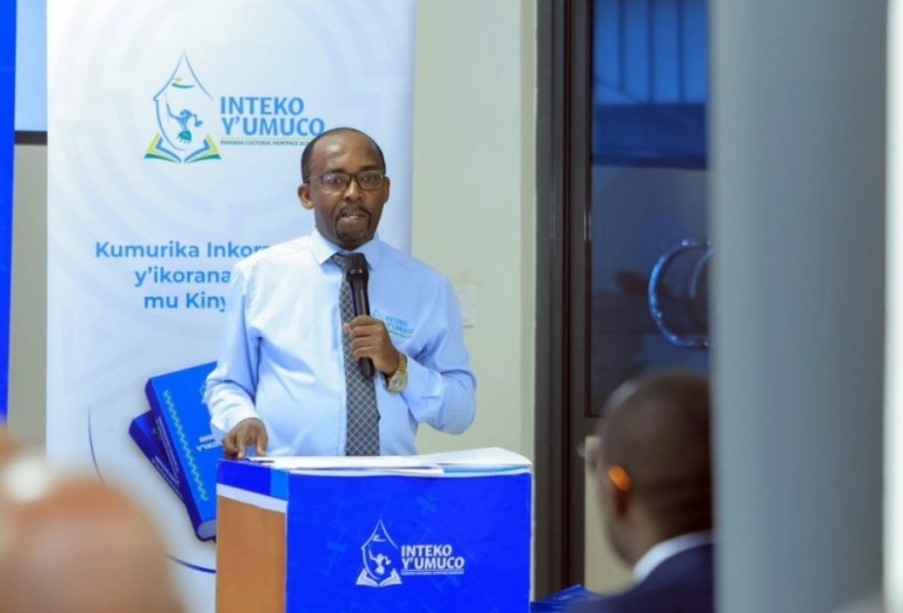 Jean Claude Uwiringiyimana
In a conversation with local media, Jean Claude Uwiringiyimana, the academy’s Deputy Director General in charge of Language, Culture Preservation and Promotion, notes that the initiative is part of an effort to ensure Kinyarwanda is an integral part of the country’s transformation.
“As the country grows, we adopt different aspects from various cultures. To preserve our language and culture, we must translate these into Kinyarwanda, which is why this dictionary was developed,” he said.
Kinyarwanda is an official Bantu language of Rwanda, spoken by over 13 million people, including populations in the Democratic Republic of Congo and Uganda. It is a tonal language that serves as the Rwandan national language and unifies its identity.
He acknowledged that Rwandans need to start embracing technology as an everyday language. As such, the dictionary aims to integrate tech in all fields and help citizens understand the language used in digital services.
Another aim of the initiative is to eradicate the misconception that Kinyarwanda lacks vocabulary.
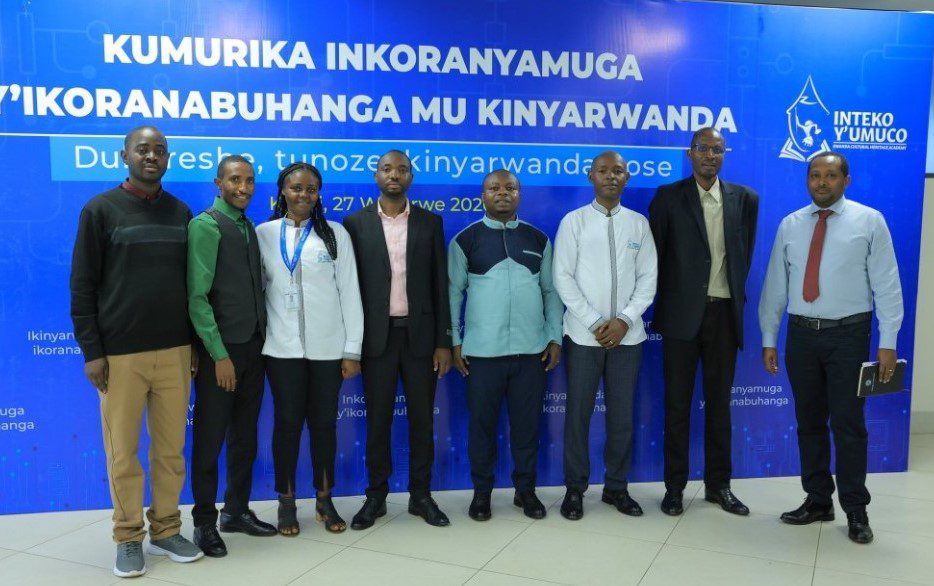 Stakeholders at the launch of the tech dictionary
Also Read: Rwanda secures $17.5m investment from Bill & Melinda Gates to establish AI Scaling Hub.
Inside Rwanda’s Kinyarwanda ICT dictionary
During launch, authorities noted that the dictionary combines newly created technological terms with those already in use across institutions and official documents. It noted that necessary conditions were considered to ensure the terms are easy to read, understand and remember.
The dictionary focuses on core tech areas such as ICT “itangazabumenyi”, computers “mudasobwa”, the internet “murandasi”, communication “itumanaho”, multimedia “urusobe ntangamakuru”, and artificial intelligence “ubwenge buhangano”.
In the 274-page dictionary, forensic technology is translated as “ikoranabuhanga ngaragazabimenyetso”, while a computer processor is translated as “intima ya mudasobwa”, which also means “the heart of a computer”. Other terms are charger “indahuzo”, authentication “kwemeza”, biometric data “amakuru y’ibipimo ndangamiterere y’umuntu”, and screen “indebero”.
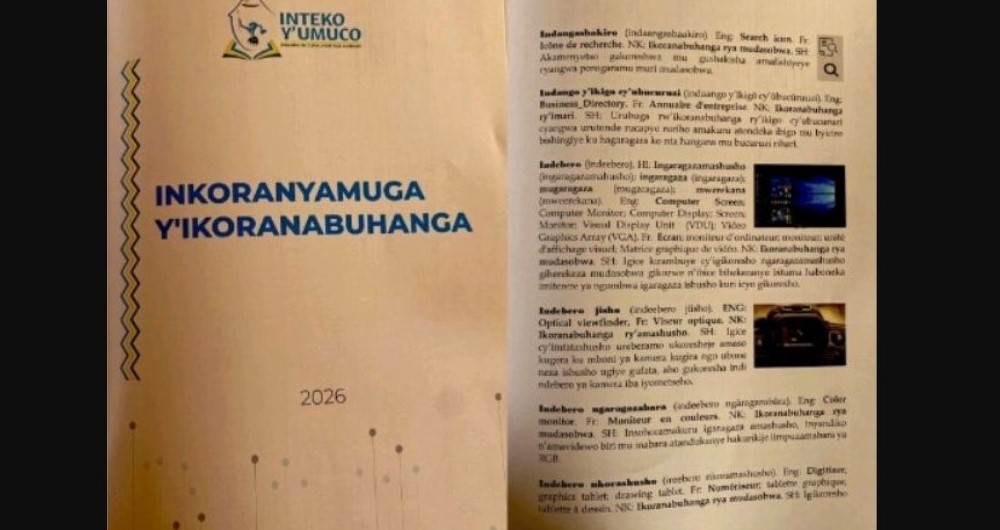 Rwanda’s Kinyarwanda ICT terminological dictionary
Uwiringiyimana pointed out that the initiative is a work-in-progress, as more technological terms will be added once they evolve.
“As these fields continue to grow, relevant institutions will contribute terminology aligned with their areas of work, while collaborating with us along the way,” he added.
In expansion of its usefulness for Rwandans and schools, the dictionary had been tipped to help in training AI models on local languages.


You May Also Like

ServiceNow (NOW) Stock Plunges 45% in Six Months, Reaches New 52-Week Low

US: Labor data volatility clouds Fed path – Commerzbank