

Must Read
PUBLIC UTILITY VEHICLES. Jeepneys ply Commonwealth Avenue in Quezon City on December 12, 2023.PUBLIC UTILITY VEHICLES. Jeepneys ply Commonwealth Avenue in Quezon City on December 12, 2023.
Public transport service contracting returns, but some pandemic-era obligations still unpaid
For feedback or concerns regarding this content, please contact us at crypto.news@mexc.com
MANILA, Philippines – During the COVID-19 pandemic, the government tapped public utility vehicles (PUVs) to provide free transportation to commuters under a service contracting program.
Amid rising fuel costs linked to tensions in the Middle East, the government is reviving the program. This time, it comes with a 20% discount, unlike the free transportation service before.
But some operators who participated in the service contracting program during the pandemic said they have yet to be paid by the government.
Mega Manila Consortium Corporation spokesperson Juliet De Jesus said in a radio interview with DZMM that the government under then-president Rodrigo Duterte still owes member-operators at least P32 million for free bus rides along EDSA.
So what caused the delay in payments?
Department of Transportation Undersecretary Mark Steven Pastor said in a press conference on Friday, April 10, that in the early days of the service contracting program during the pandemic, many vehicles operated without GPS tracking because of the immediate need for public transportation.
This led to discrepancies between data reported by operators and records held by the government.
Pastor, who led the service contracting program during the pandemic, said GPS devices were installed only later on.
He added that payment computations were also more complex at that time, since the program covered fully free rides for commuters.
De Jesus said that funds intended for contracted operators were returned by then–Land Transportation Franchising and Regulatory Board chairman Martin Delgra III to the Department of Budget and Management.
The service contracting program was first launched under the Bayanihan to Recover as One Act, also known as Bayanihan 2, to help public utility vehicle (PUV) drivers affected by the pandemic.
Land Transportation Franchising and Regulatory Board chair Vigor Mendoza III said that the agency is already investigating the issue. Mendoza targets a three- to five-day turnaround for payments to contracted PUV operators.
In 2021, during the pandemic, some jeepney drivers also reported delays in payment, as well as inadequate payments.
To make sure that the delays and inconsistencies in recording would be avoided, a government-contracted vehicle is required to install a GPS device. Payments will be processed via online banking or e-wallet transfers.
Under the revived scheme, the government will compensate PUV operators and drivers based on distance traveled, with rates varying depending on the type of vehicle.
. – Rappler.com
Market Opportunity
PUBLIC Price(PUBLIC)
$0.01571
$0.01571$0.01571
USD
PUBLIC (PUBLIC) Live Price Chart


Disclaimer: The articles reposted on this site are sourced from public platforms and are provided for informational purposes only. They do not necessarily reflect the views of MEXC. All rights remain with the original authors. If you believe any content infringes on third-party rights, please contact crypto.news@mexc.com for removal. MEXC makes no guarantees regarding the accuracy, completeness, or timeliness of the content and is not responsible for any actions taken based on the information provided. The content does not constitute financial, legal, or other professional advice, nor should it be considered a recommendation or endorsement by MEXC.
You May Also Like

USD: Inflation focus into CPI release – TD Securities
The post USD: Inflation focus into CPI release – TD Securities appeared on BitcoinEthereumNews.com. TD Securities’ Global Strategy Team highlights that United States
Share
BitcoinEthereumNews2026/04/10 20:21
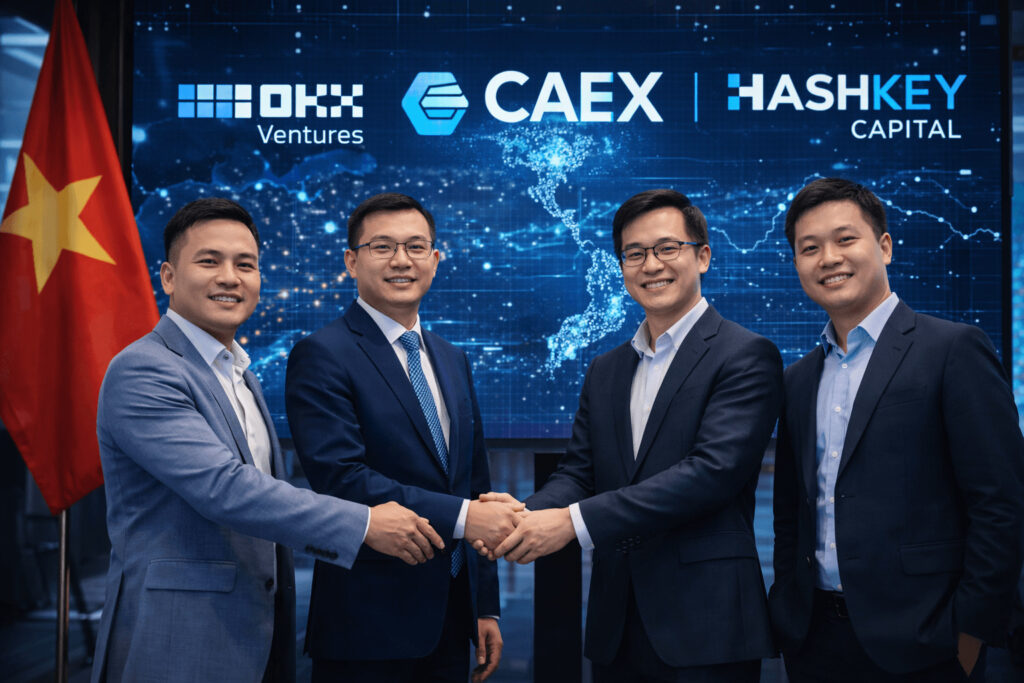
OKX Ventures and HashKey Capital Join CAEX as Strategic Partners to Advance Vietnam’s Regulated Crypto Asset Trading Pilot
April 10, 2026 • Blockchain / Crypto, News, Vietnam • By Duc Dao Vietnam Prosperity Crypto Asset Exchange Joint Stock Company (CAEX) has entered into agreements
Share
FinancePolice2026/04/10 20:45

UK Tax Debt Nears £44bn as SMEs Face Ongoing Cashflow Pressure, Says Match Finance
With UK growth remaining subdued and tax liabilities mounting, SME cashflow management is firmly back in focus, according to leading business funding specialist
Share
Globalfintechseries2026/04/10 20:38



