

Oil Markets Recover Friday Despite Posting Worst Weekly Decline Since June Amid Hormuz Crisis
Key Takeaways
- Brent futures rose past $96 per barrel while WTI approached $99 following Saudi confirmation that recent strikes reduced daily production capability by 600,000 barrels
- Despite Friday’s gains, crude remains poised for its largest weekly decline since June, dropping over 10% following Tuesday’s US-Iran ceasefire announcement
- Tehran once again suspended tanker passage through the Strait of Hormuz following Israeli military operations in Lebanon
- Planned weekend diplomatic discussions in Islamabad between US and Iranian officials face uncertainty as Iran denies delegation arrival
- Major Asian economies including Japan, China, and India are releasing strategic petroleum reserves to address supply constraints
Crude oil markets extended gains for a consecutive session Friday, though the week overall is shaping up to be the worst performance since early summer as Middle Eastern supply disruptions continue to roil global energy markets.
Brent futures pushed above the $96 per barrel threshold while West Texas Intermediate approached $99 during Asian trading hours. Both benchmarks registered approximately 1% increases Friday.
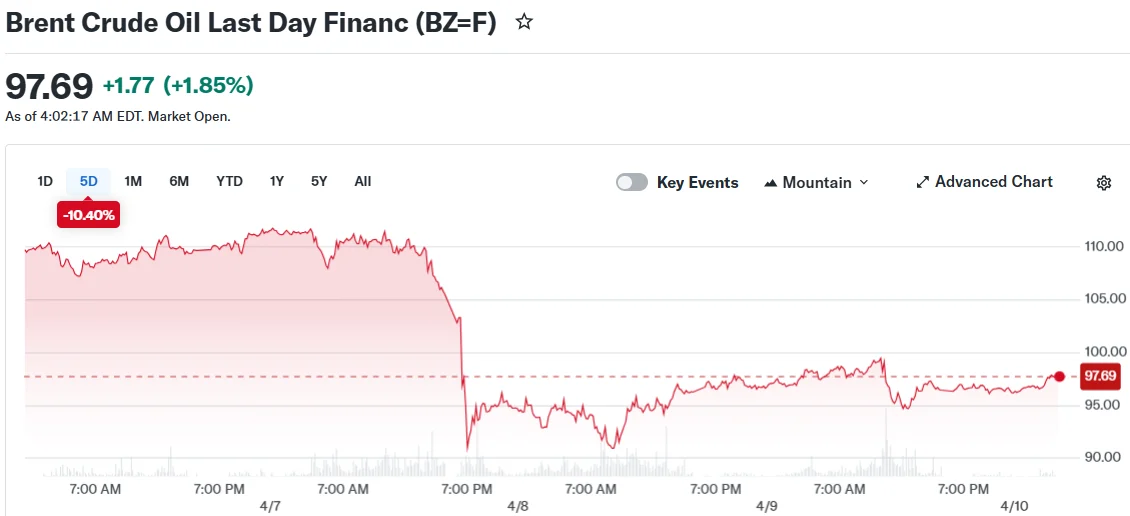 Brent Crude Oil Last Day Financ (BZ=F)
Yet despite Friday’s modest recovery, Brent crude remains down more than 11% across the trading week. WTI has experienced comparable losses.
The dramatic weekly selloff followed Tuesday’s announcement of a ceasefire agreement between Washington and Tehran. Markets initially responded with optimism that regional oil shipments might normalize.
However, complications emerged almost immediately. Shortly after the truce was announced, Israeli forces conducted aerial operations against targets in Lebanon, with officials stating their ongoing Hezbollah conflict fell outside the ceasefire parameters.
Tehran retaliated by once again blocking commercial tanker movement through the Strait of Hormuz, characterizing Israel’s Lebanese operations as ceasefire violations.
The critical waterway has been effectively closed since late February. The prolonged disruption has impacted approximately 20% of worldwide petroleum and liquefied natural gas shipments, creating substantial supply shortages.
Saudi Arabia’s official press service verified that infrastructure attacks have reduced the kingdom’s production capabilities by roughly 600,000 barrels daily—approximately 10% of typical crude exports.
Pipeline Infrastructure Damage Adds Complexity to Supply Challenges
Attacks targeting a pumping facility connected to the East-West pipeline system have decreased throughput by 700,000 barrels this week. Saudi Arabia had been leveraging this pipeline to ship crude through Red Sea terminals, effectively circumventing the Strait of Hormuz.
Kuwait has similarly reported intercepting aerial drone attacks aimed at critical infrastructure.
Nations heavily dependent on Middle Eastern crude are now accessing emergency stockpiles. Japan plans to release approximately 20 days’ worth of petroleum from reserves during May. China has authorized state-owned refineries to utilize commercial reserve supplies. India’s leading private refining company has begun implementing fuel rationing at retail stations.
Islamabad Diplomatic Talks Face Mounting Uncertainty
Market participants are closely monitoring scheduled US-Iran diplomatic discussions in Islamabad, where Vice President JD Vance is anticipated to head the American delegation Saturday.
Nevertheless, Iranian state media reported Friday that Tehran has denied any negotiating team has entered the country. Iranian officials additionally stated that discussions would remain paused until Washington demonstrates compliance with Lebanon ceasefire terms.
President Trump expressed being “very optimistic” regarding prospects for an agreement and characterized Iranian leadership as “much more reasonable” than public rhetoric might indicate.
Trump additionally issued public warnings to Iran via social media against imposing transit fees on vessels navigating the Strait of Hormuz.
Oil prices have experienced average daily volatility exceeding $9 since regional hostilities began, representing the most extreme daily price movements in recent years.
The post Oil Markets Recover Friday Despite Posting Worst Weekly Decline Since June Amid Hormuz Crisis appeared first on Blockonomi.


You May Also Like

Why Stablecoins Don’t Work Without Boring Infrastructure

Volatility compression grips crypto markets ahead of U.S. inflation report: Crypto Markets Today




