

WTI Crude Oil Soars: Strait of Hormuz Closure Sparks Critical $93 Price Surge
BitcoinWorld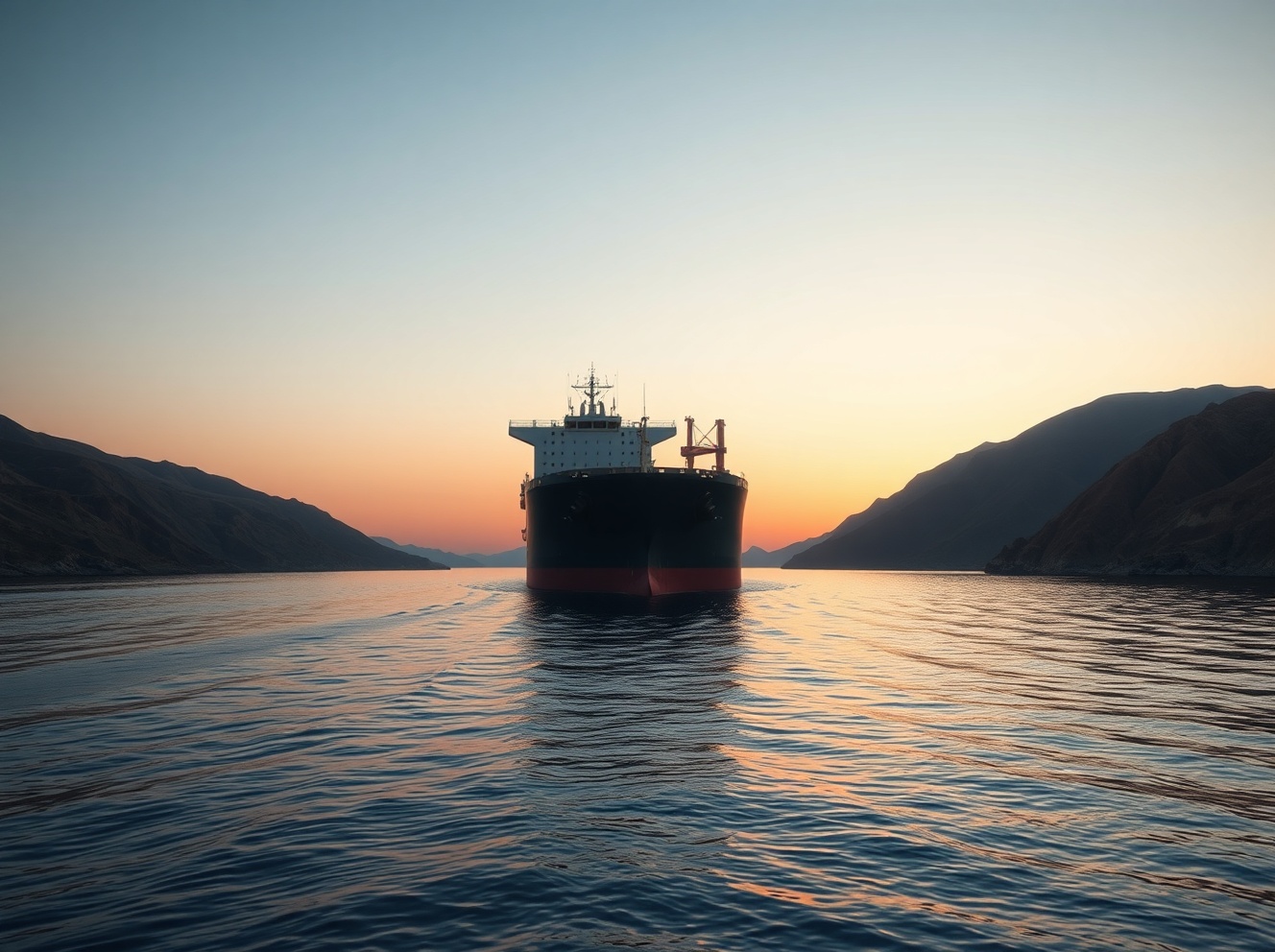
WTI Crude Oil Soars: Strait of Hormuz Closure Sparks Critical $93 Price Surge
Global energy markets are facing a critical supply shock as West Texas Intermediate (WTI) Crude Oil futures surge toward $93.00 per barrel. This dramatic price movement follows reports of a near-total, practical closure of the Strait of Hormuz, the world’s most important oil transit chokepoint. The disruption, unfolding in late March 2025, immediately threatens the flow of nearly 21 million barrels of oil per day, representing about one-fifth of global consumption. Consequently, analysts are warning of significant inflationary pressures and potential economic ramifications worldwide.
WTI Crude Oil Price Surge and Market Reaction
The price of WTI Crude Oil climbed sharply in early trading, approaching the $93.00 mark. This represents a multi-month high and a significant breakout from recent trading ranges. Market data shows trading volumes spiking by over 300% compared to the monthly average, indicating intense speculative and hedging activity. Furthermore, the price spread between WTI and Brent crude, another global benchmark, narrowed considerably. This convergence signals that the disruption is perceived as a global, rather than regional, supply crisis.
Futures contracts for delivery in the coming months also showed a steepening of the market structure into ‘backwardation.’ In this condition, near-term contracts trade at a premium to later-dated ones. Traders typically interpret this pattern as a sign of immediate physical supply tightness. Major financial institutions, including investment banks and commodity trading advisors, issued rapid client notes revising their quarterly price forecasts upward by 15-25%.
Immediate Impacts on Refiners and Consumers
Refineries in Asia and Europe, which are heavily reliant on crude shipments transiting the Strait, began reporting operational concerns. Several announced they were activating contingency supply plans, often involving more expensive alternative routes or crude grades. Meanwhile, retail fuel prices in major economies showed early signs of upward pressure. The U.S. national average gasoline price, for instance, increased by 12 cents per gallon in the 48 hours following the initial reports, according to data from the Energy Information Administration (EIA).
Anatomy of the Strait of Hormuz Disruption
The Strait of Hormuz is a narrow maritime passage between Oman and Iran, connecting the Persian Gulf with the Gulf of Oman and the Arabian Sea. At its narrowest point, the shipping lane is just 21 nautical miles wide, but the navigable channel for large vessels is effectively only two miles wide in either direction. This geography makes it an inherent chokepoint. The current disruption stems from a complex convergence of geopolitical and logistical factors, rather than a single declared blockade.
Maritime authorities reported a severe reduction in transit traffic due to overlapping safety advisories and de facto restrictions. Key factors include:
- Heightened Military Activity: Unprecedented naval exercises and weapons testing in the area by regional powers.
- Insurance Premium Surge: Maritime insurers raised war risk premiums for the zone to prohibitive levels, making voyages economically unviable for many operators.
- Flag State Advisories: Several nations advised their-flagged commercial vessels to avoid the Strait until further notice.
- Ambiguous Regulatory Holds: Reports of extended and unexplained delays in clearance procedures for tankers at loading terminals.
This combination of events created a practical closure, where commercial shipping effectively halted despite the absence of a formal, physical barricade. The table below outlines the typical daily oil flow through the Strait versus estimated current flow:
| Metric | Normal Daily Flow | Estimated Current Flow (Late March 2025) |
|---|---|---|
| Crude Oil & Condensate | ~20.5 million barrels | < 3 million barrels |
| Liquefied Natural Gas (LNG) | ~20% of global trade | Negligible |
| Total Tanker Traffic | ~30 tankers daily | 1-2 tankers daily |
Historical Context and Geopolitical Precedents
The Strait of Hormuz has been a flashpoint for decades. Historical precedents help contextualize the current crisis. During the 1980s ‘Tanker War’ phase of the Iran-Iraq conflict, attacks on shipping caused significant disruptions and insurance spikes. More recently, tensions in 2019 and 2022 led to seizures of vessels and attacks on tankers, which caused temporary price spikes but not a sustained closure. The current situation is distinct in its scale and the multifaceted nature of the disruption, which involves economic and regulatory levers alongside military posturing.
Energy analysts note that the global oil market has some buffers, but they are strained. The strategic petroleum reserves (SPRs) of member countries of the International Energy Agency (IEA) have been drawn down significantly over the past three years to address previous supply crunches. Consequently, the collective capacity for a coordinated stock release to calm markets is more limited than in previous eras. This reduced inventory cushion amplifies the price impact of any supply shock.
Expert Analysis on Market Fundamentals
Dr. Anya Sharma, Lead Geopolitical Analyst at the Global Energy Security Institute, provided context. “The market was already balanced on a knife’s edge,” she explained. “Global demand has been robust, and OPEC+ production discipline has kept supplies tight. The Strait of Hormuz disruption is not just a logistical problem; it’s a fundamental test of the global system’s spare capacity and rerouting agility. The price move toward $93 reflects a premium for both real physical risk and profound systemic uncertainty.”
Global Economic and Alternative Route Implications
The economic implications of sustained high oil prices are severe. Central banks, which have been grappling with inflation, now face renewed upward pressure on energy costs. This complicates monetary policy, potentially delaying interest rate cuts. Industries with high energy and freight costs, such as aviation, shipping, and manufacturing, will see immediate margin compression. These costs will eventually filter through to consumer prices for goods and services.
In response, shipping companies are evaluating alternative routes, though all come with major drawbacks:
- Pipeline Networks: Existing pipelines from the Persian Gulf, like the Petroline in Saudi Arabia, can redirect some crude to Red Sea ports. However, their capacity is limited and already near full utilization.
- The Cape of Good Hope: Rerouting tankers around the southern tip of Africa adds approximately 15 days to a voyage from the Gulf to Europe or North America. This increases freight costs, requires more vessels to maintain flow, and raises emissions.
- Regional Storage Drawdowns: Storage tanks at destinations like Fujairah in the UAE can release oil, but these are short-term buffers measured in days, not weeks.
The crisis also accelerates strategic discussions about energy independence and diversification. Nations and corporations are likely to increase investment in non-Gulf energy sources, renewable alternatives, and enhanced strategic storage. However, these are long-term solutions that offer little immediate relief.
Conclusion
The surge in WTI Crude Oil prices toward $93.00 is a direct and powerful market signal reflecting the critical importance of the Strait of Hormuz to global energy security. The practical closure of this chokepoint has exposed the fragility of just-in-time energy logistics. While the immediate focus is on price volatility and supply chain workarounds, the enduring lesson may be the urgent need for greater resilience in global energy systems. The situation remains fluid, and market stability will depend heavily on the duration of the disruption and the diplomatic and logistical responses from the international community.
FAQs
Q1: What exactly is causing the Strait of Hormuz to be “practically closed”?
The closure is not a single physical barrier but a result of multiple overlapping factors: dramatically increased war risk insurance premiums making voyages unaffordable, naval exercises creating unsafe zones, flag state advisories against transit, and unexplained administrative delays at ports. Together, these actions have halted most commercial traffic.
Q2: How long can the global economy cope with oil at $93+ per barrel?
Economies can withstand short-term spikes, but sustained prices at this level would likely trigger global inflation, reduce economic growth, and force central banks to maintain tighter monetary policy. The impact depends heavily on the duration; a closure lasting weeks would cause severe economic damage.
Q3: Are there any viable alternative routes for Gulf oil?
Yes, but with significant limitations. Pipelines like Saudi Arabia’s Petroline can move some oil to the Red Sea. Tankers can be rerouted around Africa’s Cape of Good Hope, adding roughly two weeks to voyage times and significantly increasing costs. Neither alternative can fully replace the Strait’s capacity.
Q4: What is the difference between WTI and Brent crude oil, and why does it matter?
WTI (West Texas Intermediate) is a U.S. benchmark, while Brent is a North Sea benchmark that prices much of the world’s oil. In a global crisis, their prices typically converge as the disruption affects all markets. The narrowing spread confirms this is a worldwide supply issue, not just a regional one.
Q5: What can be done to prevent such a crisis in the future?
Long-term strategies include diversifying energy sources away from the Persian Gulf, investing in renewable energy to reduce oil dependence, expanding strategic petroleum reserves, developing more pipeline infrastructure to bypass chokepoints, and pursuing diplomatic efforts to ensure freedom of navigation in critical waterways.
This post WTI Crude Oil Soars: Strait of Hormuz Closure Sparks Critical $93 Price Surge first appeared on BitcoinWorld.


You May Also Like

Is Adam Back Satoshi Nakamoto? CEO Responds to New York Times Investigation
Ranking Republican admits to White House reporter he regrets Trump vote: 'Make it stop!'




