U.S. Dollar Weakens Dramatically as Investors Eye Historic U.S.-Iran Talks and CPI Spike

BitcoinWorld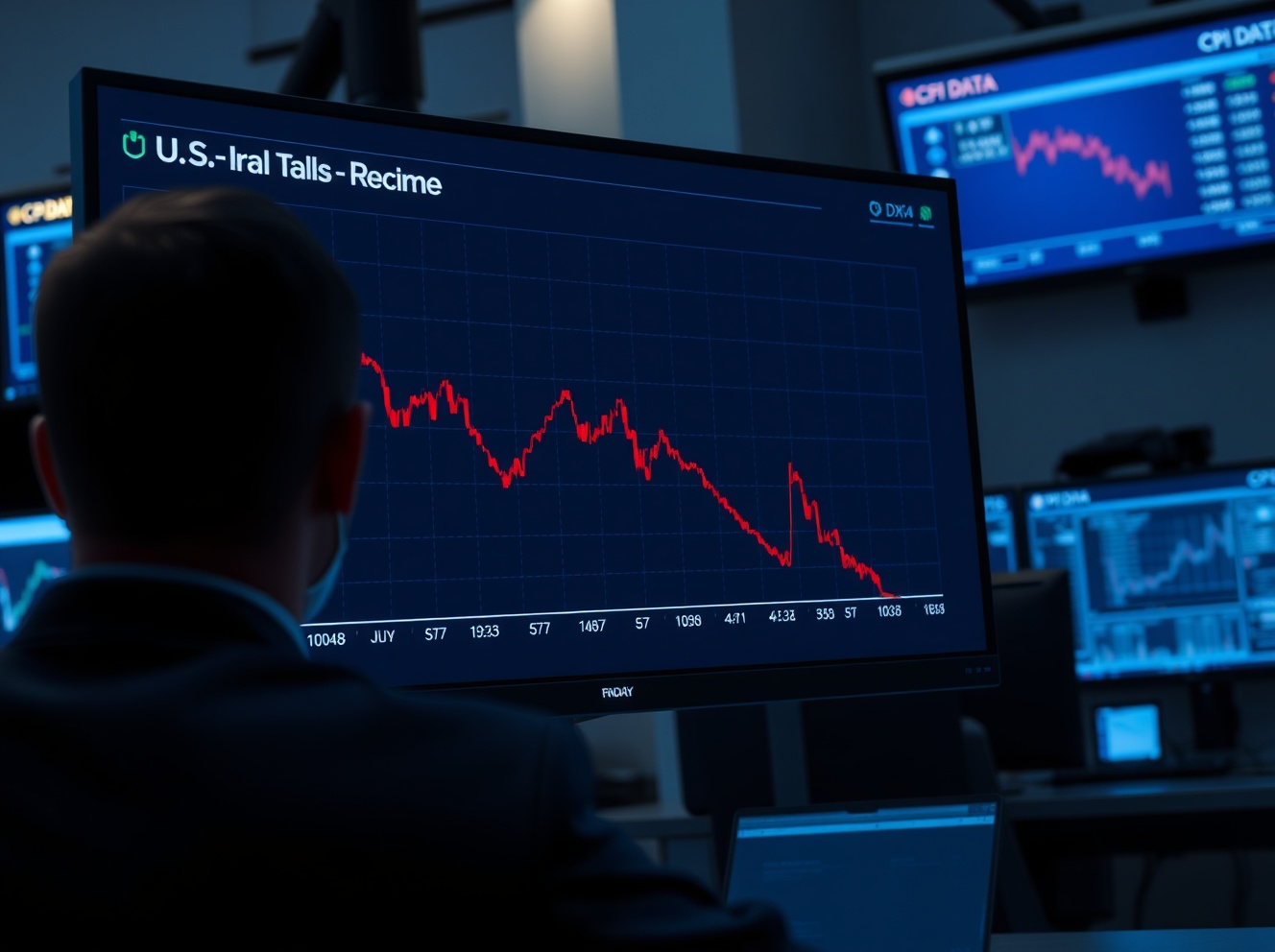
U.S. Dollar Weakens Dramatically as Investors Eye Historic U.S.-Iran Talks and CPI Spike
NEW YORK, March 2025 – The U.S. dollar experienced a significant and rapid depreciation against a basket of major global currencies today. This dramatic shift follows two concurrent market-moving developments: confirmed preparatory talks between U.S. and Iranian diplomats and the release of unexpectedly high Consumer Price Index (CPI) inflation data. Consequently, the ICE U.S. Dollar Index (DXY), a key benchmark, fell sharply, reflecting heightened investor uncertainty and a strategic repositioning of capital.
U.S. Dollar Weakens Amid Dual Geopolitical and Economic Pressures
The dollar’s decline was both broad and pronounced. Market data shows the DXY dropped over 1.2% in early trading, hitting its lowest level in several weeks. Notably, the euro gained 1.1% to trade above $1.1050, while the Japanese yen strengthened by 0.9%. Analysts immediately linked the movement to a fundamental reassessment of traditional safe-haven assets. Historically, geopolitical tensions in the Middle East have bolstered the dollar. However, the prospect of diplomatic engagement introduces a new variable, potentially reducing the region’s risk premium.
Simultaneously, the latest CPI report revealed a monthly increase of 0.5%, exceeding economist forecasts of 0.3%. This persistent inflationary pressure complicates the Federal Reserve’s policy pathway. “The market is grappling with a complex narrative,” stated Dr. Anya Sharma, Chief Economist at Global Macro Insights. “On one hand, de-escalation talks could reduce long-term oil price volatility, a dollar-negative. On the other, sticky inflation argues for a more hawkish Fed, which is typically dollar-positive. Today, the geopolitical story is dominating the short-term calculus.”
Decoding the Impact of U.S.-Iran Diplomatic Overtures
The announcement of indirect talks, facilitated by a European intermediary, marks a notable shift in a long-standing adversarial relationship. For currency traders, the primary transmission mechanism is the oil market. Iran holds some of the world’s largest proven crude oil reserves. A potential easing of sanctions or a formal agreement could incrementally increase global oil supply over time. This prospect places downward pressure on oil prices, which are predominantly traded in U.S. dollars.
A sustained drop in the petrodollar’s dominance or in global oil prices can reduce international demand for dollars to purchase energy. Furthermore, de-escalation lowers the perceived global risk, diminishing the dollar’s appeal as the world’s premier safe-haven currency. Investors often flock to the dollar and U.S. Treasuries during crises. Therefore, a reduction in crisis perception can lead to capital flowing out of dollar-denominated assets and into higher-yielding or riskier international investments.
Historical Context and Market Memory
Financial markets have a long memory regarding Middle East diplomacy. The 2015 Joint Comprehensive Plan of Action (JCPOA) provides a relevant precedent. Following its announcement, the DXY saw a period of sustained pressure as risk appetite improved globally. Current movements echo that pattern, albeit within a different macroeconomic landscape characterized by higher interest rates. Analysts caution that these are preliminary talks, and the road to any substantive agreement remains fraught with obstacles. However, the mere opening of a diplomatic channel has proven sufficient to trigger a significant market repricing.
Consumer Price Index Spike Adds Domestic Complexity
While geopolitics drove the initial sell-off, domestic inflation data cemented the dollar’s weak trajectory. The hotter-than-expected CPI print for February challenges the “last mile” disinflation narrative. Core CPI, which excludes volatile food and energy prices, also remained elevated at 0.4% month-over-month. This data presents a dilemma for the Federal Reserve, forcing it to balance growth concerns against its inflation mandate.
Paradoxically, high inflation can sometimes strengthen a currency if it leads to aggressive central bank tightening. In this instance, the market interpreted the data differently. The reaction suggests investors fear the Fed may be constrained—unable to raise rates significantly without harming the economy, yet unable to cut rates while inflation persists. This “stagflation-lite” concern undermines currency confidence. The following table summarizes key data points from the report:
| Metric | February 2025 | Forecast | January 2025 |
|---|---|---|---|
| CPI (MoM) | +0.5% | +0.3% | +0.3% |
| CPI (YoY) | +3.3% | +3.1% | +3.1% |
| Core CPI (MoM) | +0.4% | +0.3% | +0.4% |
Market-implied probabilities for a Federal Reserve rate cut at its June meeting fell slightly following the data release. However, the simultaneous dollar weakness indicates that the inflation news was overshadowed by the larger geopolitical shift. Traders are prioritizing the potential for a structural change in global oil dynamics over a single month’s domestic data point.
Broader Market Reactions and Global Currency Shifts
The dollar’s retreat created winners across the foreign exchange landscape. Commodity-linked currencies like the Australian dollar (AUD) and the Canadian dollar (CAD) rallied strongly, benefiting from improved global growth prospects and stable commodity prices. Emerging market currencies also saw relief, as a weaker dollar reduces debt servicing costs for nations that borrow in USD. Key movements included:
- Euro (EUR/USD): Jumped to $1.1080, a two-month high.
- British Pound (GBP/USD): Rose 0.8% to break above $1.2850.
- Swiss Franc (USD/CHF): Fell 0.7%, with the CHF also acting as a safe-haven.
- Gold (XAU/USD): Surged 1.5% to over $2,180/oz, a traditional hedge against currency weakness.
This synchronized move underscores the dollar’s central role in global finance. Its weakness acts as a rising tide that lifts most other currency boats, at least in the short term. The rally in gold is particularly telling, signaling that some investors view the situation as a potential long-term inflection point, not merely a temporary correction.
Expert Analysis on Sustained Trends
“We are witnessing a classic ‘risk-on’ rotation, but with a nuanced driver,” explained Marcus Chen, a veteran forex strategist. “It’s not just growth optimism; it’s a recalibration of geopolitical tail risks. If these talks gain momentum, we could see a sustained period of dollar softness as the global economy adjusts to a new equilibrium. The key for traders will be monitoring the 200-day moving average on the DXY for confirmation of a longer-term trend change.” Chen’s analysis points to the importance of technical indicators in validating today’s fundamental news.
Conclusion
The U.S. dollar weakens in the face of a powerful confluence of events: potential diplomatic breakthroughs with Iran and stubborn domestic inflation. This episode highlights how currency markets constantly synthesize geopolitical and economic signals. The dollar’s decline reflects a market betting on a reduction in global risk and grappling with a complex domestic policy outlook. While the path of diplomacy is uncertain and inflation remains a concern, today’s price action demonstrates the profound sensitivity of the U.S. dollar to shifts in the global strategic landscape. Investors will now closely watch for concrete developments in the U.S.-Iran dialogue and the Federal Reserve’s upcoming policy statement for further direction.
FAQs
Q1: Why would talks with Iran cause the U.S. dollar to weaken?
A potential diplomatic resolution could reduce Middle East tensions, lowering the global “risk premium.” This makes the dollar, a traditional safe-haven asset, less attractive. It could also increase global oil supply, reducing petrodollar demand.
Q2: Doesn’t high inflation usually strengthen a currency?
Typically, yes, if it leads to higher interest rates. In this case, the market fears the Fed may be trapped—unable to hike rates without hurting growth. This “policy paralysis” concern can undermine confidence in the currency.
Q3: What is the U.S. Dollar Index (DXY)?
The DXY is an index that measures the value of the U.S. dollar relative to a basket of six major world currencies: the euro, Japanese yen, British pound, Canadian dollar, Swedish krona, and Swiss franc. It is a key benchmark for dollar strength.
Q4: Which currencies benefit most when the dollar weakens?
Commodity-linked currencies (AUD, CAD, NZD), major peers like the euro and pound, and emerging market currencies often appreciate. Gold, priced in dollars, also typically rises.
Q5: Could this dollar weakness be a long-term trend?
It is too early to say. Sustained weakness would require follow-through on diplomatic talks and confirmation that the Fed will tolerate higher inflation or a slower economy. Traders monitor technical levels like the DXY’s 200-day average for trend confirmation.
This post U.S. Dollar Weakens Dramatically as Investors Eye Historic U.S.-Iran Talks and CPI Spike first appeared on BitcoinWorld.


You May Also Like

Bitcoin 28% Haircut: Moody’s Sets Forced-Selling Trigger

Early WLFI investors face shrinking profits as $1.28 billion supply shock looms