Bitcoin Quantum Scare Priced In? Bernstein Sees 3-5 Year Upgrade Window
Bernstein says Bitcoin’s quantum computing risk is already priced into the market after a nearly 50% drawdown from its all-time high, but the network has a 3-5 year window to upgrade its cryptographic defenses before the threat becomes practical.
Bernstein analyst Gautam Chhugani described quantum computing as a manageable upgrade cycle for Bitcoin rather than an existential threat, according to a note covered by Investing.com on April 8. The firm expects protocols have adequate time to evolve their security before quantum hardware reaches a level capable of breaking current encryption.
Bitcoin traded at $74,814 at press time, up roughly 5.9% over 24 hours, with a market cap near $1.5 trillion. The Fear and Greed Index sat at 12, deep in “Extreme Fear” territory, reflecting the broader risk-off mood even as Bernstein frames the quantum story as forward-looking rather than immediate.
Why Bernstein Says the Quantum Scare Is Already Priced In
Bernstein’s Monday note argued that Bitcoin’s decline of nearly 50% from its $126,198 all-time high in October 2025 had already absorbed several risks tied to a quantum breakthrough. In market terms, “priced in” means that the selloff has already discounted the known threat, so the information alone should not trigger further downside.
The catalyst behind the renewed debate is a Google Quantum AI whitepaper published March 30. The paper estimates that Shor’s algorithm could crack Bitcoin’s secp256k1 elliptic-curve cryptography using fewer than 500,000 physical qubits, with an on-spend attack window of roughly 9 to 12 minutes, close to Bitcoin’s average 10-minute block time.
Google’s paper also identified approximately 6.7 million BTC sitting in vulnerable address types. Within that figure, roughly 1.7 million BTC is secured by legacy P2PK locking scripts dating back to the Satoshi era, representing the highest-risk cohort. Bernstein flagged the same 1.7 million BTC figure in its note.
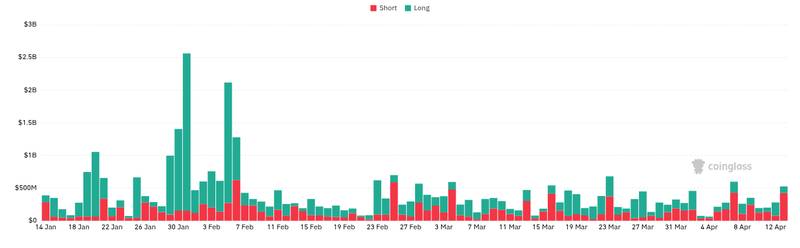 CoinGlass derivatives screen showing the positioning backdrop around bitcoin.
What the 3-5 Year Upgrade Window Means for Bitcoin
The 3-5 year timeline is the most actionable detail in Bernstein’s assessment. It reflects the gap between current quantum hardware capabilities and the qubit counts needed to execute a practical attack on Bitcoin’s cryptography. No quantum computer today comes close to the sub-500,000 physical qubit threshold outlined in Google’s paper.
For Bitcoin, closing that gap means migrating to post-quantum cryptographic algorithms. Unlike a centralized service that can push a patch overnight, Bitcoin upgrades require broad consensus across miners, node operators, and developers. Past upgrades like SegWit and Taproot took years from proposal to activation, which is why the timeline matters as much as the technical fix itself.
Bernstein suggested that large institutional holders will play a constructive role in building consensus on a post-quantum upgrade. This is forward-looking analyst opinion rather than a confirmed plan, but it aligns with the growing institutional presence in Bitcoin following spot ETF approvals. Similar coordination challenges have surfaced in other crypto governance debates, such as the tensions between FedNow and XRP’s payment infrastructure.
 CryptoQuant metrics view used to back the on-chain section for bitcoin.
How Investors May Interpret Quantum Risk From Here
The distinction Bernstein draws is between long-term structural risk and near-term price action. The quantum threat is real in the sense that Google’s whitepaper provides concrete qubit and gate-count estimates, but the timeline pushes practical exploitation years into the future. For current holders, this frames the issue as a protocol development question rather than a reason to exit positions today.
The broader market backdrop remains cautious. With the Fear and Greed Index at 12 and Bitcoin still trading roughly 40% below its October 2025 peak, sentiment has room to recover if the quantum narrative settles into an orderly upgrade discussion. Security vulnerabilities across the crypto ecosystem, including incidents like the Hyperbridge exploit that minted fake DOT on Ethereum, continue to remind the market that cryptographic integrity is a live concern across protocols.
Google’s whitepaper also raised public-policy considerations for dormant assets, arguing that vulnerable networks should migrate to post-quantum cryptography without delay. That framing aligns with Bernstein’s view: the risk is manageable, but only if the industry treats it as an active engineering priority rather than a hypothetical problem. Regulatory interest in tokenized securities and on-chain infrastructure could accelerate that urgency.
The original Bernstein research note was not publicly available at press time. The analysis above relies on corroborated secondary reporting from Investing.com and Cointelegraph.
Disclaimer: This article is for informational purposes only and does not constitute financial or investment advice. Cryptocurrency and digital asset markets carry significant risk. Always do your own research before making decisions.


You May Also Like

Gold Price Forecast: XAU/USD Bulls Face Critical $4,850 Resistance Barrier
TRON Energy vs Burning TRX: When Renting Resources Is the Better Option