

Must Read
CHINESE ENVOY. Ambassador Jing Quan presents his credentials to President Ferdinand Marcos, Jr. on December 11, 2025.CHINESE ENVOY. Ambassador Jing Quan presents his credentials to President Ferdinand Marcos, Jr. on December 11, 2025.
Joint effort between PH, China urged to speed up clean energy shift
For feedback or concerns regarding this content, please contact us at crypto.news@mexc.com
MANILA, Philippines – A stronger collaboration between the Philippines and China over renewables would fast-track the transition to clean energy, and help block fossil fuels and nuclear, according to a recent report on renewable energy cooperation.
Filipino renewable firms have reported issues over financing challenges and limited technical support. They also voiced out concerns over strained working partnerships with some Chinese companies and the need to build trust.
“We were working on a joint venture agreement with a Chinese company for a 132-megawatt solar project,” One Renewable Energy Enterprise shared in the report launched on Thursday, April 16.
“We signed an agreement in January 2024, but later on the Chinese partners withdrew without valid reasons, even citing concerns about the West Philippine Sea as an excuse.”
Nevertheless, there is now an ongoing exchange of knowledge between the two countries. For example, some Filipino students, mostly from Leyte and Nueva Ecija, are now studying renewable energy engineering in China, through a program by People of Asia for Climate Solutions (PACS).
“If we don’t act fast enough, coal will come back,” Xiaojun Wang, executive director of PACS, said on Thursday in Quezon City. “Nuclear will come back.”
Local renewable companies are dependent on China, the global leader in clean energy technology. With the Middle East crisis disrupting oil and gas supplies, countries are scrambling to find and secure alternative sources of energy. In the Philippines, interest over renewables — specifically rooftop solar — sparked in households anxious about power supply.
Barriers and opportunities
While there is an urgent need to speed up transition, policy barriers remain. The report said unstable bilateral relations between Manila and Beijing, restrictions on foreign investment access, and complicated permitting processes hinder the renewable energy business.
“Despite 50 years of diplomatic relations and nearly 100 bilateral agreements between the Philippines and China, Chinese investment in the Philippine renewable energy sector remains significantly underleveraged — below 5% compared to 20%+ in other ASEAN nations,” the report said.
The report identified opportunities in increasing deployment of rooftop solar, microgrids and solar home systems, solar charging stations, and distributed solar PV and energy storage in on-grid areas.
The Philippines targets to achieve 35% share of renewable energy in the national mix by 2030. Renewables already account for 25.4% of gross energy generation. The clean energy transition is the “biggest wealth creation opportunity we have,” Ping Mendoza, president of the Philippine Solar and Storage Energy Alliance, said on Thursday.
In 2025, research provider BloombergNEF ranked the Philippines as the fourth most attractive emerging market for renewable energy.
“[T]he Philippines maintains one of the most comprehensive renewable policy frameworks in the region, pairing auctions, net metering and fiscal incentives with rising electricity demand,” Bloomberg New Energy Finance’s report said.
It noted that the Philippines drew US$2.6 billion to $3.4 billion from 2015 to 2024 in clean energy investments. – Rappler.com


Disclaimer: The articles reposted on this site are sourced from public platforms and are provided for informational purposes only. They do not necessarily reflect the views of MEXC. All rights remain with the original authors. If you believe any content infringes on third-party rights, please contact crypto.news@mexc.com for removal. MEXC makes no guarantees regarding the accuracy, completeness, or timeliness of the content and is not responsible for any actions taken based on the information provided. The content does not constitute financial, legal, or other professional advice, nor should it be considered a recommendation or endorsement by MEXC.
You May Also Like

UK Economic Growth Outperforms Expectations, Yet Bank of England MPC Remains Cautious – TD Securities Analysis
BitcoinWorld UK Economic Growth Outperforms Expectations, Yet Bank of England MPC Remains Cautious – TD Securities Analysis LONDON, March 2025 – Recent economic
Share
bitcoinworld2026/04/16 21:35
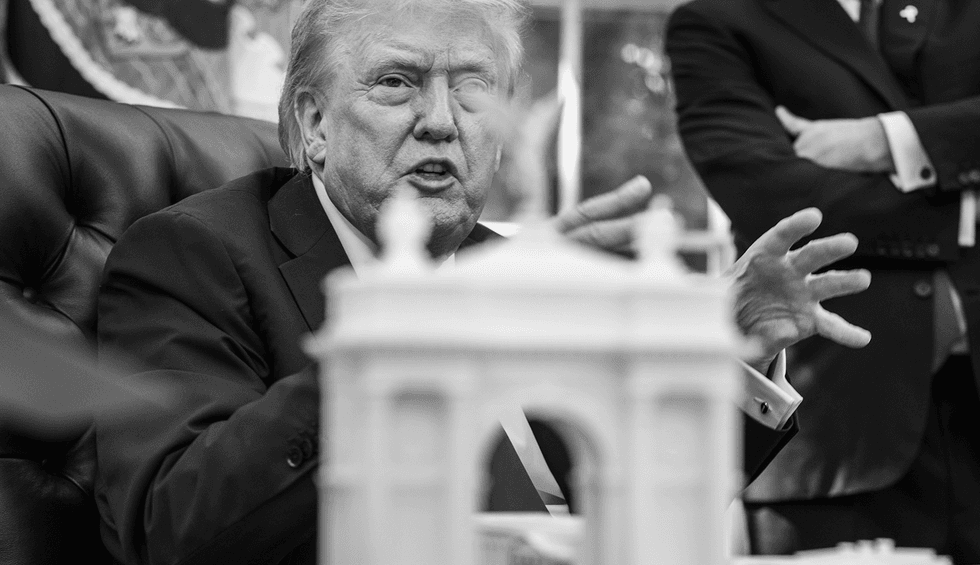
Trump team now wants three massive arches built across Washington, D.C.
President Donald Trump's "triumphal arch" is scheduled to be pitched officially at the Commission of Fine Arts on Thursday, but the project goes beyond that. Trump
Share
Alternet2026/04/16 22:36

Spartans Hits Global Top 14 During Beta Stage, While XRP Rallies on Rakuten News & Tron Maintains Network Strength
The post Spartans Hits Global Top 14 During Beta Stage, While XRP Rallies on Rakuten News & Tron Maintains Network Strength appeared on BitcoinEthereumNews.com.
Share
BitcoinEthereumNews2026/04/16 22:23



