

Russia Pushes Bill to Criminalize Unregistered Crypto Services
Russia’s lower house of parliament received a draft law aimed at tightening criminal accountability for crypto services operating without regulatory approval. The legislation would attach criminal liability to entities that organize digital currency circulation without a Bank of Russia license, signaling a tougher stance as Moscow moves to regulate the sector ahead of broader digital-asset rules.
Under the draft, individuals who provide crypto-related services without registration with the central bank could face fines of up to 4,000 USD and up to four years in prison. More severe penalties would apply to organized groups or cases involving large-scale damage or illicit gains. The bill envisions compulsory labor for up to five years or imprisonment for as long as seven years when the act is committed by an organized group or causes significant harm. A separate provision would allow fines of up to 1 million rubles (approximately 13,100 USD) or profit-linked penalties for up to five years, depending on the circumstances.
Key takeaways
- The draft law would criminalize unregistered crypto-asset services, expanding the regulatory net beyond existing licensing regimes.
- Penalties scale with the nature of the violation—from individuals facing modest fines and potential prison time to harsher outcomes for organized groups or large-scale wrongdoing.
- The move aligns with Russia’s broader push to regulate digital currencies, but comes while a broader “Digital Currency and Digital Rights” framework is still being formalized and set to take effect in July.
- Russia’s Supreme Court has questioned the necessity of criminal penalties in the absence of the accompanying digital-currency law, calling the measure premature.
- In parallel, Russia faces high-profile crypto-security incidents, such as the Grinex exchange hack, underscoring the real-world risks for traders and exchanges as oversight tightens.
- Earlier in March, a package of crypto regulation proposals included penalties for illegal miners, indicating a multi-pronged regulatory approach that could shape market dynamics going forward.
Regulatory tightening and the licensing regime
The core of the draft law is a licensing regime led by the Bank of Russia. By tying criminal liability to activities that “carry out the organization of digital currency circulation” without a license, lawmakers appear to be moving beyond civil or administrative remedies and into criminal enforcement. The intent, as described in the draft, is to deter unregistered providers and bring a centralized oversight mechanism to what Moscow views as a growing sector with potential for misuse.
Specifically, individuals operating without registration could be fined as much as 4,000 USD and face up to four years in prison. If the operation involves an organized group or yields particularly large profits or damages, penalties would intensify to compulsory labor for up to five years or imprisonment for up to seven years. In addition, the bill contemplates fines up to 1 million rubles or an income-based penalty for up to five years, depending on the case’s particulars.
The legislation is part of a broader trend in Russia toward formalizing oversight of crypto activities, including licensing requirements and centralized supervision. It follows a March package that proposed criminal penalties for illegal crypto mining, signaling a comprehensive framework that would address both exchange activity and mining under a unified regulatory lens.
Judicial cautions and timing concerns
Even as lawmakers push for stricter enforcement, Russia’s Supreme Court has voiced concerns about the bill’s approach. In recent remarks reported by RBC, the court suggested that criminal penalties lack a “reasoned justification” and argued that the measure could be premature before the full regulatory architecture is in place. The court noted the forthcoming Digital Currency and Digital Rights law, expected to take effect in July, would set the groundwork for how digital assets are treated in Russia and how enforcement should be structured.
Observers note the tension between urgency on the legislative side and the Court’s call for measured steps that align with a coherent regulatory framework. If the Digital Currency and Digital Rights law does pass and comes into force on schedule, it could provide the statutory basis for the more punitive powers envisaged in the draft law. Until then, advocates of a cautious, rules-based approach argue that criminal penalties should wait for a clearer legal foundation and for the details of licensing, supervision, and consumer protections to be finalized.
As Russia moves toward more formalized oversight, the debate underscores a key question for the market: what level of risk will participants bear while the regulatory framework remains in flux? For crypto services, the path to compliance may require not only licensing but a broader readiness to meet centralized data-sharing, capital-adequacy, and anti-money-laundering standards that critics say could raise barriers to entry and reshape the competitive landscape.
Grinex hack as a reminder of operational risk
Against the backdrop of regulatory maneuvering, Russia-based exchange Grinex has been dealing with a high-profile security incident. The platform halted trading after reporting losses exceeding 1 billion rubles (roughly 13.7 million USD) in a hack it suspects involved “hostile state” entities. Grinex has since alerted law enforcement and filed a criminal complaint as it works to resolve the incident and safeguard user funds.
The Grinex event highlights the real-world risks that exchanges and users face even as regulators step up scrutiny. Security incidents can complicate compliance efforts by drawing attention from authorities and potentially increasing the appetite for stringent enforcement. The parallel tracks of tightening regulation and cybersecurity stress-testing may influence how quickly market participants seek licensing, improve risk controls, and pursue clearer governance structures.
In the same vein, Russian media coverage and industry reporting have connected these regulatory developments to broader shifts in the country’s crypto landscape. The ongoing discourse reflects a market watching closely for a coherent rulebook that balances innovation with investor protection and national-security considerations.
What to watch next
The most immediate milestones are July’s implementation of the Digital Currency and Digital Rights framework and the legal clarifications that will follow. If the new law enshrines the central-bank licensing regime and criminal penalties for unregistered services, market participants could see a rapid shift toward greater formalization, with more entities seeking compliance measures and registration to avoid potential penalties.
Market observers will also be watching for further clarifications on enforcement practices, including how authorities interpret “organization of digital currency circulation” and what constitutes the threshold for “large-scale” offenses. As the Grinex case unfolds, regulators may use real-world incidents to calibrate enforcement intensity and to demonstrate the practical costs of cyber breaches within a tightly regulated environment.
For investors and builders in Russia’s crypto ecosystem, the current phase signals both caution and opportunity. While the tightening stance could raise compliance costs and limit gray-market activity, it may also foster a more stable regulatory climate that could eventually attract legitimate businesses and institutional participation. The coming weeks will be telling as lawmakers lay out the legislative language and courts weigh the appropriate balance between enforcement and innovation.
This article was originally published as Russia Pushes Bill to Criminalize Unregistered Crypto Services on Crypto Breaking News – your trusted source for crypto news, Bitcoin news, and blockchain updates.


You May Also Like

Caitlyn Jenner’s Memecoin Triumphs in Court Ruling
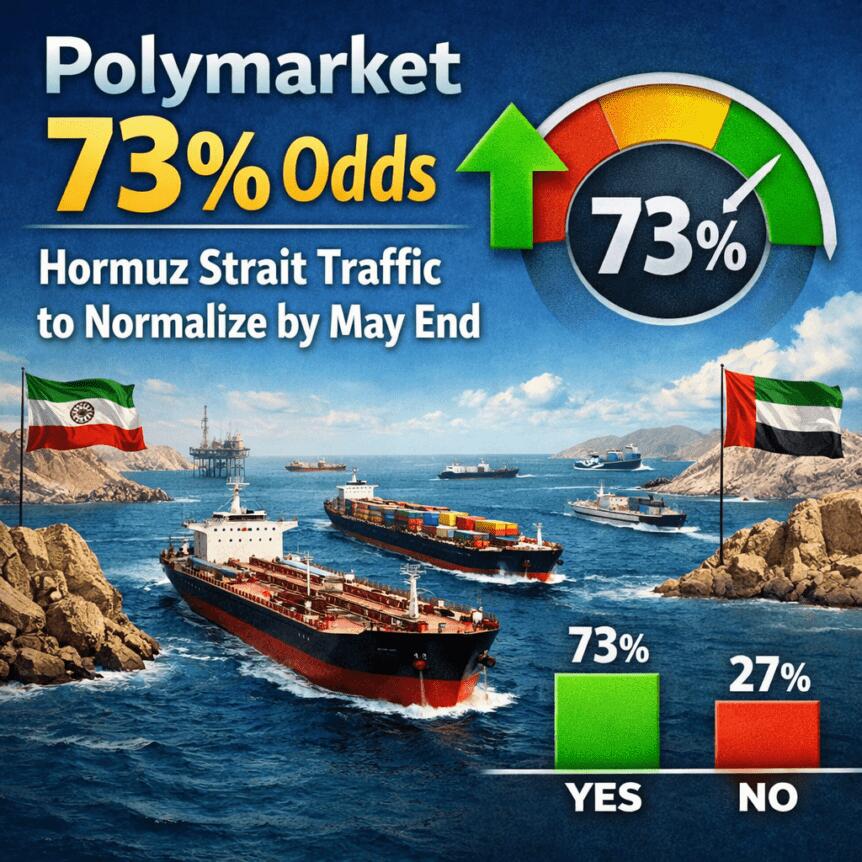
Polymarket 73% odds Hormuz Strait traffic to normalize by May end




