

Dow Jones Futures Plunge as Renewed US-Iran Tensions Spark Market Turmoil
BitcoinWorld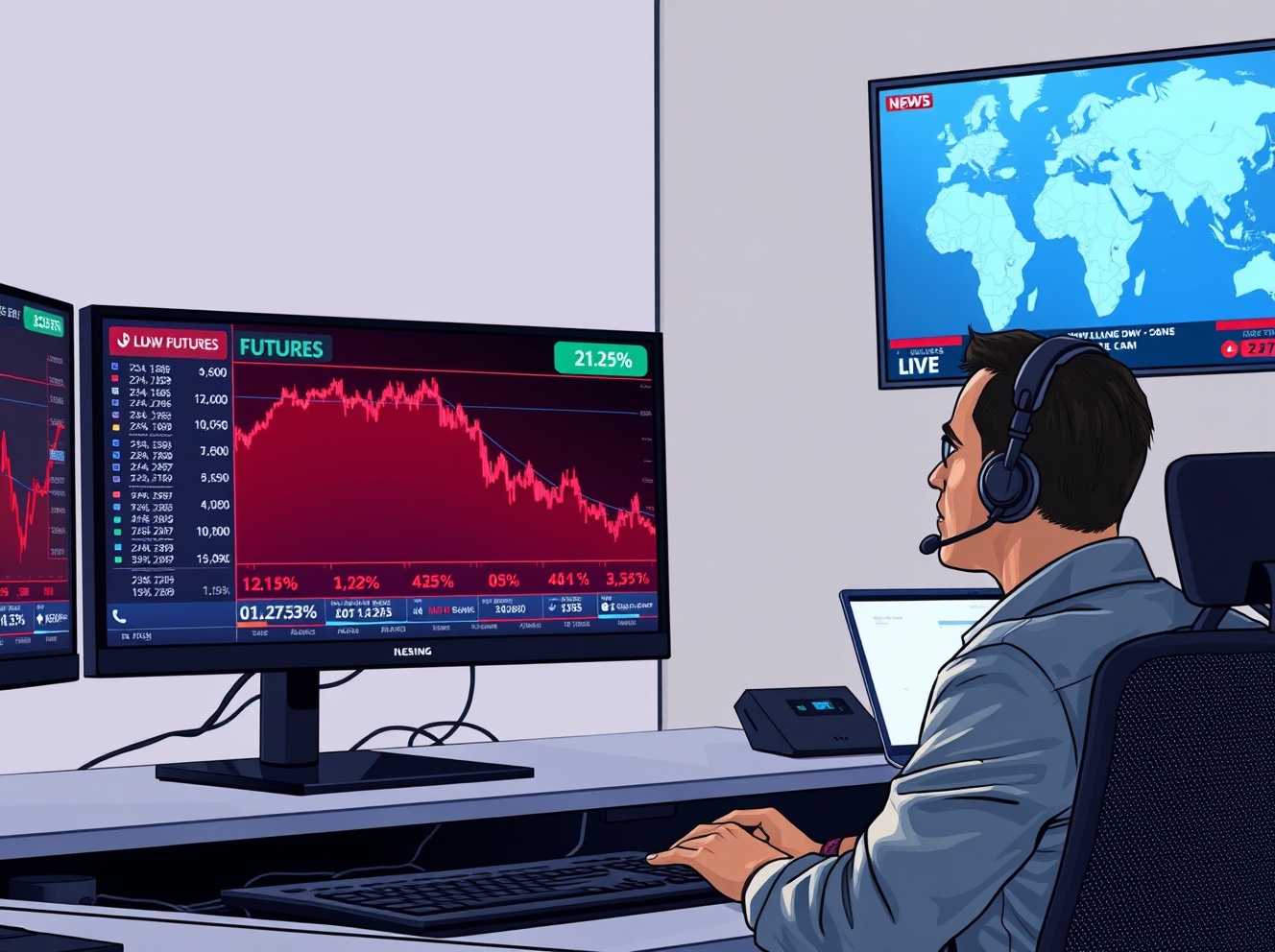
Dow Jones Futures Plunge as Renewed US-Iran Tensions Spark Market Turmoil
NEW YORK, March 2025 – Dow Jones Industrial Average futures fell sharply in overnight trading as renewed geopolitical tensions between the United States and Iran triggered immediate risk-off sentiment across global financial markets. This development follows recent diplomatic escalations in the Middle East region. Consequently, investors rapidly shifted capital toward traditional safe-haven assets. Market analysts now closely monitor the situation for potential broader economic impacts.
Dow Jones Futures React to Geopolitical Developments
Dow Jones futures declined by approximately 1.8% during the Asian trading session. This movement reflected immediate investor concerns about potential supply chain disruptions. Specifically, energy markets showed particular volatility. Brent crude oil futures surged by over 3% simultaneously. Furthermore, gold prices climbed as investors sought stability. The CBOE Volatility Index (VIX) also spiked significantly. This pattern mirrors historical market responses to Middle East tensions. For instance, similar reactions occurred during previous geopolitical incidents.
Market participants typically monitor several key indicators during such events:
- Futures volume and open interest – Unusually high activity suggests sustained concern
- Bond market movements – Treasury yields often fall as capital flows to safety
- Currency fluctuations – The US dollar frequently strengthens during global uncertainty
- Sector-specific impacts – Defense and energy stocks often show counter-cyclical movements
Historical Context of US-Iran Relations and Markets
US-Iran tensions have periodically influenced financial markets for decades. The 1979 Iranian Revolution first demonstrated this connection. More recently, the 2019 drone attacks caused significant oil price spikes. Additionally, the 2020 assassination of Qasem Soleimani triggered temporary market declines. Each event followed a similar pattern of initial shock followed by gradual stabilization. However, current tensions occur within a different macroeconomic environment. Presently, markets already face inflationary pressures and monetary policy uncertainty.
Expert Analysis of Current Market Dynamics
Financial institutions provide measured perspectives on the situation. Morgan Stanley analysts note that “geopolitical premiums in oil prices typically range from $5-$15 per barrel during Middle East crises.” Similarly, Goldman Sachs research indicates that “equity market drawdowns during geopolitical events average 5-7% before recovery.” These institutions base their assessments on decades of market data. Moreover, they consider multiple conflict scenarios and their probabilities. Consequently, they advise diversified portfolio strategies rather than reactive trading.
The following table illustrates recent comparable geopolitical market reactions:
| Event | Date | DJIA Initial Reaction | Recovery Time |
|---|---|---|---|
| Russia-Ukraine Conflict Start | Feb 2022 | -3.5% | 11 trading days |
| US-China Trade War Escalation | Aug 2019 | -2.9% | 7 trading days |
| Previous US-Iran Incident | Jan 2020 | -1.8% | 5 trading days |
Broader Economic Implications and Risk Assessment
Extended geopolitical tensions could affect multiple economic sectors. The transportation industry faces potential fuel cost increases. Similarly, manufacturing may encounter supply chain complications. Furthermore, consumer confidence often declines during international crises. Central banks also monitor these developments carefully. The Federal Reserve considers geopolitical risks in its policy decisions. Currently, the Fed maintains its data-dependent approach. However, sustained market volatility might influence future rate decisions.
International organizations provide additional context. The International Monetary Fund recently noted that “geopolitical fragmentation remains a significant growth risk.” Meanwhile, the World Bank estimates potential GDP impacts from regional conflicts. These assessments help investors understand broader implications. Consequently, institutional investors adjust their risk models accordingly. They typically increase cash positions during uncertainty periods. Additionally, they might hedge existing equity exposures.
Investor Strategies During Geopolitical Uncertainty
Experienced investors employ specific strategies during volatile periods. First, they avoid making emotional trading decisions. Instead, they review their long-term investment plans. Second, they consider rebalancing portfolios toward defensive sectors. Healthcare and consumer staples often demonstrate resilience. Third, they might increase fixed-income allocations temporarily. Treasury bonds traditionally provide stability during crises. Fourth, they maintain international diversification despite global connections.
Financial advisors emphasize several key principles:
- Maintain perspective – Most geopolitical events create temporary volatility
- Focus on fundamentals – Company earnings ultimately drive long-term returns
- Utilize dollar-cost averaging – Regular investments smooth out market timing risks
- Review asset allocation – Ensure alignment with risk tolerance and time horizon
Conclusion
Dow Jones futures movements reflect immediate market reactions to developing US-Iran tensions. Historical patterns suggest that such geopolitical events typically create short-term volatility rather than sustained bear markets. However, investors should monitor the situation for potential escalation. Market participants will watch for diplomatic developments and economic data. Ultimately, maintaining disciplined investment strategies proves most effective during uncertain periods. The Dow Jones futures market will continue serving as an important sentiment indicator.
FAQs
Q1: Why do Dow Jones futures react so quickly to geopolitical news?
Futures markets operate nearly 24 hours, allowing immediate reaction to global developments. They reflect anticipated opening prices for the next trading session, making them sensitive to overnight news.
Q2: How long do geopolitical market impacts typically last?
Most academic studies indicate that pure geopolitical events cause average market declines of 5-7% with recovery within 2-3 weeks, assuming no fundamental economic damage occurs.
Q3: Which sectors usually perform best during Middle East tensions?
Defense, cybersecurity, and energy sectors often see relative strength, while airlines, luxury goods, and discretionary consumer stocks typically underperform due to higher oil prices and reduced spending.
Q4: Should individual investors change their strategies during such events?
Financial advisors generally recommend against major strategy changes unless the event fundamentally alters long-term economic outlooks, emphasizing discipline over market timing.
Q5: How do central banks respond to geopolitical market volatility?
Central banks typically monitor rather than immediately react, as most geopolitical shocks prove temporary. They focus on underlying economic fundamentals unless events significantly impact inflation or growth expectations.
This post Dow Jones Futures Plunge as Renewed US-Iran Tensions Spark Market Turmoil first appeared on BitcoinWorld.


You May Also Like

Gold Spot Volume on Binance Surges to $80M as Demand Extends Beyond Futures

China Nabs Another Huione Group Core Member in Cambodia Extradition




