

UPDATED: Flutterwave reportedly denies $75M federal investment report after presidential aide’s tweet deleted
UPDATE, April 20, 2026: Flutterwave has denied the report that forms the basis of this story. In a statement to Techpoint Africa, the company said the information circulating is inaccurate, including the reported $250 million figure, and that it is not close to an IPO. The tweet from the Special Assistant to President Tinubu on Social Media, which was the primary source for this report, has since been deleted. Neither the Presidency nor MoFI has issued a statement explaining the deletion. Technext has reached out to both for comment and will update this story as responses come in. The original report is preserved below.
President Bola Tinubu has approved a $75 million federal government investment in Flutterwave. That is a position, and a deliberate one.
To understand what this means, you need to track how we got here. Flutterwave invited the Federal Government to invest $75 million as part of a planned $250 million Initial Public Offer on the Nigerian Exchange Limited, with the investment expected to come through the Ministry of Finance Incorporated (MOFI).
At the time, Western Post reports that no concrete agreement had been reached, though Flutterwave had already secured institutional investors, some represented on its board, with new external investors also showing interest.
The government was not rushing. The Federal Government engaged two of the four biggest global accounting and auditing firms to conduct a comprehensive review of Flutterwave’s financial statements and operations, wanting to be certain of the company’s valuation, structure, and long-term viability before committing public funds.
That is due diligence at the highest level, and the pace of it tells you how seriously this was taken inside the Presidency.
Now the approval has reportedly come through. And the context around it is thick.
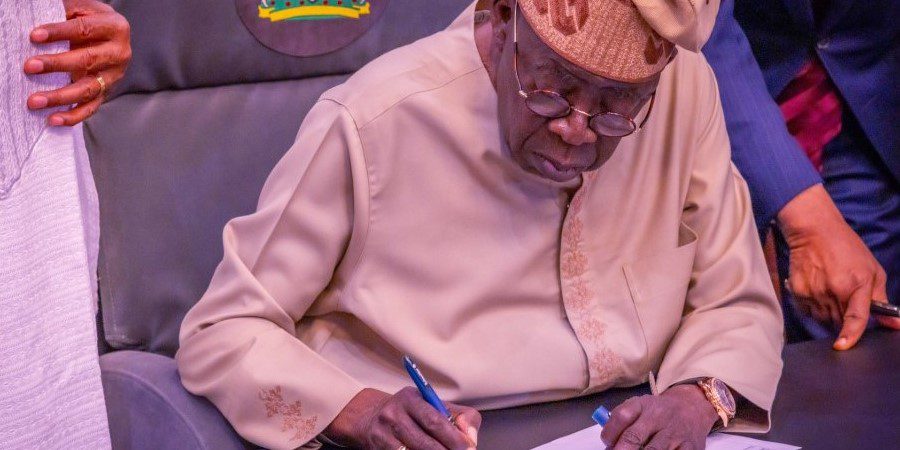 President Bola Tinubu
Flutterwave’s journey to IPO
Flutterwave secured regulatory approval from the Central Bank of Nigeria to operate banking services in Nigeria just this month, a development that came as the company disclosed it had processed more than $40 billion in payments across its platform in ten years of operations.
Weeks before that, the company acquired Mono in an all-stock deal valued between $25 million and $40 million, strengthening its capabilities in data, identity, and open banking.
Then, in late March, Flutterwave CEO Olugbenga Agboola joined President Tinubu in London as part of a Nigerian private sector delegation marking the country’s first state visit to the United Kingdom in 37 years.
 The Flutterwave team
The sequencing is deliberate. Banking licence. Mono acquisition. UK state visit. Presidential approval of a $75 million federal stake. This is a company executing a specific pre-IPO playbook, and the government has now formally entered the cap table.
What does $75 million out of a $250 million raise actually mean in practice?
The federal government would hold 30% of the IPO tranche. That is anchor investor territory. That kind of participation does two things:
Signals to every other investor that the sovereign has vetted and endorsed the offering, and ties the state's financial interest directly to Flutterwave's performance on the NGX after listing.
That second part deserves more attention than people are giving it. MoFI has been playing a central role in structuring this transaction, with the Presidential Villa meeting described as a crucial step in cementing that relationship.
MoFI entering Flutterwave as an equity investor carries accountability in both directions. If the listing performs well, the government participates in the upside. If it underperforms, public funds take the loss. The President’s approval transforms what was once a lobbying conversation into a financial commitment with consequences.
There is also the optics dimension to consider. Flutterwave has had a complicated few years. Regulatory friction in Kenya. Internal governance questions. A fraud lawsuit filed in the United States that attracted significant press attention across the continent. The fact that the Tinubu administration went through a formal audit process with two top-tier global firms before committing, and still landed on yes, carries a message of its own. The government is satisfied with what it found.
Questions remain open as this deal moves toward close. At what valuation is the $250 million raise being priced? Which firms conducted the financial review, and whether any findings shaped the terms?
What governance rights, if any, does MoFI receive as a shareholder? And what is the concrete timeline for the NGX listing itself?
This is significant news, coming from the President’s official Social Media SA account.
Confirmation from MoFI or Aso Rock directly would sharpen the story further, but the direction is that the federal government is betting public money on Flutterwave’s NGX debut.


You May Also Like
Solana Price at Risk as Key Network Metrics Wane and ETF Inflows Lag

VanEck Flags Semiconductor Stocks as Key AI Infrastructure Plays for 2026




