Crude Oil Retreats as Iran Hints at Potential US Naval Blockade Resolution
TLDR
- Crude benchmarks declined up to 2% following Iranian signals of potential diplomatic engagement if Washington ends its naval restrictions
- President Trump made the Iran ceasefire open-ended while maintaining naval enforcement operations
- The critical Strait of Hormuz shipping lane stays blocked, disrupting approximately 20% of worldwide petroleum flows
- American petroleum stockpiles decreased by 4.4 million barrels in the latest week, exceeding analyst forecasts significantly
- Diplomatic efforts collapsed when neither Washington nor Tehran sent representatives to scheduled Pakistan meetings
Crude oil benchmarks tumbled Wednesday following Tehran’s indication that it detected encouraging signals from Washington regarding a potential end to the naval restrictions at the Strait of Hormuz. The news emerged as energy markets attempted to interpret conflicting messaging from both capitals.
Brent crude futures declined by as much as 2% to approximately $97 per barrel. The US West Texas Intermediate benchmark dropped roughly 1.2% to settle at $84.95. The pullback follows nearly 9% gains recorded across the prior two trading sessions for both contracts.
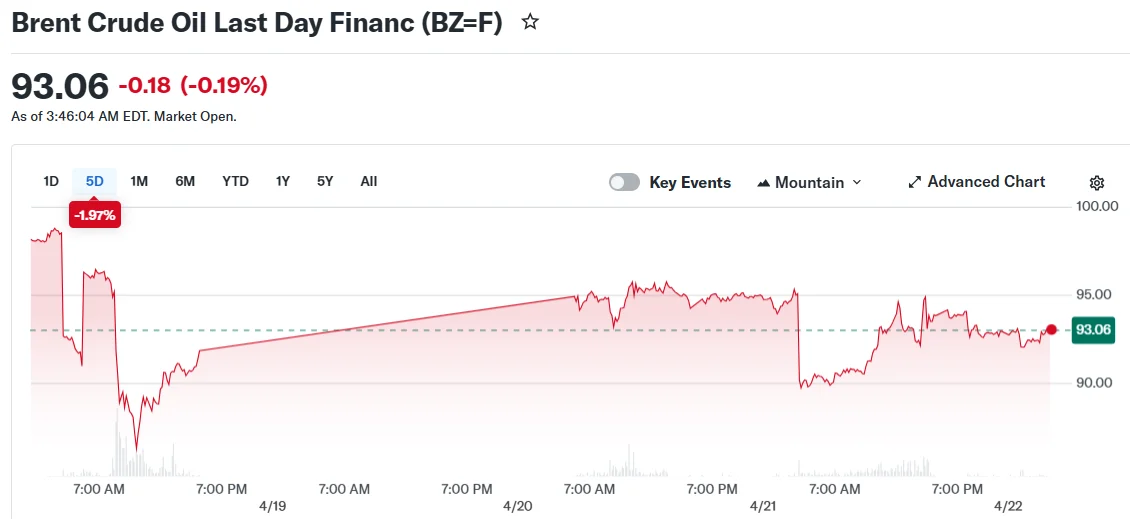 Brent Crude Oil Last Day Financ (BZ=F)
Amir-Saeid Iravani, Iran’s United Nations representative, informed journalists that Tehran would be prepared to participate in Islamabad-based negotiations should Washington withdraw its naval enforcement. He emphasized Iran’s willingness to pursue diplomatic resolution through dialogue.
President Trump announced an indefinite extension to the ceasefire arrangement with Tehran on Tuesday. However, he maintained the naval blockade measures, stating that military operations would pause while communications proceed through various channels.
The Strategic Importance of the Hormuz Passage
Under normal circumstances, the Strait of Hormuz facilitates the transit of roughly one-fifth of the world’s crude petroleum. Since Iran implemented effective closure measures in late February, energy prices have climbed sharply. American pump prices have surged approximately 40% since hostilities commenced.
Oil market turbulence has reached levels unseen since the 2020 Covid-19 pandemic disrupted global consumption. Market participants have reacted to each development, yet actual supply availability remains severely limited.
Tehran has maintained its position that the strait will stay closed as long as US Naval forces continue intercepting commercial vessels. Washington confirmed boarding a sanctioned petroleum tanker Tuesday and has redirected a combined 28 ships since enforcement operations commenced.
Despite the restrictions, at least two fully loaded Iranian tankers successfully navigated past American warships this week, delivering an estimated 9 million barrels to international markets.
Diplomatic Initiatives Collapse
Scheduled negotiations in Pakistan disintegrated this week when both nations declined participation. US Vice President JD Vance scrapped his planned Islamabad visit, while Iranian sources indicated Tehran informed Washington it would not dispatch representatives.
Treasury Secretary Scott Bessent announced continued application of “maximum pressure” tactics against Iran, including efforts to restrict petroleum exports through Kharg Island, Tehran’s primary crude shipping facility.
The majority of Iranian crude supplies flow to independent Chinese refineries, which face reduced exposure to Western sanctions. Beijing has publicly criticized the American sanction regime.
American petroleum reserves contracted by 4.4 million barrels during the week concluding April 17, according to American Petroleum Institute figures, substantially exceeding the anticipated 1 million barrel reduction.
The post Crude Oil Retreats as Iran Hints at Potential US Naval Blockade Resolution appeared first on Blockonomi.


You May Also Like
Strait of Hormuz Crisis: Macron’s Stark Warning Against Military Action

Fed Governor Calls For Strong Stablecoin Oversight As CLARITY Act’s Final Text Gets Delayed