

European Gas Markets Rally Amid Ongoing Strait of Hormuz Tensions
TLDR
- TTF hub natural gas prices in Europe climbed up to 2.4% during Wednesday’s trading session
- President Trump prolonged the Iran ceasefire agreement while maintaining the Strait of Hormuz naval blockade
- Two vessels were captured by Iran’s Revolutionary Guards in waters adjacent to the Strait of Hormuz
- Approximately 20% of global LNG shipments transit through Hormuz, which continues to be essentially shut down
- European nations confront challenging summer months attempting to replenish natural gas reserves amid competition with Asian markets for alternative sources
European natural gas markets experienced significant fluctuations on Wednesday, ultimately closing in positive territory as market participants monitored Middle Eastern geopolitical developments with heightened attention.
Front-month Dutch futures traded at the TTF hub climbed as high as 2.4% to reach €42.94 per megawatt-hour during mid-morning trading hours in Amsterdam. These contracts had previously registered gains exceeding 8% across the preceding two trading days.
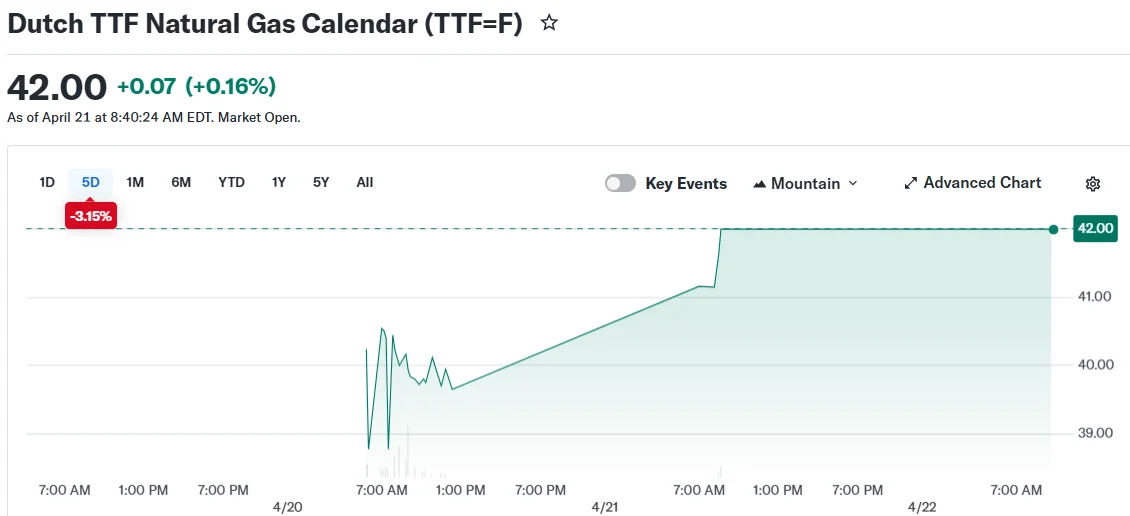 Dutch TTF Natural Gas Calendar (TTF=F)
The upward price momentum followed President Donald Trump’s confirmation that he would extend the ceasefire agreement with Iran, announced moments before the original deadline expired. This declaration arrived after anticipated diplomatic negotiations between both nations failed to materialize.
Trump indicated the United States would postpone additional military strikes against Iran. However, he emphasized that the naval blockade surrounding the Strait of Hormuz would continue operating until negotiations are “concluded, one way or the other.”
A spokesperson from Iran’s foreign ministry acknowledged the ceasefire extension through statements broadcast on Iranian state television, as reported by the Associated Press.
The situation near the strait intensified following an operation by Iran’s paramilitary Islamic Revolutionary Guards Corps, which attacked and captured two ships operating close to the strategic waterway. According to a U.K. maritime monitoring organization, one vessel was identified as a container ship.
Why the Strait of Hormuz Matters for Gas Prices
The Strait of Hormuz represents a critical narrow passage located along Iran’s southern coastline. Under normal circumstances, approximately one-fifth of global world’s oil and liquefied natural gas shipments traverse this waterway.
Tanker traffic through the strait has been virtually halted since the commencement of the U.S.-Israeli military operations against Iran in late February.
Europe’s Storage Problem
Europe is currently transitioning into the summer season when the continent traditionally replenishes natural gas storage facilities in preparation for winter demand. With Hormuz effectively closed, European nations must now compete directly with Asian purchasers for supplies originating from alternative locations.
The continent has simultaneously been managing disruptions to natural gas production infrastructure throughout the Middle East, especially facilities located in Qatar.
Current benchmark pricing levels persist above pre-conflict ranges, despite retreating from the elevated peaks recorded during the previous month.
Wednesday’s seizure of two vessels near Hormuz by Iran’s Revolutionary Guards marked the most recent incident in an ongoing series of attacks targeting ships in the region throughout the weekend, which had already escalated tensions surrounding the waterway.
The post European Gas Markets Rally Amid Ongoing Strait of Hormuz Tensions appeared first on Blockonomi.


You May Also Like

Tom Lee and BitMine’s Latest Ethereum Purchase Faces Community Backlash

KuCoin Launches KuCard on Mastercard in Australia




