

Must Read
A DAY AFTER. Toboso Mayor Richard Jaojoco (white shirt) meets police and military officials a day after a clash in Sitio Sinugnawan, Barangay Salamanca, in hisA DAY AFTER. Toboso Mayor Richard Jaojoco (white shirt) meets police and military officials a day after a clash in Sitio Sinugnawan, Barangay Salamanca, in his
[OPINION] After the Toboso encounters: The discourse this nation needs
For feedback or concerns regarding this content, please contact us at crypto.news@mexc.com
I was reading Maya and Carlo Butalid’s Unmasking the Myths of the CPP and its Leader Joma Sison when reports began to spread about a series of encounters in Toboso, Negros Occidental, between the Philippine Army and communist forces. Nineteen people were said to have died — most of them young, some barely out of college. Five others, reportedly wounded, were later intercepted and arrested in Talisay, Negros Occidental.
It is difficult not to see these deaths as more than statistics. Hindi ba sayang ang mga buhay na iyon? These were lives shaped, persuaded, and ultimately spent in a conflict that continues to reproduce the same tragic outcomes.
One has to ask: to what end are these young people being drawn into armed struggle, only to be cut down before they can even fully live? What possibilities were foreclosed — not just for them, but for the communities they might have served in ways that did not demand their deaths?
No one can easily dismiss the sincerity of many of these young people in their desire to build a more humane and equitable society — one free from poverty and injustice. There is, after all, some truth in Communist Party of the Philippines (CPP) information officer Marco Valbuena’s claim that people in Toboso “regard the NPA (New People’s Army) fighters as their own sons and daughters, who render selfless service as doctors, dentists, farmhands, and teachers to their children.”
And yet sincerity, no matter how genuine, does not make a path just — or even defensible — when it repeatedly ends in the same cycle of loss.
San Carlos Bishop Gerardo Alminaza is right: the clash in Toboso should not be reduced to a body count. “It must become a wake-up call,” he said. “The conversation must return to root causes, not focus solely on armed actors. Peace processes must be inclusive, not reduced to military solutions.”
But that call cuts both ways. If the state cannot rely on force alone, neither can a revolutionary movement justify a strategy that continues to draw in the young, only to see them die before their lives can fully unfold.
I understand the pull.
Why offer them that path?
I was 15, a second-year high school student in the 1970s, at the height of the Marcos dictatorship, when I found myself drawn to the CPP-NPA. The conditions then made such choices feel not only reasonable, but necessary. It took me another 15 years to confront what I came to see as the futility of armed struggle, and to turn instead to other forms of advancing social change.
I was not “terror-groomed,” as some would simplistically claim of young people who take up the cause. There is a line between manipulation and critical awakening. I was fortunate to have teachers and mentors who taught me to think deeply about society and injustice.
I remember visiting Smokey Mountain, the dumpsite in Tondo, Manila and seeing how families lived — how we had to set up a mosquito net, light a candle inside it, and only then open our food, because flies would otherwise swarm the plates. Encounters like that do something to you. If you are not moved to want to change those conditions, then something in your sense of humanity is missing.
The question, then, is not why young people are drawn to struggle. The question is why we continue to offer them a path that so often demands their lives, instead of one that allows them to live — and still fight for justice.
As Maya and Carlo Butalid argue in their book, “It is not true that Protracted People’s War is the only way to enact revolutionary change in the Philippines. There are alternative paths.”
The real failure is not the absence of options, but our refusal to confront them. These alternative paths to deep, structural change — grounded in democratic struggle, social movements, and accountable institutions — are too often pushed to the margins, while violence continues to dominate both imagination and policy.
This is what should be at the center of national discourse: not the shallow, personality-driven contest of who is worse or better — Marcos or Duterte — but a serious reckoning with how meaningful change can be pursued without sacrificing yet another generation. – Rappler.com
Earl Parreño is a political activist, a social entrepreneur, and author helping drive reforms and deepen public participation in democratic processes.
Market Opportunity
Whiterock Price(WHITE)
$0.00016904
$0.00016904$0.00016904
USD
Whiterock (WHITE) Live Price Chart


Disclaimer: The articles reposted on this site are sourced from public platforms and are provided for informational purposes only. They do not necessarily reflect the views of MEXC. All rights remain with the original authors. If you believe any content infringes on third-party rights, please contact crypto.news@mexc.com for removal. MEXC makes no guarantees regarding the accuracy, completeness, or timeliness of the content and is not responsible for any actions taken based on the information provided. The content does not constitute financial, legal, or other professional advice, nor should it be considered a recommendation or endorsement by MEXC.
You May Also Like

ETH Enters High-Stakes Decision Zone
The post ETH Enters High-Stakes Decision Zone appeared on BitcoinEthereumNews.com. Ethereum is testing an important area after its recent rebound, while two separate
Share
BitcoinEthereumNews2026/04/02 18:27
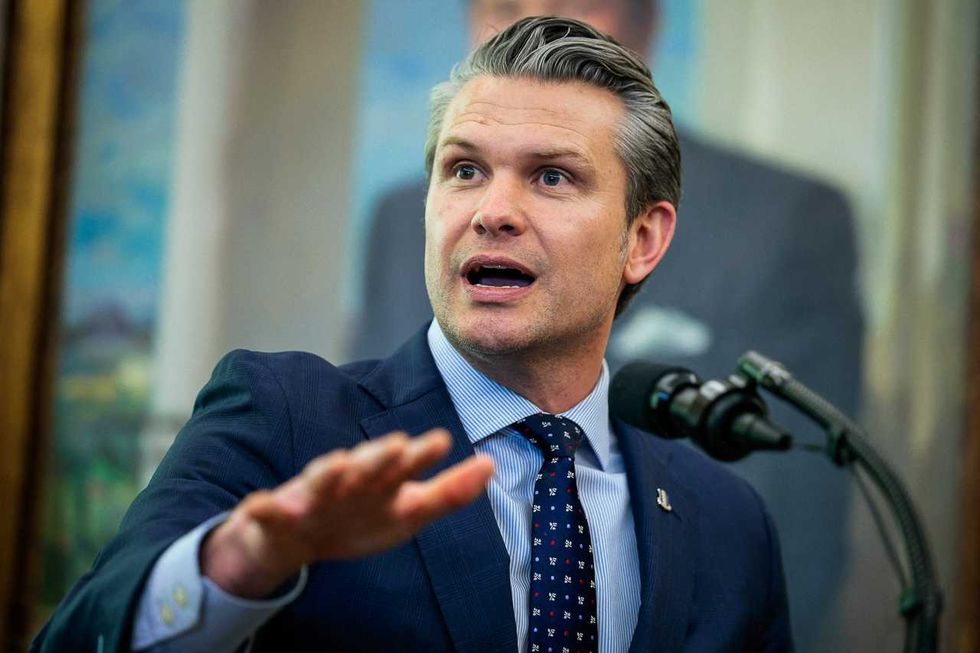
Stunned Navy secretary went to Trump disbelieving he'd actually been fired: report
The former Trump-appointed Navy Secretary who suddenly departed amid a naval blockade in Iran didn't believe Pentagon chief Pete Hegseth when he was told to leave
Share
Rawstory2026/04/24 04:42

Vivopower (VIVO) Stock: Surges 16% After Launching RFP for Mo i Rana AI Data Hub in Norway
TLDR VivoPower jumps 16.72% as Mo i Rana data center RFP attracts demand VIVO rallies to $3.49 after launching AI data center tenant process Strong demand drives
Share
Coincentral2026/04/24 04:22



