

Goldman Sachs Slashes USD/BRL Forecast on Surging Trade and Carry Strength
BitcoinWorld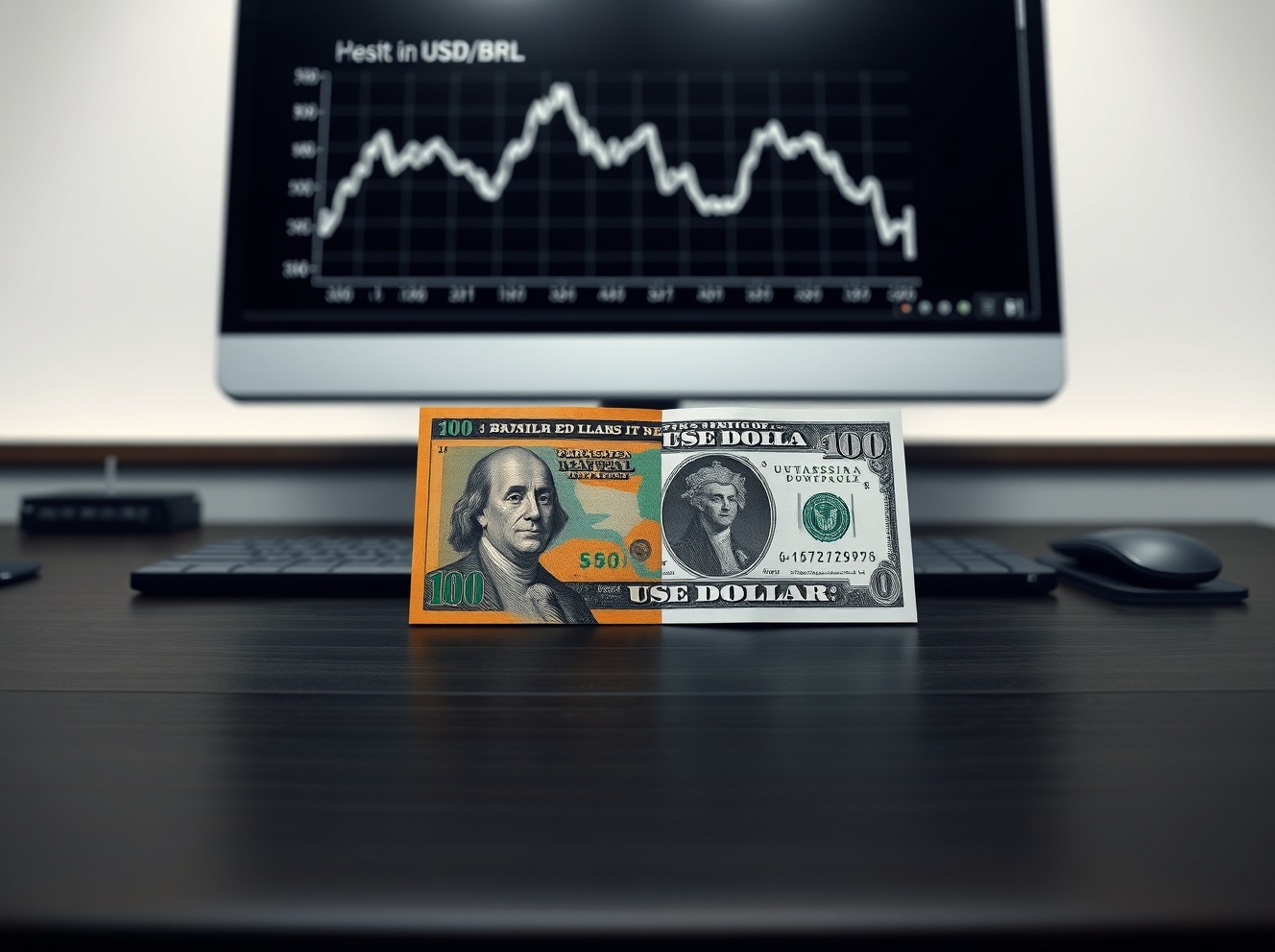
Goldman Sachs Slashes USD/BRL Forecast on Surging Trade and Carry Strength
Goldman Sachs has significantly revised its USD/BRL forecast downward, citing robust trade flows and strong carry trade dynamics. The investment bank now expects the Brazilian real to strengthen further against the US dollar, a move that signals growing confidence in Brazil’s economic fundamentals and external accounts. This adjustment comes as global investors seek higher yields in emerging markets, with Brazil’s currency benefiting from a favorable interest rate differential and a resilient trade surplus.
Goldman Sachs Lowers USD/BRL Forecast: Key Drivers
The revised USD/BRL forecast from Goldman Sachs reflects several converging factors. First, Brazil’s trade surplus has widened considerably, driven by strong commodity exports. Soybeans, iron ore, and crude oil shipments have surged, boosting dollar inflows into the economy. Second, the carry trade—borrowing in low-yielding currencies like the yen or dollar to invest in high-yielding Brazilian real-denominated assets—has become increasingly attractive. Brazil’s Selic rate remains elevated, offering one of the highest real interest rates globally. This combination of trade surplus and carry appeal has created a powerful tailwind for the real.
Goldman Sachs economists note that the previous forecast underestimated the resilience of Brazil’s external sector. The bank now projects the USD/BRL exchange rate to trade in a lower range over the coming months. This adjustment aligns with broader trends in emerging market currencies, which have rallied on the back of a weaker US dollar and improved risk appetite. The Brazilian real has outperformed many peers, including the Mexican peso and South African rand, due to its unique trade and interest rate advantages.
Trade Strength Underpins the Brazilian Real
Brazil’s trade performance has been a standout in the global economy. In 2024, the country recorded a record trade surplus of over $100 billion. Exports to China, the European Union, and the United States have all increased. Agricultural exports, particularly soybeans and corn, have benefited from strong global demand and favorable weather conditions. Meanwhile, mining exports, led by Vale’s iron ore operations, have maintained steady volumes. This consistent dollar inflow reduces pressure on the real and allows the central bank to maintain a relatively hands-off approach to currency intervention.
Furthermore, Brazil’s terms of trade have improved. The prices of key export commodities remain elevated compared to historical averages. This has boosted national income and supported fiscal revenues. The government’s commitment to fiscal discipline, though occasionally questioned by markets, has also helped maintain investor confidence. The combination of a strong trade balance and credible monetary policy has made the real a preferred currency for carry trades.
Carry Trade Dynamics Favor the Real
The carry trade is a central pillar of the revised USD/BRL forecast. Investors borrow in currencies with low interest rates, such as the Japanese yen or Swiss franc, and invest in Brazilian real-denominated bonds. The yield differential between Brazilian government bonds (currently yielding around 11-12%) and US Treasuries (around 4-5%) is substantial. This spread provides a lucrative return for foreign investors, especially when the real remains stable or appreciates. Goldman Sachs highlights that the volatility of the real has decreased, making carry trades less risky. This stability attracts more capital inflows, creating a self-reinforcing cycle of currency strength.
However, carry trades are not without risks. A sudden shift in global risk sentiment, such as a geopolitical crisis or a sharp rise in US interest rates, could trigger a rapid unwinding of these positions. Goldman Sachs acknowledges this risk but believes the current environment is supportive. The bank’s base case assumes that the Federal Reserve will begin cutting rates later this year, which would further weaken the dollar and boost emerging market currencies. This scenario would likely push the USD/BRL even lower than the current forecast.
Impact on Brazilian Economy and Markets
A stronger real has mixed implications for the Brazilian economy. On the positive side, it reduces the cost of imported goods, including machinery, electronics, and fuel. This helps to contain inflation, which has been a persistent concern for the central bank. Lower inflation could allow the Selic rate to be cut sooner than expected, stimulating domestic demand. Additionally, a stronger currency reduces the burden of dollar-denominated debt for Brazilian companies, improving their balance sheets.
On the negative side, a stronger real can hurt export competitiveness. Brazilian manufacturers and agricultural producers may find it harder to compete in global markets if the currency appreciates too quickly. This could lead to job losses in export-oriented sectors. The government must balance these competing interests. The central bank has historically intervened in the foreign exchange market to smooth excessive volatility, but it has not signaled any intention to cap the real’s appreciation. The bank’s primary mandate is inflation control, and a stronger currency supports that goal.
Expert Perspectives on the Forecast
Market analysts have broadly welcomed Goldman Sachs’ revised USD/BRL forecast. Many had already been positioning for real strength. A senior currency strategist at a rival bank noted that the revision aligns with their own models, which incorporate trade flows and interest rate differentials. Another analyst pointed out that Brazil’s political stability, despite some fiscal concerns, has improved compared to previous years. The Lula administration has maintained a pragmatic economic team, which has reassured foreign investors.
However, some experts urge caution. The real’s rally has been significant, and valuations are no longer cheap. The currency has appreciated over 15% against the dollar in the past year. Some of this strength may already be priced in. Additionally, external risks remain. A slowdown in China, Brazil’s largest trading partner, could reduce export revenues. A global recession could also dampen demand for commodities. Goldman Sachs acknowledges these risks but believes the trade and carry dynamics are strong enough to outweigh them.
Historical Context and Timeline
The USD/BRL exchange rate has experienced significant volatility over the past decade. In 2020, during the peak of the COVID-19 pandemic, the real weakened to over 5.80 per dollar. Since then, it has gradually strengthened, supported by high interest rates and a commodity boom. The central bank’s aggressive rate hikes in 2021 and 2022, which lifted the Selic to 13.75%, were a key turning point. These high rates attracted foreign capital and stabilized the currency. In 2023, as inflation began to moderate, the bank started a cautious easing cycle, but rates remain elevated by global standards.
The timeline of Goldman Sachs’ forecast revisions is instructive. In early 2024, the bank had a more neutral view on the real. By mid-2024, as trade data improved, it upgraded its outlook. The current revision represents a further significant shift. The bank now expects the USD/BRL to trade in a range of 4.70 to 4.90 over the next 12 months, down from a previous forecast of 5.10 to 5.30. This implies an appreciation of approximately 5-10% from current levels.
Comparison with Other Emerging Market Currencies
To contextualize the USD/BRL forecast, it is useful to compare the real with other emerging market currencies. The table below summarizes key metrics:
| Currency | 12-Month Forecast Change | Carry Yield (vs USD) | Trade Balance Impact |
|---|---|---|---|
| Brazilian Real (BRL) | +5% to +10% (appreciation) | High (~6-7%) | Strong positive |
| Mexican Peso (MXN) | +2% to +5% (appreciation) | Moderate (~4-5%) | Moderate positive |
| South African Rand (ZAR) | -2% to +2% (stable) | Moderate (~3-4%) | Weak positive |
| Indian Rupee (INR) | -1% to +1% (stable) | Low (~2-3%) | Negative (trade deficit) |
The real stands out for its high carry yield and strong trade balance. This combination is rare among major emerging markets. The Mexican peso also benefits from nearshoring flows, but its trade surplus is smaller. The South African rand is weighed down by structural economic challenges. The Indian rupee faces persistent trade deficits. Therefore, the real’s outperformance is justified by fundamentals.
Implications for Global Investors
For global investors, the revised USD/BRL forecast presents both opportunities and risks. On the opportunity side, the real offers an attractive carry trade. Investors can earn high yields while potentially benefiting from currency appreciation. This makes Brazilian fixed-income assets, such as government bonds and inflation-linked securities, appealing. Equity investors may also benefit, as a stronger real boosts the returns of dollar-based investors in Brazilian stocks. The Bovespa index, which includes many commodity exporters, could see further gains.
On the risk side, the trade is crowded. Many investors have already piled into Brazilian assets. A sudden shift in sentiment could lead to a sharp reversal. Political risks also remain. The government’s fiscal stance, including spending on social programs, could undermine confidence. The 2026 presidential election could introduce policy uncertainty. Goldman Sachs advises investors to hedge their positions or maintain a diversified portfolio. The bank recommends using options to protect against downside risks.
Conclusion
Goldman Sachs’ decision to lower its USD/BRL forecast reflects a comprehensive assessment of Brazil’s economic strengths. The country’s robust trade surplus and attractive carry trade dynamics provide a solid foundation for the real’s appreciation. While risks remain, including global economic headwinds and domestic political factors, the overall outlook is positive. The USD/BRL forecast revision underscores the importance of trade and interest rate differentials in currency markets. Investors should monitor these factors closely as they navigate the evolving landscape. The Brazilian real is likely to remain a key player in emerging market forex strategies.
FAQs
Q1: Why did Goldman Sachs lower its USD/BRL forecast?
Goldman Sachs lowered its USD/BRL forecast due to strong Brazilian trade flows and attractive carry trade dynamics. The bank expects the real to appreciate further against the dollar.
Q2: What is a carry trade in forex?
A carry trade involves borrowing a currency with a low interest rate to invest in a currency with a higher interest rate. In the case of USD/BRL, investors borrow dollars or yen and buy Brazilian real-denominated assets to profit from the yield differential.
Q3: How does Brazil’s trade surplus affect the real?
A trade surplus means Brazil exports more than it imports, generating a net inflow of dollars. This increases demand for the real, strengthening its value against the dollar.
Q4: What are the risks to the USD/BRL forecast?
Key risks include a global economic slowdown, a sharp rise in US interest rates, political instability in Brazil, or a sudden reversal in risk appetite that could trigger a sell-off in emerging market currencies.
Q5: How can investors benefit from a stronger real?
Investors can benefit by holding Brazilian fixed-income assets, such as government bonds, or by investing in Brazilian equities. Currency appreciation amplifies returns for dollar-based investors.
Q6: Is the Brazilian real expected to continue strengthening?
According to Goldman Sachs, the real is expected to appreciate further over the next 12 months, driven by trade and carry dynamics. However, the pace of appreciation may moderate as valuations become less cheap.
This post Goldman Sachs Slashes USD/BRL Forecast on Surging Trade and Carry Strength first appeared on BitcoinWorld.


You May Also Like
How Will XRP Price React After the FOMC Meeting Today?

RAVE drops 12% amid capital outflows, even as bullish positioning holds




