BitcoinWorld AI in Sports: The Controversial Experiment of the Oakland Ballers’ AI Manager In the rapidly evolving landscape of technology, the boundaries of innovation are constantly being pushed. For those immersed in the world of cryptocurrency and blockchain, the concept of decentralized decision-making and experimental technology is familiar territory. So, when an independent baseball team decided to let an AI manage a game, it naturally sparked a fascinating conversation. This bold move by the Oakland Ballers wasn’t just about baseball; it was a profound experiment in AI in sports, echoing the spirit of disruption and questioning traditional structures that resonates deeply within the tech community. The Mathematical Heart of Baseball and the Rise of AI in Sports Baseball, often called America’s pastime, is more than just a game of skill and athleticism; it’s a deeply mathematical sport. Every pitch, every swing, every defensive shift can be broken down into granular statistics. Major League teams employ legions of data engineers to crunch numbers, seeking minute advantages that can influence managerial decisions. This data-driven approach, while effective, sometimes leads to an almost absurd level of overanalysis, reminiscent of Mr. Burns in that classic Simpsons episode, who famously pulled an eight-time all-star for Homer Simpson based on ‘playing the percentages.’ This deep analytical foundation makes baseball a prime candidate for technological experimentation, especially with artificial intelligence. The integration of AI in sports isn’t just a futuristic fantasy; it’s becoming a tangible reality, promising to optimize strategies, enhance player performance analysis, and even redefine the role of human coaches. From predictive analytics for player injuries to real-time strategic adjustments, AI offers a new lens through which to view and manage athletic competition. The Oakland Ballers, with their independent spirit, decided to take this concept further than most, venturing into uncharted territory. The Oakland Ballers’ Bold Experiment with Baseball AI The story of the Oakland Ballers is one of resilience and innovation. Founded by edtech entrepreneur Paul Freedman, the Ballers emerged as a beacon of hope for Oakland baseball fans after the painful departure of the Major League A’s. Though a minor league team, the ‘Oakland B’s’ quickly garnered a national following, winning a title in just two seasons. This unique position—a major league team in a minor league market—gave them the freedom to experiment in ways larger leagues couldn’t. Freedman explained to Bitcoin World, "We can play with things and experiment with things way before the MLB or NBA or any of those leagues could do something." This experimental ethos led them to a groundbreaking partnership with Distillery, an AI company, to develop software capable of managing a baseball game in real time. The core of this initiative was to see how a sophisticated Baseball AI could perform under live game conditions. Unlike previous fan-controlled experiments where humorous decisions often trumped strategic ones, this AI initiative aimed for pure data-driven optimization. The implications of such an experiment extend beyond the diamond, touching upon how artificial intelligence might reshape various industries, including those reliant on complex, real-time decision-making. Navigating AI Decision-Making on the Field The choice of baseball for this AI experiment was deliberate. As Freedman noted, "Baseball is the perfect place to do an initial experiment like this, because it is so data-driven, and decisions are made very analytically." The slow pace between pitches allows ample time for an AI system to process data and recommend actions. Distillery trained OpenAI’s ChatGPT on an immense dataset, including over a century of baseball statistics and specific Ballers game data, to mimic the strategic thinking of their human manager, Aaron Miles. The goal wasn’t to replace human ingenuity but to augment it. Freedman clarified, "What the AI did was figure out what our human coach would have done – the ingenuity on strategy and the concepts came from [Miles], and the ability to use the data and recognize patterns… is what the AI did throughout the course of the game." This highlights a critical distinction in the current state of AI decision-making: AI as a powerful tool for optimization, rather than an autonomous replacement for human expertise. During the AI-controlled game, the system performed remarkably, making almost identical decisions to Miles regarding pitching changes, lineup adjustments, and pinch hitters. The only instance where Miles had to intervene was due to a player’s unexpected illness, a scenario outside the AI’s programmed scope. This singular override underscores the enduring necessity of human oversight for unforeseen circumstances and ethical considerations. The manager himself, Aaron Miles, embraced the experiment with good humor, even offering the tablet running the AI for a handshake with the opposing manager, a symbolic gesture of technology meeting tradition. Aspect Human Manager (Aaron Miles) AI Manager (Distillery’s AI) Decision-making Basis Experience, intuition, real-time observation, data analysis Centuries of baseball data, Ballers’ game history, pattern recognition via ChatGPT Key Decisions Made Pitching changes, lineup construction, pinch hitters Identical decisions to Miles for pitching changes, lineup, pinch hitters Override Instances Miles overrode AI once due to player illness Required human override for unexpected player health issue Outcome of Game Smooth execution of managerial strategy Smooth execution, mirroring human decisions The Critical Role of Fan Engagement and Backlash Despite the smooth execution of the AI’s managerial duties, the experiment triggered an unexpected wave of backlash from the Oakland Ballers’ dedicated fanbase. For many, the involvement of companies like OpenAI, which powered Distillery’s AI, felt like a betrayal. Fans expressed concerns that such enterprises prioritize "winning" the AI race over thorough safety testing and ethical deployment. This sentiment was amplified by the recent history of corporate greed that led to the departure of multiple professional sports franchises from Oakland, creating a deep-seated mistrust among locals. Comments like "There goes the Ballers trying to appeal to Bay Area techies instead of baseball fans" highlighted a perceived disconnect. The issue wasn’t just about AI; it was about the broader cultural tension between technological advancement and community values. Fan engagement, crucial for any sports team, proved to be a double-edged sword. While fans had previously embraced novel concepts like fan-controlled games, the AI experiment touched a nerve related to corporate influence and the perceived erosion of authenticity. Paul Freedman acknowledged the unforeseen negative reaction, stating, "It never feels good to have your fans be like, ‘We hate this.’" The Ballers do not intend to repeat this specific AI experiment. However, the experience sparked a vital conversation about the ethical implications and societal acceptance of new technologies. This public discourse, though initially uncomfortable, is essential for navigating the complex future of AI. It underscores that while technology can optimize processes, the human element—emotion, community, and trust—remains paramount. A Look Ahead: Balancing Innovation and Community in the Age of AI The Oakland Ballers’ experiment serves as a compelling case study in the ongoing dialogue surrounding artificial intelligence. It showcased the impressive capabilities of AI in sports for data-driven strategy while simultaneously revealing the critical importance of public perception and fan engagement. The journey of the Oakland Ballers, from a team born out of protest to pioneers in sports technology, reflects a broader societal challenge: how to embrace innovation without alienating the communities it serves. As AI continues to integrate into various aspects of life, including sports and even the financial sector where cryptocurrencies thrive, understanding its practical applications and potential pitfalls becomes increasingly vital. The Ballers’ experience reminds us that while AI can be an incredible tool for optimization, the human touch, ethical considerations, and genuine connection with stakeholders are indispensable. The conversation about AI’s role in our future has just begun, and experiments like these, even with their bumps, are crucial steps in shaping that dialogue responsibly. To learn more about the latest AI in sports trends, explore our article on key developments shaping AI features, institutional adoption, and future applications. This post AI in Sports: The Controversial Experiment of the Oakland Ballers’ AI Manager first appeared on BitcoinWorld.BitcoinWorld AI in Sports: The Controversial Experiment of the Oakland Ballers’ AI Manager In the rapidly evolving landscape of technology, the boundaries of innovation are constantly being pushed. For those immersed in the world of cryptocurrency and blockchain, the concept of decentralized decision-making and experimental technology is familiar territory. So, when an independent baseball team decided to let an AI manage a game, it naturally sparked a fascinating conversation. This bold move by the Oakland Ballers wasn’t just about baseball; it was a profound experiment in AI in sports, echoing the spirit of disruption and questioning traditional structures that resonates deeply within the tech community. The Mathematical Heart of Baseball and the Rise of AI in Sports Baseball, often called America’s pastime, is more than just a game of skill and athleticism; it’s a deeply mathematical sport. Every pitch, every swing, every defensive shift can be broken down into granular statistics. Major League teams employ legions of data engineers to crunch numbers, seeking minute advantages that can influence managerial decisions. This data-driven approach, while effective, sometimes leads to an almost absurd level of overanalysis, reminiscent of Mr. Burns in that classic Simpsons episode, who famously pulled an eight-time all-star for Homer Simpson based on ‘playing the percentages.’ This deep analytical foundation makes baseball a prime candidate for technological experimentation, especially with artificial intelligence. The integration of AI in sports isn’t just a futuristic fantasy; it’s becoming a tangible reality, promising to optimize strategies, enhance player performance analysis, and even redefine the role of human coaches. From predictive analytics for player injuries to real-time strategic adjustments, AI offers a new lens through which to view and manage athletic competition. The Oakland Ballers, with their independent spirit, decided to take this concept further than most, venturing into uncharted territory. The Oakland Ballers’ Bold Experiment with Baseball AI The story of the Oakland Ballers is one of resilience and innovation. Founded by edtech entrepreneur Paul Freedman, the Ballers emerged as a beacon of hope for Oakland baseball fans after the painful departure of the Major League A’s. Though a minor league team, the ‘Oakland B’s’ quickly garnered a national following, winning a title in just two seasons. This unique position—a major league team in a minor league market—gave them the freedom to experiment in ways larger leagues couldn’t. Freedman explained to Bitcoin World, "We can play with things and experiment with things way before the MLB or NBA or any of those leagues could do something." This experimental ethos led them to a groundbreaking partnership with Distillery, an AI company, to develop software capable of managing a baseball game in real time. The core of this initiative was to see how a sophisticated Baseball AI could perform under live game conditions. Unlike previous fan-controlled experiments where humorous decisions often trumped strategic ones, this AI initiative aimed for pure data-driven optimization. The implications of such an experiment extend beyond the diamond, touching upon how artificial intelligence might reshape various industries, including those reliant on complex, real-time decision-making. Navigating AI Decision-Making on the Field The choice of baseball for this AI experiment was deliberate. As Freedman noted, "Baseball is the perfect place to do an initial experiment like this, because it is so data-driven, and decisions are made very analytically." The slow pace between pitches allows ample time for an AI system to process data and recommend actions. Distillery trained OpenAI’s ChatGPT on an immense dataset, including over a century of baseball statistics and specific Ballers game data, to mimic the strategic thinking of their human manager, Aaron Miles. The goal wasn’t to replace human ingenuity but to augment it. Freedman clarified, "What the AI did was figure out what our human coach would have done – the ingenuity on strategy and the concepts came from [Miles], and the ability to use the data and recognize patterns… is what the AI did throughout the course of the game." This highlights a critical distinction in the current state of AI decision-making: AI as a powerful tool for optimization, rather than an autonomous replacement for human expertise. During the AI-controlled game, the system performed remarkably, making almost identical decisions to Miles regarding pitching changes, lineup adjustments, and pinch hitters. The only instance where Miles had to intervene was due to a player’s unexpected illness, a scenario outside the AI’s programmed scope. This singular override underscores the enduring necessity of human oversight for unforeseen circumstances and ethical considerations. The manager himself, Aaron Miles, embraced the experiment with good humor, even offering the tablet running the AI for a handshake with the opposing manager, a symbolic gesture of technology meeting tradition. Aspect Human Manager (Aaron Miles) AI Manager (Distillery’s AI) Decision-making Basis Experience, intuition, real-time observation, data analysis Centuries of baseball data, Ballers’ game history, pattern recognition via ChatGPT Key Decisions Made Pitching changes, lineup construction, pinch hitters Identical decisions to Miles for pitching changes, lineup, pinch hitters Override Instances Miles overrode AI once due to player illness Required human override for unexpected player health issue Outcome of Game Smooth execution of managerial strategy Smooth execution, mirroring human decisions The Critical Role of Fan Engagement and Backlash Despite the smooth execution of the AI’s managerial duties, the experiment triggered an unexpected wave of backlash from the Oakland Ballers’ dedicated fanbase. For many, the involvement of companies like OpenAI, which powered Distillery’s AI, felt like a betrayal. Fans expressed concerns that such enterprises prioritize "winning" the AI race over thorough safety testing and ethical deployment. This sentiment was amplified by the recent history of corporate greed that led to the departure of multiple professional sports franchises from Oakland, creating a deep-seated mistrust among locals. Comments like "There goes the Ballers trying to appeal to Bay Area techies instead of baseball fans" highlighted a perceived disconnect. The issue wasn’t just about AI; it was about the broader cultural tension between technological advancement and community values. Fan engagement, crucial for any sports team, proved to be a double-edged sword. While fans had previously embraced novel concepts like fan-controlled games, the AI experiment touched a nerve related to corporate influence and the perceived erosion of authenticity. Paul Freedman acknowledged the unforeseen negative reaction, stating, "It never feels good to have your fans be like, ‘We hate this.’" The Ballers do not intend to repeat this specific AI experiment. However, the experience sparked a vital conversation about the ethical implications and societal acceptance of new technologies. This public discourse, though initially uncomfortable, is essential for navigating the complex future of AI. It underscores that while technology can optimize processes, the human element—emotion, community, and trust—remains paramount. A Look Ahead: Balancing Innovation and Community in the Age of AI The Oakland Ballers’ experiment serves as a compelling case study in the ongoing dialogue surrounding artificial intelligence. It showcased the impressive capabilities of AI in sports for data-driven strategy while simultaneously revealing the critical importance of public perception and fan engagement. The journey of the Oakland Ballers, from a team born out of protest to pioneers in sports technology, reflects a broader societal challenge: how to embrace innovation without alienating the communities it serves. As AI continues to integrate into various aspects of life, including sports and even the financial sector where cryptocurrencies thrive, understanding its practical applications and potential pitfalls becomes increasingly vital. The Ballers’ experience reminds us that while AI can be an incredible tool for optimization, the human touch, ethical considerations, and genuine connection with stakeholders are indispensable. The conversation about AI’s role in our future has just begun, and experiments like these, even with their bumps, are crucial steps in shaping that dialogue responsibly. To learn more about the latest AI in sports trends, explore our article on key developments shaping AI features, institutional adoption, and future applications. This post AI in Sports: The Controversial Experiment of the Oakland Ballers’ AI Manager first appeared on BitcoinWorld.

AI in Sports: The Controversial Experiment of the Oakland Ballers’ AI Manager

BitcoinWorld
AI in Sports: The Controversial Experiment of the Oakland Ballers’ AI Manager

In the rapidly evolving landscape of technology, the boundaries of innovation are constantly being pushed. For those immersed in the world of cryptocurrency and blockchain, the concept of decentralized decision-making and experimental technology is familiar territory. So, when an independent baseball team decided to let an AI manage a game, it naturally sparked a fascinating conversation. This bold move by the Oakland Ballers wasn’t just about baseball; it was a profound experiment in AI in sports, echoing the spirit of disruption and questioning traditional structures that resonates deeply within the tech community.

The Mathematical Heart of Baseball and the Rise of AI in Sports

Baseball, often called America’s pastime, is more than just a game of skill and athleticism; it’s a deeply mathematical sport. Every pitch, every swing, every defensive shift can be broken down into granular statistics. Major League teams employ legions of data engineers to crunch numbers, seeking minute advantages that can influence managerial decisions. This data-driven approach, while effective, sometimes leads to an almost absurd level of overanalysis, reminiscent of Mr. Burns in that classic Simpsons episode, who famously pulled an eight-time all-star for Homer Simpson based on ‘playing the percentages.’

This deep analytical foundation makes baseball a prime candidate for technological experimentation, especially with artificial intelligence. The integration of AI in sports isn’t just a futuristic fantasy; it’s becoming a tangible reality, promising to optimize strategies, enhance player performance analysis, and even redefine the role of human coaches. From predictive analytics for player injuries to real-time strategic adjustments, AI offers a new lens through which to view and manage athletic competition. The Oakland Ballers, with their independent spirit, decided to take this concept further than most, venturing into uncharted territory.

The Oakland Ballers’ Bold Experiment with Baseball AI

The story of the Oakland Ballers is one of resilience and innovation. Founded by edtech entrepreneur Paul Freedman, the Ballers emerged as a beacon of hope for Oakland baseball fans after the painful departure of the Major League A’s. Though a minor league team, the ‘Oakland B’s’ quickly garnered a national following, winning a title in just two seasons. This unique position—a major league team in a minor league market—gave them the freedom to experiment in ways larger leagues couldn’t. Freedman explained to Bitcoin World, "We can play with things and experiment with things way before the MLB or NBA or any of those leagues could do something."

This experimental ethos led them to a groundbreaking partnership with Distillery, an AI company, to develop software capable of managing a baseball game in real time. The core of this initiative was to see how a sophisticated Baseball AI could perform under live game conditions. Unlike previous fan-controlled experiments where humorous decisions often trumped strategic ones, this AI initiative aimed for pure data-driven optimization. The implications of such an experiment extend beyond the diamond, touching upon how artificial intelligence might reshape various industries, including those reliant on complex, real-time decision-making.

The choice of baseball for this AI experiment was deliberate. As Freedman noted, "Baseball is the perfect place to do an initial experiment like this, because it is so data-driven, and decisions are made very analytically." The slow pace between pitches allows ample time for an AI system to process data and recommend actions. Distillery trained OpenAI’s ChatGPT on an immense dataset, including over a century of baseball statistics and specific Ballers game data, to mimic the strategic thinking of their human manager, Aaron Miles.

The goal wasn’t to replace human ingenuity but to augment it. Freedman clarified, "What the AI did was figure out what our human coach would have done – the ingenuity on strategy and the concepts came from [Miles], and the ability to use the data and recognize patterns… is what the AI did throughout the course of the game." This highlights a critical distinction in the current state of AI decision-making: AI as a powerful tool for optimization, rather than an autonomous replacement for human expertise.

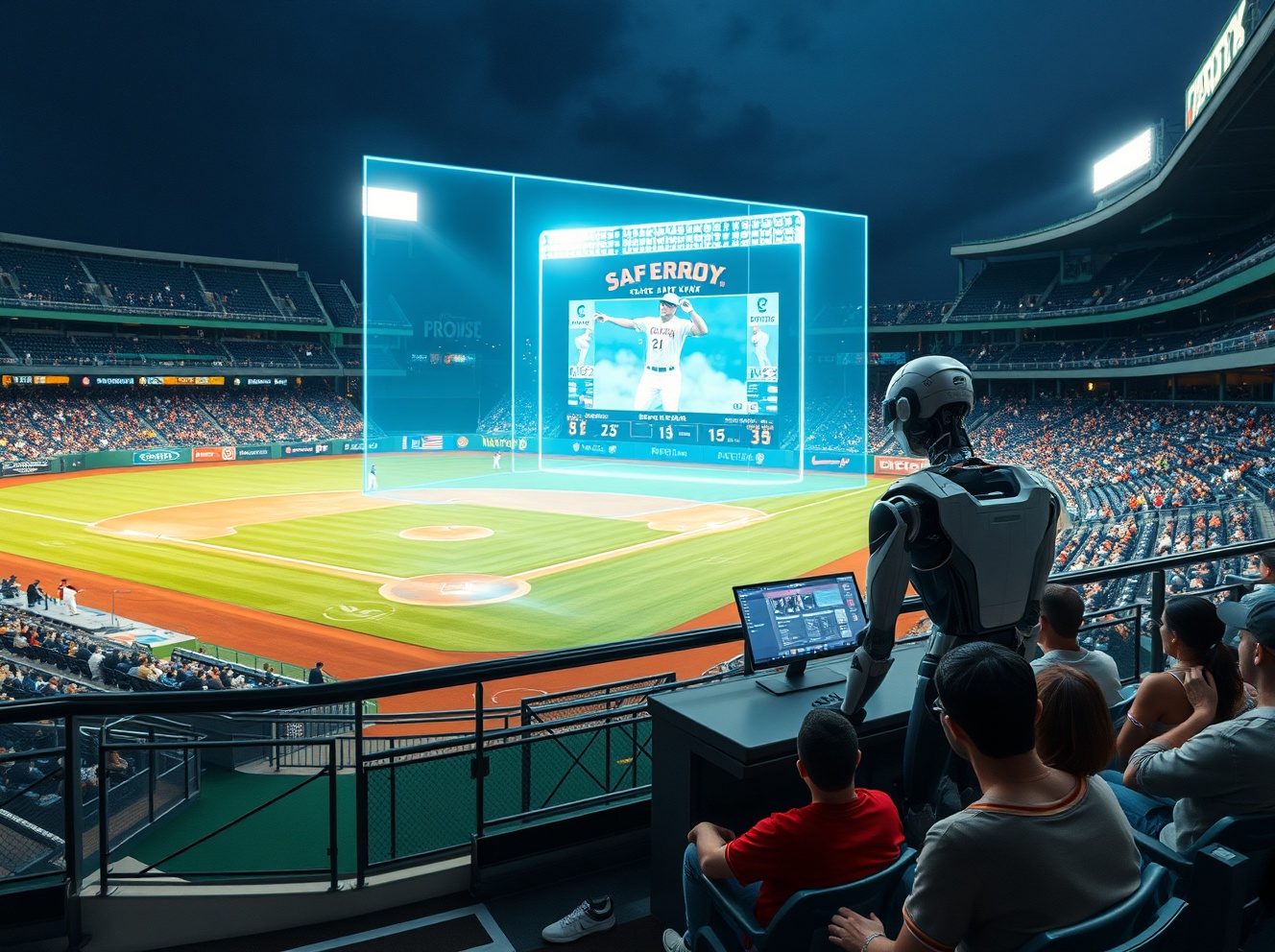
During the AI-controlled game, the system performed remarkably, making almost identical decisions to Miles regarding pitching changes, lineup adjustments, and pinch hitters. The only instance where Miles had to intervene was due to a player’s unexpected illness, a scenario outside the AI’s programmed scope. This singular override underscores the enduring necessity of human oversight for unforeseen circumstances and ethical considerations. The manager himself, Aaron Miles, embraced the experiment with good humor, even offering the tablet running the AI for a handshake with the opposing manager, a symbolic gesture of technology meeting tradition.

AspectHuman Manager (Aaron Miles)AI Manager (Distillery’s AI)
Decision-making BasisExperience, intuition, real-time observation, data analysisCenturies of baseball data, Ballers’ game history, pattern recognition via ChatGPT
Key Decisions MadePitching changes, lineup construction, pinch hittersIdentical decisions to Miles for pitching changes, lineup, pinch hitters
Override InstancesMiles overrode AI once due to player illnessRequired human override for unexpected player health issue
Outcome of GameSmooth execution of managerial strategySmooth execution, mirroring human decisions

The Critical Role of Fan Engagement and Backlash

Despite the smooth execution of the AI’s managerial duties, the experiment triggered an unexpected wave of backlash from the Oakland Ballers’ dedicated fanbase. For many, the involvement of companies like OpenAI, which powered Distillery’s AI, felt like a betrayal. Fans expressed concerns that such enterprises prioritize "winning" the AI race over thorough safety testing and ethical deployment. This sentiment was amplified by the recent history of corporate greed that led to the departure of multiple professional sports franchises from Oakland, creating a deep-seated mistrust among locals.

Comments like "There goes the Ballers trying to appeal to Bay Area techies instead of baseball fans" highlighted a perceived disconnect. The issue wasn’t just about AI; it was about the broader cultural tension between technological advancement and community values. Fan engagement, crucial for any sports team, proved to be a double-edged sword. While fans had previously embraced novel concepts like fan-controlled games, the AI experiment touched a nerve related to corporate influence and the perceived erosion of authenticity.

Paul Freedman acknowledged the unforeseen negative reaction, stating, "It never feels good to have your fans be like, ‘We hate this.’" The Ballers do not intend to repeat this specific AI experiment. However, the experience sparked a vital conversation about the ethical implications and societal acceptance of new technologies. This public discourse, though initially uncomfortable, is essential for navigating the complex future of AI. It underscores that while technology can optimize processes, the human element—emotion, community, and trust—remains paramount.

A Look Ahead: Balancing Innovation and Community in the Age of AI

The Oakland Ballers’ experiment serves as a compelling case study in the ongoing dialogue surrounding artificial intelligence. It showcased the impressive capabilities of AI in sports for data-driven strategy while simultaneously revealing the critical importance of public perception and fan engagement. The journey of the Oakland Ballers, from a team born out of protest to pioneers in sports technology, reflects a broader societal challenge: how to embrace innovation without alienating the communities it serves.

As AI continues to integrate into various aspects of life, including sports and even the financial sector where cryptocurrencies thrive, understanding its practical applications and potential pitfalls becomes increasingly vital. The Ballers’ experience reminds us that while AI can be an incredible tool for optimization, the human touch, ethical considerations, and genuine connection with stakeholders are indispensable. The conversation about AI’s role in our future has just begun, and experiments like these, even with their bumps, are crucial steps in shaping that dialogue responsibly.

To learn more about the latest AI in sports trends, explore our article on key developments shaping AI features, institutional adoption, and future applications.

This post AI in Sports: The Controversial Experiment of the Oakland Ballers’ AI Manager first appeared on BitcoinWorld.

Market Opportunity
B Logo
B Price(B)
$0.20357
$0.20357$0.20357
+0.90%
USD
B (B) Live Price Chart
Disclaimer: The articles reposted on this site are sourced from public platforms and are provided for informational purposes only. They do not necessarily reflect the views of MEXC. All rights remain with the original authors. If you believe any content infringes on third-party rights, please contact service@support.mexc.com for removal. MEXC makes no guarantees regarding the accuracy, completeness, or timeliness of the content and is not responsible for any actions taken based on the information provided. The content does not constitute financial, legal, or other professional advice, nor should it be considered a recommendation or endorsement by MEXC.

You May Also Like

Lovable AI’s Astonishing Rise: Anton Osika Reveals Startup Secrets at Bitcoin World Disrupt 2025

Lovable AI’s Astonishing Rise: Anton Osika Reveals Startup Secrets at Bitcoin World Disrupt 2025

BitcoinWorld Lovable AI’s Astonishing Rise: Anton Osika Reveals Startup Secrets at Bitcoin World Disrupt 2025 Are you ready to witness a phenomenon? The world of technology is abuzz with the incredible rise of Lovable AI, a startup that’s not just breaking records but rewriting the rulebook for rapid growth. Imagine creating powerful apps and websites just by speaking to an AI – that’s the magic Lovable brings to the masses. This groundbreaking approach has propelled the company into the spotlight, making it one of the fastest-growing software firms in history. And now, the visionary behind this sensation, co-founder and CEO Anton Osika, is set to share his invaluable insights on the Disrupt Stage at the highly anticipated Bitcoin World Disrupt 2025. If you’re a founder, investor, or tech enthusiast eager to understand the future of innovation, this is an event you cannot afford to miss. Lovable AI’s Meteoric Ascent: Redefining Software Creation In an era where digital transformation is paramount, Lovable AI has emerged as a true game-changer. Its core premise is deceptively simple yet profoundly impactful: democratize software creation. By enabling anyone to build applications and websites through intuitive AI conversations, Lovable is empowering the vast majority of individuals who lack coding skills to transform their ideas into tangible digital products. This mission has resonated globally, leading to unprecedented momentum. The numbers speak for themselves: Achieved an astonishing $100 million Annual Recurring Revenue (ARR) in less than a year. Successfully raised a $200 million Series A funding round, valuing the company at $1.8 billion, led by industry giant Accel. Is currently fielding unsolicited investor offers, pushing its valuation towards an incredible $4 billion. As industry reports suggest, investors are unequivocally “loving Lovable,” and it’s clear why. This isn’t just about impressive financial metrics; it’s about a company that has tapped into a fundamental need, offering a solution that is both innovative and accessible. The rapid scaling of Lovable AI provides a compelling case study for any entrepreneur aiming for similar exponential growth. The Visionary Behind the Hype: Anton Osika’s Journey to Innovation Every groundbreaking company has a driving force, and for Lovable, that force is co-founder and CEO Anton Osika. His journey is as fascinating as his company’s success. A physicist by training, Osika previously contributed to the cutting-edge research at CERN, the European Organization for Nuclear Research. This deep technical background, combined with his entrepreneurial spirit, has been instrumental in Lovable’s rapid ascent. Before Lovable, he honed his skills as a co-founder of Depict.ai and a Founding Engineer at Sana. Based in Stockholm, Osika has masterfully steered Lovable from a nascent idea to a global phenomenon in record time. His leadership embodies a unique blend of profound technical understanding and a keen, consumer-first vision. At Bitcoin World Disrupt 2025, attendees will have the rare opportunity to hear directly from Osika about what it truly takes to build a brand that not only scales at an incredible pace in a fiercely competitive market but also adeptly manages the intense cultural conversations that inevitably accompany such swift and significant success. His insights will be crucial for anyone looking to understand the dynamics of high-growth tech leadership. Unpacking Consumer Tech Innovation at Bitcoin World Disrupt 2025 The 20th anniversary of Bitcoin World is set to be marked by a truly special event: Bitcoin World Disrupt 2025. From October 27–29, Moscone West in San Francisco will transform into the epicenter of innovation, gathering over 10,000 founders, investors, and tech leaders. It’s the ideal platform to explore the future of consumer tech innovation, and Anton Osika’s presence on the Disrupt Stage is a highlight. His session will delve into how Lovable is not just participating in but actively shaping the next wave of consumer-facing technologies. Why is this session particularly relevant for those interested in the future of consumer experiences? Osika’s discussion will go beyond the superficial, offering a deep dive into the strategies that have allowed Lovable to carve out a unique category in a market long thought to be saturated. Attendees will gain a front-row seat to understanding how to identify unmet consumer needs, leverage advanced AI to meet those needs, and build a product that captivates users globally. The event itself promises a rich tapestry of ideas and networking opportunities: For Founders: Sharpen your pitch and connect with potential investors. For Investors: Discover the next breakout startup poised for massive growth. For Innovators: Claim your spot at the forefront of technological advancements. The insights shared regarding consumer tech innovation at this event will be invaluable for anyone looking to navigate the complexities and capitalize on the opportunities within this dynamic sector. Mastering Startup Growth Strategies: A Blueprint for the Future Lovable’s journey isn’t just another startup success story; it’s a meticulously crafted blueprint for effective startup growth strategies in the modern era. Anton Osika’s experience offers a rare glimpse into the practicalities of scaling a business at breakneck speed while maintaining product integrity and managing external pressures. For entrepreneurs and aspiring tech leaders, his talk will serve as a masterclass in several critical areas: Strategy Focus Key Takeaways from Lovable’s Journey Rapid Scaling How to build infrastructure and teams that support exponential user and revenue growth without compromising quality. Product-Market Fit Identifying a significant, underserved market (the 99% who can’t code) and developing a truly innovative solution (AI-powered app creation). Investor Relations Balancing intense investor interest and pressure with a steadfast focus on product development and long-term vision. Category Creation Carving out an entirely new niche by democratizing complex technologies, rather than competing in existing crowded markets. Understanding these startup growth strategies is essential for anyone aiming to build a resilient and impactful consumer experience. Osika’s session will provide actionable insights into how to replicate elements of Lovable’s success, offering guidance on navigating challenges from product development to market penetration and investor management. Conclusion: Seize the Future of Tech The story of Lovable, under the astute leadership of Anton Osika, is a testament to the power of innovative ideas meeting flawless execution. Their remarkable journey from concept to a multi-billion-dollar valuation in record time is a compelling narrative for anyone interested in the future of technology. By democratizing software creation through Lovable AI, they are not just building a company; they are fostering a new generation of creators. His appearance at Bitcoin World Disrupt 2025 is an unmissable opportunity to gain direct insights from a leader who is truly shaping the landscape of consumer tech innovation. Don’t miss this chance to learn about cutting-edge startup growth strategies and secure your front-row seat to the future. Register now and save up to $668 before Regular Bird rates end on September 26. To learn more about the latest AI market trends, explore our article on key developments shaping AI features. This post Lovable AI’s Astonishing Rise: Anton Osika Reveals Startup Secrets at Bitcoin World Disrupt 2025 first appeared on BitcoinWorld.
Share
Coinstats2025/09/17 23:40
SHIB Price Drops as Leadership Concerns Grow

SHIB Price Drops as Leadership Concerns Grow

The post SHIB Price Drops as Leadership Concerns Grow appeared on BitcoinEthereumNews.com. Shiba Inu investors uneasy as Kusama’s silence fuels leadership concerns. SHIB slid 13% in three days, retracing from $0.00001484 to $0.00001305. Shibarium exploit and Kusama’s absence have weighed on investor trust. Shiba Inu investors are voicing concerns about the project’s long-term direction as leadership uncertainty and slow ecosystem progress erode confidence.  The token, which rallied from its meme-coin origins to become the second-largest meme asset by market cap, counts more than 1.5 million holders worldwide. But as SHIB matures, the gap between early hype and current delivery has widened.  The project’s transition into an “ecosystem coin” with spin-off projects and Shibarium, its layer-2 network, once raised expectations. Analysts now point to internal challenges as the main factor holding SHIB back from fulfilling that potential. Kusama’s Silence Adds to Instability Central to the debate is the role of Shytoshi Kusama, Shiba Inu’s pseudonymous lead developer. Investors are concerned about the intermittent disappearance of the project’s lead developer, who repeatedly takes unannounced social media breaks.  For instance, Kusama went silent on X for over a month before resurfacing this week amid growing speculation that he had abandoned the Shiba Inu project.  Kusama returned shortly after the Shibarium bridge suffered an exploit worth around $3 million. However, he did not directly address the issue but only reassured Shiba Inu community members of his commitment to advancing the project.  Although most community members didn’t complain about Kusama’s anonymity in the project’s initial stages, his recent behavior has raised concerns. Many are beginning to develop trust issues, particularly because nobody could reveal the SHIB developer’s identity for the past five years. He has conducted all communications under pseudonyms. SHIB Price Action Reflects Sentiment Shift Market reaction has mirrored the doubts. SHIB, which spiked 26% at the start of September, has since reversed. Over the last…
Share
BitcoinEthereumNews2025/09/18 04:13
Q2 Market Insights: Bitcoin regains dominance in risk-averse environment, ETFs remain critical to market structure

Q2 Market Insights: Bitcoin regains dominance in risk-averse environment, ETFs remain critical to market structure

The market will show a downward trend in the short term, and then rebound and set new highs in the second half of the year.
Share
PANews2025/04/28 19:40