Fed Dissenting Votes Reveal Internal Conflict: Warsh’s Warning Confirmed by Timiraos
BitcoinWorld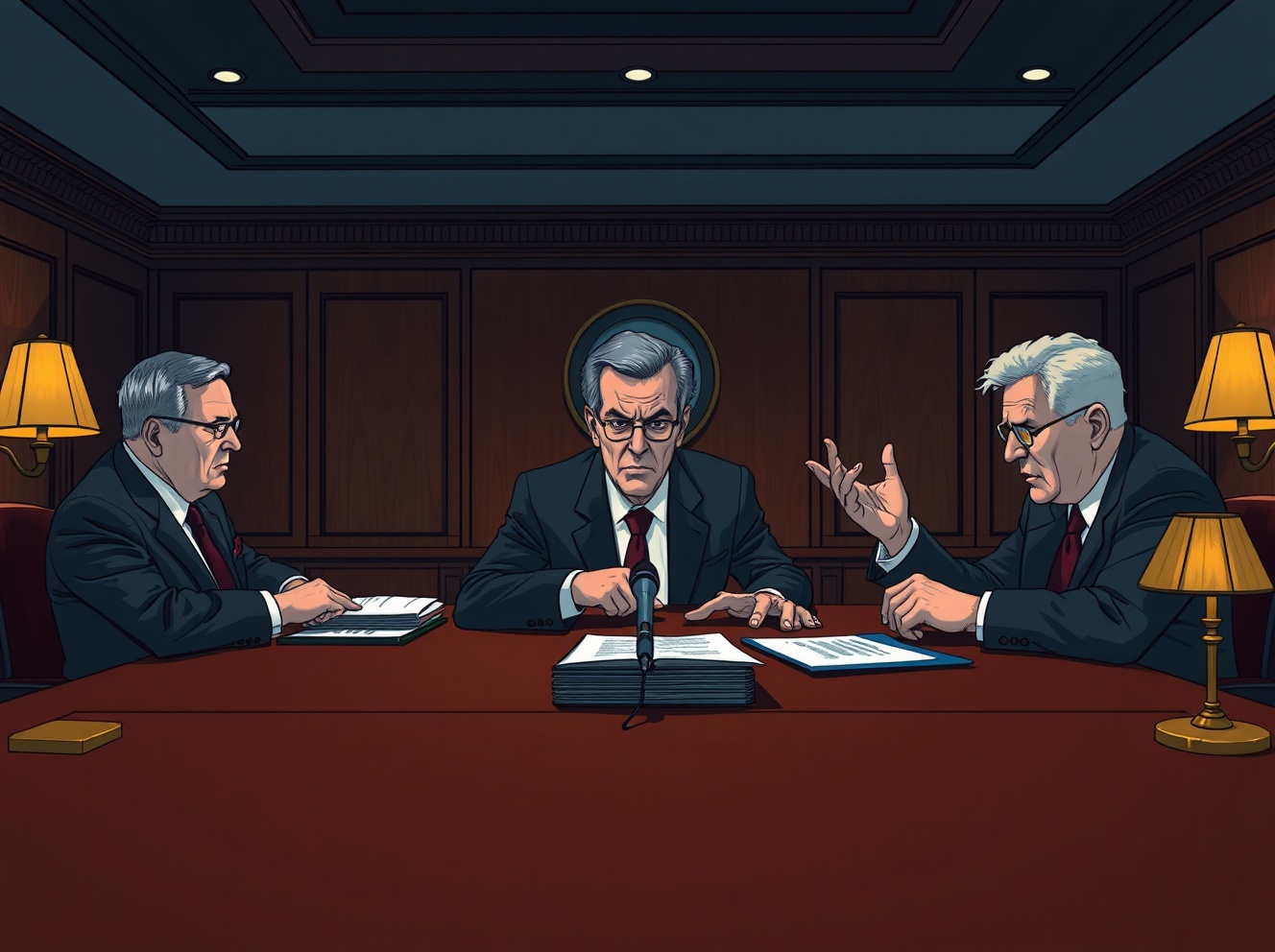
Fed Dissenting Votes Reveal Internal Conflict: Warsh’s Warning Confirmed by Timiraos
The Federal Reserve faces a deepening internal crisis. Four dissenting votes at the latest policy meeting may prove the chaotic atmosphere and internal conflict that Fed Chair nominee Kevin Warsh described at his confirmation hearing last week. Nick Timiraos, widely known as the Fed whisperer, has now publicly linked these votes to Warsh’s testimony, raising urgent questions about the central bank’s unity.
Fed Dissenting Votes Signal Unprecedented Discord
The four dissenting votes represent a rare and powerful signal. Historically, the Fed operates through consensus. Dissents are uncommon, especially multiple dissents in a single meeting. This event marks the highest number of dissenting votes in over a decade.
Each dissenting member expressed concerns about the pace of interest rate decisions. Some argued for more aggressive tightening. Others wanted a pause. This split reveals a deep ideological divide within the Federal Open Market Committee (FOMC).
Key facts about the dissenting votes:
- Four FOMC members voted against the majority decision.
- Two dissents favored a larger rate hike.
- Two dissents favored holding rates steady.
- This is the first time since 2017 that four members dissented in one meeting.
Timiraos, a veteran journalist at The Wall Street Journal, has a strong track record of accurately predicting Fed moves. His analysis suggests that these votes are not random. They reflect the exact internal conflict Warsh warned about.
Kevin Warsh’s Confirmation Hearing Warning
During his confirmation hearing last week, Kevin Warsh described the Fed as a deeply fractured institution. He stated that the decision-making process had become chaotic. He claimed that personal disagreements were overshadowing economic data.
Warsh’s testimony shocked many market observers. The Fed traditionally presents a unified front to the public. Admitting internal conflict is highly unusual for a nominee. Warsh argued that this lack of cohesion undermines the Fed’s credibility.
Warsh’s key claims included:
- Staff and governors were working in silos.
- Policy debates were becoming personal.
- Communication with the public was inconsistent.
- Market guidance was confusing and contradictory.
Now, with four dissenting votes, Warsh’s claims appear prescient. Timiraos has pointed to the voting record as direct evidence of this dysfunction. The timing could not be more significant.
The Fed Whisperer’s Analysis
Nick Timiraos earned his nickname by consistently leaking or predicting Fed policy shifts. His reporting often moves markets. In a recent analysis, he wrote that the dissenting votes are a direct result of the internal conflict Warsh described.
Timiraos noted that the dissenting members did not coordinate their statements. Each issued a separate, individual explanation. This lack of coordination is unusual. It suggests that the FOMC lacks a clear communication strategy.
He further argued that the Fed’s leadership has lost control of the narrative. The dissenting votes create confusion for investors. Markets thrive on predictability. The Fed’s internal conflict now threatens that stability.
Market Impact of Fed Internal Conflict
Financial markets reacted immediately to the news. Bond yields became volatile. The US dollar weakened against major currencies. Stock indices experienced sharp intraday swings.
Investors now question the Fed’s ability to manage inflation. A divided committee may struggle to act decisively. This uncertainty increases risk premiums across asset classes.
Immediate market reactions included:
- 2-year Treasury yield dropped 15 basis points.
- S&P 500 fell 1.2% in afternoon trading.
- Gold prices rose 0.8% as a safe-haven asset.
- The US Dollar Index fell 0.5%.
Analysts at major banks have revised their Fed rate forecasts. Some now expect a slower pace of rate hikes. Others predict a pause in the tightening cycle. The dissenting votes make future policy direction highly uncertain.
Historical Context of Dissenting Votes
Dissenting votes at the Fed are rare but not unprecedented. However, the current situation is unique in its scale and context.
Historical dissenting vote patterns:
| Year | Number of Dissents | Reason |
|---|---|---|
| 2017 | 4 | Inflation outlook disagreement |
| 2011 | 3 | QE3 opposition |
| 2005 | 2 | Rate hike pace |
| 1994 | 1 | Preemptive tightening |
The 2017 dissents were largely technical. The current dissents are ideological. This makes them harder to resolve. The Fed’s internal conflict may persist for months.
Implications for Fed Chair Nominee Kevin Warsh
The dissenting votes strengthen Warsh’s position. He can now point to concrete evidence of the chaos he described. This may accelerate his confirmation process.
Senators who questioned Warsh’s claims now face a difficult choice. They must either acknowledge the internal conflict or defend a divided Fed. Either position carries political risk.
Warsh has proposed structural reforms to the Fed. He wants clearer voting procedures. He also wants more transparent communication. The dissenting votes make these reforms seem necessary.
Warsh’s proposed reforms include:
- Mandatory dissenting statement within 24 hours.
- Quarterly public briefings by dissenting members.
- Independent review of FOMC decision-making processes.
- Term limits for regional bank presidents.
These reforms aim to reduce internal conflict. They also aim to restore market confidence. The dissenting votes have made these proposals more urgent.
The Role of the Fed Whisperer in Shaping Narrative
Nick Timiraos holds significant influence over market perception of the Fed. His reporting often precedes official announcements. Traders closely follow his Twitter account and articles.
Timiraos has a reputation for accuracy. He correctly predicted the 2022 rate hiking cycle. He also predicted the 2023 pause. His current analysis carries substantial weight.
By linking the dissenting votes to Warsh’s claims, Timiraos has validated a controversial narrative. This narrative now dominates financial news. It forces the Fed to address its internal conflict publicly.
What This Means for Monetary Policy Going Forward
The internal conflict will likely slow down policy decisions. A divided committee may hesitate to take bold action. This could lead to delayed rate cuts or hikes.
Inflation remains above the Fed’s 2% target. The labor market is still tight. These conditions require clear policy direction. The dissenting votes undermine that clarity.
Economists are divided on the impact. Some believe the conflict will resolve quickly. Others fear a prolonged period of uncertainty. The outcome depends on the Fed’s leadership.
Possible scenarios for future Fed policy:
- Status quo: Fed maintains current rates, conflict continues.
- Dovish shift: Dissenters force a rate cut sooner than expected.
- Hawkish shift: Dissenters push for more aggressive tightening.
- Leadership change: Warsh’s reforms restructure the FOMC.
Each scenario has different implications for markets. Investors must prepare for volatility. The internal conflict is unlikely to disappear quickly.
Conclusion
The four dissenting Fed votes provide concrete evidence of the internal conflict Kevin Warsh described. Nick Timiraos, the Fed whisperer, has confirmed this connection. The Federal Reserve now faces a credibility crisis. Its ability to guide markets and manage inflation is under question. Investors should expect continued volatility as the central bank struggles to find unity. The Fed dissenting votes represent a turning point in modern monetary policy.
FAQs
Q1: What are dissenting votes at the Federal Reserve?
Dissenting votes occur when FOMC members vote against the majority decision. They are rare and signal disagreement within the committee.
Q2: Why are four dissenting votes significant?
Four dissents in one meeting is highly unusual. It indicates deep ideological divisions. This level of internal conflict has not been seen since 2017.
Q3: Who is Nick Timiraos and why is he called the Fed whisperer?
Nick Timiraos is a Wall Street Journal reporter known for accurately predicting Fed policy moves. He earned the nickname for his insider sources and reliable analysis.
Q4: How do dissenting votes affect financial markets?
Dissenting votes create uncertainty. Markets prefer predictable policy. The conflict can lead to increased volatility in bonds, stocks, and currencies.
Q5: What reforms has Kevin Warsh proposed for the Fed?
Warsh has proposed clearer voting procedures, mandatory dissenting statements, quarterly briefings, and term limits for regional bank presidents to reduce internal conflict.
This post Fed Dissenting Votes Reveal Internal Conflict: Warsh’s Warning Confirmed by Timiraos first appeared on BitcoinWorld.


You May Also Like

USDC Treasury mints 250 million new USDC on Solana

Tesla (TSLA) Stock Climbs as Shanghai Factory Posts Fifth Consecutive Month of Sales Growth