

US Dollar Index Holds Steady After Fed Hold: Traders Brace for GDP and PCE Data Shock
BitcoinWorld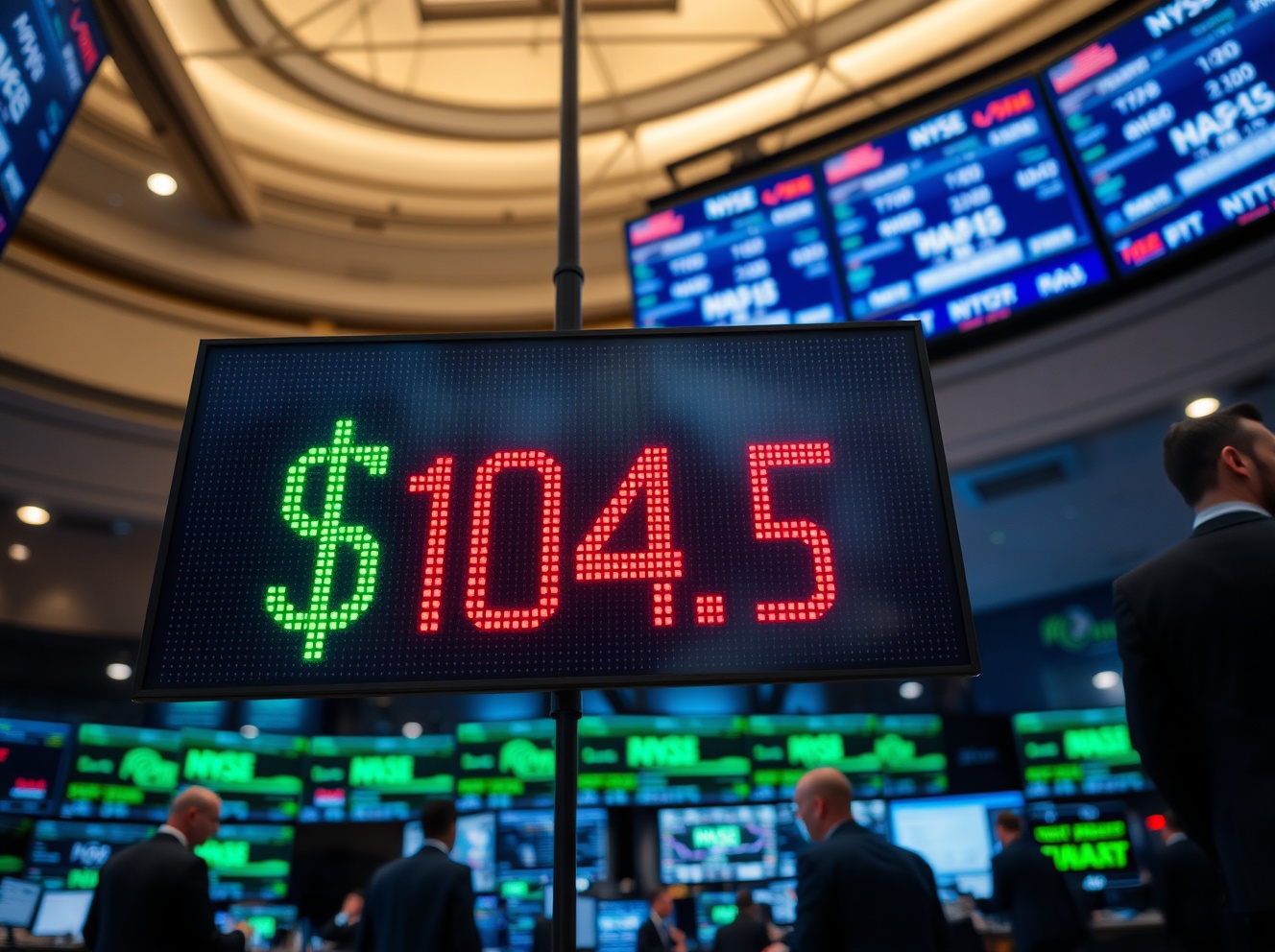
US Dollar Index Holds Steady After Fed Hold: Traders Brace for GDP and PCE Data Shock
The US Dollar Index holds steady near 104.5 after the Federal Reserve decided to keep interest rates unchanged. Markets now shift focus to upcoming US GDP and PCE data. These reports will shape the next move for the dollar. Traders watch closely for any signs of economic slowdown or persistent inflation.
US Dollar Index Steady After Fed Decision
The Federal Reserve concluded its two-day meeting on Wednesday. As widely expected, the central bank held the federal funds rate at 5.25%–5.50%. This marks the third consecutive pause since July 2023. The US Dollar Index reacted with minimal volatility. It remained locked in a tight range between 104.2 and 104.8.
Fed Chair Jerome Powell reiterated a data-dependent stance. He emphasized that the committee needs more confidence inflation is moving sustainably toward 2%. The statement removed any reference to further tightening. This shift signals a potential end to the hiking cycle. However, Powell did not rule out future hikes if inflation reaccelerates.
The dollar steady behavior reflects market pricing. According to CME FedWatch, traders assign a 95% probability to rates staying unchanged in January 2025. The first rate cut is not fully priced until mid-2025. This aligns with the Fed’s dot plot, which projects two 25-basis-point cuts next year.
Market Reaction and Immediate Impact
Currency markets showed a muted response. The euro traded near $1.0850 against the dollar. The yen weakened slightly to 148.50. Sterling held above $1.2700. The US Dollar Index remained flat, gaining just 0.1% on the day.
Bond yields moved lower. The 10-year Treasury yield fell 4 basis points to 4.22%. The 2-year yield dropped 3 basis points to 4.68%. This flattening yield curve suggests markets see the Fed on hold for longer. Gold prices edged higher, rising 0.3% to $2,045 per ounce.
Equity markets rallied. The S&P 500 gained 0.8%, reaching a new all-time high. The Nasdaq climbed 1.1%. Investors welcomed the Fed’s dovish tone. They interpreted the removal of tightening bias as supportive for risk assets.
US GDP The Next Major Catalyst
The first major test for the US Dollar Index comes with the third-quarter GDP revision. The Bureau of Economic Analysis releases the final estimate on Thursday. The initial reading showed the economy grew at an annualized rate of 5.2%. This was the fastest pace since Q4 2021.
Economists expect a slight downward revision to 5.1%. Consumer spending and business investment remain strong. However, inventory accumulation and net exports may drag on growth. A stronger-than-expected print could boost the dollar. It would reinforce the narrative of a resilient US economy.
A weaker number might pressure the dollar. It would raise concerns about the sustainability of growth. The US Dollar Index could break below 104 if GDP data disappoints. Traders should watch for any changes in personal consumption expenditures within the report.
What the GDP Data Means for the Fed
The Fed’s dual mandate includes maximum employment and stable prices. Strong GDP growth supports the employment side. It gives the Fed room to keep rates higher for longer. Conversely, a sharp slowdown could accelerate rate cut expectations.
Markets currently price a 60% chance of a cut by May 2025. A robust GDP print could push that probability lower. This would support the US Dollar Index. A weak print could increase cut bets and weigh on the dollar.
PCE The Fed’s Preferred Inflation Gauge
The second critical release is the November Personal Consumption Expenditures (PCE) price index. The Fed uses this measure to track inflation. The data comes out on Friday. Core PCE, which excludes food and energy, is the key metric.
Economists forecast core PCE to rise 0.2% month-over-month. The annual rate is expected to fall to 3.3% from 3.5%. Headline PCE may show a 0.1% monthly increase. The annual headline rate likely drops to 2.8% from 3.0%.
These numbers would confirm the disinflation trend. However, they remain above the Fed’s 2% target. The PCE data will influence the dollar’s trajectory. Lower-than-expected inflation could weaken the dollar. It would reinforce expectations of rate cuts. Higher inflation could strengthen the dollar. It would suggest the Fed needs to maintain a restrictive stance.
Historical Context and Market Sensitivity
The PCE index has been declining since its peak of 7.1% in June 2022. The core measure peaked at 5.6% in February 2023. Progress has been uneven. Services inflation remains sticky. Goods prices have fallen, but services like rent and healthcare keep core elevated.
The US Dollar Index is highly sensitive to inflation surprises. In October, a hotter-than-expected CPI report pushed the dollar higher. The index rose from 105.5 to 106.5 in a single day. Conversely, a soft PCE reading in September caused the dollar to drop 0.8%.
Traders should prepare for similar volatility this week. The dollar’s reaction will depend on the deviation from forecasts. A 0.1% miss in either direction can move the index by 0.5% or more.
Technical Analysis: Key Levels for US Dollar Index
The US Dollar Index shows a neutral-to-bearish technical picture. It trades below the 50-day moving average of 105.20. The 200-day moving average sits at 104.00, providing support. The index has formed a descending triangle pattern since October.
Key resistance levels include 105.00, 105.50, and 106.00. A break above 105.50 would signal renewed bullish momentum. Support levels are at 104.00, 103.50, and 103.00. A break below 104.00 could trigger a sell-off toward 103.00.
The Relative Strength Index (RSI) reads 48, indicating neutral momentum. The MACD shows a bearish crossover. Volume has been declining, suggesting indecision. The upcoming data releases will likely break this range.
Comparison with Major Currency Pairs
The dollar’s performance varies across pairs. EUR/USD remains range-bound between 1.0800 and 1.0950. USD/JPY has risen from 146 to 148, driven by yield differentials. GBP/USD holds above 1.2700, supported by sticky UK inflation.
The US Dollar Index weights heavily toward the euro (57.6%). Therefore, EUR/USD movements dominate the index. The yen (13.6%), pound (11.9%), and other currencies have smaller impacts. Traders should monitor these pairs for divergences.
Global Context and Risk Factors
Several external factors could influence the US Dollar Index beyond US data. Geopolitical tensions in the Middle East remain elevated. The conflict between Israel and Hamas continues. Any escalation could trigger safe-haven demand for the dollar.
China’s economic slowdown also poses risks. Weak manufacturing data and property sector troubles weigh on global growth. A sharper slowdown could boost the dollar as a safe haven. However, it could also reduce US export demand, weighing on GDP.
European Central Bank and Bank of England meetings next week add uncertainty. Both central banks are expected to hold rates. Any dovish surprises could weaken their currencies and boost the dollar.
Expert Perspectives and Institutional Views
Major banks have mixed outlooks for the US Dollar Index. Goldman Sachs expects the dollar to weaken in 2025 as the Fed cuts rates. They forecast the index falling to 102 by year-end. Morgan Stanley is more bullish. They see the dollar staying strong due to US economic outperformance.
BlackRock recommends a neutral dollar position. They cite competing forces of strong growth and falling inflation. JPMorgan advises hedging dollar exposure ahead of the data releases. They note that positioning is stretched, increasing the risk of sharp reversals.
Conclusion
The US Dollar Index holds steady after the Fed’s decision to keep rates unchanged. All eyes now turn to US GDP and PCE data. These releases will determine the dollar’s next direction. Strong growth and sticky inflation could support the dollar. Weak data could trigger a sell-off. Traders should prepare for increased volatility. The US Dollar Index remains at a critical juncture. The coming days will provide clarity on the Fed’s next move and the dollar’s trajectory.
FAQs
Q1: Why did the US Dollar Index hold steady after the Fed decision?
The Fed held rates unchanged as expected. Markets had already priced in this outcome. The dollar showed minimal reaction because the decision was fully anticipated. Traders now focus on upcoming economic data.
Q2: What is the significance of US GDP data for the dollar?
GDP data reflects the health of the US economy. Strong growth supports the dollar by reinforcing the Fed’s higher-for-longer stance. Weak growth pressures the dollar by raising rate cut expectations.
Q3: How does PCE data affect the US Dollar Index?
PCE is the Fed’s preferred inflation measure. Lower inflation weakens the dollar by increasing rate cut bets. Higher inflation strengthens the dollar by keeping the Fed hawkish.
Q4: What are the key technical levels for the US Dollar Index?
Key support is at 104.00 and 103.50. Key resistance is at 105.00 and 105.50. A break above 105.50 is bullish. A break below 104.00 is bearish.
Q5: What other factors could influence the dollar this week?
Geopolitical tensions, China’s economy, and central bank meetings in Europe and the UK could all impact the dollar. Safe-haven demand and global growth concerns remain important drivers.
This post US Dollar Index Holds Steady After Fed Hold: Traders Brace for GDP and PCE Data Shock first appeared on BitcoinWorld.


You May Also Like

White House Blocks Anthropic’s Plan to Expand Access to Its Mythos AI Model

WLFI Token Unlock Advances with 99.5% Support
