

ECB Rate Hikes Loom as Brent Crude Surges Past $100: A Critical Analysis of Eurozone Monetary Policy
BitcoinWorld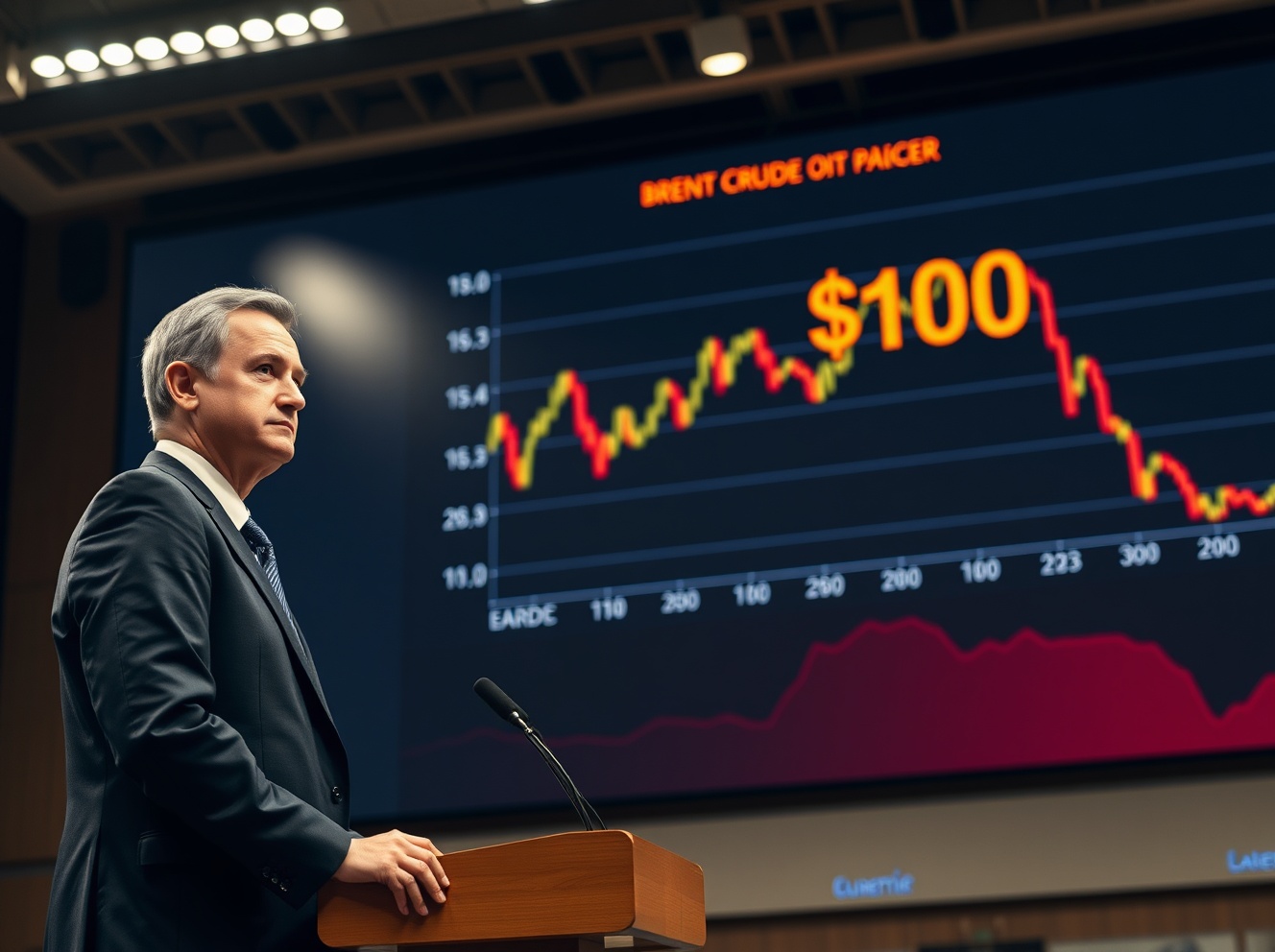
ECB Rate Hikes Loom as Brent Crude Surges Past $100: A Critical Analysis of Eurozone Monetary Policy
The European Central Bank (ECB) is preparing for two consecutive interest rate hikes if Brent crude oil prices remain above $100 per barrel, according to sources familiar with the central bank’s internal deliberations. This development signals a decisive shift in the ECB’s monetary policy stance as energy-driven inflation pressures intensify across the eurozone. The focus keyword ECB rate hikes now takes center stage in discussions about the region’s economic stability.
ECB Rate Hikes: A Direct Response to Persistent Energy Inflation
Sources close to the ECB’s Governing Council indicate that the central bank views sustained high oil prices as a primary driver of inflationary pressures. The Brent crude benchmark, a global oil price reference, has surged above $100 per barrel due to supply constraints and geopolitical tensions. The ECB’s internal models now project that each additional $10 increase in oil prices adds approximately 0.3 percentage points to eurozone headline inflation over a 12-month period. This direct correlation forces the ECB to act decisively.
In recent statements, ECB President Christine Lagarde emphasized that the central bank remains data-dependent. However, the source information suggests a more aggressive timeline. Two rate hikes of 25 basis points each could occur within the next two quarters. This would bring the ECB’s main refinancing rate to 4.00% from its current 3.50%. The decision reflects a broader consensus among policymakers that inflation expectations risk becoming unanchored if action is delayed.
Key factors driving this decision include:
- Energy price pass-through: Higher oil costs increase production and transportation expenses across multiple sectors.
- Wage-price spiral risks: Workers demand higher wages to offset living costs, fueling second-round effects.
- Supply chain disruptions: Ongoing conflicts in key oil-producing regions exacerbate supply shortages.
- Currency depreciation: A weaker euro amplifies import costs, particularly for energy commodities priced in US dollars.
Brent Crude at $100: The Catalyst for Monetary Tightening
The Brent crude price crossing the $100 threshold marks a critical inflection point for the ECB. Historically, the central bank has tolerated moderate oil price increases, viewing them as transitory. However, the persistence of high energy costs since 2022 has changed this calculus. The ECB’s latest macroeconomic projections show headline inflation remaining above 3% through 2025 if oil prices stay elevated. This scenario exceeds the ECB’s 2% target by a significant margin.
Market analysts at major investment banks have revised their ECB rate forecasts upward. Goldman Sachs now expects two rate hikes in 2025, while JPMorgan predicts a similar trajectory. The bond market reflects these expectations, with two-year German government bond yields rising sharply. This indicates that investors price in tighter monetary conditions.
To understand the broader impact, consider the following table comparing ECB rate scenarios:
| Scenario | Brent Price | Expected Rate Hikes | Inflation Impact | Growth Impact |
|---|---|---|---|---|
| Baseline | $85-95 | 1 hike | Moderate | Minor slowdown |
| High Oil | $100-110 | 2 hikes | Significant | Recession risk |
| Extreme | Above $120 | 3 hikes | Severe | Deep recession |
Eurozone Economic Impact: Balancing Inflation and Growth
The ECB faces a delicate balancing act. Raising rates too aggressively could stifle economic growth in a region already struggling with weak manufacturing output and sluggish consumer spending. Germany, the eurozone’s largest economy, narrowly avoided a recession in early 2025. Further tightening could push it into a contraction. Conversely, failing to act could entrench inflation, eroding purchasing power and savings.
Small and medium-sized enterprises (SMEs) are particularly vulnerable. Higher borrowing costs increase their debt servicing burdens. Many SMEs operate on thin margins and rely on variable-rate loans. The ECB’s rate hikes could trigger a wave of defaults if not managed carefully. The central bank’s Transmission Protection Instrument (TPI) may be activated to prevent fragmentation in bond markets.
Real-world effects already visible include:
- Housing market slowdown: Mortgage rates in Spain and Italy have risen to 5-year highs.
- Corporate investment delays: Firms postpone capital expenditure due to uncertainty.
- Consumer confidence drop: Eurozone consumer sentiment index fell to -15 in March 2025.
- Export competitiveness: A stronger euro, if rates rise, could hurt export-oriented economies.
Expert Analysis: Historical Precedents and Forward Guidance
Historical data shows that the ECB has rarely raised rates during periods of high oil prices. The 2008 oil shock, when Brent hit $147, coincided with the global financial crisis. The ECB actually cut rates then. Today’s context differs: inflation is broader and more persistent. Former ECB Chief Economist Peter Praet argues that the central bank must prioritize credibility. “Allowing inflation to stay above target for too long damages the ECB’s reputation,” he stated in a recent interview.
Current ECB board members have signaled a hawkish tilt. Isabel Schnabel, an influential member, recently noted that “the last mile of disinflation is often the hardest.” Her comments suggest that the ECB will not hesitate to act. The central bank’s forward guidance now emphasizes data dependency rather than specific timelines. This gives policymakers flexibility but also creates uncertainty for markets.
The International Monetary Fund (IMF) has warned that the ECB’s tightening could exacerbate global economic divergence. While the US Federal Reserve has paused its rate cycle, the ECB may continue hiking. This policy divergence could weaken the euro further, ironically fueling more import inflation. The ECB must weigh these crosscurrents carefully.
Conclusion
The ECB’s potential two rate hikes, driven by Brent crude oil prices above $100, represent a pivotal moment for eurozone monetary policy. The central bank’s commitment to price stability forces it to act despite risks to economic growth. ECB rate hikes remain the primary tool to combat persistent energy-driven inflation. However, the path forward requires careful calibration to avoid triggering a recession. Investors, businesses, and consumers must prepare for tighter financial conditions in the coming months. The ECB’s decisions will shape the eurozone’s economic trajectory for the remainder of 2025 and beyond.
FAQs
Q1: What is the ECB’s main reason for considering rate hikes?
A1: The ECB considers rate hikes primarily due to sustained high inflation driven by Brent crude oil prices remaining above $100 per barrel. Energy costs feed into broader price increases, threatening the ECB’s 2% inflation target.
Q2: How would two rate hikes affect eurozone consumers?
A2: Two rate hikes would increase borrowing costs for mortgages, car loans, and credit cards. Consumers may face higher monthly payments and reduced disposable income. Savings accounts could earn slightly more interest, but overall spending power may decline.
Q3: Could the ECB pause rate hikes if oil prices drop?
A3: Yes, the ECB is data-dependent. If Brent crude prices fall below $90 per barrel and inflation shows sustained decline, the ECB may pause or reduce the pace of rate hikes. The central bank monitors a range of indicators before making decisions.
Q4: What is the impact of ECB rate hikes on the euro exchange rate?
A4: Higher interest rates typically strengthen a currency by attracting foreign investment. A stronger euro could reduce import costs, including oil, which may help lower inflation. However, it also makes eurozone exports more expensive, potentially hurting trade.
Q5: How do ECB rate hikes compare to the US Federal Reserve’s actions?
A5: The US Federal Reserve has paused its rate hiking cycle as inflation moderates. The ECB, facing more persistent energy-driven inflation, may continue tightening. This policy divergence could lead to a weaker euro relative to the US dollar, affecting global trade dynamics.
This post ECB Rate Hikes Loom as Brent Crude Surges Past $100: A Critical Analysis of Eurozone Monetary Policy first appeared on BitcoinWorld.


You May Also Like

TON Price Prediction: $2.40 Breakout Target as Smart Money Accumulates

WIF Price Prediction: $0.22 Relief Rally Before $0.15 Breakdown
