Asia FX Slides, Dollar Firms as Markets Weigh Fragile US-Iran Ceasefire
BitcoinWorld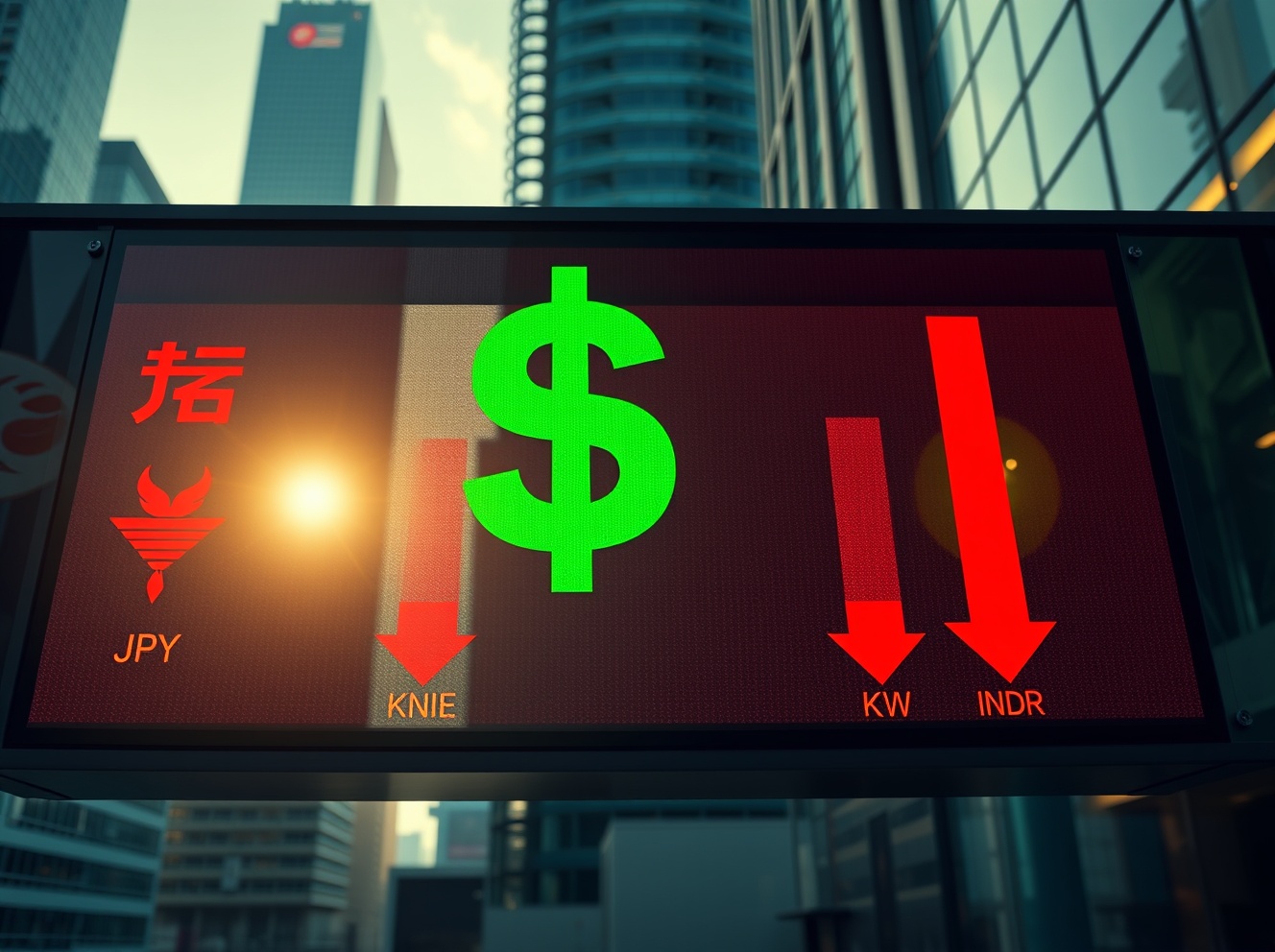
Asia FX Slides, Dollar Firms as Markets Weigh Fragile US-Iran Ceasefire
Asian currencies weakened broadly against the U.S. dollar on Tuesday as traders digested the implications of a newly announced but fragile ceasefire between the United States and Iran. The dollar strengthened across the board, reflecting renewed safe-haven demand amid lingering doubts about the durability of the agreement.
Market Reaction to the Ceasefire Announcement
The ceasefire, brokered through indirect talks in Oman over the weekend, was hailed by both Washington and Tehran as a step toward de-escalation. However, key details remain unresolved, including the timeline for a full withdrawal of U.S. naval assets from the Persian Gulf and Iran’s commitment to halt enrichment activities above 3.67 percent purity. Markets, which had priced in a higher probability of prolonged conflict, reacted cautiously.
The dollar index, which measures the greenback against a basket of six major currencies, rose 0.3 percent in early Asian trading. The Japanese yen slipped 0.4 percent to 149.80 per dollar, while the South Korean won fell 0.6 percent and the Chinese offshore yuan weakened 0.3 percent. The Indian rupee touched a fresh record low of 84.95 against the dollar before recovering slightly.
Why the Dollar Is Gaining
Analysts pointed to several factors driving dollar strength. First, the ceasefire’s fragility leaves the door open for renewed hostilities, prompting investors to seek the relative safety of U.S. assets. Second, oil prices remain elevated — Brent crude hovered near $82 per barrel — adding to inflationary pressures in Asian economies that are net energy importers. Third, the Federal Reserve’s cautious stance on rate cuts continues to support the dollar’s yield advantage.
“The market is not fully convinced this ceasefire will hold,” said Priya Mehta, senior currency strategist at Singapore-based Global FX Partners. “Until there is a verifiable, step-by-step framework, the dollar will likely remain bid, and Asian currencies will stay under pressure.”
Impact on Asian Economies
The weakness in Asian currencies poses challenges for central banks across the region. Import-dependent nations like India, South Korea, and the Philippines face higher costs for crude oil and other commodities, which could stoke domestic inflation. Several central banks, including the Reserve Bank of India and Bank of Korea, have already intervened in foreign exchange markets to smooth volatility.
Export-oriented economies such as Japan and China may benefit from a weaker currency in the short term, but prolonged depreciation risks capital outflows and higher import costs. The Bank of Japan is widely expected to maintain its ultra-loose monetary policy, which has contributed to the yen’s persistent weakness.
Geopolitical Uncertainty and Safe-Haven Flows
The ceasefire agreement, while a diplomatic achievement, lacks enforcement mechanisms. U.S. Secretary of State Marco Rubio acknowledged that “significant gaps remain” and that the coming weeks would be critical. Iran’s Foreign Ministry similarly stressed that the deal was “conditional and reversible.”
This ambiguity has kept gold prices elevated near $2,350 per ounce, while U.S. Treasury yields edged lower as investors rotated into government bonds. The dollar’s safe-haven status has been reinforced, overshadowing optimism about de-escalation.
Conclusion
The fragile US-Iran ceasefire has injected a new layer of uncertainty into currency markets, with Asian currencies bearing the brunt of cautious repositioning. While the agreement reduces the immediate risk of a broader Middle East conflict, its lack of concrete terms and enforcement mechanisms leaves markets on edge. For now, the dollar remains the preferred hedge, and Asian central banks face a delicate balancing act between supporting their currencies and managing domestic growth.
FAQs
Q1: Why are Asian currencies falling if there is a ceasefire?
The ceasefire is viewed as fragile and lacking detailed enforcement. Investors are not fully confident it will hold, leading them to buy the U.S. dollar as a safe haven. Additionally, oil prices remain high, which hurts Asian importers.
Q2: Which Asian currencies are most affected?
The Japanese yen, South Korean won, Chinese offshore yuan, and Indian rupee have all weakened. The rupee hit a record low. Exporters like Japan may benefit slightly, but import costs are rising across the region.
Q3: How long will the dollar stay strong?
It depends on the durability of the ceasefire and the Federal Reserve’s policy path. If the agreement solidifies with clear verification steps, dollar strength could fade. Until then, safe-haven demand is likely to persist.
This post Asia FX Slides, Dollar Firms as Markets Weigh Fragile US-Iran Ceasefire first appeared on BitcoinWorld.


You May Also Like

Bitcoin at Crucial Pivot Point, Here's Why Fed Can Tilt Balance

Meta (META) Stock; Dips Despite Expansion of Ray-Ban and Oakley Smart Glasses in Korea