Sony Xperia 1 VIII just launched: Here’s everything you need to know
Table of contents
Features of the Sony Xperia 1 VIII
Sony Xperia 1 VIII price
Sony Xperia 1 VIII vs. Sony Xperia 1 VII
Sony today announced the Xperia 1 VIII, its flagship Android phone for the year. Pre-orders opened the same day across Europe and select Asian markets, with shipments set to begin on June 26, 2026.
The phone is built for creators. Sony has kept the features that fans of the Xperia line have always relied on, including the 3.5 mm headphone jack, a microSD card slot, a dedicated two-stage shutter button, and front-firing stereo speakers.
On top of that, it brings a larger telephoto sensor, a new design, the latest Qualcomm chip, and an AI camera tool that Sony calls the AI Camera Assistant.
If you have been following Sony’s Xperia line, this is the most significant upgrade in a few years. Here is everything you need to know.
Features of the Sony Xperia 1 VIII
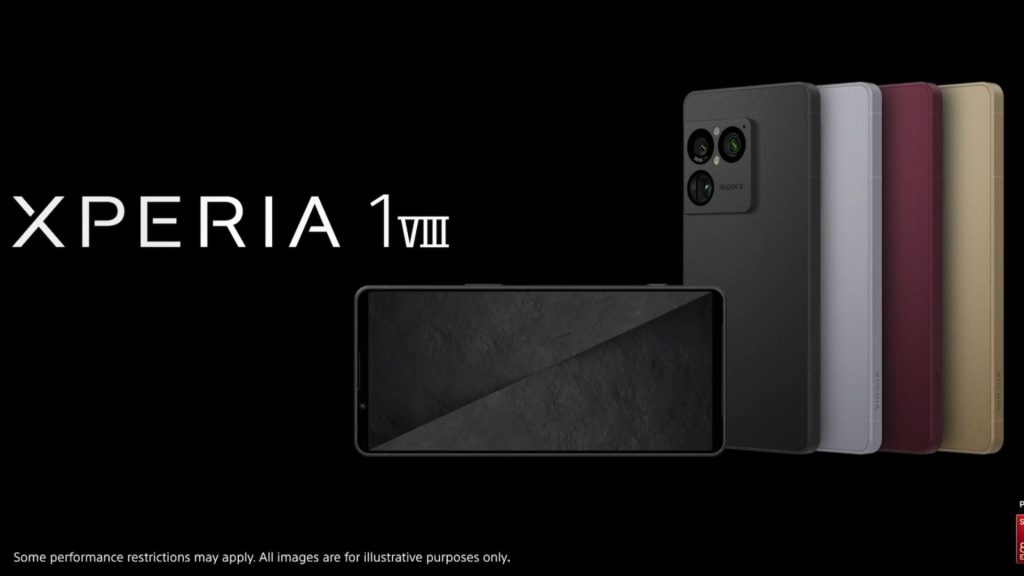 Image source: Sony | Xperia on YouTube
1. Display
The Xperia 1 VIII uses a 6.5-inch LTPO OLED panel with a 1080 x 2340 (FHD+) resolution, a 19.5:9 aspect ratio, and a 120 Hz adaptive refresh rate. It supports one billion colours with HDR coverage across the BT.2020 wide-gamut standard, and the screen is protected by Corning Gorilla Glass Victus 2.
Peak brightness sits at around 1,510 nits according to GSMArena’s lab measurements, a slight step up from the 1,475 nits recorded on the Xperia 1 VII. The bezels are slim and symmetrical, with no punch-hole cutout. The front camera sits in the top bezel, as it has on every Xperia 1 before this one.
2. Chipset and performance
The Xperia 1 VIII is powered by the Qualcomm Snapdragon 8 Elite Gen 5 (SM8850-AC, 3 nm), with an octa-core CPU comprising two 4.6 GHz Oryon V3 Phoenix L cores and six 3.62 GHz Oryon V3 Phoenix M cores, paired with the Adreno 840 GPU.
Sony says the chip delivers about 20% better processing performance than the previous generation, with improved power efficiency across everyday tasks such as gaming, app launches, and content creation. Early benchmark numbers from GSMArena put the AnTuTu 10 score at around 2,312,684 and the Geekbench 6 score at 9,278.
The chip’s NPU handles on-device AI tasks under Sony’s Xperia Intelligence branding, which powers the AI Camera Assistant and the new Processing Optimisation feature for battery efficiency.
3. Camera system
The cameras are the headline story of this generation. All three rear cameras use Zeiss optics with the Zeiss T* anti-reflective coating, and Sony has extended RAW multi-frame processing to every lens for the first time. That means the ultrawide and telephoto now benefit from the same dynamic range boost and low-light noise reduction that previously only applied to the main camera.
Here is how the three rear cameras break down:
- Main (24 mm): 48 MP, 1/1.35-inch Exmor T sensor, f/1.9, dual-pixel PDAF, OIS. This is unchanged from the Xperia 1 VII.
- Telephoto (70 mm): 48 MP, 1/1.56-inch sensor, f/2.8, dual-pixel PDAF, OIS, 2.9x optical magnification, minimum focus distance of 15 cm. This is the biggest hardware upgrade on the phone.
- Ultrawide (16 mm): 48 MP, 1/1.56-inch sensor, f/2.0, PDAF.
- Front: 12 MP, 1/2.9-inch, f/2.0, 24 mm equivalent.
The telephoto is where Sony made the boldest call. The 1/1.56-inch sensor is roughly four times larger than the telephoto sensor in the Xperia 1 VII, which means significantly better low-light performance and more natural background blur. Sony has dropped the continuous optical zoom lens, a defining feature of the Xperia 1 line, from the Mark III to the Mark VII. The new 70 mm lens is fixed, and the phone uses sensor cropping for a longer reach.
That is a real trade-off. You lose the 170 mm reach and the 4 cm super-macro capability that the Xperia 1 VII had. What you get in return is a much larger sensor that performs better in low light and gives you cleaner crops at medium zoom distances.
Sony says all three rear cameras deliver low-light performance comparable to a full-frame camera, particularly in noise reduction and dynamic range at Light Value 2 or lower. That is a qualified claim; it applies only to still images, but the sensor specs back it up more convincingly than they did for previous models.
Video recording goes up to 4K at 24, 30, 60, and 120 fps with HDR, plus 1080p at up to 120 fps. Five-axis gyro-EIS works alongside OIS for stabilisation. The phone also retains native Sony Alpha camera support, so you can pair it with an Alpha body to use it as a wireless monitor and remote control.
4. AI Camera Assistant
The AI Camera Assistant is new to this generation and runs on Xperia Intelligence, Sony’s on-device AI platform. When you point the camera at a scene, the assistant reads the subject, the environment, and the conditions, including the weather, then suggests adjustments such as switching lenses, changing colour tone, or adjusting bokeh intensity.
The suggestions draw on Sony’s Creative Look profiles, which are available in the Alpha camera line. You can tap to apply a suggestion or ignore it and shoot manually. Sony notes the feature is not available during continuous shooting or RAW capture.
This is Sony’s first real step toward the kind of scene-aware computational photography that Pixel, Galaxy, and iPhone flagships have offered for years. The key difference is that Sony has kept it optional. If you know what you are doing, you can turn it off entirely.
5. Design
The Xperia 1 VIII has the biggest design change the line has seen in a long time. The vertical, traffic-light camera strip that Sony has used since the original Xperia 1 is gone. In its place is a square camera island in the upper-left of the rear panel, with the Sony logo sitting on the module itself.
Sony calls the new look the ‘ORE’ design, named for the rough stone texture applied to the frame and back materials. The texture is functional too, giving you a better grip without a case.
The phone comes in four colours, each named after a raw gemstone:
- Graphite Black
- Iolite Silver
- Garnet Red
- Native Gold (exclusive to the 1 TB model, sold only through Sony’s online store)
Construction is Gorilla Glass Victus 2 on the front, Gorilla Glass Victus on the back, and an aluminum frame. The dimensions are 162 x 74 x 8.3 mm at 200 g, fractionally heavier and thicker than the Xperia 1 VII at 8.2 mm and 197 g. The IP65/IP68 rating carries over unchanged.
Sony also offers an optional translucent case with a built-in stand that works in both portrait and landscape orientations. The material is designed to resist yellowing over time.
6. Audio
Audio has always been one of the strongest areas of the Xperia line, and Sony has pushed it further. The 3.5 mm headphone jack is still here, and it still carries Sony’s Walkman audio tuning for wired listening.
The big audio upgrade this generation is the new Full-Stage Stereo Speakers. Sony has redesigned the left and right speaker units to be identical, giving you true symmetric stereo for the first time on an Xperia 1. The company says you get deeper bass, extended highs, and a wider soundstage compared to the Xperia 1 VII. GSMArena measured them at -25.5 LUFS, which is slightly louder than the Xperia 1 VII’s -26.1 LUFS.
The phone also supports Hi-Res Audio and Hi-Res Wireless Audio, Snapdragon Sound, aptX HD, aptX Adaptive, aptX Lossless, and LE Audio. The dynamic vibration system delivers haptic feedback in sync with music and video.
7. Battery and charging
The Xperia 1 VIII has a 5,000 mAh battery with 30 W wired charging (PD3.0/PPS), 15 W wireless charging, and reverse wireless charging. Sony claims the phone can last up to two days on a single charge based on a defined test scenario that includes 360 minutes of mixed use per day alongside 1,080 minutes of standby. The company also claims the battery will hold healthy capacity for up to four years.
GSMArena’s standardised battery test puts the active-use score at 17 hours and 47 minutes, compared to 15 hours and 32 minutes on the Xperia 1 VII. That improvement comes mostly from the more efficient Snapdragon 8 Elite Gen 5.
The charging speeds are 30 W wired and 15 W wireless, unchanged for the fourth year in a row. By 2026 flagship standards, that is slow. Most competing phones at this price charge at 65 W or faster. A new software feature called Processing Optimisation helps stretch battery life by reducing power draw in high-consumption apps like maps, on top of the existing routines for browsing and social media.
8. Storage and RAM
The Xperia 1 VIII comes in three configurations:
- 256 GB storage with 12 GB RAM
- 512 GB storage with 12 GB RAM
- 1 TB storage with 16 GB RAM (Native Gold colorway, sold exclusively through Sony’s online store)
The phone also keeps the microSDXC card slot, one of the very few 2026 flagships that still offer expandable storage. The slot is shared with one of the SIM positions. Dual-SIM options are Nano-SIM plus eSIM or Nano-SIM plus Nano-SIM.
9. Software
The Xperia 1 VIII ships with Android 16 out of the box. Sony is committing to up to five major Android upgrades and six years of security patches, according to GSMArena’s spec sheet and Sportskeeda’s launch-day coverage. One outlet, Tech Advisor, reported four years of OS updates, which aligns with the Xperia 1 VII’s policy. The five-year figure appears on the official spec sheet, but it is worth confirming directly with Sony for your market.
10. Connectivity
The Xperia 1 VIII covers all the connectivity bases you would expect from a 2026 flagship:
- 5G Sub-6 (SA/NSA) and LTE
- Wi-Fi 7, tri-band, with Wi-Fi Direct and DLNA
- Bluetooth 6.0 with aptX HD, aptX Adaptive, aptX Lossless, and LE Audio
- USB Type-C 3.2 with OTG and DisplayPort video output
- NFC
- GPS, GLONASS, BDS, Galileo, and QZSS
Biometrics are handled by a side-mounted fingerprint sensor built into the power button. The sensor array includes an accelerometer, gyroscope, proximity sensor, barometer, and compass. There is no FM radio.
Sony Xperia 1 VIII price
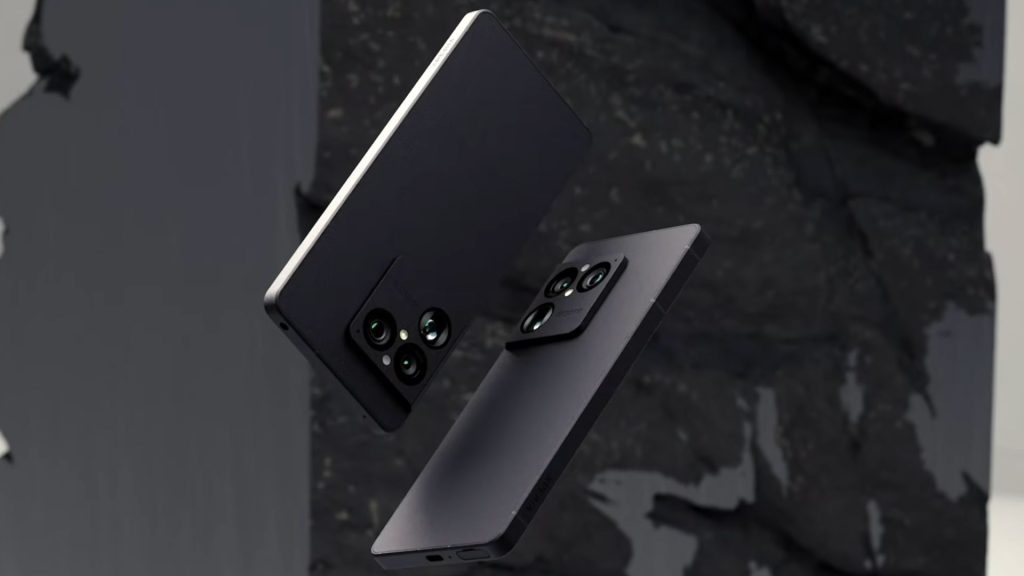 Image source: Sony | Xperia on YouTube
Sony has confirmed pricing for Europe and the UK. There is no official USD price. Sony has not launched an Xperia flagship in the US since 2023, and based on the IMEI certification data that surfaced earlier this year, a US release is unlikely. If you are in Nigeria or elsewhere outside Europe, your best route is through importers.
Here is the confirmed pricing:
Naira estimates are based on a conversion rate of $1 to NGN 1,365 (CBN rate), with EUR to USD at approximately 1.10. These are estimates and will vary depending on the importer and exchange rate at the time of purchase.
Pre-orders are open from May 13, 2026. Every qualifying pre-order includes a free pair of Sony WH-1000XM6 noise-cancelling headphones during the launch window. Shipping begins June 26, 2026.
Sony Xperia 1 VIII vs. Sony Xperia 1 VII
Here is how the Xperia 1 VIII stacks up against the Xperia 1 VII, which Sony launched in May 2025:


You May Also Like

Myriad Integrates Chainlink Oracles for Real-Time Prediction Markets

Goatseus Maximus (GOAT) Price Prediction 2026, 2027-2030