BitcoinWorld Remarkable Bitcoin Decoupling: What It Means for Global Markets Have you ever noticed how some things just seem to move together in the financial world? For a long time, many analysts observed a fascinating pattern with Bitcoin: its price often mirrored movements in the global M2 money supply, typically with about a 70-day lag. But what if that predictable dance has suddenly stopped? According to Joe Consorti, head of growth at the Bitcoin custody firm Theya, we are now witnessing a significant shift. He points out that the historical correlation between Bitcoin’s price and the global M2 money supply has ceased since May. This development, which we can call the Bitcoin decoupling, marks a new chapter in understanding how the leading cryptocurrency behaves. What’s Behind the Remarkable Bitcoin Decoupling? Joe Consorti’s analysis reveals a pivotal moment for Bitcoin. For years, the 70-day lag between Bitcoin’s price and the global M2 money supply was a key indicator for many. This meant that changes in the amount of money circulating globally would eventually influence Bitcoin’s value. However, that pattern is no longer holding true. Since May, Bitcoin has embarked on a new, independent path. This Bitcoin decoupling suggests that its price movements are now being driven by different factors, moving away from the direct influence of broader monetary aggregates. It’s a noteworthy change because it challenges long-held assumptions about Bitcoin’s market drivers. While gold continues to show a near one-to-one correlation with the M2 metric, Bitcoin is charting its own course, signaling a potential maturation of the asset. Understanding Global M2: Why Does It Matter for Asset Prices? To fully grasp the significance of this Bitcoin decoupling, it’s helpful to understand what global M2 money supply actually is. Simply put, M2 represents a broad measure of the total money circulating in an economy. This includes: Cash Checking deposits Savings deposits Money market accounts Historically, an increase in M2 often indicates more money chasing a relatively fixed supply of assets, which can lead to inflation and higher asset prices. This is why many traditional assets, like gold, tend to move in tandem with M2, acting as a hedge against currency devaluation. The fact that gold maintains this strong correlation while Bitcoin breaks away highlights a fundamental shift in their respective market roles and investor perceptions. Navigating New Market Waters: Implications of Bitcoin Decoupling Consorti suggests that this significant shift is unfolding amid a complex global economic landscape, characterized by a weaker U.S. dollar and heightened geopolitical risks. These broader macroeconomic factors are likely contributing to the changing asset correlations we are observing. The implications of this Bitcoin decoupling are substantial for investors and market watchers alike: Changing Asset Perceptions: Gold is traditionally seen as the ultimate safe-haven asset, attracting capital during times of crisis and uncertainty. Bitcoin, however, is increasingly viewed differently. Bitcoin as ‘Risk-On’: Consorti explains that Bitcoin is now perceived as an asset that moves more significantly in a ‘risk-on’ environment. This means that when investors feel confident and are willing to take on more risk for higher potential returns, Bitcoin tends to perform strongly. Independent Drivers: This new behavior suggests that Bitcoin’s price might be influenced more by crypto-specific adoption, technological advancements, regulatory clarity, or unique supply-demand dynamics within the digital asset space, rather than just broad monetary policy. This evolving narrative requires a fresh perspective on how Bitcoin fits into a diversified investment portfolio. What Does This Mean for Your Crypto Strategy? The observation of a Bitcoin decoupling from global M2 money supply presents both challenges and opportunities for investors. It means that relying solely on past correlations might no longer be an effective strategy. Here are some actionable insights to consider: Re-evaluate Investment Theses: It’s crucial to reassess why you hold Bitcoin. Is it purely an inflation hedge, or are you recognizing its potential as a growth asset in a ‘risk-on’ environment? Broaden Your Analysis: Look beyond just M2. Pay attention to other macroeconomic indicators, geopolitical events, and, critically, developments within the cryptocurrency ecosystem itself. Diversification Remains Key: As correlations shift, maintaining a diversified portfolio across different asset classes and within the crypto space can help mitigate risks. Stay Informed: The crypto market is dynamic. Continuously learning about new analyses and market shifts, like this Bitcoin decoupling, is essential for making informed decisions. This period of shifting correlations could define Bitcoin’s role for years to come. The Bitcoin decoupling from global M2 money supply is a truly remarkable development. It signifies a potential maturation of Bitcoin as an asset, with its movements now seemingly less tethered to traditional monetary metrics and more influenced by a complex interplay of risk sentiment and unique crypto-market dynamics. While gold continues its traditional role, Bitcoin is forging its own path, offering investors a new lens through which to view its value and potential. Understanding these evolving correlations is paramount for navigating the exciting, yet ever-changing, landscape of digital assets. Frequently Asked Questions (FAQs) Q1: What is the global M2 money supply? A1: The global M2 money supply is a broad measure of the total amount of money circulating in an economy, including physical currency, checking accounts, savings accounts, and money market funds. It’s often used as an indicator of liquidity and potential inflationary pressures. Q2: How did Bitcoin’s price previously correlate with M2? A2: Historically, Bitcoin’s price often showed a correlation with the global M2 money supply, typically with a lag of about 70 days. This meant that increases or decreases in M2 would often precede similar movements in Bitcoin’s price. Q3: Why is Bitcoin decoupling from M2 now? A3: According to analyst Joe Consorti, this Bitcoin decoupling has occurred since May. He suggests it’s happening amidst a weaker U.S. dollar and heightened geopolitical risks, leading to a re-evaluation of asset correlations and Bitcoin’s role as a ‘risk-on’ asset. Q4: Does this make Bitcoin more or less risky? A4: The decoupling doesn’t inherently make Bitcoin more or less risky, but it changes the nature of its risk. It suggests Bitcoin’s price movements may be driven by different factors, potentially increasing its volatility in ‘risk-on’ environments and requiring investors to adapt their risk assessment strategies. Q5: How does gold’s correlation with M2 compare to Bitcoin’s? A5: While Bitcoin is decoupling, gold continues to show a near one-to-one correlation with the global M2 money supply. This reinforces gold’s traditional role as a safe-haven asset and an inflation hedge, contrasting with Bitcoin’s evolving ‘risk-on’ perception. Q6: What should investors do in light of this Bitcoin decoupling? A6: Investors should re-evaluate their investment theses, broaden their market analysis beyond traditional correlations, and consider how Bitcoin fits into a diversified portfolio as a dynamic asset influenced by both macro and crypto-specific factors. If you found this analysis insightful, consider sharing it with your network! Understanding these shifts is crucial for anyone navigating the evolving world of digital assets. Share on social media to spark a conversation about Bitcoin’s future! To learn more about the latest crypto market trends, explore our article on key developments shaping Bitcoin price action. This post Remarkable Bitcoin Decoupling: What It Means for Global Markets first appeared on BitcoinWorld.BitcoinWorld Remarkable Bitcoin Decoupling: What It Means for Global Markets Have you ever noticed how some things just seem to move together in the financial world? For a long time, many analysts observed a fascinating pattern with Bitcoin: its price often mirrored movements in the global M2 money supply, typically with about a 70-day lag. But what if that predictable dance has suddenly stopped? According to Joe Consorti, head of growth at the Bitcoin custody firm Theya, we are now witnessing a significant shift. He points out that the historical correlation between Bitcoin’s price and the global M2 money supply has ceased since May. This development, which we can call the Bitcoin decoupling, marks a new chapter in understanding how the leading cryptocurrency behaves. What’s Behind the Remarkable Bitcoin Decoupling? Joe Consorti’s analysis reveals a pivotal moment for Bitcoin. For years, the 70-day lag between Bitcoin’s price and the global M2 money supply was a key indicator for many. This meant that changes in the amount of money circulating globally would eventually influence Bitcoin’s value. However, that pattern is no longer holding true. Since May, Bitcoin has embarked on a new, independent path. This Bitcoin decoupling suggests that its price movements are now being driven by different factors, moving away from the direct influence of broader monetary aggregates. It’s a noteworthy change because it challenges long-held assumptions about Bitcoin’s market drivers. While gold continues to show a near one-to-one correlation with the M2 metric, Bitcoin is charting its own course, signaling a potential maturation of the asset. Understanding Global M2: Why Does It Matter for Asset Prices? To fully grasp the significance of this Bitcoin decoupling, it’s helpful to understand what global M2 money supply actually is. Simply put, M2 represents a broad measure of the total money circulating in an economy. This includes: Cash Checking deposits Savings deposits Money market accounts Historically, an increase in M2 often indicates more money chasing a relatively fixed supply of assets, which can lead to inflation and higher asset prices. This is why many traditional assets, like gold, tend to move in tandem with M2, acting as a hedge against currency devaluation. The fact that gold maintains this strong correlation while Bitcoin breaks away highlights a fundamental shift in their respective market roles and investor perceptions. Navigating New Market Waters: Implications of Bitcoin Decoupling Consorti suggests that this significant shift is unfolding amid a complex global economic landscape, characterized by a weaker U.S. dollar and heightened geopolitical risks. These broader macroeconomic factors are likely contributing to the changing asset correlations we are observing. The implications of this Bitcoin decoupling are substantial for investors and market watchers alike: Changing Asset Perceptions: Gold is traditionally seen as the ultimate safe-haven asset, attracting capital during times of crisis and uncertainty. Bitcoin, however, is increasingly viewed differently. Bitcoin as ‘Risk-On’: Consorti explains that Bitcoin is now perceived as an asset that moves more significantly in a ‘risk-on’ environment. This means that when investors feel confident and are willing to take on more risk for higher potential returns, Bitcoin tends to perform strongly. Independent Drivers: This new behavior suggests that Bitcoin’s price might be influenced more by crypto-specific adoption, technological advancements, regulatory clarity, or unique supply-demand dynamics within the digital asset space, rather than just broad monetary policy. This evolving narrative requires a fresh perspective on how Bitcoin fits into a diversified investment portfolio. What Does This Mean for Your Crypto Strategy? The observation of a Bitcoin decoupling from global M2 money supply presents both challenges and opportunities for investors. It means that relying solely on past correlations might no longer be an effective strategy. Here are some actionable insights to consider: Re-evaluate Investment Theses: It’s crucial to reassess why you hold Bitcoin. Is it purely an inflation hedge, or are you recognizing its potential as a growth asset in a ‘risk-on’ environment? Broaden Your Analysis: Look beyond just M2. Pay attention to other macroeconomic indicators, geopolitical events, and, critically, developments within the cryptocurrency ecosystem itself. Diversification Remains Key: As correlations shift, maintaining a diversified portfolio across different asset classes and within the crypto space can help mitigate risks. Stay Informed: The crypto market is dynamic. Continuously learning about new analyses and market shifts, like this Bitcoin decoupling, is essential for making informed decisions. This period of shifting correlations could define Bitcoin’s role for years to come. The Bitcoin decoupling from global M2 money supply is a truly remarkable development. It signifies a potential maturation of Bitcoin as an asset, with its movements now seemingly less tethered to traditional monetary metrics and more influenced by a complex interplay of risk sentiment and unique crypto-market dynamics. While gold continues its traditional role, Bitcoin is forging its own path, offering investors a new lens through which to view its value and potential. Understanding these evolving correlations is paramount for navigating the exciting, yet ever-changing, landscape of digital assets. Frequently Asked Questions (FAQs) Q1: What is the global M2 money supply? A1: The global M2 money supply is a broad measure of the total amount of money circulating in an economy, including physical currency, checking accounts, savings accounts, and money market funds. It’s often used as an indicator of liquidity and potential inflationary pressures. Q2: How did Bitcoin’s price previously correlate with M2? A2: Historically, Bitcoin’s price often showed a correlation with the global M2 money supply, typically with a lag of about 70 days. This meant that increases or decreases in M2 would often precede similar movements in Bitcoin’s price. Q3: Why is Bitcoin decoupling from M2 now? A3: According to analyst Joe Consorti, this Bitcoin decoupling has occurred since May. He suggests it’s happening amidst a weaker U.S. dollar and heightened geopolitical risks, leading to a re-evaluation of asset correlations and Bitcoin’s role as a ‘risk-on’ asset. Q4: Does this make Bitcoin more or less risky? A4: The decoupling doesn’t inherently make Bitcoin more or less risky, but it changes the nature of its risk. It suggests Bitcoin’s price movements may be driven by different factors, potentially increasing its volatility in ‘risk-on’ environments and requiring investors to adapt their risk assessment strategies. Q5: How does gold’s correlation with M2 compare to Bitcoin’s? A5: While Bitcoin is decoupling, gold continues to show a near one-to-one correlation with the global M2 money supply. This reinforces gold’s traditional role as a safe-haven asset and an inflation hedge, contrasting with Bitcoin’s evolving ‘risk-on’ perception. Q6: What should investors do in light of this Bitcoin decoupling? A6: Investors should re-evaluate their investment theses, broaden their market analysis beyond traditional correlations, and consider how Bitcoin fits into a diversified portfolio as a dynamic asset influenced by both macro and crypto-specific factors. If you found this analysis insightful, consider sharing it with your network! Understanding these shifts is crucial for anyone navigating the evolving world of digital assets. Share on social media to spark a conversation about Bitcoin’s future! To learn more about the latest crypto market trends, explore our article on key developments shaping Bitcoin price action. This post Remarkable Bitcoin Decoupling: What It Means for Global Markets first appeared on BitcoinWorld.

Remarkable Bitcoin Decoupling: What It Means for Global Markets

BitcoinWorld
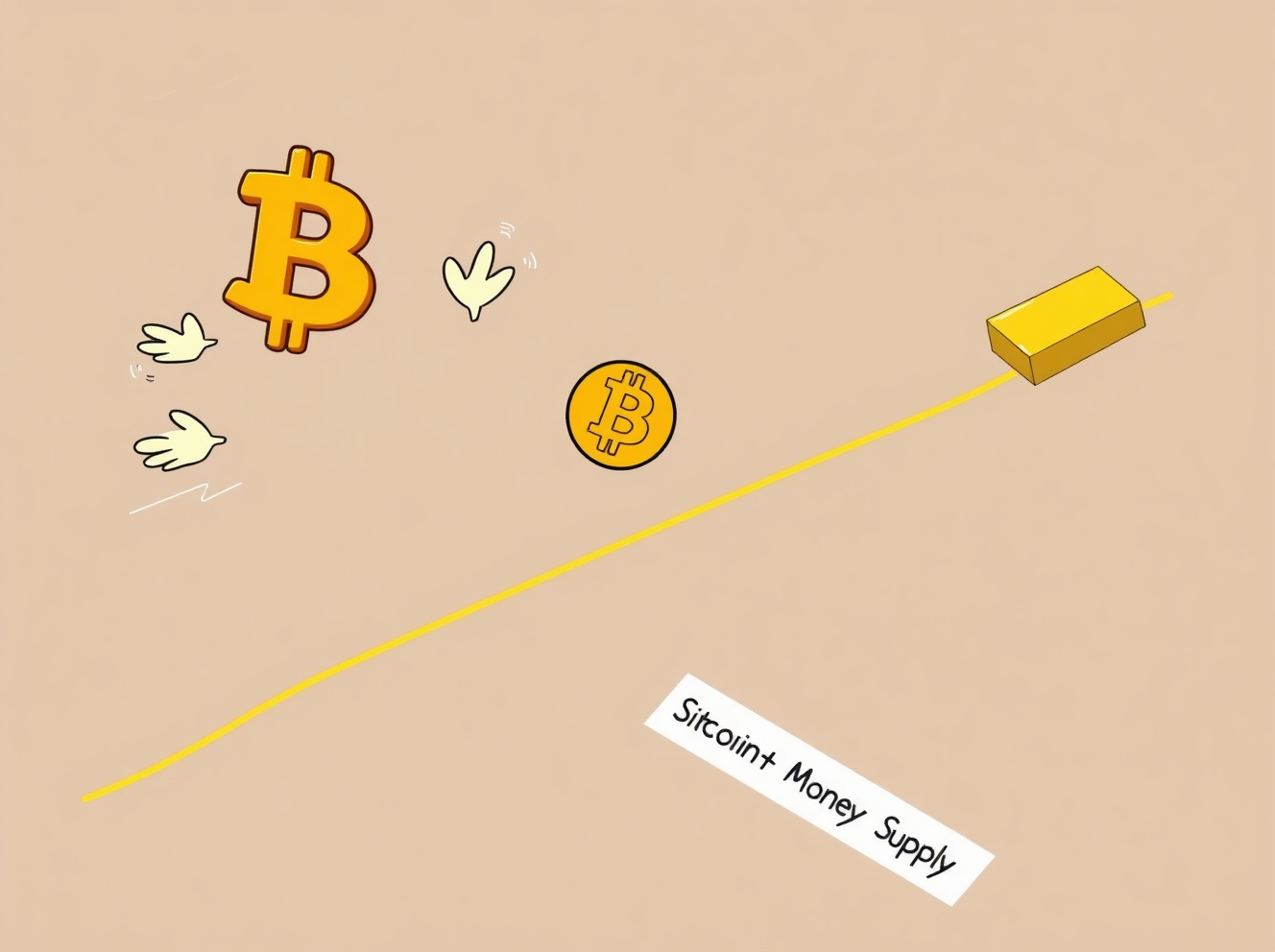
Remarkable Bitcoin Decoupling: What It Means for Global Markets

Have you ever noticed how some things just seem to move together in the financial world? For a long time, many analysts observed a fascinating pattern with Bitcoin: its price often mirrored movements in the global M2 money supply, typically with about a 70-day lag. But what if that predictable dance has suddenly stopped?

According to Joe Consorti, head of growth at the Bitcoin custody firm Theya, we are now witnessing a significant shift. He points out that the historical correlation between Bitcoin’s price and the global M2 money supply has ceased since May. This development, which we can call the Bitcoin decoupling, marks a new chapter in understanding how the leading cryptocurrency behaves.

What’s Behind the Remarkable Bitcoin Decoupling?

Joe Consorti’s analysis reveals a pivotal moment for Bitcoin. For years, the 70-day lag between Bitcoin’s price and the global M2 money supply was a key indicator for many. This meant that changes in the amount of money circulating globally would eventually influence Bitcoin’s value.

However, that pattern is no longer holding true. Since May, Bitcoin has embarked on a new, independent path. This Bitcoin decoupling suggests that its price movements are now being driven by different factors, moving away from the direct influence of broader monetary aggregates.

It’s a noteworthy change because it challenges long-held assumptions about Bitcoin’s market drivers. While gold continues to show a near one-to-one correlation with the M2 metric, Bitcoin is charting its own course, signaling a potential maturation of the asset.

Understanding Global M2: Why Does It Matter for Asset Prices?

To fully grasp the significance of this Bitcoin decoupling, it’s helpful to understand what global M2 money supply actually is. Simply put, M2 represents a broad measure of the total money circulating in an economy. This includes:

  • Cash
  • Checking deposits
  • Savings deposits
  • Money market accounts

Historically, an increase in M2 often indicates more money chasing a relatively fixed supply of assets, which can lead to inflation and higher asset prices. This is why many traditional assets, like gold, tend to move in tandem with M2, acting as a hedge against currency devaluation.

The fact that gold maintains this strong correlation while Bitcoin breaks away highlights a fundamental shift in their respective market roles and investor perceptions.

Consorti suggests that this significant shift is unfolding amid a complex global economic landscape, characterized by a weaker U.S. dollar and heightened geopolitical risks. These broader macroeconomic factors are likely contributing to the changing asset correlations we are observing.

The implications of this Bitcoin decoupling are substantial for investors and market watchers alike:

  • Changing Asset Perceptions: Gold is traditionally seen as the ultimate safe-haven asset, attracting capital during times of crisis and uncertainty. Bitcoin, however, is increasingly viewed differently.
  • Bitcoin as ‘Risk-On’: Consorti explains that Bitcoin is now perceived as an asset that moves more significantly in a ‘risk-on’ environment. This means that when investors feel confident and are willing to take on more risk for higher potential returns, Bitcoin tends to perform strongly.
  • Independent Drivers: This new behavior suggests that Bitcoin’s price might be influenced more by crypto-specific adoption, technological advancements, regulatory clarity, or unique supply-demand dynamics within the digital asset space, rather than just broad monetary policy.

This evolving narrative requires a fresh perspective on how Bitcoin fits into a diversified investment portfolio.

What Does This Mean for Your Crypto Strategy?

The observation of a Bitcoin decoupling from global M2 money supply presents both challenges and opportunities for investors. It means that relying solely on past correlations might no longer be an effective strategy.

Here are some actionable insights to consider:

  • Re-evaluate Investment Theses: It’s crucial to reassess why you hold Bitcoin. Is it purely an inflation hedge, or are you recognizing its potential as a growth asset in a ‘risk-on’ environment?
  • Broaden Your Analysis: Look beyond just M2. Pay attention to other macroeconomic indicators, geopolitical events, and, critically, developments within the cryptocurrency ecosystem itself.
  • Diversification Remains Key: As correlations shift, maintaining a diversified portfolio across different asset classes and within the crypto space can help mitigate risks.
  • Stay Informed: The crypto market is dynamic. Continuously learning about new analyses and market shifts, like this Bitcoin decoupling, is essential for making informed decisions.

This period of shifting correlations could define Bitcoin’s role for years to come.

The Bitcoin decoupling from global M2 money supply is a truly remarkable development. It signifies a potential maturation of Bitcoin as an asset, with its movements now seemingly less tethered to traditional monetary metrics and more influenced by a complex interplay of risk sentiment and unique crypto-market dynamics. While gold continues its traditional role, Bitcoin is forging its own path, offering investors a new lens through which to view its value and potential. Understanding these evolving correlations is paramount for navigating the exciting, yet ever-changing, landscape of digital assets.

Frequently Asked Questions (FAQs)

Q1: What is the global M2 money supply?
A1: The global M2 money supply is a broad measure of the total amount of money circulating in an economy, including physical currency, checking accounts, savings accounts, and money market funds. It’s often used as an indicator of liquidity and potential inflationary pressures.

Q2: How did Bitcoin’s price previously correlate with M2?
A2: Historically, Bitcoin’s price often showed a correlation with the global M2 money supply, typically with a lag of about 70 days. This meant that increases or decreases in M2 would often precede similar movements in Bitcoin’s price.

Q3: Why is Bitcoin decoupling from M2 now?
A3: According to analyst Joe Consorti, this Bitcoin decoupling has occurred since May. He suggests it’s happening amidst a weaker U.S. dollar and heightened geopolitical risks, leading to a re-evaluation of asset correlations and Bitcoin’s role as a ‘risk-on’ asset.

Q4: Does this make Bitcoin more or less risky?
A4: The decoupling doesn’t inherently make Bitcoin more or less risky, but it changes the nature of its risk. It suggests Bitcoin’s price movements may be driven by different factors, potentially increasing its volatility in ‘risk-on’ environments and requiring investors to adapt their risk assessment strategies.

Q5: How does gold’s correlation with M2 compare to Bitcoin’s?
A5: While Bitcoin is decoupling, gold continues to show a near one-to-one correlation with the global M2 money supply. This reinforces gold’s traditional role as a safe-haven asset and an inflation hedge, contrasting with Bitcoin’s evolving ‘risk-on’ perception.

Q6: What should investors do in light of this Bitcoin decoupling?
A6: Investors should re-evaluate their investment theses, broaden their market analysis beyond traditional correlations, and consider how Bitcoin fits into a diversified portfolio as a dynamic asset influenced by both macro and crypto-specific factors.

If you found this analysis insightful, consider sharing it with your network! Understanding these shifts is crucial for anyone navigating the evolving world of digital assets. Share on social media to spark a conversation about Bitcoin’s future!

To learn more about the latest crypto market trends, explore our article on key developments shaping Bitcoin price action.

This post Remarkable Bitcoin Decoupling: What It Means for Global Markets first appeared on BitcoinWorld.

Market Opportunity
Everscale Logo
Everscale Price(EVER)
$0.0093
$0.0093$0.0093
+0.75%
USD
Everscale (EVER) Live Price Chart
Disclaimer: The articles reposted on this site are sourced from public platforms and are provided for informational purposes only. They do not necessarily reflect the views of MEXC. All rights remain with the original authors. If you believe any content infringes on third-party rights, please contact service@support.mexc.com for removal. MEXC makes no guarantees regarding the accuracy, completeness, or timeliness of the content and is not responsible for any actions taken based on the information provided. The content does not constitute financial, legal, or other professional advice, nor should it be considered a recommendation or endorsement by MEXC.

You May Also Like

VIRTUAL Weekly Analysis Jan 21

VIRTUAL Weekly Analysis Jan 21

The post VIRTUAL Weekly Analysis Jan 21 appeared on BitcoinEthereumNews.com. VIRTUAL closed the week up 3.57% at $0.84, but the long-term downtrend maintains its
Share
BitcoinEthereumNews2026/01/22 06:54
Dogecoin, Shiba Inu & XYZVerse: Three Meme Coin Paths — Stability, Gradual Growth & Explosive Upside?

Dogecoin, Shiba Inu & XYZVerse: Three Meme Coin Paths — Stability, Gradual Growth & Explosive Upside?

Three meme tokens are taking unique routes in the market. One is holding firm, another is making slow gains, and a third is causing excitement with its big jumps. What sets these coins apart and makes each path interesting? The coming analysis looks at how these strategies could shape their future and what it might mean for traders. From Meme to Mainstream: Is Dogecoin Ready for Another Lift-Off? Dogecoin burst onto the scene in 2013 with a grinning Shiba Inu and a shrug. Its creators, Billy Marcus and Jackson Palmer, wanted a light-hearted twist on serious crypto. They set no hard limit on coins; in fact 10,000 fresh DOGE roll out every minute. What began as a joke became a juggernaut. Social media rallies, led by Elon Musk, pushed its worth above $50 billion in 2021, planting it in the top ten. The surge proved one thing: an online crowd can turn a meme into a market force. Under the hood DOGE runs on the same proof-of-work idea as Bitcoin, yet blocks clear faster and fees stay tiny. That makes tipping gamers, streamers, and friends quick and cheap. The endless supply fuels spending but also keeps a lid on scarcity. In today’s cycle Bitcoin’s rebound has traders hunting for lagging plays. New meme coins flash brighter, yet many fade fast. Dogecoin still owns the biggest fan club and sits on every major exchange, giving it staying power. If utility grows—or another Musk tweet lands—momentum could return in a hurry. Shiba Inu: The Meme Dog That Sniffed Out a Spot on Ethereum Shiba Inu burst onto the scene in 2020, barking at Dogecoin’s heels. Built on Ethereum, it plugs into a huge network of apps and wallets. Its maker, known only as Ryoshi, unleashed one quadrillion tokens. Half went to Vitalik Buterin, who later gave much away and burned the rest. That bold move grabbed headlines and trust. At the same time, it showed the coin was more than a joke. Today, SHIB powers ShibaSwap, a place to trade tokens without a middleman. Soon, holders may vote on new changes and even mint art pieces called NFTs. This wider plan gives SHIB tools that Dogecoin still lacks. The market cycle now rewards coins with clear stories and active teams. Meme coins often ride big waves, and Ethereum-based ones get extra attention because they fit with popular chains like Uniswap and OpenSea. SHIB also has a huge, vocal fan base that can drive fast moves. Prices are still far below last year’s peak, so some see room for a fresh run if the next bull phase appears. Demand for $XYZ Surges As Its Capitalization Hits the $15M Milestone XYZVerse ($XYZ), recently recognized as Best NEW Meme Project, is drawing significant attention thanks to its standout concept. It is the first ever meme coin that merges the thrill of sports and the innovation of web3. Unlike typical meme coins, XYZVerse offers real utility and a clear roadmap for long-term development. It plans to launch gamified products and form partnerships with big sports teams and platforms. Notably, XYZVerse recently delivered on one of its goals ahead of schedule by partnering with bookmaker.XYZ, the first fully on-chain decentralized sportsbook and casino. As a bonus, $XYZ token holders receive exclusive perks on their first bet. Price Dynamics and Listing Plans During its presale phase, the $XYZ token has shown steady growth. Since its launch, the price has increased from $0.0001 to $0.0055, with the next stage set to push it further to $0.0056. With an anticipated listing price of $0.10, the token is set to launch on leading CEXs and DEXs. The projected listing price of $0.10 could generate up to 1,000x returns for early investors, provided the project secures the necessary market capitalization. So far, more than $15 million has been raised, and the presale is approaching another significant milestone of $20 million. This fast progress is signaling strong demand from both retail and institutional investors. Champions Get Rewarded In XYZVerse, the community calls the plays. Active contributors are rewarded with airdropped XYZ tokens for their dedication. It’s a game where the most passionate players win big. The Road to Victory With solid tokenomics, strategic CEX and DEX listings, and consistent token burns, $XYZ is built for a championship run. Every play is designed to push it further, to strengthen its price, and to rally a community of believers who believe this is the start of something legendary. Airdrops, Rewards, and More - Join XYZVerse to Unlock All the Benefits Conclusion DOGE offers steadiness, SHIB moves upward in steps, yet XYZVerse (XYZ) blends sports and memes, presale live, community-led, aiming to beat past 17,000% stars in the 2025 bull run. You can find more information about XYZVerse (XYZ) here: https://xyzverse.io/, https://t.me/xyzverse, https://x.com/xyz_verse   Disclaimer: This article is provided for informational purposes only. It is not offered or intended to be used as legal, tax, investment, financial, or other advice.
Share
Coinstats2025/09/20 16:32
YZi Labs invests in Ethena Labs to support the expansion of the USDe ecosystem

YZi Labs invests in Ethena Labs to support the expansion of the USDe ecosystem

PANews reported on September 19th that YZi Labs announced it has deepened its holdings in Ethena Labs and will continue its strategic support for the development of the USDe ecosystem. USDe is the fastest-growing and third-largest dollar-denominated crypto asset in history, with a current circulating supply exceeding $ 13 billion. YZi Labs' support will promote the expansion of USDe's application across centralized and decentralized platforms, and will contribute to the development of new products : USDtb (a fiat-backed stablecoin) and Converge (an institutional settlement layer).
Share
PANews2025/09/19 21:07