Top Privacy Cryptocurrencies for 2026: Analyzing Monero, Zcash, and Dash
Key Takeaways
- Increasing worries about blockchain transparency and Know Your Customer (KYC) requirements are driving renewed interest in privacy-focused cryptocurrencies
- Monero enforces complete transaction anonymity by default, establishing it as the leading privacy cryptocurrency while attracting the most regulatory scrutiny
- Zcash surged past $585 in 2026 following Multicoin Capital’s disclosure of a significant investment on May 6
- Dash functions primarily as a payment-focused cryptocurrency with optional privacy capabilities rather than a dedicated privacy solution
- Regulatory challenges pose the greatest threat to all three cryptocurrencies, with multiple jurisdictions already implementing delisting measures
Privacy-oriented cryptocurrencies are experiencing a resurgence in investor attention throughout May. Escalating anxieties surrounding financial monitoring, increasingly stringent exchange regulations, and sophisticated blockchain analysis tools are driving crypto enthusiasts toward digital assets offering enhanced transactional confidentiality.
Contrasting with Bitcoin or Ethereum, where every transaction remains permanently visible on public ledgers, privacy coins employ specialized cryptographic techniques to obscure transaction information. These technologies can mask the sending party, receiving party, and transferred amounts.
This cryptocurrency category remains divisive. Financial regulators and trading platforms have approached privacy coins cautiously, contending that they complicate compliance obligations. Advocates counter with a fundamental question: if physical currency transactions enjoy privacy, shouldn’t digital alternatives offer the same?
Three cryptocurrencies deserve particular attention this month: Monero, Zcash, and Dash. Each implements distinct privacy methodologies and presents unique risk considerations.
Monero: Mandatory Anonymity with Maximum Regulatory Exposure
Monero stands as the most recognized privacy cryptocurrency. Anonymity functions as a fundamental network characteristic — every transaction maintains privacy automatically, with no mechanism for public visibility.
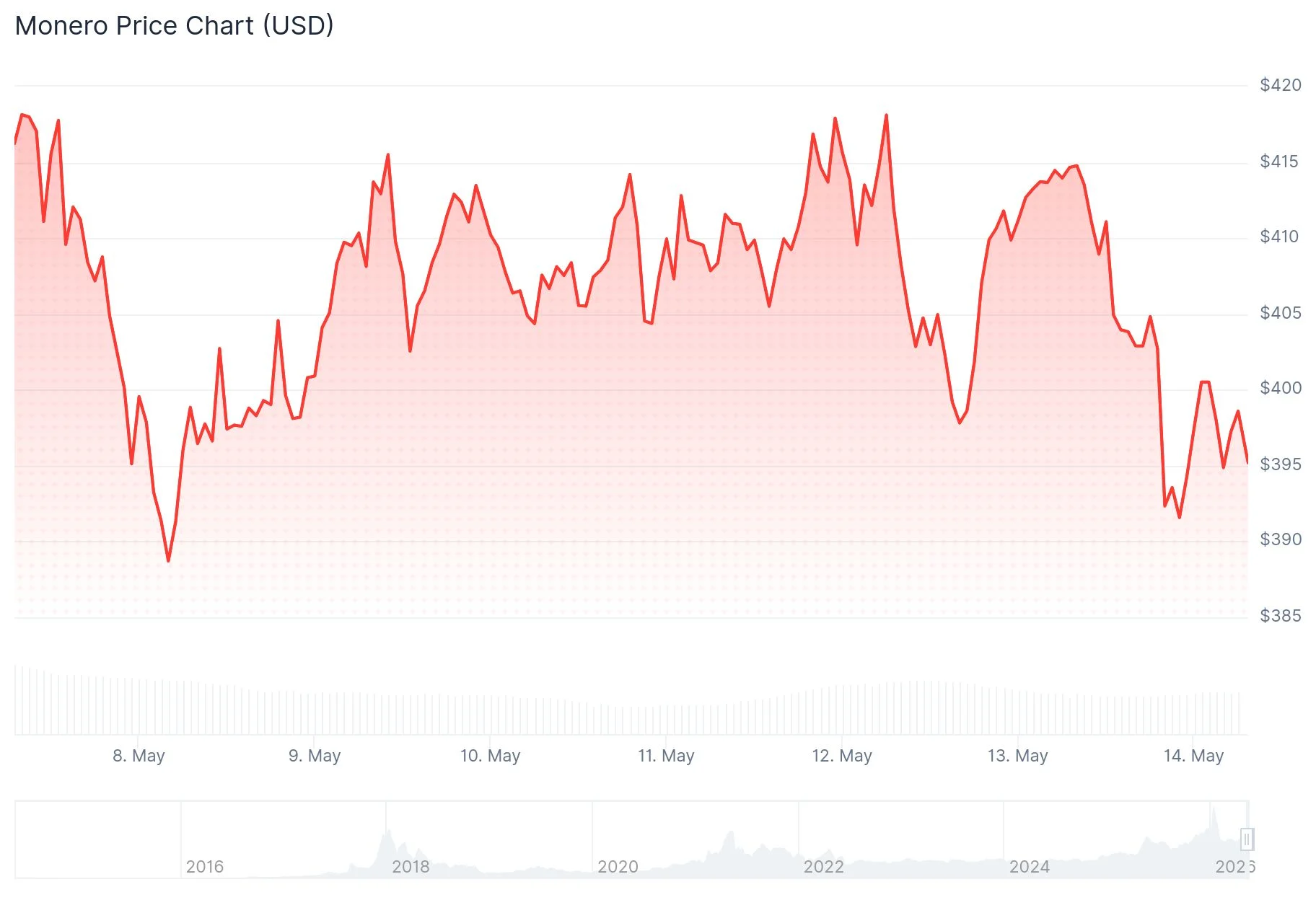 Monero (XMR) Price
The protocol employs ring signatures, stealth addresses, and confidential transaction technology to conceal senders, recipients, and transaction values. This architecture represents the most comprehensive implementation of compulsory transaction privacy in cryptocurrency.
Monero doesn’t attempt to compete as a smart contract platform or comprehensive payment network. Its purpose remains straightforward: functioning as untraceable digital currency.
This singular focus has cultivated one of cryptocurrency’s most dedicated communities. User demand for private transactions may intensify as surveillance concerns escalate.
The primary vulnerability involves regulatory intervention. Nations including Japan, South Korea, India, and various European jurisdictions have already imposed restrictions on privacy coins through regulated exchanges. Monero consistently faces the earliest regulatory action.
Zcash: Zero-Knowledge Technology with Growing Institutional Backing
Zcash implements an alternative methodology. The protocol permits both public and private transactions, offering user choice rather than mandating universal privacy.
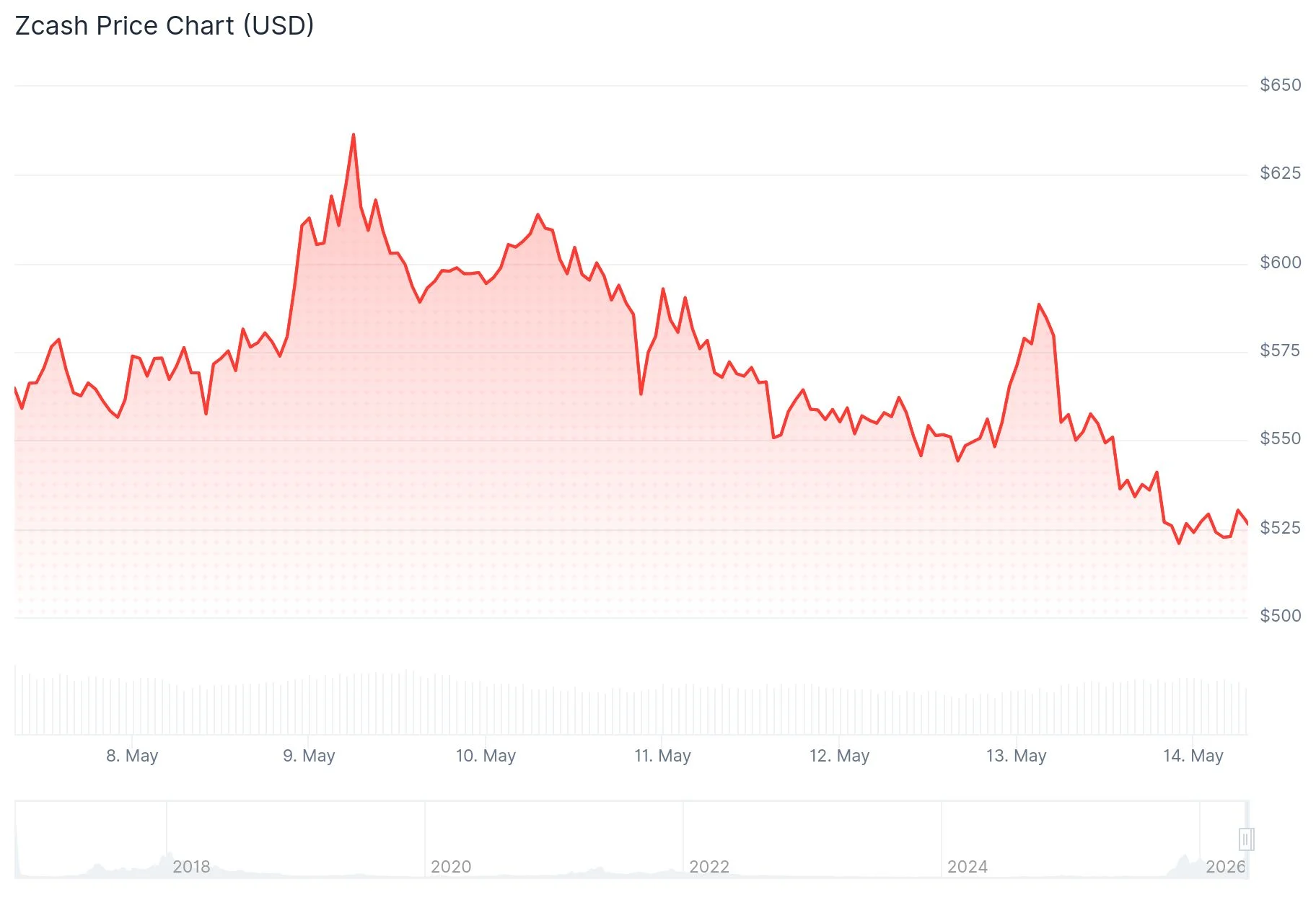 Zcash (ZEC) Price
Its privacy infrastructure relies on zero-knowledge proof cryptography, enabling transaction verification without exposing underlying transaction details.
Throughout 2026, Zcash has emerged as a closely monitored privacy asset following Multicoin Capital’s announcement of a substantial holding on May 6. The cryptocurrency reached a 2026 peak exceeding $585 immediately afterward.
This development carries significance because privacy cryptocurrencies have traditionally attracted primarily retail investment. Institutional participation transforms the market narrative and indicates some professional investors view privacy as a broader digital rights or infrastructure investment theme.
Zcash may also attract investors seeking privacy sector exposure while preferring an asset with optional transparency features, facilitating discussions in regulated environments.
The principal concern involves actual usage patterns. If most participants continue using transparent transactions, the practical privacy advantage diminishes considerably.
Dash: Payment Functionality with Secondary Privacy Features
Dash originated as a privacy-centered Bitcoin derivative but subsequently pivoted toward rapid digital payment processing. Its PrivateSend functionality employs CoinJoin-style transaction mixing, which provides limited privacy but differs fundamentally from Monero’s comprehensive default model or Zcash’s zero-knowledge proof architecture.
This characterization positions Dash less as a dedicated privacy cryptocurrency and more as a payment-focused asset with supplementary privacy capabilities.
This strategic positioning can prove advantageous in certain markets. Its payment-centric identity resonates more clearly with investors, and it has historically attracted users prioritizing transaction speed and reduced fees.
Dash appeared among the sector’s strongest performers when privacy tokens outpaced the broader market earlier this year, according to CoinDesk.
The vulnerability lies in Dash’s ambiguous positioning. It may lack sufficient privacy features for strict anonymity advocates, yet its privacy associations can still trigger challenges on regulated trading platforms.
Concluding Analysis
Monero represents the most uncompromising privacy implementation. Zcash delivers advanced zero-knowledge proof technology alongside increasing institutional validation. Dash provides payment utility with moderate privacy functionality.
The opportunity remains consistent across all three: if concerns regarding surveillance and exchange restrictions intensify, privacy-focused cryptocurrencies could experience renewed demand.
The risk appears equally apparent: regulatory intervention. Exchange availability for privacy coins can shift rapidly, and this sector remains among cryptocurrency’s most politically sensitive categories.
The post Top Privacy Cryptocurrencies for 2026: Analyzing Monero, Zcash, and Dash appeared first on Blockonomi.


You May Also Like

Gold Price Forecast: Stable at $4,700 as markets await news from Trump-Xi meeting

INSTITUTIONAL | BitGo Q1 2026 Losses More Than Double Despite Over 40% Growth in Client Base