Responsive MCP Integration for Revenue Teams Signals Shift Toward Trusted Enterprise AI Workflows
Summary
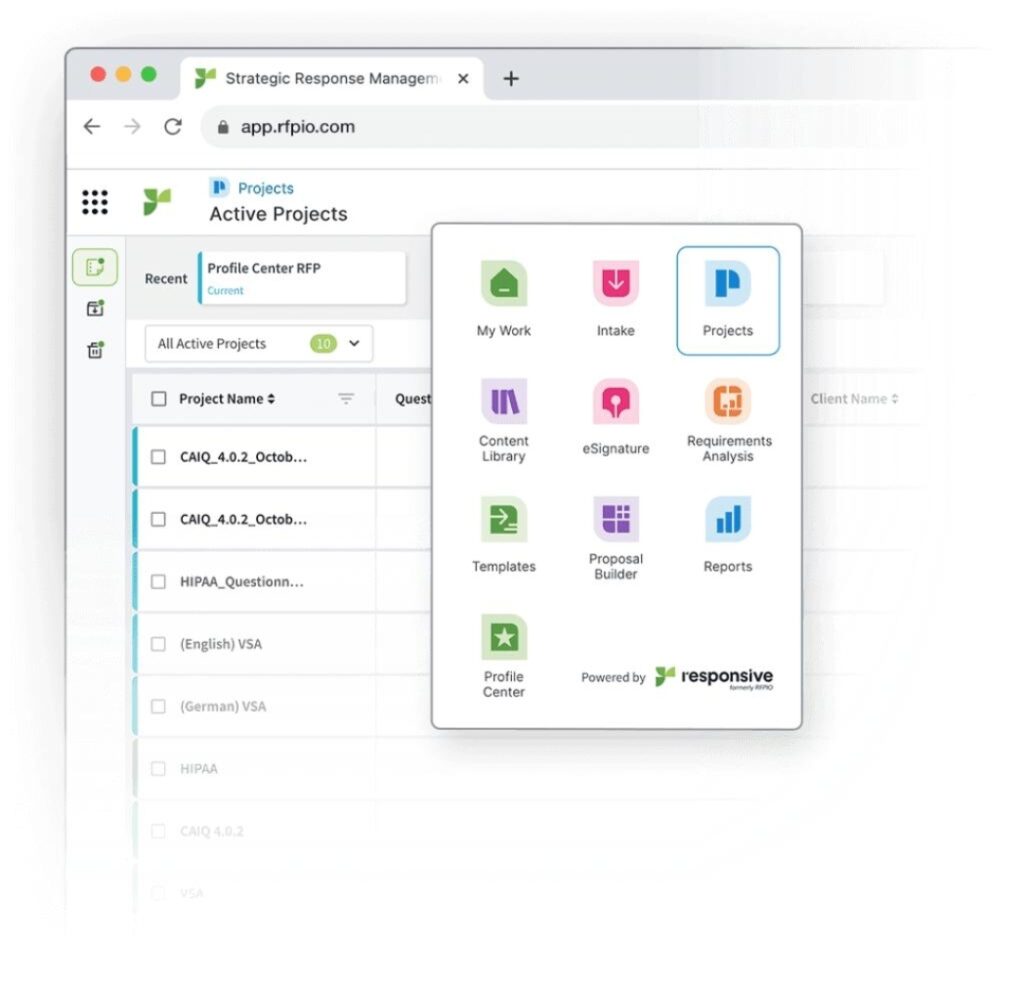
Responsive has launched its Spring 2026 release centered on Responsive MCP integration for revenue teams, enabling direct access to trusted enterprise knowledge within AI platforms such as OpenAI ChatGPT, Microsoft Copilot, and Anthropic Claude. The announcement reflects a broader enterprise shift toward AI-first workflows where customer-facing teams increasingly rely on generative AI during high-stakes interactions. The release also introduces Portal Automation capabilities for completing third-party questionnaires. From a CX perspective, the development matters because it addresses a growing enterprise challenge: maintaining trust, accuracy, and consistency when AI-generated responses influence customer relationships, procurement cycles, and revenue operations.
CX Industry Context
The rise of generative AI inside enterprise workflows has fundamentally changed how organizations manage customer engagement, proposal development, and knowledge delivery. However, speed without governance creates operational risk. Responsive MCP integration for revenue teams directly targets this tension by embedding verified enterprise content into AI assistants already used by sellers and proposal teams.
This shift reflects a larger CX transformation. Enterprises increasingly recognize that AI-generated responses influence customer trust just as much as human interactions do. As organizations scale AI adoption, consistency becomes a differentiator. Buyers expect accurate responses across RFPs, security questionnaires, onboarding discussions, and procurement evaluations. Consequently, vendors that connect AI systems to approved knowledge repositories may gain an advantage in reducing misinformation, shortening sales cycles, and improving experience continuity across customer touchpoints.
Company Strategy Analysis
Responsive continues positioning itself beyond traditional RFP automation by aligning with the emerging infrastructure layer surrounding enterprise AI workflows. The company’s strategy centers on embedding Strategic Response Management directly into operational environments where revenue teams already work rather than forcing users into standalone systems.
The Spring 2026 release demonstrates three important architectural decisions. First, MCP-based integrations align Responsive with the rapidly expanding ecosystem around AI agents and contextual enterprise data access. Second, native integrations with ChatGPT, Copilot, and Claude increase platform relevance amid growing AI fragmentation. Third, Portal Automation extends the company’s value proposition from internal response generation into external procurement ecosystems.
Competitive differentiation now depends less on AI generation itself and more on trusted orchestration, auditability, and enterprise-grade knowledge governance.
CX Impact
The customer experience implications extend well beyond productivity gains. AI-generated responses increasingly shape how customers evaluate competence, reliability, and operational maturity. Responsive’s new capabilities focus on ensuring that organizations deliver accurate information consistently across every interaction.
By embedding trusted content directly into AI environments, the platform reduces the likelihood of contradictory or outdated customer-facing communication. This strengthens brand trust and improves response reliability during critical engagement stages such as vendor evaluations, security reviews, and procurement negotiations.
Moreover, Portal Automation addresses a significant friction point in enterprise buying journeys. Organizations frequently struggle with repetitive third-party questionnaires that delay decisions and create operational bottlenecks. Automating these workflows while maintaining traceability improves continuity and responsiveness. Consequently, enterprises can accelerate interactions without compromising governance, auditability, or customer confidence.
Industry Implications
The launch signals a broader market transition toward governed AI operations rather than standalone generative AI experimentation. Responsive MCP integration for revenue teams highlights how enterprises increasingly prioritize contextual accuracy over raw generation capability.
The growing adoption of MCP infrastructure may reshape SaaS integration strategies across customer-facing functions. Vendors that provide verifiable AI outputs connected to trusted enterprise systems could emerge as preferred partners in regulated or high-stakes industries.
Meanwhile, procurement processes themselves may evolve. As AI assistants become operational interfaces for revenue teams, organizations will expect seamless continuity between conversational AI, enterprise knowledge systems, and external customer portals. This convergence could redefine competitive expectations in enterprise CX and revenue enablement technology.
Key Insights
- MCP infrastructure is emerging as a governance layer for enterprise AI, not merely a connectivity protocol.
- Revenue operations increasingly depend on response consistency as a measurable CX metric.
- AI adoption now creates reputational risk when enterprise knowledge validation is absent.
- Portal automation reflects a shift from internal workflow optimization toward ecosystem-wide operational orchestration.
- The future competitive advantage in AI-enabled CX may depend more on trusted enterprise context than on model sophistication alone.
Enterprise AI adoption is accelerating rapidly, but governance challenges continue to shadow that momentum. Against this backdrop, Responsive MCP integration for revenue teams represents a strategic move toward embedding verified enterprise intelligence directly into the AI environments where customer-facing work increasingly happens. Responsive announced its Spring 2026 release with integrations for ChatGPT, Microsoft Copilot, and Claude through a Model Context Protocol (MCP) server, alongside new Portal Automation capabilities designed to streamline third-party questionnaire workflows.
The announcement reflects a larger transformation unfolding across customer experience and revenue operations. AI assistants no longer function merely as productivity tools. Instead, they increasingly influence how organizations communicate credibility, accuracy, and responsiveness during high-stakes customer interactions.
Responsive MCP Integration for Revenue Teams Targets AI Governance Gaps
Many enterprises have embraced generative AI for drafting customer communications, proposals, and sales responses. However, organizations frequently struggle to ensure those outputs remain grounded in verified company knowledge. As a result, enterprises face rising risks involving inconsistency, compliance exposure, and trust erosion.
Responsive’s latest release directly addresses that challenge by integrating approved enterprise content into AI assistants already embedded within daily workflows.
The company emphasized that sales, marketing, and field teams can now access Responsive directly from ChatGPT, Copilot, and Claude through MCP-powered integrations. These integrations enable teams to generate customer-facing responses while maintaining traceability to verified enterprise sources.
Notably, the timing aligns with broader market momentum surrounding MCP infrastructure. According to Gartner research cited in the announcement, “by 2027, 80% of AI agent interaction with SaaS applications will be via SaaS-hosted MCP servers, up from less than 5% in 2025.”
That projection highlights how enterprises increasingly view contextual AI governance as foundational rather than optional.
AI Assistants Are Becoming Revenue Operating Systems
The Spring 2026 release underscores how AI assistants now function as operational environments for revenue teams rather than isolated support tools. Consequently, integration depth has become strategically important.
AJ Sunder, co-founder and chief product officer at Responsive, directly addressed this transition:
That positioning signals a broader strategic shift. Instead of competing solely within proposal management or RFP automation categories, Responsive appears focused on becoming an orchestration layer connecting AI systems, enterprise knowledge, and customer-facing workflows.
Meanwhile, enterprises increasingly prioritize continuity across fragmented AI environments. Organizations rarely standardize on a single AI platform. Instead, teams simultaneously use ChatGPT, Copilot, Claude, and specialized enterprise tools. Therefore, vendors capable of maintaining governance consistency across ecosystems may gain operational relevance.
Responsive MCP Integration for Revenue Teams Expands Beyond Internal Workflows
The company also introduced Portal Automation, extending automation capabilities into external procurement and compliance ecosystems. This capability enables organizations to automatically complete portal questionnaires while maintaining collaboration and auditability within Responsive.
Supported portals currently include Whistic, OneTrust, Coupa, Venminder, BitSight, Hologic, ProcessUnity, and UpGuard.
This expansion matters because enterprise customer journeys increasingly involve complex third-party validation processes. Security reviews, compliance questionnaires, ESG assessments, and procurement evaluations frequently delay sales cycles and create operational friction.
Responsive’s approach attempts to reduce that friction while preserving oversight and content governance.
The company stated that Portal Automation allows teams to:
- Automatically complete portal questionnaires
- Collaborate and maintain auditability within Responsive
- Sync completed responses back to external portals
Importantly, the feature remains in beta and currently supports Chrome and Microsoft Edge.
Enterprise CX Increasingly Depends on Verified AI Responses
The CX implications of these developments extend beyond operational efficiency. Buyers now encounter AI-generated communication throughout procurement and vendor evaluation journeys. Consequently, inconsistent or inaccurate responses can directly affect brand perception.
Bernadette Guthrie, Global Director, Proposal Operations at Agiloft, emphasized this operational value in the release announcement:
That statement reflects a growing enterprise concern surrounding AI reliability. Organizations increasingly recognize that generative AI introduces reputational exposure when outputs drift away from approved information.
Therefore, enterprise CX strategies now require governance frameworks alongside automation initiatives.
MCP Infrastructure Could Reshape Enterprise SaaS Architecture
The broader significance of the release may lie in what it signals about future enterprise software architecture. MCP is rapidly emerging as a connective layer between AI systems and enterprise knowledge repositories.
This shift could fundamentally alter how SaaS platforms compete. Historically, workflow ownership defined enterprise value. However, AI assistants increasingly mediate user interactions across systems. As a result, contextual integration may become more important than interface dominance.
Responsive appears to be positioning itself early within that transition.
Moreover, the convergence between AI assistants, enterprise knowledge systems, and external procurement portals could redefine revenue operations entirely. Organizations may soon expect seamless continuity between proposal creation, compliance workflows, procurement validation, and conversational AI systems.
In that environment, trust architecture becomes a competitive differentiator.
The Emerging Battle for Trusted Enterprise AI
The Spring 2026 release demonstrates how enterprise AI competition is evolving beyond model performance. Vendors now compete on governance, traceability, workflow integration, and operational consistency.
Responsive’s focus on embedding verified knowledge directly into AI assistants reflects a practical reality facing modern enterprises: customers increasingly interact with AI-mediated responses before they interact with humans.
Consequently, organizations must ensure those responses reinforce reliability rather than undermine confidence.
As enterprises scale AI adoption across revenue and customer-facing functions, platforms capable of combining automation with governance may shape the next phase of enterprise customer experience transformation.
The post Responsive MCP Integration for Revenue Teams Signals Shift Toward Trusted Enterprise AI Workflows appeared first on CX Quest.


You May Also Like

Japanese Tech Giant’s Ambitious Bitcoin Accumulation

Trump says he and China’s Xi agree Iran cannot have nuclear weapons