'Unprecedented': Court hit with blistering demand to throw out Trump lawsuit
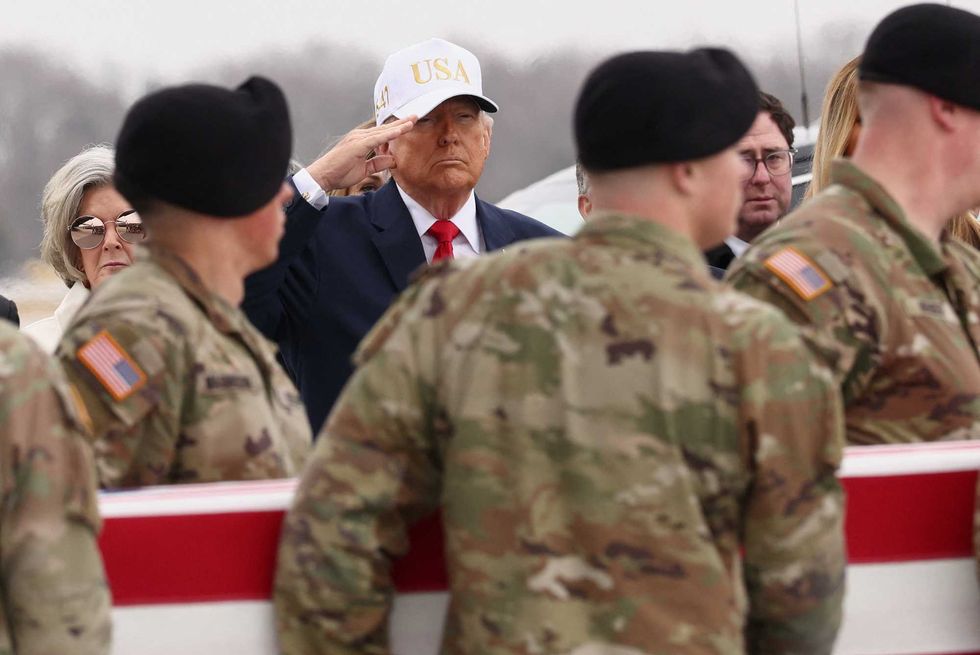
A federal court's own appointed attorneys filed a blistering brief Wednesday arguing that Donald Trump's $10 billion lawsuit against the IRS may be flatly unconstitutional — because, as Trump himself put it, he's essentially suing himself.
"This case is unprecedented," the court-appointed lawyers wrote in a 24-page filing this week. "A sitting president seeks monetary damages for alleged harm to his personal interests from an executive agency that he controls."
Trump filed the lawsuit in January, claiming the IRS failed to protect his confidential tax returns from a contractor who leaked them to the New York Times. The suit demands at least $10 billion. But there's a problem baked into the premise: the president controls the very agencies he's suing.
Trump seemed to grasp the paradox himself. Two days after filing, a reporter asked what it was like to be on both sides of a lawsuit. "It's very interesting," Trump said. "I'm supposed to work out a settlement with myself." Asked whether he could order the Treasury Secretary to pay him, Trump responded, "What I would do, tell 'em to pay me, but I'll give 100% of the money to charity."
This isn't Trump's only financial claim against his own government. As the New Republic has reported, Trump is separately pursuing two administrative claims under the Federal Tort Claims Act — one over the FBI's Russia investigation, another over the Mar-a-Lago raid — seeking a combined $230 million from his own Justice Department. He's been pursuing all three while sitting in the Oval Office.
The constitutional problem at the heart of Wednesday's filing is the legal doctrine of dominus litis — "master of the suit" — which requires dismissal when one party effectively controls both sides of a case. Courts "do not engage in the academic pastime of rendering judgments in favor of persons against themselves," the brief notes. And Trump's grip on the defendants is extensive: the IRS Commissioner "may be removed at the will of the President" — authority Trump already exercised in August 2025, firing Commissioner Billy Long just two months after his Senate confirmation, with no reason given.
The DOJ's behavior in the case has only deepened the court's suspicions. In nearly identical suits filed by other victims of the same IRS leak, the government has fought hard to get the cases thrown out, arguing sovereign immunity. In Trump's case, the two sides skipped the fighting and went straight to settlement talks. The brief flags that "the circumstances raise the specter that Defendants and their attorneys may instead be operating at the President's direction."
Former Attorney General Pam Bondi warned DOJ attorneys in a February 2025 memo that refusing to advance the president's legal positions could mean consequences, and publicly vowed to root out lawyers who "despise Donald Trump." Attorneys have since been fired for arguing cases that crossed the administration — including one who was terminated for conceding an error, and another who was fired for declining to prosecute a case Trump wanted pursued.
The brief urges Judge Kathleen Williams — an Obama appointee in the Southern District of Florida who flagged the jurisdictional problem last month — to demand answers. "What measures, if any, have they taken to ensure that Defendants and the DOJ lawyers assigned to this case are free to exercise independent litigation judgment?"
That's a question with an obvious implied answer. As the New Republic noted, the situation is the inverse of United States v. Nixon, the 1974 case that established a president could be sued by his own executive branch — but only because the Watergate special prosecutor was genuinely independent.
The parties have until May 20 to file their own memos explaining why the case shouldn't be dismissed. A settlement, if it materializes, could render the question moot — which may be exactly the point.


You May Also Like

Zero Outflows. $123M Locked. The Chainlink ETF Story Nobody Is Talking About

US Dollar Surges as Hawkish Fed Repricing Drives Breakout, Says ING