Whales just dropped $117K into Bitcoin Hyper’s presale, with buys of $17.3K, $87.1K, and $12.7K in the past 48 hours alone. That brings total funds raised to $18.3M+, cementing $HYPER as the most viral crypto presale in recent months.Whales just dropped $117K into Bitcoin Hyper’s presale, with buys of $17.3K, $87.1K, and $12.7K in the past 48 hours alone. That brings total funds raised to $18.3M+, cementing $HYPER as the most viral crypto presale in recent months.

Whales Buy $117K of Bitcoin Hyper in the Most Viral Crypto Presale in Recent Months

2025/09/26 21:09
6 min read
For feedback or concerns regarding this content, please contact us at crypto.news@mexc.com
Whales Buy $117K of Bitcoin Hyper in the Most Viral Crypto Presale in Recent Months

The frenzy isn’t without reason. Bitcoin still dominates the market with a $2.17T valuation and trades around $109K, but its limitations are well known: painfully slow transactions, sky-high fees in bull cycles, and almost no space for apps, meme coins, or DeFi.

Bitcoin Hyper ($HYPER) is aiming to fix that by introducing an advanced Bitcoin Layer-2 ecosystem. By integrating the Solana Virtual Machine, it will unlock sub-second speeds, near-zero gas fees, and cross-chain dApps – all secured by Bitcoin itself.

So why are whales betting big now? The answer lies in how $HYPER could finally make Bitcoin so much more than a ‘digital gold’ vault.

The Problem – Bitcoin’s Speed and Scalability Limits

Bitcoin may be the largest cryptocurrency by market cap, but in terms of scalability, it falls far behind its rivals.

On-chain, $BTC can process just seven transactions per second (TPS). By comparison, $SOL has a theoretical limit of 65K TPS and has already peaked above 100K in real-world tests. Even $BNB Chain averages hundreds of TPS, leaving Bitcoin looking outdated with its measly single digits.
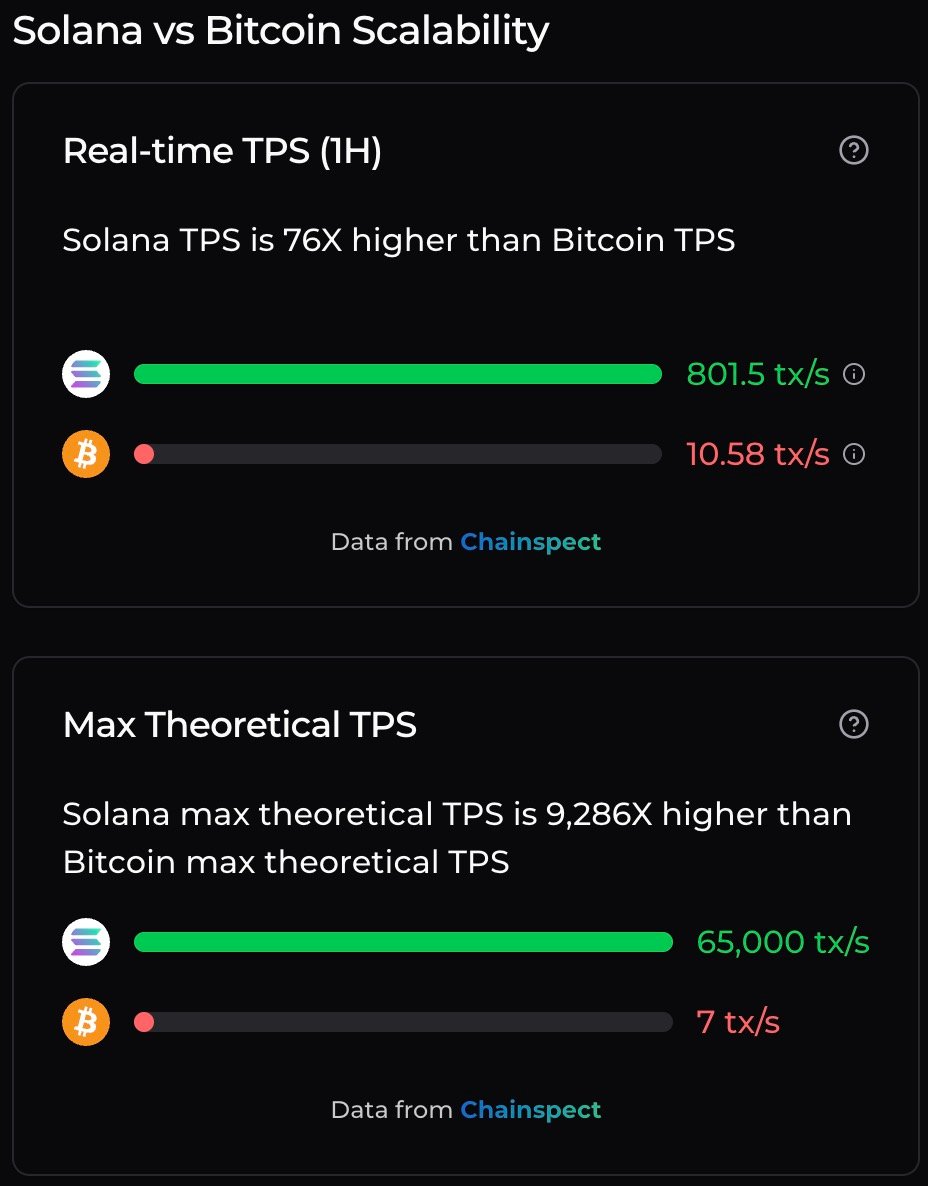
Solana vs Bitcoin blockchains by transactions per second (TPS).

Source: Chainspect

This slow throughput translates into a painful user experience. A typical Bitcoin transaction takes 10 minutes to confirm, and in bull runs network congestion drives fees high. For a chain positioning itself as global money, that’s a critical bottleneck.

The Lightning Network was meant to change this. Launched in 2018, it promised off-chain payment channels and cheaper fees. But the reality hasn’t matched the hype. Average transaction fees continued to rise after Lightning’s rollout, according to BitInfoCharts data. The huge spike in April 2024, however, was due to the launch of the Runes protocol.
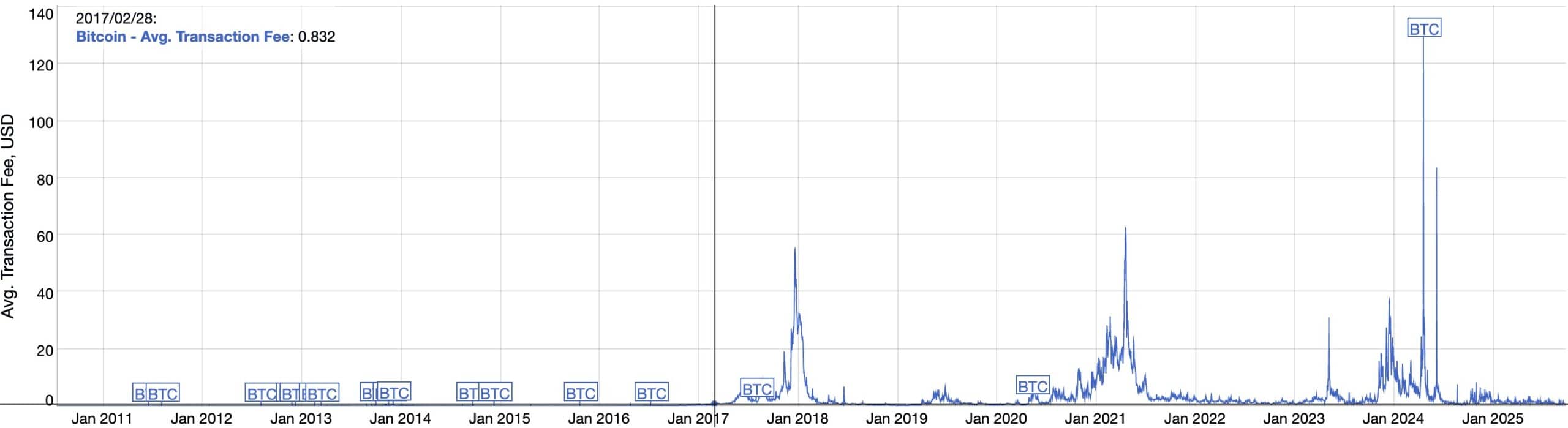
Bitcoin average transaction fee all-time chart.

Source: BitInfoCharts

Users still pay base fees and variable rates to routing nodes, and opening or closing channels requires on-chain transactions, meaning congestion and costs never disappear.

More concerning are the risks baked into the model. Lightning nodes must stay online at all times. Go offline, and your counterparty could fraudulently close a channel and pocket funds before you can dispute it.

Security researchers also warn that coordinated channel expirations could clog Bitcoin blocks and lock users out of their money.

The bottom line… Lightning hasn’t solved Bitcoin’s fee problem, and the base chain remains too slow for modern demands. While $BTC holds unmatched brand strength and institutional adoption, it lacks the scalability that keeps $ETH, $SOL, and $BNB at the center of DeFi, NFTs, and cultural adoption.

The Solution – Bitcoin Hyper’s Layer-2

Bitcoin Hyper ($HYPER) frames itself as Bitcoin’s long-missing execution layer. The place where real activity can happen without clogging the base chain. The idea is straightforward:

First, you bridge in. $BTC is locked on the Layer-1, and an equal amount is minted on Bitcoin Hyper’s Layer-2 as wrapped $BTC. From there, activity flows instantly and at near-zero cost. Trades, transfers, staking, or launching dApps all happen with sub-second confirmation times.

Security comes from zero-knowledge settlement. Transactions on Hyper are bundled, proven valid, and then committed back to the Bitcoin main chain. That means the speed of a high-performance Layer-2 with the security of Bitcoin itself. When you’re done, you bridge out, and the system releases your $BTC back to the Layer-1.
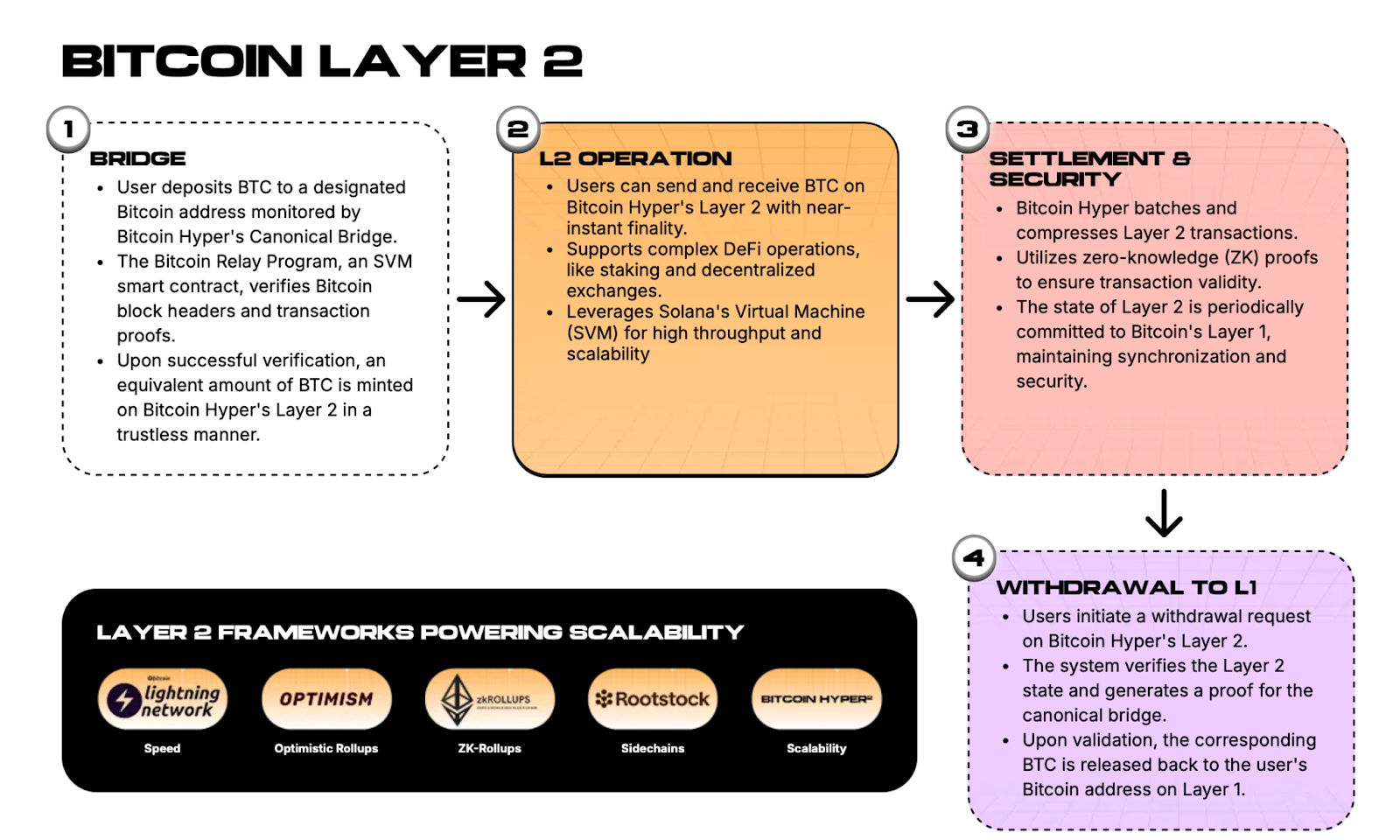
Bitcoin Hyper’s Layer-2 architecture.

The real differentiator is Hyper’s use of the Solana Virtual Machine. By integrating one of the fastest blockchain engines in the industry, Bitcoin Hyper inherits Solana’s ability to push tens of thousands of TPS while staying compatible with existing Solana-based apps. In practice, that makes Bitcoin interoperable with Solana and Ethereum ecosystems from day one.

What does this unlock? A new frontier – DeFi apps, lending platforms, and DEXs built directly on Bitcoin. Meme coins and cultural tokens no longer need to migrate elsewhere. And cross-chain flows between $BTC, $ETH, and $SOL become seamless.

Discover more about what $HYPER plans to bring to the table in our What is Bitcoin Hyper guide.

$HYPER Could Make Bitcoin Climb Even Higher

Bitcoin already sits at the top of the crypto market, with unmatched liquidity, brand recognition, and a $2T+ valuation. But history shows that dominance isn’t just about market cap… It’s about utility. Ethereum proved this when it moved beyond payments into smart contracts, dApps, and NFTs, cementing itself as the hub of Web3 activity.

Bitcoin Hyper could allow $BTC to make that same leap. By enabling DeFi, NFTs, meme coins, and even gaming to run on a Bitcoin-secured Layer-2, Hyper plans to transform Bitcoin from a static store of value into a dynamic ecosystem.

ETFs have made Bitcoin easier to hold, sparking institutional inflows. $HYPER, however, will make Bitcoin easier to use, which could be an even bigger narrative shift.

If Bitcoin becomes both the hardest currency and the most usable chain, its dominance could stretch further, and that’s exactly why whales are piling into $HYPER.

The Financial Side – Presale, Tokenomics, and Whale Buys

Bitcoin Hyper’s presale has already raised $18.3M+, with tokens priced at just $0.012975. Our step-by-step guide explains exactly how to buy in. Meanwhile, our Bitcoin Hyper prediction sees the token potentially reaching $1.50 by 2030. That equates to an impressive 3,754% gain.

For early buyers, the appeal is access. $HYPER is the fuel for the ecosystem, covering gas fees, staking, governance, and launch access for new projects. Investors can already stake at a 64% APY, while presale perks also include voting rights.

Whales have noticed. In the past 48 hours alone, three major buys landed: $87.1K, $17.3K, and $12.7K.
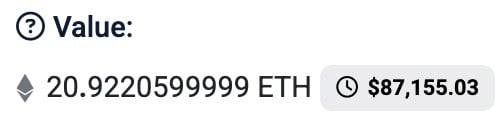
$87K buy on Bitcoin Hyper presale.

Source: Etherscan

That’s $117K in fresh capital within just two days, signaling conviction from larger players who see this as more than another meme play. They’re positioning ahead of a potential Bitcoin narrative shift.

A comparison to Ethereum’s early days is tempting. $ETH’s ICO in 2014 priced tokens at $0.31; seven years later, it hit an all-time high of $4.8K. While no project can guarantee that kind of trajectory, Bitcoin Hyper’s low entry price and growing momentum invite similar speculation.

Scarcity also drives interest. Presale buyers lock in a lower cost basis before an eventual listing premium. In other words, whales are front-running a vision of Bitcoin evolving beyond digital gold. The question for retail investors is whether to follow their lead before the presale closes.

Ready to jump in? Visit the Bitcoin Hyper presale website today.

Market Opportunity
Hyperlane Logo
Hyperlane Price(HYPER)
$0.08948
$0.08948$0.08948
-2.82%
USD
Hyperlane (HYPER) Live Price Chart
Disclaimer: The articles reposted on this site are sourced from public platforms and are provided for informational purposes only. They do not necessarily reflect the views of MEXC. All rights remain with the original authors. If you believe any content infringes on third-party rights, please contact crypto.news@mexc.com for removal. MEXC makes no guarantees regarding the accuracy, completeness, or timeliness of the content and is not responsible for any actions taken based on the information provided. The content does not constitute financial, legal, or other professional advice, nor should it be considered a recommendation or endorsement by MEXC.

You May Also Like

MEXC Expands Zero Fee Tokenized Equities With Ondo Batch

MEXC Expands Zero Fee Tokenized Equities With Ondo Batch

TLDR MEXC lists 17 ERC20 tokenized US equities with 30-day zero fees All pairs trade in USDT and use MEXC proprietary liquidity tech Launch marks ninth Ondo Finance
Share
Coincentral2026/03/05 14:02
On the eve of Web4, a guide for ordinary workers to avoid being left behind.

On the eve of Web4, a guide for ordinary workers to avoid being left behind.

Author: TT3LABS, Web3/AI/SaaS Remote Recruitment Platform On February 26, 2026, fintech giant Block announced layoffs of over 4,000 employees, reducing its team
Share
PANews2026/03/05 14:22
Coinbase Issues Cryptocurrency Call to US Justice Department: “Solve Urgent Problems!”

Coinbase Issues Cryptocurrency Call to US Justice Department: “Solve Urgent Problems!”

The post Coinbase Issues Cryptocurrency Call to US Justice Department: “Solve Urgent Problems!” appeared on BitcoinEthereumNews.com. Coinbase, the largest cryptocurrency exchange in the United States, stated that there should be uniform cryptocurrency regulation in the country. At this point, Coinbase sent a letter to the US Department of Justice requesting that federal regulators prevent state regulations from conflicting with national crypto policies and ensure uniform regulatory clarity. Coinbase’s request comes after the state of Oregon filed a lawsuit against Coinbase for unregistered securities, despite the SEC withdrawing its lawsuit against the cryptocurrency exchange. Coinbase states that although the country’s top regulator, the SEC, withdrew its lawsuit, states are filing lawsuits in defiance of the SEC’s decision. In the letter, addressed by Coinbase Legal Counsel Paul Grewal, he stated: “Despite the Trump administration’s positive regulatory efforts, crypto companies are being negatively impacted by states’ flawed interpretations of securities laws and their divergent actions. If Oregon can sue us for services that are legal under federal law, we have a problem. It has long been clear that the current patchwork of state laws is not only inefficient, but also slows innovation and harms consumers. At this point, the Justice Department should take steps to address the pressing issues by calling on Congress to step in and enact comprehensive and uniform regulations.” Oregon Attorney General Dan Rayfield filed a lawsuit against Coinbase last April, alleging that Coinbase was promoting the sale of unregistered cryptocurrencies to individuals in Oregon. *This is not investment advice. Follow our Telegram and Twitter account now for exclusive news, analytics and on-chain data! Source: https://en.bitcoinsistemi.com/coinbase-issues-cryptocurrency-call-to-us-justice-department-solve-urgent-problems/
Share
BitcoinEthereumNews2025/09/18 05:06