

Ellipse and Entrust Secure Agentic Commerce with EVC Dynamic Card Security Code
Unified, intuitive security across virtual, digital, & physical payment channels, helping prevent card-not-present fraud in an AI-driven payments environment.
As agentic commerce moves from concept to production, payment security is entering a new phase. AI agents are beginning to browse, select, and transact on behalf of consumers, introducing new challenges for dispute resolution and fraud management. Without a foundational trust layer designed for this environment, card issuers face growing complexity in adjudicating unauthorized transactions at scale.
To address this shift, Ellipse and Entrust today announced that Ellipse’s EVC® dynamic card security code (dCVV) technology is now natively available within the Entrust Digital Card Solution. By replacing the traditional fixed 3-digit security code with a dynamic code, EVC reduces the risk of card data misuse, including unauthorized credential sharing among AI agents. For cardholders, the experience is as intuitive as using any card today, whether through their banking app or a physical card.
Read More on Fintech : Global Fintech Interview with Rob Young, Managing Director – UK at InDebted
EVC works seamlessly across virtual cards, mobile wallets including Apple Pay, Google Pay, and physical cards. It supports same-PAN, tokenized-PAN, and numberless programs, and is compatible with tokenization, secure card-on-file, and Click to Pay. Because EVC runs on existing EMV rails, issuers can strengthen security across their portfolios without disrupting established systems.
Frictionless Adoption and Deployment Across Issuer Profiles
EVC removes the tradeoff between digital-first and physical-first issuance strategies. Issuers can deploy dynamic security across virtual and physical cards using a single platform, avoiding fragmented implementations. Further, EVC is delivered through the Entrust Digital Card Solution, giving issuers a streamlined path across Visa, Mastercard, Discover, Elo, and Amex without the need to evaluate a separate dCCV vendor.
Online Payment Fraud Set to Reach $91 Billion by 2028 as AI Accelerates the Curve
The scale of the challenge is accelerating. Juniper Research projects annual online payment fraud losses will reach approximately $91 billion by 2028. Generative AI is accelerating the curve: Deloitte estimates that U.S. AI-enabled fraud losses could climb to $40 billion by 2027, a 32% compound annual growth rate.
The fixed 3-digit security codes on payment cards were designed for a world where a person typed it at checkout. That world is ending. AI agents can reuse, share, or extract those codes without the cardholder ever knowing. EVC replaces the static code with a dynamic credential that refreshes automatically or on demand, rendering captured data unusable for unauthorized transactions.
“Agentic commerce breaks the assumption that a payment credential equals a present cardholder. EVC restores that trust layer by ensuring every transaction is legitimate across every card a bank issues,” said Cyril Lalo, Co-Founder and Chief Executive Officer, Ellipse. “With its global issuing footprint and decades of experience securing financial institution infrastructure, Entrust is the natural partner to deliver this capability at scale.”
“With Ellipse’s EVC and the Entrust Digital Card Solution, banks can easily deploy a secure card solution ready for agentic commerce. Ellipse’s EVC has set a clear standard for dynamic card security, and making it native within the Entrust Digital Card Solution allows banks to add dynamic protection through configuration rather than custom build-outs,” said Nicolas Bruley, VP Digital Cards at Entrust. “The result is stronger security without added complexity for card programs already under pressure.”
Catch more Fintech Insights : Finance as a Feature: The Monetization Shift in Global FinTech Platforms
[To share your insights with us, please write to psen@itechseries.com ]
The post Ellipse and Entrust Secure Agentic Commerce with EVC Dynamic Card Security Code appeared first on GlobalFinTechSeries.


You May Also Like

Glassnode Warns Nearly 30% Of Bitcoin Supply Could Face Future Quantum Risks
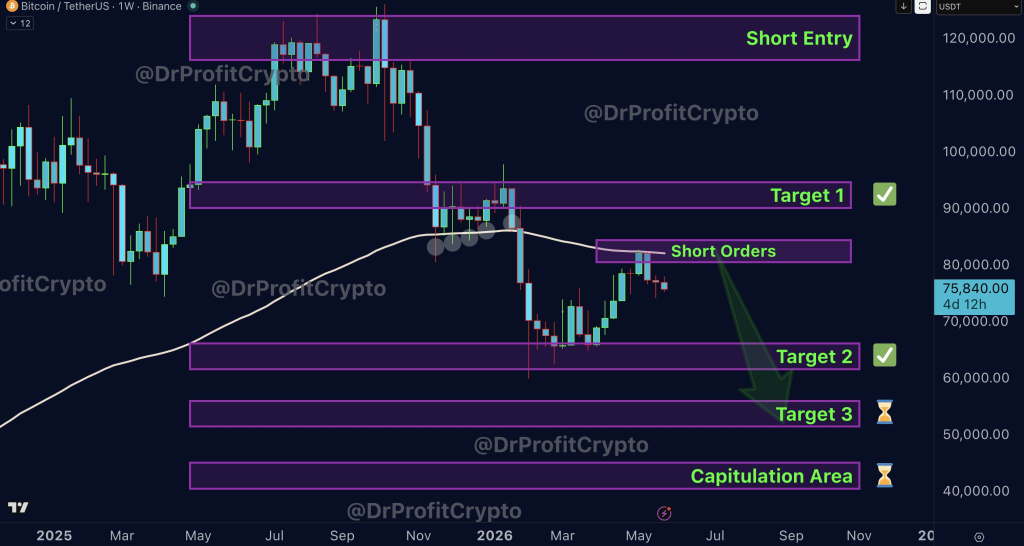
Bitcoin Price News: BTC at Risk of Falling to $70K as Crypto Veteran Calls for 50‑60K in Coming Months

Photographer catches Marco Rubio writing mantra to himself during cabinet meeting



