Bank of England Governor Andrew Bailey has outlined plans to grant widely used stablecoins access to central bank accounts while warning the tokens could reshape Britain’s financial system. According to a report from the Financial Times, Bailey described stablecoins as a technology that could separate money holding from credit provision, potentially reducing the role of commercial banks in the economy. The governor believes that this shift would require careful management to preserve the link between money and credit creation that underpins economic activity. His intervention coincides with the Bank of England’s preparation to publish a consultation paper on its systemic stablecoin regime, which will set standards for tokens used at scale for everyday payments or for settling tokenized financial markets.Andrew Bailey, Governor of the Bank of England (Source: Semafor) BoE Proposes Access to Central Bank Accounts Amid Deposit Drain Concerns Bailey explained that Britain’s financial system currently combines money holding with credit provision through fractional reserve banking, where commercial bank deposits directly support lending to households and companies. He noted that stablecoins could allow a different arrangement where money and credit provision are partially separated, with banks and stablecoins coexisting while non-banks carry out more lending activity. The central bank has also proposed ownership limits of £10,000 to £20,000 for people and £10 million for businesses on systemic stablecoins. Sasha Mills, the Bank’s executive director for financial market infrastructure, said the limits would “mitigate financial stability risks stemming from large and rapid outflows of deposits from the banking sector”. Bailey particularly stressed that backing assets for stablecoins must be free of credit, interest, and exchange rate risk to ensure value stability, and must be accompanied by insurance schemes and statutory resolution arrangements similar to bank deposits. He added that exchange terms must be known, consistent, and directly convertible into other forms of money rather than dependent on crypto exchanges and their business terms. The governor acknowledged that the technology behind stablecoins is new but poses an old central banking question about ensuring the link between money and credit creation. Crypto Industry Pushes Back Against the Proposed Stablecoin Cap Tom Duff Gordon, vice-president of international policy at Coinbase, told the Financial Times that “imposing caps on stablecoins is bad for UK savers, bad for the City and bad for sterling” and that no other major jurisdiction has deemed caps necessary. Similarly, Simon Jennings, executive director of the UK Cryptoasset Business Council, argued that “limits simply don’t work in practice” because stablecoin issuers cannot monitor token holders in real time. He warned that enforcing caps would require costly new systems such as digital IDs or constant coordination between wallets. Riccardo Tordera-Ricchi, director of policy at The Payments Association, also said, “just as there are no limits on cash, bank accounts, or e-money, there is no reason beyond scepticism to impose limits on stablecoin ownership”. The criticism threatens to deepen tensions between the Bank of England and the Treasury after Chancellor Rachel Reeves committed in her Mansion House speech to “drive forward developments in blockchain technology, including tokenised securities and stablecoins.” Given the ongoing criticism, the Bank of England has clarified that its proposed limits could be “transitional” as the financial system adjusts to the growth of digital money. The global stablecoin market has grown to $298 billion and received a major boost after Congress passed the GENIUS Act in July, introducing a regulatory framework expected to embed stablecoins as a key part of the U.S. financial system. Meanwhile, Coinbase has forecast that the stablecoin market could reach $1.2 trillion by 2028 and has recently published research titled “Beyond the Deposit Debate,” challenging the banking industry’s claims that stablecoins threaten traditional financial stability. The exchange called the “deposit erosion” narrative a myth designed to protect banks’ $187 billion annual payment processing monopoly. Coinbase argues that banks currently park $3.3 trillion in Federal Reserve reserves, earning $176 billion risk-free annually, rather than extending additional loans. Bank of England Governor Andrew Bailey has outlined plans to grant widely used stablecoins access to central bank accounts while warning the tokens could reshape Britain’s financial system. According to a report from the Financial Times, Bailey described stablecoins as a technology that could separate money holding from credit provision, potentially reducing the role of commercial banks in the economy. The governor believes that this shift would require careful management to preserve the link between money and credit creation that underpins economic activity. His intervention coincides with the Bank of England’s preparation to publish a consultation paper on its systemic stablecoin regime, which will set standards for tokens used at scale for everyday payments or for settling tokenized financial markets.Andrew Bailey, Governor of the Bank of England (Source: Semafor) BoE Proposes Access to Central Bank Accounts Amid Deposit Drain Concerns Bailey explained that Britain’s financial system currently combines money holding with credit provision through fractional reserve banking, where commercial bank deposits directly support lending to households and companies. He noted that stablecoins could allow a different arrangement where money and credit provision are partially separated, with banks and stablecoins coexisting while non-banks carry out more lending activity. The central bank has also proposed ownership limits of £10,000 to £20,000 for people and £10 million for businesses on systemic stablecoins. Sasha Mills, the Bank’s executive director for financial market infrastructure, said the limits would “mitigate financial stability risks stemming from large and rapid outflows of deposits from the banking sector”. Bailey particularly stressed that backing assets for stablecoins must be free of credit, interest, and exchange rate risk to ensure value stability, and must be accompanied by insurance schemes and statutory resolution arrangements similar to bank deposits. He added that exchange terms must be known, consistent, and directly convertible into other forms of money rather than dependent on crypto exchanges and their business terms. The governor acknowledged that the technology behind stablecoins is new but poses an old central banking question about ensuring the link between money and credit creation. Crypto Industry Pushes Back Against the Proposed Stablecoin Cap Tom Duff Gordon, vice-president of international policy at Coinbase, told the Financial Times that “imposing caps on stablecoins is bad for UK savers, bad for the City and bad for sterling” and that no other major jurisdiction has deemed caps necessary. Similarly, Simon Jennings, executive director of the UK Cryptoasset Business Council, argued that “limits simply don’t work in practice” because stablecoin issuers cannot monitor token holders in real time. He warned that enforcing caps would require costly new systems such as digital IDs or constant coordination between wallets. Riccardo Tordera-Ricchi, director of policy at The Payments Association, also said, “just as there are no limits on cash, bank accounts, or e-money, there is no reason beyond scepticism to impose limits on stablecoin ownership”. The criticism threatens to deepen tensions between the Bank of England and the Treasury after Chancellor Rachel Reeves committed in her Mansion House speech to “drive forward developments in blockchain technology, including tokenised securities and stablecoins.” Given the ongoing criticism, the Bank of England has clarified that its proposed limits could be “transitional” as the financial system adjusts to the growth of digital money. The global stablecoin market has grown to $298 billion and received a major boost after Congress passed the GENIUS Act in July, introducing a regulatory framework expected to embed stablecoins as a key part of the U.S. financial system. Meanwhile, Coinbase has forecast that the stablecoin market could reach $1.2 trillion by 2028 and has recently published research titled “Beyond the Deposit Debate,” challenging the banking industry’s claims that stablecoins threaten traditional financial stability. The exchange called the “deposit erosion” narrative a myth designed to protect banks’ $187 billion annual payment processing monopoly. Coinbase argues that banks currently park $3.3 trillion in Federal Reserve reserves, earning $176 billion risk-free annually, rather than extending additional loans.

Bank of England Governor Says Stablecoins Could Reduce UK Reliance on Commercial Banks – Could It?

2025/10/02 03:05
4 min read
For feedback or concerns regarding this content, please contact us at crypto.news@mexc.com

Bank of England Governor Andrew Bailey has outlined plans to grant widely used stablecoins access to central bank accounts while warning the tokens could reshape Britain’s financial system.

According to a report from the Financial Times, Bailey described stablecoins as a technology that could separate money holding from credit provision, potentially reducing the role of commercial banks in the economy.

The governor believes that this shift would require careful management to preserve the link between money and credit creation that underpins economic activity.

His intervention coincides with the Bank of England’s preparation to publish a consultation paper on its systemic stablecoin regime, which will set standards for tokens used at scale for everyday payments or for settling tokenized financial markets.
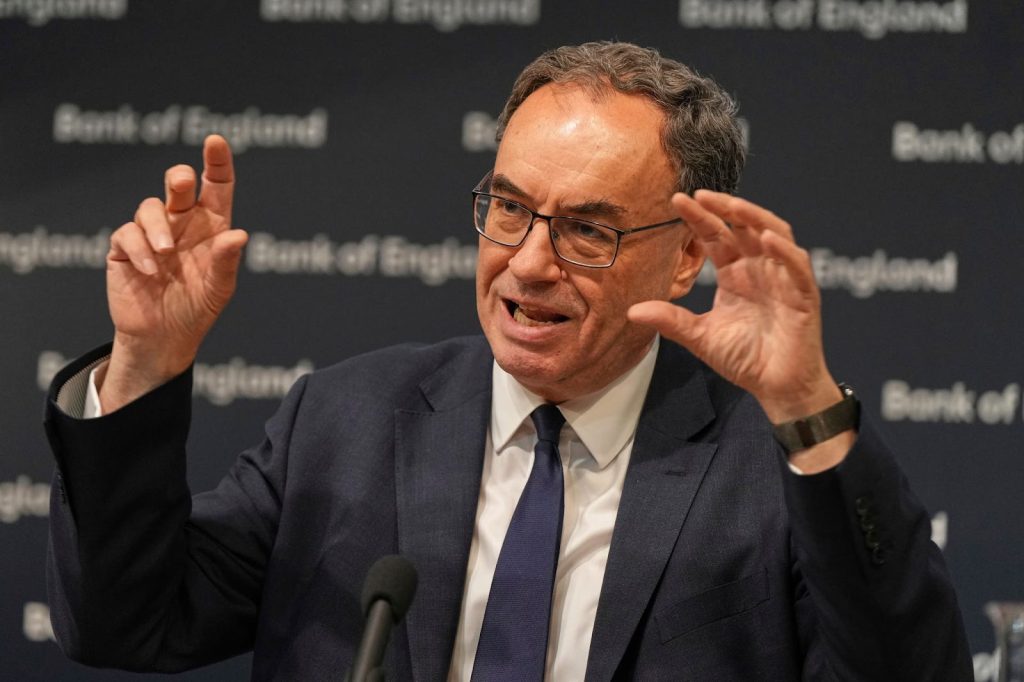
Bank of England Governor Says Stablecoins Could Reduce UK Reliance on Commercial Banks - Could It?Andrew Bailey, Governor of the Bank of England (Source: Semafor)

BoE Proposes Access to Central Bank Accounts Amid Deposit Drain Concerns

Bailey explained that Britain’s financial system currently combines money holding with credit provision through fractional reserve banking, where commercial bank deposits directly support lending to households and companies.

He noted that stablecoins could allow a different arrangement where money and credit provision are partially separated, with banks and stablecoins coexisting while non-banks carry out more lending activity.

The central bank has also proposed ownership limits of £10,000 to £20,000 for people and £10 million for businesses on systemic stablecoins.

Sasha Mills, the Bank’s executive director for financial market infrastructure, said the limits would “mitigate financial stability risks stemming from large and rapid outflows of deposits from the banking sector”.

Bailey particularly stressed that backing assets for stablecoins must be free of credit, interest, and exchange rate risk to ensure value stability, and must be accompanied by insurance schemes and statutory resolution arrangements similar to bank deposits.

He added that exchange terms must be known, consistent, and directly convertible into other forms of money rather than dependent on crypto exchanges and their business terms.

The governor acknowledged that the technology behind stablecoins is new but poses an old central banking question about ensuring the link between money and credit creation.

Crypto Industry Pushes Back Against the Proposed Stablecoin Cap

Tom Duff Gordon, vice-president of international policy at Coinbase, told the Financial Times that “imposing caps on stablecoins is bad for UK savers, bad for the City and bad for sterling” and that no other major jurisdiction has deemed caps necessary.

Similarly, Simon Jennings, executive director of the UK Cryptoasset Business Council, argued that “limits simply don’t work in practice” because stablecoin issuers cannot monitor token holders in real time.

He warned that enforcing caps would require costly new systems such as digital IDs or constant coordination between wallets.

Riccardo Tordera-Ricchi, director of policy at The Payments Association, also said, “just as there are no limits on cash, bank accounts, or e-money, there is no reason beyond scepticism to impose limits on stablecoin ownership”.

The criticism threatens to deepen tensions between the Bank of England and the Treasury after Chancellor Rachel Reeves committed in her Mansion House speech to “drive forward developments in blockchain technology, including tokenised securities and stablecoins.”

Given the ongoing criticism, the Bank of England has clarified that its proposed limits could be “transitional” as the financial system adjusts to the growth of digital money.

The global stablecoin market has grown to $298 billion and received a major boost after Congress passed the GENIUS Act in July, introducing a regulatory framework expected to embed stablecoins as a key part of the U.S. financial system.

Meanwhile, Coinbase has forecast that the stablecoin market could reach $1.2 trillion by 2028 and has recently published research titled “Beyond the Deposit Debate,” challenging the banking industry’s claims that stablecoins threaten traditional financial stability.

The exchange called the “deposit erosion” narrative a myth designed to protect banks’ $187 billion annual payment processing monopoly.

Coinbase argues that banks currently park $3.3 trillion in Federal Reserve reserves, earning $176 billion risk-free annually, rather than extending additional loans.

Market Opportunity
Lorenzo Protocol Logo
Lorenzo Protocol Price(BANK)
$0.03797
$0.03797$0.03797
-1.24%
USD
Lorenzo Protocol (BANK) Live Price Chart
Disclaimer: The articles reposted on this site are sourced from public platforms and are provided for informational purposes only. They do not necessarily reflect the views of MEXC. All rights remain with the original authors. If you believe any content infringes on third-party rights, please contact crypto.news@mexc.com for removal. MEXC makes no guarantees regarding the accuracy, completeness, or timeliness of the content and is not responsible for any actions taken based on the information provided. The content does not constitute financial, legal, or other professional advice, nor should it be considered a recommendation or endorsement by MEXC.

You May Also Like

Disney Pockets $2.2 Billion For Filming Outside America

Disney Pockets $2.2 Billion For Filming Outside America

The post Disney Pockets $2.2 Billion For Filming Outside America appeared on BitcoinEthereumNews.com. Disney has made $2.2 billion from filming productions like ‘Avengers: Endgame’ in the U.K. ©Marvel Studios 2018 Disney has been handed $2.2 billion by the government of the United Kingdom over the past 15 years in return for filming movies and streaming shows in the country according to analysis of more than 400 company filings Disney is believed to be the biggest single beneficiary of the Audio-Visual Expenditure Credit (AVEC) in the U.K. which gives studios a cash reimbursement of up to 25.5% of the money they spend there. The generous fiscal incentives have attracted all of the major Hollywood studios to the U.K. and the country has reeled in the returns from it. Data from the British Film Institute (BFI) shows that foreign studios contributed around 87% of the $2.2 billion (£1.6 billion) spent on making films in the U.K. last year. It is a 7.6% increase on the sum spent in 2019 and is in stark contrast to the picture in the United States. According to permit issuing office FilmLA, the number of on-location shooting days in Los Angeles fell 35.7% from 2019 to 2024 making it the second-least productive year since 1995 aside from 2020 when it was the height of the pandemic. The outlook hasn’t improved since then with FilmLA’s latest data showing that between April and June this year there was a 6.2% drop in shooting days on the same period a year ago. It followed a 22.4% decline in the first quarter with FilmLA noting that “each drop reflected the impact of global production cutbacks and California’s ongoing loss of work to rival territories.” The one-two punch of the pandemic followed by the 2023 SAG-AFTRA strikes put Hollywood on the ropes just as the U.K. began drafting a plan to improve its fiscal incentives…
Share
BitcoinEthereumNews2025/09/18 07:20
XRP vs Chainlink 2026: Ghost Chain Accusation, Ripple CTO Response, and the Full Debate Explained

XRP vs Chainlink 2026: Ghost Chain Accusation, Ripple CTO Response, and the Full Debate Explained


The post XRP vs Chainlink 2026: Ghost Chain Accusation, Ripple CTO Response, and the Full Debate Explained appeared first on Coinpedia Fintech News The latest XRP
Share
CoinPedia2026/03/18 12:47
US Life Insurance Industry Statistics 2026: Growth Facts

US Life Insurance Industry Statistics 2026: Growth Facts

In the ever-evolving landscape of the US life insurance industry, millions of Americans rely on these policies to secure their families’ financial future. With
Share
Coinlaw2026/03/18 12:36