The post Bored Ape NFTs Cleared of Securities Status by Court appeared on BitcoinEthereumNews.com. Court rules Bored Ape NFTs not securities, ending Yuga Labs class-action case. Judge finds no common enterprise for NFTs sold on third-party platforms like OpenSea. Royalties show Yuga’s profits independent of holder gains, weakening the SEC’s argument. A federal court in California has ruled that Bored Ape Yacht Club (BAYC) NFTs are not securities, closing a class-action lawsuit that had challenged the legal status of one of the most well-known digital collectible projects. The decision ends years of uncertainty surrounding Yuga Labs’ compliance with U.S. securities law and marks one of the simplest judicial statements yet on non-fungible tokens’ (NFTs) regulatory classification. A U.S. federal judge in California has dismissed an investor lawsuit against Yuga Labs, ruling that its Bored Ape Yacht Club (BAYC) NFTs and ApeCoin do not constitute securities. The court stated that the plaintiffs failed to prove the three prongs of the Howey test, affirming… — Wu Blockchain (@WuBlockchain) October 4, 2025 Judge Fernando M. Olguin of the U.S. District Court for the Central District of California dismissed the lawsuit against Yuga Labs, concluding that Bored Ape NFTs do not satisfy the legal requirements of a security under the Howey test. The ruling, issued Thursday, found no “common enterprise” linking NFT holders’ financial success to Yuga Labs’ operations. The court stated that the NFTs were purchased through third-party marketplaces such as OpenSea and Coinbase, rather than an exchange operated by Yuga Labs. This difference distinguishes BAYC from prior cases, such as Dapper Labs’ NBA Top Shot NFTs and DraftKings NFTs, where courts found closer operational ties between issuers and secondary market activity. Related: U.S. Court Mandates Ryder Ripps to Pay Yuga Labs $9 Million in Final Judgment Royalties Undermine Common Financial Interest Olguin’s ruling also noted that Yuga Labs’ receipt of royalties from secondary NFT sales further… The post Bored Ape NFTs Cleared of Securities Status by Court appeared on BitcoinEthereumNews.com. Court rules Bored Ape NFTs not securities, ending Yuga Labs class-action case. Judge finds no common enterprise for NFTs sold on third-party platforms like OpenSea. Royalties show Yuga’s profits independent of holder gains, weakening the SEC’s argument. A federal court in California has ruled that Bored Ape Yacht Club (BAYC) NFTs are not securities, closing a class-action lawsuit that had challenged the legal status of one of the most well-known digital collectible projects. The decision ends years of uncertainty surrounding Yuga Labs’ compliance with U.S. securities law and marks one of the simplest judicial statements yet on non-fungible tokens’ (NFTs) regulatory classification. A U.S. federal judge in California has dismissed an investor lawsuit against Yuga Labs, ruling that its Bored Ape Yacht Club (BAYC) NFTs and ApeCoin do not constitute securities. The court stated that the plaintiffs failed to prove the three prongs of the Howey test, affirming… — Wu Blockchain (@WuBlockchain) October 4, 2025 Judge Fernando M. Olguin of the U.S. District Court for the Central District of California dismissed the lawsuit against Yuga Labs, concluding that Bored Ape NFTs do not satisfy the legal requirements of a security under the Howey test. The ruling, issued Thursday, found no “common enterprise” linking NFT holders’ financial success to Yuga Labs’ operations. The court stated that the NFTs were purchased through third-party marketplaces such as OpenSea and Coinbase, rather than an exchange operated by Yuga Labs. This difference distinguishes BAYC from prior cases, such as Dapper Labs’ NBA Top Shot NFTs and DraftKings NFTs, where courts found closer operational ties between issuers and secondary market activity. Related: U.S. Court Mandates Ryder Ripps to Pay Yuga Labs $9 Million in Final Judgment Royalties Undermine Common Financial Interest Olguin’s ruling also noted that Yuga Labs’ receipt of royalties from secondary NFT sales further…

Bored Ape NFTs Cleared of Securities Status by Court

For feedback or concerns regarding this content, please contact us at crypto.news@mexc.com
  • Court rules Bored Ape NFTs not securities, ending Yuga Labs class-action case.
  • Judge finds no common enterprise for NFTs sold on third-party platforms like OpenSea.
  • Royalties show Yuga’s profits independent of holder gains, weakening the SEC’s argument.

A federal court in California has ruled that Bored Ape Yacht Club (BAYC) NFTs are not securities, closing a class-action lawsuit that had challenged the legal status of one of the most well-known digital collectible projects. The decision ends years of uncertainty surrounding Yuga Labs’ compliance with U.S. securities law and marks one of the simplest judicial statements yet on non-fungible tokens’ (NFTs) regulatory classification.

Judge Fernando M. Olguin of the U.S. District Court for the Central District of California dismissed the lawsuit against Yuga Labs, concluding that Bored Ape NFTs do not satisfy the legal requirements of a security under the Howey test. The ruling, issued Thursday, found no “common enterprise” linking NFT holders’ financial success to Yuga Labs’ operations.

The court stated that the NFTs were purchased through third-party marketplaces such as OpenSea and Coinbase, rather than an exchange operated by Yuga Labs. This difference distinguishes BAYC from prior cases, such as Dapper Labs’ NBA Top Shot NFTs and DraftKings NFTs, where courts found closer operational ties between issuers and secondary market activity.

Related: U.S. Court Mandates Ryder Ripps to Pay Yuga Labs $9 Million in Final Judgment

Royalties Undermine Common Financial Interest

Olguin’s ruling also noted that Yuga Labs’ receipt of royalties from secondary NFT sales further weakens any alleged shared financial structure. The company earned a fixed fee each time a Bored Ape changed hands, regardless of whether the buyer made a profit or incurred a loss. This arrangement, the judge stated, “decoupled” the financial interests of NFT holders and the company.

Creator royalties, which can reach up to 10% of each resale, have been a standard feature across NFT markets. In this case, the court found that such royalties pointed away from the existence of an investment contract since Yuga Labs benefited from sales activity without relying on holders’ speculative gains.

The decision follows multiple investigations into NFT projects by U.S. regulators. Earlier this year, the Securities and Exchange Commission (SEC) closed inquiries into both Yuga Labs and OpenSea, signaling a shift toward limited enforcement in the NFT sector.

Related:Bored Ape Yacht Club NFT Floor Price Hit Historic Low, Down 92%

Disclaimer: The information presented in this article is for informational and educational purposes only. The article does not constitute financial advice or advice of any kind. Coin Edition is not responsible for any losses incurred as a result of the utilization of content, products, or services mentioned. Readers are advised to exercise caution before taking any action related to the company.

Source: https://coinedition.com/bored-ape-nfts-not-securities-federal-judge-rules-in-key-yuga-labs-case/

Market Opportunity
ApeCoin Logo
ApeCoin Price(APE)
$0.096
$0.096$0.096
-1.53%
USD
ApeCoin (APE) Live Price Chart
Disclaimer: The articles reposted on this site are sourced from public platforms and are provided for informational purposes only. They do not necessarily reflect the views of MEXC. All rights remain with the original authors. If you believe any content infringes on third-party rights, please contact crypto.news@mexc.com for removal. MEXC makes no guarantees regarding the accuracy, completeness, or timeliness of the content and is not responsible for any actions taken based on the information provided. The content does not constitute financial, legal, or other professional advice, nor should it be considered a recommendation or endorsement by MEXC.

You May Also Like

Vitalik Buterin to Ethereum Developers: Build It Like It Has to Last Without You

Vitalik Buterin to Ethereum Developers: Build It Like It Has to Last Without You

Key Takeaways Vitalik Buterin wants Ethereum apps built to survive without developers, corporate servers, or trusted third parties Two major […] The post Vitalik
Share
Coindoo2026/03/07 15:49
Non-Opioid Painkillers Have Struggled–Cannabis Drugs Might Be The Solution

Non-Opioid Painkillers Have Struggled–Cannabis Drugs Might Be The Solution

The post Non-Opioid Painkillers Have Struggled–Cannabis Drugs Might Be The Solution appeared on BitcoinEthereumNews.com. In this week’s edition of InnovationRx, we look at possible pain treatments from cannabis, risks of new vaccine restrictions, virtual clinical trials at the Mayo Clinic, GSK’s $30 billion U.S. manufacturing commitment, and more. To get it in your inbox, subscribe here. Despite their addictive nature, opioids continue to be a major treatment for pain due to a lack of effective alternatives. In an effort to boost new drugs, the FDA released new guidelines for non-opioid painkillers last week. But making these drugs hasn’t been easy. Vertex Pharmaceuticals received FDA approval for its non-opioid Journavx in January, then abandoned a next generation drug after a failed clinical trial earlier this summer. Acadia similarly abandoned a promising candidate after a failed trial in 2022. One possible basis for non-opioids might be cannabis. Earlier this year, researchers at Washington University at St. Louis and Stanford published a study showing that a cannabis-derived compound successfully eased pain in mice with minimal side effects. Munich-based pharmaceutical company Vertanical is perhaps the furthest along in this quest. It is developing a cannabinoid-based extract to treat chronic pain it hopes will soon become an approved medicine, first in the European Union and eventually in the United States. The drug, currently called Ver-01, packs enough low levels of cannabinoids (including THC) to relieve pain, but not so much that patients get high. Founder Clemens Fischer, a 50-year-old medical doctor and serial pharmaceutical and supplement entrepreneur, hopes it will become the first cannabis-based painkiller prescribed by physicians and covered by insurance. Fischer founded Vertanical, with his business partner Madlena Hohlefelder, in 2017, and has invested more than $250 million of his own money in it. With a cannabis cultivation site and drug manufacturing plant in Denmark, Vertanical has successfully passed phase III clinical trials in Germany and expects…
Share
BitcoinEthereumNews2025/09/18 05:26
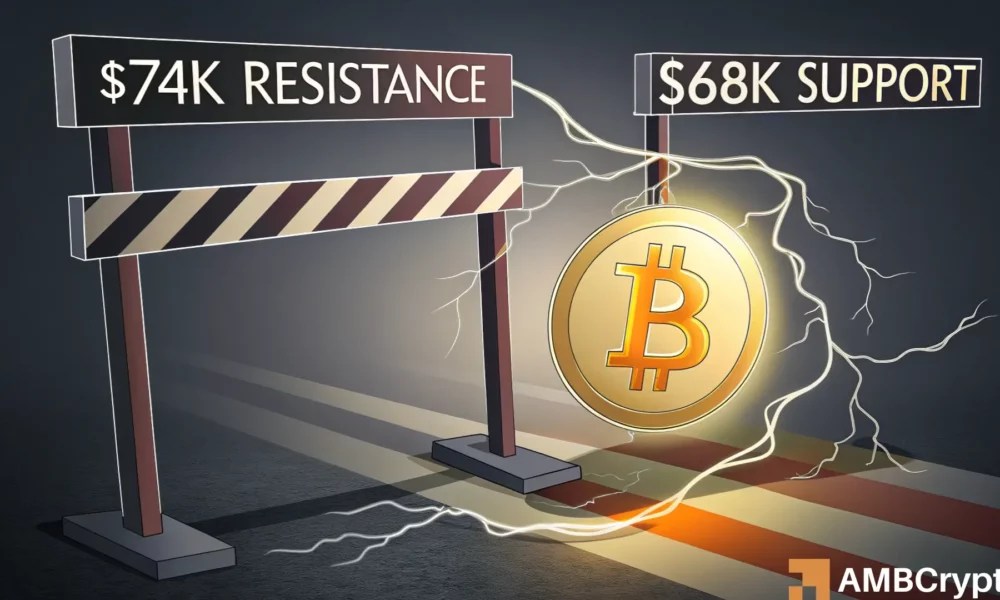
Short-term profit-taking pushes Bitcoin back below key $70K level – What next?

Short-term profit-taking pushes Bitcoin back below key $70K level – What next?

The post Short-term profit-taking pushes Bitcoin back below key $70K level – What next? appeared on BitcoinEthereumNews.com. Bitcoin [BTC] rallied as high as $74
Share
BitcoinEthereumNews2026/03/07 16:09