

STON.fi at TOKEN2049: Andrey Fedorov on TON’s future
Disclosure: This article does not represent investment advice. The content and materials featured on this page are for educational purposes only.
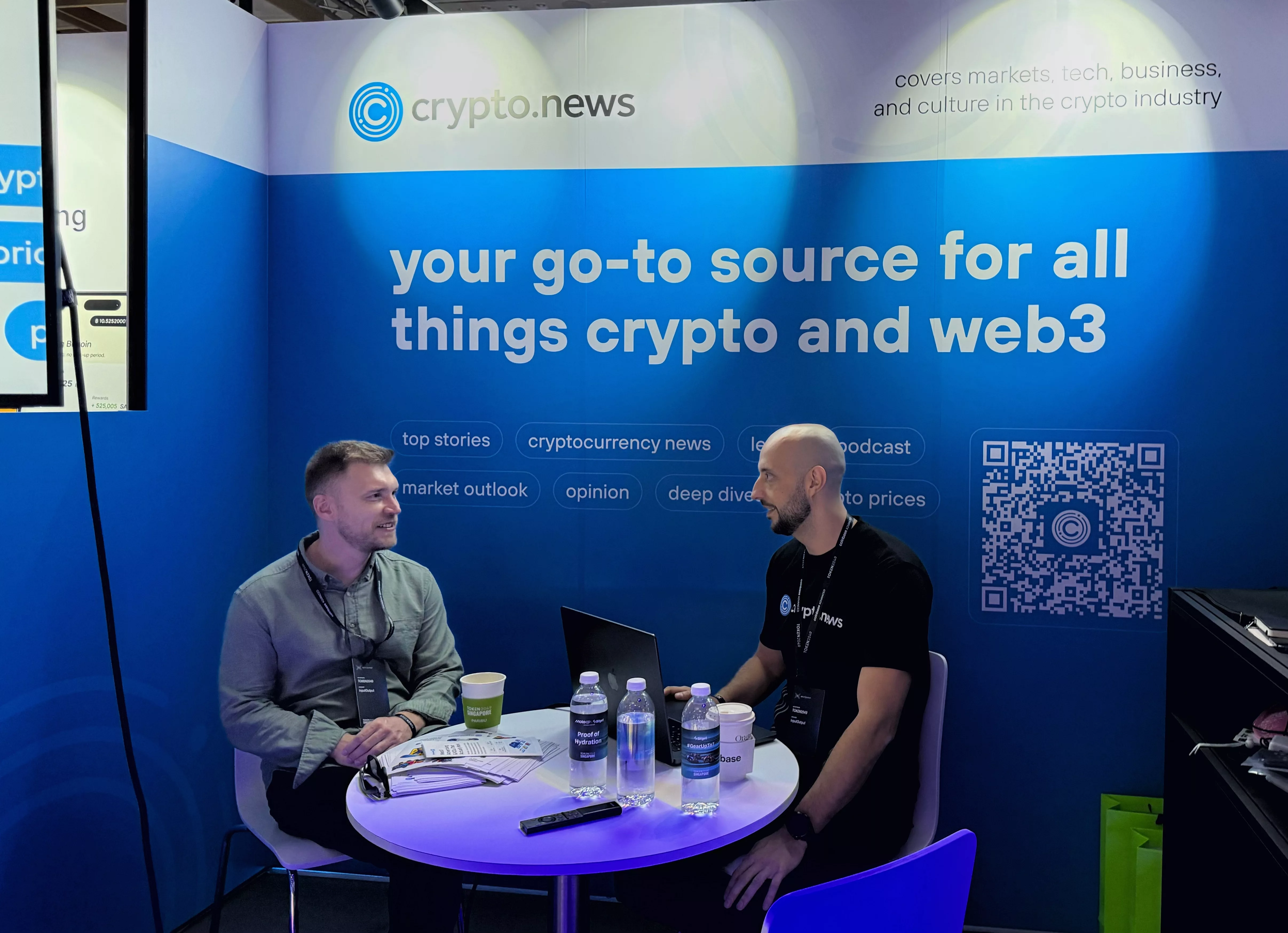
At TOKEN2049 Singapore, STON.fi’s Andrey Fedorov shared how swaps, liquidity aggregation, and the Omniston protocol are shaping TON into a scalable blockchain ecosystem.
- STON.fi is building infrastructure to make swaps on TON faster, fairer, and more reliable, ensuring users get smooth execution without dealing with fragmented liquidity.
- The Omniston protocol aggregates liquidity across TON, simplifying developer integration and enhancing user experience while fostering healthy competition among DEXs.
- With TON scaling rapidly through Telegram mini-app adoption, STON.fi is positioning itself to support cross-chain liquidity and launch community-driven governance via a DAO.
At TOKEN2049 in Singapore, we sat down with Andrey Fedorov, CMO and CBDO of STON.fi Dev, to talk about the future of infrastructure on the TON blockchain. With a background in building user-focused financial products and driving ecosystem growth, Fedorov shared his insights on swaps, liquidity aggregation, and the role of Omniston in making TON more scalable and developer-friendly. Our conversation explored how STON.fi is positioning itself at the center of TON’s rapid expansion.
- For someone just discovering TON through Telegram, why should they care about infrastructure like swaps and liquidity aggregation, and what problem would they actually feel without it?
That’s a great question, because for most people, infrastructure sounds invisible. But here’s the thing: if you try to swap tokens and it takes forever, or you get a bad price, or the transaction fails, that’s when you feel it. Without strong infrastructure, the experience becomes frustrating really fast. What we’re building with STON.fi is the engine that makes sure those issues don’t happen. Ideally, users don’t think about what’s happening behind the scenes, they just get smooth swaps and fair prices.
And there’s another angle that’s very relevant for TON Blockchain: Telegram is famous for its viral mini-apps and games, where players find themselves with tokens. The very next question they ask is, “Okay, I’ve got these tokens… now what? Can I trade them, use them, stake them?” If there isn’t reliable infrastructure to let those tokens move, to be swapped, staked, farmed, or anything else, the excitement dies quickly. It’s not enough to give people tokens; you have to give them a path into the wider ecosystem. That’s exactly the gap STON.fi fills.
And that’s also why Omniston, a liquidity aggregation protocol, is being built. Users automatically get the best execution without thinking about which DEX has the best pool today. Omniston ties everything together, so people can just use TON without worrying about where the liquidity sits. The idea is to cut down the hassle, make things more reliable, and ensure that when someone’s first step into web3 comes through Telegram, they don’t get stuck, they actually see how easy it is to go further.
- TON is scaling fast, but growth brings both opportunity and unexpected challenges. From your perspective, what’s the single biggest shift you’ve seen in TON over the past year, and where does STON.fi fit into that story?
The biggest shift has been TON moving from being promising to being stress-tested at scale. A year ago, people were still asking, “Is TON ready for real traffic?” Then we suddenly had proof: during events like the big airdrops, transaction volumes nearly tripled overnight. That was both exciting and chaotic.
For STON.fi, it was a trial by fire. Swaps slowed down, queues built up, and execution became unpredictable. The swaps were paused to protect users, then rebuilt: added distributed routers, simplified transactions, and introduced automatic deadlines. That stress test turned into the blueprint for a stronger system.
The result is that today, developers using our SDK know they’re building on infrastructure that’s already been through the toughest test. Even when TON traffic spikes, swaps keep running smoothly, and users don’t have to think twice. In a way, that chaos pushed us to build resilience faster, and that’s how STON.fi fits into TON’s growth: by turning those moments of pressure into stronger foundations for the whole ecosystem.
- Everyone asks “TON vs. Ethereum/Solana.” Better question: where does TON’s architecture make your job easier, and where does it box you in?
TON has some real strengths. First, the integration with Telegram gives projects like ours a direct line to a billion users right away. That makes distribution and adoption much faster than in most other ecosystems, people don’t need to search for you, you’re already where they are.
Second, TON’s sharding is designed for scalability, which is a huge advantage long term. But it also comes with challenges: under heavy load, working across shards isn’t simple, so we need to account for this in development and make sure we use the system effectively. That’s why STON.fi had to build solutions like distributed routers to keep swaps reliable.
And third, there’s the supportive ecosystem. Projects on TON don’t just grow in isolation, we think a lot about how one can amplify another. That’s why we focus on strong partnerships, because collaboration is what really helps the whole ecosystem move forward.
- Fragmented liquidity was a huge barrier for blockchains, and TON isn’t an exception. Beyond better execution, what deeper effects do you see Omniston having on developer adoption and ecosystem growth?
If you were a developer and wanted swaps in your app, you basically had to plug into every single DEX and protocols by yourself, and that just doesn’t scale.
With Omniston, you integrate once and get access to all the liquidity on TON right away. It makes life so much easier for developers, they can focus on building features instead of messing with plumbing. That’s why more than 40 projects have already integrated our solution.
And the ripple effect is huge: users get smoother apps, liquidity providers see more activity, and the whole ecosystem feels more connected instead of fragmented. In the end, Omniston isn’t just about better execution, it’s about helping TON grow faster and stronger together.

- Some critics might say aggregators reduce competition between DEXs. How do you see Omniston affecting innovation among liquidity providers themselves?
I actually think it pushes them to innovate more. With Omniston, users automatically get the best rates across all pools. That means if you’re a DEX or a professional market maker, you know you’ll only win order flow if your offering is competitive. In other words, it levels the playing field, no one can just rely on being “the default.” So in my view, it creates healthy competition and gives everyone an incentive to improve.
- Cross-chain connectivity sounds like the next big milestone. How do you see external capital reshaping TON once it flows in, and what role will STON.fi play in making that transition smooth?
Once external capital flows in, TON stops being an island and really becomes part of the wider crypto economy. That’s when things get exciting, suddenly you’ve got more liquidity, more trading pairs, and more opportunities for both users and builders. But of course, it also brings complexity: bridging assets, routing trades across different chains, managing risks.
That’s exactly where STON.fi, and especially Omniston, comes in. The big idea behind Omniston isn’t just aggregating TON liquidity, it’s to become a truly cross-chain solution. Today, it makes all liquidity inside TON feel connected. Tomorrow, it will extend that same simplicity across ecosystems, so whether you’re moving tokens from Ethereum, Solana, or any other chain, it feels just as seamless as a swap inside TON.
Our role is to make all that invisible. Users shouldn’t need to care where the liquidity sits or how many hops a transaction takes. They should just click once, and it works. That’s the mission of Omniston, to turn cross-chain from something complicated into something natural, and in doing so, unlock a much bigger wave of capital and adoption for TON.
- Every big protocol eventually faces governance questions. Do you see a future where STON.fi’s direction is more community-driven?
Absolutely. Up to now, we’ve been in the “build fast, stabilize the foundation” phase, and in that stage, it made sense for a core team to lead. But in the long run, we believe protocols are stronger when they’re guided by their communities. Community-driven governance isn’t just about handing over control, it’s about building more resilience, more ideas, and more trust.
That’s why the project feels ready to take the next step. This year, STON.fi will be launching its DAO. STON.fi has a strong, loyal community, and it wants them to be part of the journey, not just as users, but as active participants shaping what comes next for STON.fi. It’s about growing together and making sure the protocol is strengthened by the community.
Disclosure: This content is provided by a third party. Neither crypto.news nor the author of this article endorses any product mentioned on this page. Users should conduct their own research before taking any action related to the company.


You May Also Like

Layer3 Token Surges 152% in 24 Hours: What On-Chain Data Reveals
Why Binance Coin (BNB) Falls Below $650 While New Crypto Protocols Gain Interest




