The post Federated AI Models Enhance Protein Localization Prediction appeared on BitcoinEthereumNews.com. Jessie A Ellis Oct 08, 2025 19:10 NVIDIA’s federated AI models, using FLARE and BioNeMo, improve protein localization predictions, crucial for biology and drug discovery, while maintaining data privacy. In a significant advancement for biology and drug discovery, NVIDIA has introduced a method for predicting protein properties using federated AI models, as detailed by Holger Roth. This approach leverages NVIDIA FLARE and the BioNeMo Framework to predict the subcellular localization of proteins, a critical factor in understanding cellular processes and identifying therapeutic targets. Federated Learning Approach Federated learning allows researchers to collaboratively train AI models without the need to transfer sensitive data between institutions. The NVIDIA FLARE tutorial demonstrates how to fine-tune the ESM-2nv model to classify proteins based on their subcellular localization. This model utilizes embeddings of protein sequences, drawing from datasets like those in the study “Light Attention Predicts Protein Location from the Language of Life.” Data and Training Process The data utilized follows the biotrainer standard, formatted as FASTA files, and includes a sequence, training/validation split, and one of ten location classes, such as Nucleus or Cell Membrane. This setup presents a real-world classification challenge, ideal for federated learning applications. Utilizing the BioNeMo Framework in Docker, researchers can run the Federated Protein Property Prediction tutorial in a Jupyter Lab environment. NVIDIA FLARE facilitates federated training by enabling local training and only sharing model updates, thus ensuring privacy. The FedAvg method aggregates these updates to form a global model. Training and Results The team fine-tuned the ESM-2nv model, balancing predictive accuracy with computational efficiency. Key steps included data splitting, federated averaging, and visualization using TensorBoard. This setup allowed for monitoring of both local and federated training in real-time. Results showed that federated training outperformed local models, increasing average accuracy from… The post Federated AI Models Enhance Protein Localization Prediction appeared on BitcoinEthereumNews.com. Jessie A Ellis Oct 08, 2025 19:10 NVIDIA’s federated AI models, using FLARE and BioNeMo, improve protein localization predictions, crucial for biology and drug discovery, while maintaining data privacy. In a significant advancement for biology and drug discovery, NVIDIA has introduced a method for predicting protein properties using federated AI models, as detailed by Holger Roth. This approach leverages NVIDIA FLARE and the BioNeMo Framework to predict the subcellular localization of proteins, a critical factor in understanding cellular processes and identifying therapeutic targets. Federated Learning Approach Federated learning allows researchers to collaboratively train AI models without the need to transfer sensitive data between institutions. The NVIDIA FLARE tutorial demonstrates how to fine-tune the ESM-2nv model to classify proteins based on their subcellular localization. This model utilizes embeddings of protein sequences, drawing from datasets like those in the study “Light Attention Predicts Protein Location from the Language of Life.” Data and Training Process The data utilized follows the biotrainer standard, formatted as FASTA files, and includes a sequence, training/validation split, and one of ten location classes, such as Nucleus or Cell Membrane. This setup presents a real-world classification challenge, ideal for federated learning applications. Utilizing the BioNeMo Framework in Docker, researchers can run the Federated Protein Property Prediction tutorial in a Jupyter Lab environment. NVIDIA FLARE facilitates federated training by enabling local training and only sharing model updates, thus ensuring privacy. The FedAvg method aggregates these updates to form a global model. Training and Results The team fine-tuned the ESM-2nv model, balancing predictive accuracy with computational efficiency. Key steps included data splitting, federated averaging, and visualization using TensorBoard. This setup allowed for monitoring of both local and federated training in real-time. Results showed that federated training outperformed local models, increasing average accuracy from…

Federated AI Models Enhance Protein Localization Prediction

For feedback or concerns regarding this content, please contact us at crypto.news@mexc.com


Jessie A Ellis
Oct 08, 2025 19:10

NVIDIA’s federated AI models, using FLARE and BioNeMo, improve protein localization predictions, crucial for biology and drug discovery, while maintaining data privacy.


In a significant advancement for biology and drug discovery, NVIDIA has introduced a method for predicting protein properties using federated AI models, as detailed by Holger Roth. This approach leverages NVIDIA FLARE and the BioNeMo Framework to predict the subcellular localization of proteins, a critical factor in understanding cellular processes and identifying therapeutic targets.

Federated Learning Approach

Federated learning allows researchers to collaboratively train AI models without the need to transfer sensitive data between institutions. The NVIDIA FLARE tutorial demonstrates how to fine-tune the ESM-2nv model to classify proteins based on their subcellular localization. This model utilizes embeddings of protein sequences, drawing from datasets like those in the study “Light Attention Predicts Protein Location from the Language of Life.”

Data and Training Process

The data utilized follows the biotrainer standard, formatted as FASTA files, and includes a sequence, training/validation split, and one of ten location classes, such as Nucleus or Cell Membrane. This setup presents a real-world classification challenge, ideal for federated learning applications.

Utilizing the BioNeMo Framework in Docker, researchers can run the Federated Protein Property Prediction tutorial in a Jupyter Lab environment. NVIDIA FLARE facilitates federated training by enabling local training and only sharing model updates, thus ensuring privacy. The FedAvg method aggregates these updates to form a global model.

Training and Results

The team fine-tuned the ESM-2nv model, balancing predictive accuracy with computational efficiency. Key steps included data splitting, federated averaging, and visualization using TensorBoard. This setup allowed for monitoring of both local and federated training in real-time.

Results showed that federated training outperformed local models, increasing average accuracy from 78.8% to 81.7% across sites. This demonstrates the effectiveness of federated learning in enhancing model performance by leveraging data from multiple institutions.

Advantages of BioNeMo and FLARE

The integration of BioNeMo and FLARE offers several benefits beyond protein localization, as it supports AI developments in the scientific community while maintaining data privacy. This approach fosters collaboration, allowing each site to contribute to a more robust model.

With these advancements, NVIDIA positions itself at the forefront of collaborative AI in life sciences. The future of AI in this field is collaborative, and the tools provided by NVIDIA FLARE and BioNeMo are paving the way for new discoveries in healthcare and biotechnology.

For more details, visit the official NVIDIA blog.

Image source: Shutterstock


Source: https://blockchain.news/news/federated-ai-models-enhance-protein-localization-prediction
Market Opportunity
null Logo
null Price(null)
--
----
USD
null (null) Live Price Chart
Disclaimer: The articles reposted on this site are sourced from public platforms and are provided for informational purposes only. They do not necessarily reflect the views of MEXC. All rights remain with the original authors. If you believe any content infringes on third-party rights, please contact crypto.news@mexc.com for removal. MEXC makes no guarantees regarding the accuracy, completeness, or timeliness of the content and is not responsible for any actions taken based on the information provided. The content does not constitute financial, legal, or other professional advice, nor should it be considered a recommendation or endorsement by MEXC.

You May Also Like

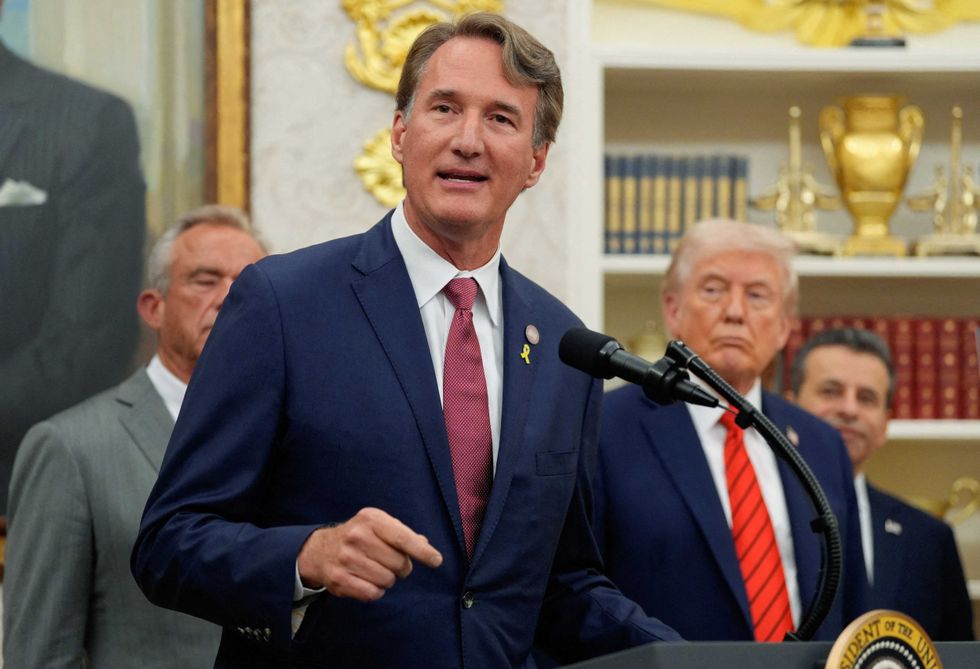
Virginia Republicans rage against ex-GOP governor: 'Missing in action' while eyeing 2028

Virginia Republicans rage against ex-GOP governor: 'Missing in action' while eyeing 2028

Republicans in Virginia are turning on the state's former GOP governor, Glenn Youngkin, according to the Wall Street Journal, accusing him of being "missing in
Share
Alternet2026/03/10 00:31
Franklin Templeton CEO Dismisses 50bps Rate Cut Ahead FOMC

Franklin Templeton CEO Dismisses 50bps Rate Cut Ahead FOMC

The post Franklin Templeton CEO Dismisses 50bps Rate Cut Ahead FOMC appeared on BitcoinEthereumNews.com. Franklin Templeton CEO Jenny Johnson has weighed in on whether the Federal Reserve should make a 25 basis points (bps) Fed rate cut or 50 bps cut. This comes ahead of the Fed decision today at today’s FOMC meeting, with the market pricing in a 25 bps cut. Bitcoin and the broader crypto market are currently trading flat ahead of the rate cut decision. Franklin Templeton CEO Weighs In On Potential FOMC Decision In a CNBC interview, Jenny Johnson said that she expects the Fed to make a 25 bps cut today instead of a 50 bps cut. She acknowledged the jobs data, which suggested that the labor market is weakening. However, she noted that this data is backward-looking, indicating that it doesn’t show the current state of the economy. She alluded to the wage growth, which she remarked is an indication of a robust labor market. She added that retail sales are up and that consumers are still spending, despite inflation being sticky at 3%, which makes a case for why the FOMC should opt against a 50-basis-point Fed rate cut. In line with this, the Franklin Templeton CEO said that she would go with a 25 bps rate cut if she were Jerome Powell. She remarked that the Fed still has the October and December FOMC meetings to make further cuts if the incoming data warrants it. Johnson also asserted that the data show a robust economy. However, she noted that there can’t be an argument for no Fed rate cut since Powell already signaled at Jackson Hole that they were likely to lower interest rates at this meeting due to concerns over a weakening labor market. Notably, her comment comes as experts argue for both sides on why the Fed should make a 25 bps cut or…
Share
BitcoinEthereumNews2025/09/18 00:36
Wall Street Bull Warns! “US Stock Markets Could Collapse, Bitcoin (BTC) Could Fall Further!”

Wall Street Bull Warns! “US Stock Markets Could Collapse, Bitcoin (BTC) Could Fall Further!”

Wall Street bull Ed Yardeni raised the probability of a US stock market crash to 35 percent and warned of further selling pressure on Bitcoin. Continue Reading
Share
Bitcoinsistemi2026/03/10 00:34