Author: FinTax 1. Introduction Jersey, with a tax system independent of the UK, has long been renowned for its low tax burden, clear system, and simple structure, making it one of the world's most attractive offshore financial centers. The island's tax system, while adhering to local governance, takes into account international compliance standards, providing a flexible and stable tax environment for traditional financial services, wealth management institutions, and the emerging crypto economy. Unlike other countries, Jersey's institutional response to crypto assets has not been radically innovative, but rather a cautious, layered, and compatibility-oriented approach. In terms of taxation, it continues its traditional design of tax-free capital gains and low corporate tax burdens, but retains flexibility in determining whether an activity is "commercial" or "purposeful." In terms of regulation, it expands existing legal boundaries to incorporate virtual assets into conventional frameworks such as anti-money laundering, transaction disclosure, and licensing, rather than creating a new set of crypto codes. 2. Jersey’s Crypto Tax Regime 2.1 Jersey tax system Jersey is a British Crown dependency with a high degree of autonomy and independent tax and financial regulatory systems. Its tax system is renowned for its simplicity, stability, and low tax burden, offering an attractive tax environment for global investors and high-net-worth individuals. The main taxes and rates are as follows: ① Corporate tax: Jersey adopts a "0-10-20" categorized tax rate structure, where the standard corporate income tax rate is 0%, financial services companies are subject to 10%, and public utility companies are subject to 20%. ② Personal income tax: The flat tax rate is 20%, with no progressive structure, and a basic tax-free amount (around 17,000 pounds, slightly adjusted each year). There is no capital gains tax, inheritance tax, or gift tax. ③Goods and Services Tax (GST): Goods and Services Tax was introduced in 2008 with a uniform tax rate of 5%. It is similar to VAT but has a narrower scope. It mainly applies to local goods and services transactions, while financial services, export services, etc. are usually tax-free. This tax system design not only serves traditional finance, but also provides policy space for crypto-asset-related businesses. It has also become one of the key factors in attracting Web3 companies to register and operate on the island. 2.2 Jersey Cryptocurrency Tax Policy 2.2.1 Characterization of Crypto Assets From an overall regulatory perspective, Jersey considers crypto assets to be "assets" rather than legal tender, and does not uniformly classify them as securities or financial products. This means that from a legal and tax perspective, crypto assets do not enjoy legal tender status, nor are they automatically included in the scope of financial instrument regulation. Instead, they are functionally identified based on specific usage scenarios: The Jersey regulator, citing the definition of the Jersey Financial Services Commission (JFSC), defines crypto assets as "digital representations of value that can be traded or transmitted and used for payment or investment," but does not consider them legal tender. If crypto assets are used for investment and held for appreciation, they are considered investment assets similar to "personal property" and are subject to similar tax rules as ordinary property. According to the JFSC's 2018 ICO Guidance Note, tokens that possess features such as participation in the issuer's profits, asset claims, redemption promises, management rights, or return expectations will be considered securities. If they exhibit features of a collective investment arrangement, they will be treated as a "collective investment scheme," requiring a case-by-case assessment based on their equity structure. If crypto assets are obtained through mining or on-chain services, the related income may be considered "business income" or "compensation for services rendered," and thus subject to income or corporation tax. Jersey's regulatory authorities emphasize risk-oriented and usage-based classification principles in their supervision and taxation of crypto assets. They do not include all virtual assets in the regulatory scope in a one-size-fits-all manner, but instead classify the trading, holding, circulation, and services of crypto assets separately to determine whether current financial regulations or anti-money laundering obligations apply. 2.2.2 Tax policies related to crypto assets Although Jersey has yet to enact specific cryptoasset tax laws, its tax authority, Revenue Jersey, has, through interpretative documents and precedent, categorized cryptoassets within the existing tax framework. Overall, Jersey's cryptoasset tax regime adopts the principles of purpose-based, attribute-based, and risk-adaptive taxation. Different tax rules apply to different taxpayers and activity scenarios, with the following being the main scenarios: Personal holdings and transactions For natural persons, if they hold crypto assets solely for long-term investment or occasional trading, the resulting appreciation is generally considered capital gains and is not taxable in Jersey. However, if trading is frequent and commercial in nature, such as using leverage or continuously providing liquidity, the related gains will be considered business income and must be reported at a 20% personal income tax rate. Jersey's definition of "trading behavior" is based on the UK's HMRC "Badges of Trade" principle (BIM20205). In addition, non-capital income such as staking income, airdrops, and node rewards are generally considered taxable income and subject to tax accordingly. Business Ownership and Operations If a company engages in crypto-asset-related activities, such as exchange operations, digital wallet custody, mining, token issuance, and DeFi protocol development, its operating income should be considered taxable business income. According to Jersey's "0-10-20" corporate tax system, general technology or platform companies may be subject to a 0% corporate tax rate; those engaging in financial services (such as crypto asset custody, transaction matching, and wealth management product issuance) may be subject to a 10% tax rate; and those classified as public utilities or real estate investment companies are subject to a 20% tax rate. Mining behavior Jersey has no specific legislation prohibiting or exempting crypto-asset mining from taxation. Officials in the Cryptocurrency Tax Treatment document state that if mining activities are "occasional or non-commercial," they are not taxable activities. However, if mining is ongoing, profitable, and organized, the crypto assets generated constitute taxable income and should be included in current income and taxed at market prices. Crypto Payments and GST Issues Although Jersey implements a 5% Goods and Services Tax (GST), the tax authorities have clarified that the "exchange" of crypto assets as a means of payment does not constitute a taxable transaction. In other words, when a user uses Bitcoin or Ethereum to purchase goods or exchange them for fiat currency or other virtual currencies, this transaction itself does not incur GST obligations. However, if a merchant accepts crypto payments and provides taxable goods or services, the goods themselves are still subject to GST. In this case, crypto assets are merely considered a medium of payment, no different from using cash or a credit card. 3. Establishing and improving Jersey’s crypto regulatory framework Jersey's regulatory framework for crypto assets is led by the Jersey Financial Services Commission (JFSC). The JFSC is responsible for the supervision, regulation, and development of Jersey's financial services industry, including the regulation of virtual assets. Its responsibilities include: ① Develop regulatory policies and guidelines: The JFSC will issue guidance notes and other documents to clarify how virtual assets are regulated in Jersey, including issuing guidelines and licenses for virtual currency exchanges. ② Registration and licensing: Companies operating in the virtual asset sector in Jersey must register with the JFSC and obtain all necessary licenses or permits. ③ Supervision and Enforcement: The JFSC is responsible for supervising regulated entities and ensuring their compliance with Jersey’s anti-money laundering/counter-terrorist financing laws and other regulatory requirements. The JFSC also has the power to take enforcement action against entities that violate these requirements. ④ Establishing Compliance and Oversight Standards: The JFSC sets compliance and review standards for the virtual asset industry. For example, firms must have personnel with appropriate skills and experience, including designated Money Laundering Reporting Officers (MLROs) and Deputy MLROs, as well as key personnel responsible for compliance and internal oversight. The JFSC also monitors virtual asset service providers for compliance with the Travel Rule and international crypto-asset tax reporting standards. ⑤ International cooperation: JFSC cooperates with other regulatory agencies and international organizations to exchange information and promote coordination and consistency in global virtual asset regulation. Jersey has not enacted a specific code for crypto assets. Instead, it has gradually brought virtual assets and their service providers under the regulatory umbrella by adding definitions, expanding the scope of application, and implementing a registration system, building on its existing financial regulatory system and anti-money laundering system. The following are the core laws and regulatory documents currently related to crypto assets: ①Financial Services (Jersey) Law 1998 The Act is Jersey's most fundamental financial regulatory law, requiring any business providing certain financial services in Jersey to register or apply for a license with the JFSC. In 2016, the JFSC clarified that virtual currency exchanges fall within the scope of the Act and must therefore register as "money service businesses." ② Proceeds of Crime (Jersey) Law 1999 This is Jersey's core anti-money laundering and counter-terrorist financing law, applicable to all high-risk industries, including crypto businesses. The law requires businesses dealing in virtual assets to fulfill the following obligations: customer due diligence (CDD), transaction record keeping, and reporting of suspicious transactions to the Jersey Financial Crimes Unit (JFCU). ③Virtual Currency Exchange Regulations In 2016, the JFSC issued specific regulations targeting virtual currency exchanges, requiring them to strictly implement AML/CFT measures and establish robust internal controls and governance structures. These regulations brought crypto trading platforms into the substantive regulatory system. ⑤ Initial Coin Offerings Guidance Note The JFSC issued this guidance in 2017, clarifying the regulatory scope of ICOs in Jersey. The document emphasizes that ICOs will be assessed on a case-by-case basis, with the nature of the tokens issued determining whether they fall under existing financial services regulations. If the tokens possess securities or constitute collective investment vehicles, they will require a license and regulatory oversight. ⑥ Information Accompanying Transfers of Funds (Jersey) Regulations 2017 (revised in 2023) The regulation is used to implement the FATF's "Travel Rule", requiring all VASPs to collect and exchange sender/recipient identification information in virtual asset transfers. It is an important measure for Jersey to enhance the transparency of cross-border crypto transactions. ⑦OECD Crypto-Asset Reporting Framework (CARF) Regulations (2024–2025) Jersey joined the CARF agreement in 2024 and implemented local regulations in 2025, requiring all crypto asset service providers to fulfill their obligations to collect and report customer tax information and to achieve automatic information exchange with other jurisdictions. In Jersey, virtual asset tax and regulatory arrangements are based on the Financial Services Act and the Proceeds of Crime Act, and have been gradually refined through scenario-based, detailed regulations and international cooperation provisions. The Financial Services Act establishes licensing requirements for emerging businesses such as crypto exchanges under the "money services business" category, while the Proceeds of Crime Act serves as the baseline for anti-money laundering and counter-terrorist financing regulations for all virtual asset activities, covering obligations such as customer due diligence, transaction records, and suspicious activity reporting. The Initial Coin Offering Guidelines build on this foundation by providing a functional classification of token issuance activities, clarifying whether different issuance models should be included in the existing regulatory framework for securities or collective investments. The Information Incidental to Funds Transfer Regulations and the CARF Regulations further enhance the transparency of cross-border capital flows and tax information, ensuring that Jersey maintains the advantages of a flexible tax system while maintaining consistency with international compliance requirements. 4. Summary and Outlook With its simple, flexible tax system and progressive regulatory approach, Jersey is gradually building an attractive and compliant crypto-asset environment. Regarding its tax system, Jersey maintains its traditional advantages—no capital gains tax and low corporate tax burdens—which provide favorable conditions for the crypto industry. However, it is notable that Jersey does not encourage speculative arbitrage structures. Instead, it defines "commercial activities" as taxable, clarifying the boundaries and leaving room for regulatory judgment. This ambiguity is precisely the source of its flexibility. Going forward, Jersey will inevitably be impacted by tightening international regulations, particularly the implementation of the OECD's CARF framework and the FATF's VASP transparency requirements, which will gradually shrink its policy buffer zone. Jersey's real challenge may not lie in attracting more crypto businesses, but rather in maintaining institutional autonomy while establishing a trustworthy regulatory image without unduly sacrificing flexibility.Author: FinTax 1. Introduction Jersey, with a tax system independent of the UK, has long been renowned for its low tax burden, clear system, and simple structure, making it one of the world's most attractive offshore financial centers. The island's tax system, while adhering to local governance, takes into account international compliance standards, providing a flexible and stable tax environment for traditional financial services, wealth management institutions, and the emerging crypto economy. Unlike other countries, Jersey's institutional response to crypto assets has not been radically innovative, but rather a cautious, layered, and compatibility-oriented approach. In terms of taxation, it continues its traditional design of tax-free capital gains and low corporate tax burdens, but retains flexibility in determining whether an activity is "commercial" or "purposeful." In terms of regulation, it expands existing legal boundaries to incorporate virtual assets into conventional frameworks such as anti-money laundering, transaction disclosure, and licensing, rather than creating a new set of crypto codes. 2. Jersey’s Crypto Tax Regime 2.1 Jersey tax system Jersey is a British Crown dependency with a high degree of autonomy and independent tax and financial regulatory systems. Its tax system is renowned for its simplicity, stability, and low tax burden, offering an attractive tax environment for global investors and high-net-worth individuals. The main taxes and rates are as follows: ① Corporate tax: Jersey adopts a "0-10-20" categorized tax rate structure, where the standard corporate income tax rate is 0%, financial services companies are subject to 10%, and public utility companies are subject to 20%. ② Personal income tax: The flat tax rate is 20%, with no progressive structure, and a basic tax-free amount (around 17,000 pounds, slightly adjusted each year). There is no capital gains tax, inheritance tax, or gift tax. ③Goods and Services Tax (GST): Goods and Services Tax was introduced in 2008 with a uniform tax rate of 5%. It is similar to VAT but has a narrower scope. It mainly applies to local goods and services transactions, while financial services, export services, etc. are usually tax-free. This tax system design not only serves traditional finance, but also provides policy space for crypto-asset-related businesses. It has also become one of the key factors in attracting Web3 companies to register and operate on the island. 2.2 Jersey Cryptocurrency Tax Policy 2.2.1 Characterization of Crypto Assets From an overall regulatory perspective, Jersey considers crypto assets to be "assets" rather than legal tender, and does not uniformly classify them as securities or financial products. This means that from a legal and tax perspective, crypto assets do not enjoy legal tender status, nor are they automatically included in the scope of financial instrument regulation. Instead, they are functionally identified based on specific usage scenarios: The Jersey regulator, citing the definition of the Jersey Financial Services Commission (JFSC), defines crypto assets as "digital representations of value that can be traded or transmitted and used for payment or investment," but does not consider them legal tender. If crypto assets are used for investment and held for appreciation, they are considered investment assets similar to "personal property" and are subject to similar tax rules as ordinary property. According to the JFSC's 2018 ICO Guidance Note, tokens that possess features such as participation in the issuer's profits, asset claims, redemption promises, management rights, or return expectations will be considered securities. If they exhibit features of a collective investment arrangement, they will be treated as a "collective investment scheme," requiring a case-by-case assessment based on their equity structure. If crypto assets are obtained through mining or on-chain services, the related income may be considered "business income" or "compensation for services rendered," and thus subject to income or corporation tax. Jersey's regulatory authorities emphasize risk-oriented and usage-based classification principles in their supervision and taxation of crypto assets. They do not include all virtual assets in the regulatory scope in a one-size-fits-all manner, but instead classify the trading, holding, circulation, and services of crypto assets separately to determine whether current financial regulations or anti-money laundering obligations apply. 2.2.2 Tax policies related to crypto assets Although Jersey has yet to enact specific cryptoasset tax laws, its tax authority, Revenue Jersey, has, through interpretative documents and precedent, categorized cryptoassets within the existing tax framework. Overall, Jersey's cryptoasset tax regime adopts the principles of purpose-based, attribute-based, and risk-adaptive taxation. Different tax rules apply to different taxpayers and activity scenarios, with the following being the main scenarios: Personal holdings and transactions For natural persons, if they hold crypto assets solely for long-term investment or occasional trading, the resulting appreciation is generally considered capital gains and is not taxable in Jersey. However, if trading is frequent and commercial in nature, such as using leverage or continuously providing liquidity, the related gains will be considered business income and must be reported at a 20% personal income tax rate. Jersey's definition of "trading behavior" is based on the UK's HMRC "Badges of Trade" principle (BIM20205). In addition, non-capital income such as staking income, airdrops, and node rewards are generally considered taxable income and subject to tax accordingly. Business Ownership and Operations If a company engages in crypto-asset-related activities, such as exchange operations, digital wallet custody, mining, token issuance, and DeFi protocol development, its operating income should be considered taxable business income. According to Jersey's "0-10-20" corporate tax system, general technology or platform companies may be subject to a 0% corporate tax rate; those engaging in financial services (such as crypto asset custody, transaction matching, and wealth management product issuance) may be subject to a 10% tax rate; and those classified as public utilities or real estate investment companies are subject to a 20% tax rate. Mining behavior Jersey has no specific legislation prohibiting or exempting crypto-asset mining from taxation. Officials in the Cryptocurrency Tax Treatment document state that if mining activities are "occasional or non-commercial," they are not taxable activities. However, if mining is ongoing, profitable, and organized, the crypto assets generated constitute taxable income and should be included in current income and taxed at market prices. Crypto Payments and GST Issues Although Jersey implements a 5% Goods and Services Tax (GST), the tax authorities have clarified that the "exchange" of crypto assets as a means of payment does not constitute a taxable transaction. In other words, when a user uses Bitcoin or Ethereum to purchase goods or exchange them for fiat currency or other virtual currencies, this transaction itself does not incur GST obligations. However, if a merchant accepts crypto payments and provides taxable goods or services, the goods themselves are still subject to GST. In this case, crypto assets are merely considered a medium of payment, no different from using cash or a credit card. 3. Establishing and improving Jersey’s crypto regulatory framework Jersey's regulatory framework for crypto assets is led by the Jersey Financial Services Commission (JFSC). The JFSC is responsible for the supervision, regulation, and development of Jersey's financial services industry, including the regulation of virtual assets. Its responsibilities include: ① Develop regulatory policies and guidelines: The JFSC will issue guidance notes and other documents to clarify how virtual assets are regulated in Jersey, including issuing guidelines and licenses for virtual currency exchanges. ② Registration and licensing: Companies operating in the virtual asset sector in Jersey must register with the JFSC and obtain all necessary licenses or permits. ③ Supervision and Enforcement: The JFSC is responsible for supervising regulated entities and ensuring their compliance with Jersey’s anti-money laundering/counter-terrorist financing laws and other regulatory requirements. The JFSC also has the power to take enforcement action against entities that violate these requirements. ④ Establishing Compliance and Oversight Standards: The JFSC sets compliance and review standards for the virtual asset industry. For example, firms must have personnel with appropriate skills and experience, including designated Money Laundering Reporting Officers (MLROs) and Deputy MLROs, as well as key personnel responsible for compliance and internal oversight. The JFSC also monitors virtual asset service providers for compliance with the Travel Rule and international crypto-asset tax reporting standards. ⑤ International cooperation: JFSC cooperates with other regulatory agencies and international organizations to exchange information and promote coordination and consistency in global virtual asset regulation. Jersey has not enacted a specific code for crypto assets. Instead, it has gradually brought virtual assets and their service providers under the regulatory umbrella by adding definitions, expanding the scope of application, and implementing a registration system, building on its existing financial regulatory system and anti-money laundering system. The following are the core laws and regulatory documents currently related to crypto assets: ①Financial Services (Jersey) Law 1998 The Act is Jersey's most fundamental financial regulatory law, requiring any business providing certain financial services in Jersey to register or apply for a license with the JFSC. In 2016, the JFSC clarified that virtual currency exchanges fall within the scope of the Act and must therefore register as "money service businesses." ② Proceeds of Crime (Jersey) Law 1999 This is Jersey's core anti-money laundering and counter-terrorist financing law, applicable to all high-risk industries, including crypto businesses. The law requires businesses dealing in virtual assets to fulfill the following obligations: customer due diligence (CDD), transaction record keeping, and reporting of suspicious transactions to the Jersey Financial Crimes Unit (JFCU). ③Virtual Currency Exchange Regulations In 2016, the JFSC issued specific regulations targeting virtual currency exchanges, requiring them to strictly implement AML/CFT measures and establish robust internal controls and governance structures. These regulations brought crypto trading platforms into the substantive regulatory system. ⑤ Initial Coin Offerings Guidance Note The JFSC issued this guidance in 2017, clarifying the regulatory scope of ICOs in Jersey. The document emphasizes that ICOs will be assessed on a case-by-case basis, with the nature of the tokens issued determining whether they fall under existing financial services regulations. If the tokens possess securities or constitute collective investment vehicles, they will require a license and regulatory oversight. ⑥ Information Accompanying Transfers of Funds (Jersey) Regulations 2017 (revised in 2023) The regulation is used to implement the FATF's "Travel Rule", requiring all VASPs to collect and exchange sender/recipient identification information in virtual asset transfers. It is an important measure for Jersey to enhance the transparency of cross-border crypto transactions. ⑦OECD Crypto-Asset Reporting Framework (CARF) Regulations (2024–2025) Jersey joined the CARF agreement in 2024 and implemented local regulations in 2025, requiring all crypto asset service providers to fulfill their obligations to collect and report customer tax information and to achieve automatic information exchange with other jurisdictions. In Jersey, virtual asset tax and regulatory arrangements are based on the Financial Services Act and the Proceeds of Crime Act, and have been gradually refined through scenario-based, detailed regulations and international cooperation provisions. The Financial Services Act establishes licensing requirements for emerging businesses such as crypto exchanges under the "money services business" category, while the Proceeds of Crime Act serves as the baseline for anti-money laundering and counter-terrorist financing regulations for all virtual asset activities, covering obligations such as customer due diligence, transaction records, and suspicious activity reporting. The Initial Coin Offering Guidelines build on this foundation by providing a functional classification of token issuance activities, clarifying whether different issuance models should be included in the existing regulatory framework for securities or collective investments. The Information Incidental to Funds Transfer Regulations and the CARF Regulations further enhance the transparency of cross-border capital flows and tax information, ensuring that Jersey maintains the advantages of a flexible tax system while maintaining consistency with international compliance requirements. 4. Summary and Outlook With its simple, flexible tax system and progressive regulatory approach, Jersey is gradually building an attractive and compliant crypto-asset environment. Regarding its tax system, Jersey maintains its traditional advantages—no capital gains tax and low corporate tax burdens—which provide favorable conditions for the crypto industry. However, it is notable that Jersey does not encourage speculative arbitrage structures. Instead, it defines "commercial activities" as taxable, clarifying the boundaries and leaving room for regulatory judgment. This ambiguity is precisely the source of its flexibility. Going forward, Jersey will inevitably be impacted by tightening international regulations, particularly the implementation of the OECD's CARF framework and the FATF's VASP transparency requirements, which will gradually shrink its policy buffer zone. Jersey's real challenge may not lie in attracting more crypto businesses, but rather in maintaining institutional autonomy while establishing a trustworthy regulatory image without unduly sacrificing flexibility.

The Crypto World Meets Offshore Finance: Jersey's Crypto Asset Taxation and Regulatory Regime

2025/10/14 13:00
11 min read
For feedback or concerns regarding this content, please contact us at crypto.news@mexc.com

Author: FinTax

1. Introduction

Jersey, with a tax system independent of the UK, has long been renowned for its low tax burden, clear system, and simple structure, making it one of the world's most attractive offshore financial centers. The island's tax system, while adhering to local governance, takes into account international compliance standards, providing a flexible and stable tax environment for traditional financial services, wealth management institutions, and the emerging crypto economy.

Unlike other countries, Jersey's institutional response to crypto assets has not been radically innovative, but rather a cautious, layered, and compatibility-oriented approach. In terms of taxation, it continues its traditional design of tax-free capital gains and low corporate tax burdens, but retains flexibility in determining whether an activity is "commercial" or "purposeful." In terms of regulation, it expands existing legal boundaries to incorporate virtual assets into conventional frameworks such as anti-money laundering, transaction disclosure, and licensing, rather than creating a new set of crypto codes.

2. Jersey’s Crypto Tax Regime

2.1 Jersey tax system

Jersey is a British Crown dependency with a high degree of autonomy and independent tax and financial regulatory systems. Its tax system is renowned for its simplicity, stability, and low tax burden, offering an attractive tax environment for global investors and high-net-worth individuals. The main taxes and rates are as follows:

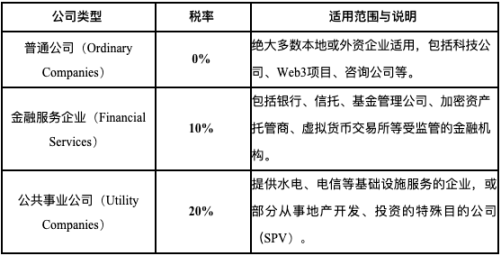
① Corporate tax: Jersey adopts a "0-10-20" categorized tax rate structure, where the standard corporate income tax rate is 0%, financial services companies are subject to 10%, and public utility companies are subject to 20%.
② Personal income tax: The flat tax rate is 20%, with no progressive structure, and a basic tax-free amount (around 17,000 pounds, slightly adjusted each year). There is no capital gains tax, inheritance tax, or gift tax.

③Goods and Services Tax (GST): Goods and Services Tax was introduced in 2008 with a uniform tax rate of 5%. It is similar to VAT but has a narrower scope. It mainly applies to local goods and services transactions, while financial services, export services, etc. are usually tax-free.

This tax system design not only serves traditional finance, but also provides policy space for crypto-asset-related businesses. It has also become one of the key factors in attracting Web3 companies to register and operate on the island.

2.2 Jersey Cryptocurrency Tax Policy

2.2.1 Characterization of Crypto Assets

From an overall regulatory perspective, Jersey considers crypto assets to be "assets" rather than legal tender, and does not uniformly classify them as securities or financial products. This means that from a legal and tax perspective, crypto assets do not enjoy legal tender status, nor are they automatically included in the scope of financial instrument regulation. Instead, they are functionally identified based on specific usage scenarios:

The Jersey regulator, citing the definition of the Jersey Financial Services Commission (JFSC), defines crypto assets as "digital representations of value that can be traded or transmitted and used for payment or investment," but does not consider them legal tender. If crypto assets are used for investment and held for appreciation, they are considered investment assets similar to "personal property" and are subject to similar tax rules as ordinary property.

According to the JFSC's 2018 ICO Guidance Note, tokens that possess features such as participation in the issuer's profits, asset claims, redemption promises, management rights, or return expectations will be considered securities. If they exhibit features of a collective investment arrangement, they will be treated as a "collective investment scheme," requiring a case-by-case assessment based on their equity structure. If crypto assets are obtained through mining or on-chain services, the related income may be considered "business income" or "compensation for services rendered," and thus subject to income or corporation tax.

Jersey's regulatory authorities emphasize risk-oriented and usage-based classification principles in their supervision and taxation of crypto assets. They do not include all virtual assets in the regulatory scope in a one-size-fits-all manner, but instead classify the trading, holding, circulation, and services of crypto assets separately to determine whether current financial regulations or anti-money laundering obligations apply.

2.2.2 Tax policies related to crypto assets

Although Jersey has yet to enact specific cryptoasset tax laws, its tax authority, Revenue Jersey, has, through interpretative documents and precedent, categorized cryptoassets within the existing tax framework. Overall, Jersey's cryptoasset tax regime adopts the principles of purpose-based, attribute-based, and risk-adaptive taxation. Different tax rules apply to different taxpayers and activity scenarios, with the following being the main scenarios:

  • Personal holdings and transactions

For natural persons, if they hold crypto assets solely for long-term investment or occasional trading, the resulting appreciation is generally considered capital gains and is not taxable in Jersey. However, if trading is frequent and commercial in nature, such as using leverage or continuously providing liquidity, the related gains will be considered business income and must be reported at a 20% personal income tax rate. Jersey's definition of "trading behavior" is based on the UK's HMRC "Badges of Trade" principle (BIM20205). In addition, non-capital income such as staking income, airdrops, and node rewards are generally considered taxable income and subject to tax accordingly.

  • Business Ownership and Operations

If a company engages in crypto-asset-related activities, such as exchange operations, digital wallet custody, mining, token issuance, and DeFi protocol development, its operating income should be considered taxable business income. According to Jersey's "0-10-20" corporate tax system, general technology or platform companies may be subject to a 0% corporate tax rate; those engaging in financial services (such as crypto asset custody, transaction matching, and wealth management product issuance) may be subject to a 10% tax rate; and those classified as public utilities or real estate investment companies are subject to a 20% tax rate.

  • Mining behavior

Jersey has no specific legislation prohibiting or exempting crypto-asset mining from taxation. Officials in the Cryptocurrency Tax Treatment document state that if mining activities are "occasional or non-commercial," they are not taxable activities. However, if mining is ongoing, profitable, and organized, the crypto assets generated constitute taxable income and should be included in current income and taxed at market prices.

  • Crypto Payments and GST Issues

Although Jersey implements a 5% Goods and Services Tax (GST), the tax authorities have clarified that the "exchange" of crypto assets as a means of payment does not constitute a taxable transaction. In other words, when a user uses Bitcoin or Ethereum to purchase goods or exchange them for fiat currency or other virtual currencies, this transaction itself does not incur GST obligations. However, if a merchant accepts crypto payments and provides taxable goods or services, the goods themselves are still subject to GST. In this case, crypto assets are merely considered a medium of payment, no different from using cash or a credit card.

3. Establishing and improving Jersey’s crypto regulatory framework

Jersey's regulatory framework for crypto assets is led by the Jersey Financial Services Commission (JFSC). The JFSC is responsible for the supervision, regulation, and development of Jersey's financial services industry, including the regulation of virtual assets. Its responsibilities include:

① Develop regulatory policies and guidelines: The JFSC will issue guidance notes and other documents to clarify how virtual assets are regulated in Jersey, including issuing guidelines and licenses for virtual currency exchanges.

② Registration and licensing: Companies operating in the virtual asset sector in Jersey must register with the JFSC and obtain all necessary licenses or permits.

③ Supervision and Enforcement: The JFSC is responsible for supervising regulated entities and ensuring their compliance with Jersey’s anti-money laundering/counter-terrorist financing laws and other regulatory requirements. The JFSC also has the power to take enforcement action against entities that violate these requirements.

④ Establishing Compliance and Oversight Standards: The JFSC sets compliance and review standards for the virtual asset industry. For example, firms must have personnel with appropriate skills and experience, including designated Money Laundering Reporting Officers (MLROs) and Deputy MLROs, as well as key personnel responsible for compliance and internal oversight. The JFSC also monitors virtual asset service providers for compliance with the Travel Rule and international crypto-asset tax reporting standards.

⑤ International cooperation: JFSC cooperates with other regulatory agencies and international organizations to exchange information and promote coordination and consistency in global virtual asset regulation.

Jersey has not enacted a specific code for crypto assets. Instead, it has gradually brought virtual assets and their service providers under the regulatory umbrella by adding definitions, expanding the scope of application, and implementing a registration system, building on its existing financial regulatory system and anti-money laundering system. The following are the core laws and regulatory documents currently related to crypto assets:

①Financial Services (Jersey) Law 1998

The Act is Jersey's most fundamental financial regulatory law, requiring any business providing certain financial services in Jersey to register or apply for a license with the JFSC. In 2016, the JFSC clarified that virtual currency exchanges fall within the scope of the Act and must therefore register as "money service businesses."

② Proceeds of Crime (Jersey) Law 1999

This is Jersey's core anti-money laundering and counter-terrorist financing law, applicable to all high-risk industries, including crypto businesses. The law requires businesses dealing in virtual assets to fulfill the following obligations: customer due diligence (CDD), transaction record keeping, and reporting of suspicious transactions to the Jersey Financial Crimes Unit (JFCU).

③Virtual Currency Exchange Regulations

In 2016, the JFSC issued specific regulations targeting virtual currency exchanges, requiring them to strictly implement AML/CFT measures and establish robust internal controls and governance structures. These regulations brought crypto trading platforms into the substantive regulatory system.

⑤ Initial Coin Offerings Guidance Note

The JFSC issued this guidance in 2017, clarifying the regulatory scope of ICOs in Jersey. The document emphasizes that ICOs will be assessed on a case-by-case basis, with the nature of the tokens issued determining whether they fall under existing financial services regulations. If the tokens possess securities or constitute collective investment vehicles, they will require a license and regulatory oversight.

⑥ Information Accompanying Transfers of Funds (Jersey) Regulations 2017 (revised in 2023)

The regulation is used to implement the FATF's "Travel Rule", requiring all VASPs to collect and exchange sender/recipient identification information in virtual asset transfers. It is an important measure for Jersey to enhance the transparency of cross-border crypto transactions.

⑦OECD Crypto-Asset Reporting Framework (CARF) Regulations (2024–2025)

Jersey joined the CARF agreement in 2024 and implemented local regulations in 2025, requiring all crypto asset service providers to fulfill their obligations to collect and report customer tax information and to achieve automatic information exchange with other jurisdictions.

In Jersey, virtual asset tax and regulatory arrangements are based on the Financial Services Act and the Proceeds of Crime Act, and have been gradually refined through scenario-based, detailed regulations and international cooperation provisions. The Financial Services Act establishes licensing requirements for emerging businesses such as crypto exchanges under the "money services business" category, while the Proceeds of Crime Act serves as the baseline for anti-money laundering and counter-terrorist financing regulations for all virtual asset activities, covering obligations such as customer due diligence, transaction records, and suspicious activity reporting. The Initial Coin Offering Guidelines build on this foundation by providing a functional classification of token issuance activities, clarifying whether different issuance models should be included in the existing regulatory framework for securities or collective investments. The Information Incidental to Funds Transfer Regulations and the CARF Regulations further enhance the transparency of cross-border capital flows and tax information, ensuring that Jersey maintains the advantages of a flexible tax system while maintaining consistency with international compliance requirements.

4. Summary and Outlook

With its simple, flexible tax system and progressive regulatory approach, Jersey is gradually building an attractive and compliant crypto-asset environment. Regarding its tax system, Jersey maintains its traditional advantages—no capital gains tax and low corporate tax burdens—which provide favorable conditions for the crypto industry. However, it is notable that Jersey does not encourage speculative arbitrage structures. Instead, it defines "commercial activities" as taxable, clarifying the boundaries and leaving room for regulatory judgment. This ambiguity is precisely the source of its flexibility.

Going forward, Jersey will inevitably be impacted by tightening international regulations, particularly the implementation of the OECD's CARF framework and the FATF's VASP transparency requirements, which will gradually shrink its policy buffer zone. Jersey's real challenge may not lie in attracting more crypto businesses, but rather in maintaining institutional autonomy while establishing a trustworthy regulatory image without unduly sacrificing flexibility.

Market Opportunity
Nifty Island Logo
Nifty Island Price(ISLAND)
$0.00349
$0.00349$0.00349
-15.65%
USD
Nifty Island (ISLAND) Live Price Chart
Disclaimer: The articles reposted on this site are sourced from public platforms and are provided for informational purposes only. They do not necessarily reflect the views of MEXC. All rights remain with the original authors. If you believe any content infringes on third-party rights, please contact crypto.news@mexc.com for removal. MEXC makes no guarantees regarding the accuracy, completeness, or timeliness of the content and is not responsible for any actions taken based on the information provided. The content does not constitute financial, legal, or other professional advice, nor should it be considered a recommendation or endorsement by MEXC.

You May Also Like

Tether Backs Ark Labs’ $5.2 Million Bet on Bitcoin’s Stablecoin Revival

Tether Backs Ark Labs’ $5.2 Million Bet on Bitcoin’s Stablecoin Revival

The post Tether Backs Ark Labs’ $5.2 Million Bet on Bitcoin’s Stablecoin Revival appeared on BitcoinEthereumNews.com. In brief Ark Labs secured backing from Tether
Share
BitcoinEthereumNews2026/03/12 21:44
Summarize Any Stock’s Earnings Call in Seconds Using FMP API

Summarize Any Stock’s Earnings Call in Seconds Using FMP API

Turn lengthy earnings call transcripts into one-page insights using the Financial Modeling Prep APIPhoto by Bich Tran Earnings calls are packed with insights. They tell you how a company performed, what management expects in the future, and what analysts are worried about. The challenge is that these transcripts often stretch across dozens of pages, making it tough to separate the key takeaways from the noise. With the right tools, you don’t need to spend hours reading every line. By combining the Financial Modeling Prep (FMP) API with Groq’s lightning-fast LLMs, you can transform any earnings call into a concise summary in seconds. The FMP API provides reliable access to complete transcripts, while Groq handles the heavy lifting of distilling them into clear, actionable highlights. In this article, we’ll build a Python workflow that brings these two together. You’ll see how to fetch transcripts for any stock, prepare the text, and instantly generate a one-page summary. Whether you’re tracking Apple, NVIDIA, or your favorite growth stock, the process works the same — fast, accurate, and ready whenever you are. Fetching Earnings Transcripts with FMP API The first step is to pull the raw transcript data. FMP makes this simple with dedicated endpoints for earnings calls. If you want the latest transcripts across the market, you can use the stable endpoint /stable/earning-call-transcript-latest. For a specific stock, the v3 endpoint lets you request transcripts by symbol, quarter, and year using the pattern: https://financialmodelingprep.com/api/v3/earning_call_transcript/{symbol}?quarter={q}&year={y}&apikey=YOUR_API_KEY here’s how you can fetch NVIDIA’s transcript for a given quarter: import requestsAPI_KEY = "your_api_key"symbol = "NVDA"quarter = 2year = 2024url = f"https://financialmodelingprep.com/api/v3/earning_call_transcript/{symbol}?quarter={quarter}&year={year}&apikey={API_KEY}"response = requests.get(url)data = response.json()# Inspect the keysprint(data.keys())# Access transcript contentif "content" in data[0]: transcript_text = data[0]["content"] print(transcript_text[:500]) # preview first 500 characters The response typically includes details like the company symbol, quarter, year, and the full transcript text. If you aren’t sure which quarter to query, the “latest transcripts” endpoint is the quickest way to always stay up to date. Cleaning and Preparing Transcript Data Raw transcripts from the API often include long paragraphs, speaker tags, and formatting artifacts. Before sending them to an LLM, it helps to organize the text into a cleaner structure. Most transcripts follow a pattern: prepared remarks from executives first, followed by a Q&A session with analysts. Separating these sections gives better control when prompting the model. In Python, you can parse the transcript and strip out unnecessary characters. A simple way is to split by markers such as “Operator” or “Question-and-Answer.” Once separated, you can create two blocks — Prepared Remarks and Q&A — that will later be summarized independently. This ensures the model handles each section within context and avoids missing important details. Here’s a small example of how you might start preparing the data: import re# Example: using the transcript_text we fetched earliertext = transcript_text# Remove extra spaces and line breaksclean_text = re.sub(r'\s+', ' ', text).strip()# Split sections (this is a heuristic; real-world transcripts vary slightly)if "Question-and-Answer" in clean_text: prepared, qna = clean_text.split("Question-and-Answer", 1)else: prepared, qna = clean_text, ""print("Prepared Remarks Preview:\n", prepared[:500])print("\nQ&A Preview:\n", qna[:500]) With the transcript cleaned and divided, you’re ready to feed it into Groq’s LLM. Chunking may be necessary if the text is very long. A good approach is to break it into segments of a few thousand tokens, summarize each part, and then merge the summaries in a final pass. Summarizing with Groq LLM Now that the transcript is clean and split into Prepared Remarks and Q&A, we’ll use Groq to generate a crisp one-pager. The idea is simple: summarize each section separately (for focus and accuracy), then synthesize a final brief. Prompt design (concise and factual) Use a short, repeatable template that pushes for neutral, investor-ready language: You are an equity research analyst. Summarize the following earnings call sectionfor {symbol} ({quarter} {year}). Be factual and concise.Return:1) TL;DR (3–5 bullets)2) Results vs. guidance (what improved/worsened)3) Forward outlook (specific statements)4) Risks / watch-outs5) Q&A takeaways (if present)Text:<<<{section_text}>>> Python: calling Groq and getting a clean summary Groq provides an OpenAI-compatible API. Set your GROQ_API_KEY and pick a fast, high-quality model (e.g., a Llama-3.1 70B variant). We’ll write a helper to summarize any text block, then run it for both sections and merge. import osimport textwrapimport requestsGROQ_API_KEY = os.environ.get("GROQ_API_KEY") or "your_groq_api_key"GROQ_BASE_URL = "https://api.groq.com/openai/v1" # OpenAI-compatibleMODEL = "llama-3.1-70b" # choose your preferred Groq modeldef call_groq(prompt, temperature=0.2, max_tokens=1200): url = f"{GROQ_BASE_URL}/chat/completions" headers = { "Authorization": f"Bearer {GROQ_API_KEY}", "Content-Type": "application/json", } payload = { "model": MODEL, "messages": [ {"role": "system", "content": "You are a precise, neutral equity research analyst."}, {"role": "user", "content": prompt}, ], "temperature": temperature, "max_tokens": max_tokens, } r = requests.post(url, headers=headers, json=payload, timeout=60) r.raise_for_status() return r.json()["choices"][0]["message"]["content"].strip()def build_prompt(section_text, symbol, quarter, year): template = """ You are an equity research analyst. Summarize the following earnings call section for {symbol} ({quarter} {year}). Be factual and concise. Return: 1) TL;DR (3–5 bullets) 2) Results vs. guidance (what improved/worsened) 3) Forward outlook (specific statements) 4) Risks / watch-outs 5) Q&A takeaways (if present) Text: <<< {section_text} >>> """ return textwrap.dedent(template).format( symbol=symbol, quarter=quarter, year=year, section_text=section_text )def summarize_section(section_text, symbol="NVDA", quarter="Q2", year="2024"): if not section_text or section_text.strip() == "": return "(No content found for this section.)" prompt = build_prompt(section_text, symbol, quarter, year) return call_groq(prompt)# Example usage with the cleaned splits from Section 3prepared_summary = summarize_section(prepared, symbol="NVDA", quarter="Q2", year="2024")qna_summary = summarize_section(qna, symbol="NVDA", quarter="Q2", year="2024")final_one_pager = f"""# {symbol} Earnings One-Pager — {quarter} {year}## Prepared Remarks — Key Points{prepared_summary}## Q&A Highlights{qna_summary}""".strip()print(final_one_pager[:1200]) # preview Tips that keep quality high: Keep temperature low (≈0.2) for factual tone. If a section is extremely long, chunk at ~5–8k tokens, summarize each chunk with the same prompt, then ask the model to merge chunk summaries into one section summary before producing the final one-pager. If you also fetched headline numbers (EPS/revenue, guidance) earlier, prepend them to the prompt as brief context to help the model anchor on the right outcomes. Building the End-to-End Pipeline At this point, we have all the building blocks: the FMP API to fetch transcripts, a cleaning step to structure the data, and Groq LLM to generate concise summaries. The final step is to connect everything into a single workflow that can take any ticker and return a one-page earnings call summary. The flow looks like this: Input a stock ticker (for example, NVDA). Use FMP to fetch the latest transcript. Clean and split the text into Prepared Remarks and Q&A. Send each section to Groq for summarization. Merge the outputs into a neatly formatted earnings one-pager. Here’s how it comes together in Python: def summarize_earnings_call(symbol, quarter, year, api_key, groq_key): # Step 1: Fetch transcript from FMP url = f"https://financialmodelingprep.com/api/v3/earning_call_transcript/{symbol}?quarter={quarter}&year={year}&apikey={api_key}" resp = requests.get(url) resp.raise_for_status() data = resp.json() if not data or "content" not in data[0]: return f"No transcript found for {symbol} {quarter} {year}" text = data[0]["content"] # Step 2: Clean and split clean_text = re.sub(r'\s+', ' ', text).strip() if "Question-and-Answer" in clean_text: prepared, qna = clean_text.split("Question-and-Answer", 1) else: prepared, qna = clean_text, "" # Step 3: Summarize with Groq prepared_summary = summarize_section(prepared, symbol, quarter, year) qna_summary = summarize_section(qna, symbol, quarter, year) # Step 4: Merge into final one-pager return f"""# {symbol} Earnings One-Pager — {quarter} {year}## Prepared Remarks{prepared_summary}## Q&A Highlights{qna_summary}""".strip()# Example runprint(summarize_earnings_call("NVDA", 2, 2024, API_KEY, GROQ_API_KEY)) With this setup, generating a summary becomes as simple as calling one function with a ticker and date. You can run it inside a notebook, integrate it into a research workflow, or even schedule it to trigger after each new earnings release. Free Stock Market API and Financial Statements API... Conclusion Earnings calls no longer need to feel overwhelming. With the Financial Modeling Prep API, you can instantly access any company’s transcript, and with Groq LLM, you can turn that raw text into a sharp, actionable summary in seconds. This pipeline saves hours of reading and ensures you never miss the key results, guidance, or risks hidden in lengthy remarks. Whether you track tech giants like NVIDIA or smaller growth stocks, the process is the same — fast, reliable, and powered by the flexibility of FMP’s data. Summarize Any Stock’s Earnings Call in Seconds Using FMP API was originally published in Coinmonks on Medium, where people are continuing the conversation by highlighting and responding to this story
Share
Medium2025/09/18 14:40
PayPal USD Expands to TRON Network via LayerZero

PayPal USD Expands to TRON Network via LayerZero

The post PayPal USD Expands to TRON Network via LayerZero appeared on BitcoinEthereumNews.com. This content is provided by a sponsor. PRESS RELEASE. September 18, 2025 – Geneva, Switzerland – TRON DAO, the community-governed DAO dedicated to accelerating the decentralization of the internet through blockchain technology and decentralized applications (dApps), announced today that PayPal USD will be available on the TRON network through Stargate Hydra as a permissionless token, […] Source: https://news.bitcoin.com/paypal-usd-expands-to-tron-network-via-layerzero/
Share
BitcoinEthereumNews2025/09/18 23:12