On October 12th, MetaDao, the Solana blockchain launchpad, launched its latest ICO round: AVICI, LOYAL, ZKSOL, and PAYSTREAM. Just a week prior, while the BSC blockchain was caught up in a meme coin frenzy, MetaDAO's popularity within the Solana ecosystem continued to climb. Its platform token, META, saw its value more than triple during the National Day holiday, becoming one of Solana's most prominent assets. Its ICO project, UMBRA, launched on October 6th, soared from a pre-sale price of $0.30 to $2.10, achieving a 700% return. This series of data not only reflects MetaDAO’s strong ability to generate revenue as an on-chain fundraising engine, but also indicates that the speculative enthusiasm for the Solana ecosystem is returning in full force. MetaDAO may become the core narrative of the Solana ecosystem in the next stage. From “Voting” to “Betting”: MetaDAO’s Market-Based Governance Experiment MetaDAO operates in a completely different way from previous launchpads or ICO platforms. Its logic is simple: let the market determine the fate of the project. When a project raises funds on MetaDAO, all USDC raised doesn't go directly into the team's accounts. Instead, it goes into an on-chain treasury governed by the market. If a team wishes to use funds, issue additional tokens, modify parameters, or even adjust product direction, they must submit a proposal. The approval of a proposal is determined not by voting but by transactions—this is MetaDAO's core governance mechanism, Futarchy. This mechanism is similar to a prediction market, where investors aren't "voting" but "betting." If they believe a proposal will increase token value, they buy into the "Approve" market; if they believe it's harmful, they buy into the "Reject" market. Ultimately, market price itself becomes the basis for judgment—the party with the higher value wins, and the proposal is implemented. This design completely breaks away from the "most votes, most decisions" structure of governance and directly ties every decision to token value. This mechanism has two significant advantages. First, it prevents project owners from "rugging." In the traditional ICO model, once a project successfully raises funds, investors have virtually no leverage, and funds could be misappropriated or disappear at any time. In MetaDAO, all USDC raised is held in an on-chain vault, and any spending or token minting is subject to market verification. If the project team leaves or the market value falls below the stated funds, anyone can initiate a proposal to redeem the funds. Governance no longer relies on "trusting the team" but on "trusting the mechanism." Secondly, incentives are tied to long-term value. MetaDAO's ICO model utilizes a highly volatile and transparent issuance method. Investors receive tokens proportional to their investment, while the founding team's earnings are locked into a "performance package" tied to price performance. The team unlocks corresponding incentives every time the token price reaches 2x, 4x, 8x, 16x, and 32x. All unlocks are subject to an 18-month lock-up period and a three-month time-weighted average price verification. This means that the team can only cash in on returns when the project continues to grow and the token truly gains market recognition. This "delayed gratification" structure redefines the boundary between short-term speculation and long-term development. What projects are worth paying attention to? @UmbraPrivacy UMBRA is Solana's privacy protocol, built on ArciumHQ. Its goal isn't simply to enable "private transactions," but rather to provide a compliant, auditable privacy infrastructure for the entire on-chain financial system. By building an auditable, anonymous transfer system, UMBRA enables transactions to be verified on-chain without exposing any critical details, enabling the coexistence of privacy and trust. UMBRA's governance is fully decentralized—fundraising, tokens, and the treasury are all controlled by the community. The team and early backers have allocated a total of 13.5 million tokens, which will be gradually unlocked after an 18-month lockup period, with returns linked to token performance. @AviciMoney Avici is a crypto neobank built on Solana, aiming to create a global internet banking system that is user-hosted and trustless. Users can open a stablecoin Visa card in minutes, spend directly with crypto assets, and deposit funds through a virtual account. Avici also plans to launch an on-chain credit score, replacing traditional credit reporting with zero-knowledge proofs, allowing users to obtain fairer credit services while protecting their privacy. The platform currently boasts over $1 million in spending, a 70% retention rate, and over 9,000 users. Avici will launch an ICO on MetaDAO on October 14th, issuing an Ownership Coin. @loyal_hq Loyal is a decentralized intelligent inference protocol built on Solana and MagicBlock infrastructure, aiming to rebuild a private and open-source intelligent network. It allows users to securely call AI models and conduct private conversations on-chain. The user's wallet generates a PDA (Program Derived Address), which both records conversations and serves as a payment settlement node. AI inference fees are automatically distributed to computing nodes, developers, and the protocol itself, creating a fully decentralized incentive loop. The project will launch an ICO on MetaDAO on October 18th, with a total supply of 10 million tokens and a minimum fundraising amount of $500,000. 28% of the team's tokens will be locked for 18 months and unlocked in batches based on price multiples (2x, 4x, 8x, 16x, and 32x). @ZKLSOL ZKLSOL is the first protocol on Solana to combine privacy protection with yield generation. Traditional mixers require long periods of locked funds to enhance anonymity, but this means assets sit idle. ZKLSOL, on the other hand, relies on liquidity staking, earning interest on deposited SOL, allowing users to earn income while waiting for privacy mixing. ZKLSOL's yield model has a clear flywheel logic: users deposit SOL → generate ZKLSOL → generate yield from staking → pay a small fee upon withdrawal and transfer → fees and yield are combined into a reward pool, driving up APY, attracting more depositors, and further enhancing anonymity and fund security. The project will launch its ICO on MetaDAO on October 19th, with all funds raised going toward security audits, expanding LPs, and implementing regulatory compliance. @Paystreamlabs Paystream is a DeFi lending protocol that combines peer-to-peer matching and liquidity aggregation, aiming to maximize the efficiency of on-chain capital utilization. It achieves efficient capital circulation and maximized returns through a two-tiered structure: a P2P matching engine and a smart liquidity pool (LLP). At its core, Paystream's matching engine directly matches lenders and borrowers, ensuring the best interest rate for both parties. When the market temporarily lacks a match, the system automatically routes idle funds to the underlying yield pool, allowing the funds to continue generating returns. Protocol revenue primarily comes from two sources: a share of the matching spread and lending interest; and fees collected from users when borrowing, making leveraged markets, or withdrawing funds. The project will launch its ICO on MetaDAO on October 23rd. Summarize The recent rise of MetaDAO bears resemblance to the once-popular Believe ecosystem. The former reshapes fundraising tools with its "anti-rug" ICO mechanism, while the latter ignites investor sentiment with its Launchpad platform. Together, these two initiatives have driven Solona's alignment with the ICM (Internet Capital Market) ecosystem, gradually transitioning from MEME to sustainable speculation. Against the backdrop of the emergence of hot sectors like privacy, payments, and AI, MetaDAO may be becoming a key pillar in Solana's ecosystem recovery.On October 12th, MetaDao, the Solana blockchain launchpad, launched its latest ICO round: AVICI, LOYAL, ZKSOL, and PAYSTREAM. Just a week prior, while the BSC blockchain was caught up in a meme coin frenzy, MetaDAO's popularity within the Solana ecosystem continued to climb. Its platform token, META, saw its value more than triple during the National Day holiday, becoming one of Solana's most prominent assets. Its ICO project, UMBRA, launched on October 6th, soared from a pre-sale price of $0.30 to $2.10, achieving a 700% return. This series of data not only reflects MetaDAO’s strong ability to generate revenue as an on-chain fundraising engine, but also indicates that the speculative enthusiasm for the Solana ecosystem is returning in full force. MetaDAO may become the core narrative of the Solana ecosystem in the next stage. From “Voting” to “Betting”: MetaDAO’s Market-Based Governance Experiment MetaDAO operates in a completely different way from previous launchpads or ICO platforms. Its logic is simple: let the market determine the fate of the project. When a project raises funds on MetaDAO, all USDC raised doesn't go directly into the team's accounts. Instead, it goes into an on-chain treasury governed by the market. If a team wishes to use funds, issue additional tokens, modify parameters, or even adjust product direction, they must submit a proposal. The approval of a proposal is determined not by voting but by transactions—this is MetaDAO's core governance mechanism, Futarchy. This mechanism is similar to a prediction market, where investors aren't "voting" but "betting." If they believe a proposal will increase token value, they buy into the "Approve" market; if they believe it's harmful, they buy into the "Reject" market. Ultimately, market price itself becomes the basis for judgment—the party with the higher value wins, and the proposal is implemented. This design completely breaks away from the "most votes, most decisions" structure of governance and directly ties every decision to token value. This mechanism has two significant advantages. First, it prevents project owners from "rugging." In the traditional ICO model, once a project successfully raises funds, investors have virtually no leverage, and funds could be misappropriated or disappear at any time. In MetaDAO, all USDC raised is held in an on-chain vault, and any spending or token minting is subject to market verification. If the project team leaves or the market value falls below the stated funds, anyone can initiate a proposal to redeem the funds. Governance no longer relies on "trusting the team" but on "trusting the mechanism." Secondly, incentives are tied to long-term value. MetaDAO's ICO model utilizes a highly volatile and transparent issuance method. Investors receive tokens proportional to their investment, while the founding team's earnings are locked into a "performance package" tied to price performance. The team unlocks corresponding incentives every time the token price reaches 2x, 4x, 8x, 16x, and 32x. All unlocks are subject to an 18-month lock-up period and a three-month time-weighted average price verification. This means that the team can only cash in on returns when the project continues to grow and the token truly gains market recognition. This "delayed gratification" structure redefines the boundary between short-term speculation and long-term development. What projects are worth paying attention to? @UmbraPrivacy UMBRA is Solana's privacy protocol, built on ArciumHQ. Its goal isn't simply to enable "private transactions," but rather to provide a compliant, auditable privacy infrastructure for the entire on-chain financial system. By building an auditable, anonymous transfer system, UMBRA enables transactions to be verified on-chain without exposing any critical details, enabling the coexistence of privacy and trust. UMBRA's governance is fully decentralized—fundraising, tokens, and the treasury are all controlled by the community. The team and early backers have allocated a total of 13.5 million tokens, which will be gradually unlocked after an 18-month lockup period, with returns linked to token performance. @AviciMoney Avici is a crypto neobank built on Solana, aiming to create a global internet banking system that is user-hosted and trustless. Users can open a stablecoin Visa card in minutes, spend directly with crypto assets, and deposit funds through a virtual account. Avici also plans to launch an on-chain credit score, replacing traditional credit reporting with zero-knowledge proofs, allowing users to obtain fairer credit services while protecting their privacy. The platform currently boasts over $1 million in spending, a 70% retention rate, and over 9,000 users. Avici will launch an ICO on MetaDAO on October 14th, issuing an Ownership Coin. @loyal_hq Loyal is a decentralized intelligent inference protocol built on Solana and MagicBlock infrastructure, aiming to rebuild a private and open-source intelligent network. It allows users to securely call AI models and conduct private conversations on-chain. The user's wallet generates a PDA (Program Derived Address), which both records conversations and serves as a payment settlement node. AI inference fees are automatically distributed to computing nodes, developers, and the protocol itself, creating a fully decentralized incentive loop. The project will launch an ICO on MetaDAO on October 18th, with a total supply of 10 million tokens and a minimum fundraising amount of $500,000. 28% of the team's tokens will be locked for 18 months and unlocked in batches based on price multiples (2x, 4x, 8x, 16x, and 32x). @ZKLSOL ZKLSOL is the first protocol on Solana to combine privacy protection with yield generation. Traditional mixers require long periods of locked funds to enhance anonymity, but this means assets sit idle. ZKLSOL, on the other hand, relies on liquidity staking, earning interest on deposited SOL, allowing users to earn income while waiting for privacy mixing. ZKLSOL's yield model has a clear flywheel logic: users deposit SOL → generate ZKLSOL → generate yield from staking → pay a small fee upon withdrawal and transfer → fees and yield are combined into a reward pool, driving up APY, attracting more depositors, and further enhancing anonymity and fund security. The project will launch its ICO on MetaDAO on October 19th, with all funds raised going toward security audits, expanding LPs, and implementing regulatory compliance. @Paystreamlabs Paystream is a DeFi lending protocol that combines peer-to-peer matching and liquidity aggregation, aiming to maximize the efficiency of on-chain capital utilization. It achieves efficient capital circulation and maximized returns through a two-tiered structure: a P2P matching engine and a smart liquidity pool (LLP). At its core, Paystream's matching engine directly matches lenders and borrowers, ensuring the best interest rate for both parties. When the market temporarily lacks a match, the system automatically routes idle funds to the underlying yield pool, allowing the funds to continue generating returns. Protocol revenue primarily comes from two sources: a share of the matching spread and lending interest; and fees collected from users when borrowing, making leveraged markets, or withdrawing funds. The project will launch its ICO on MetaDAO on October 23rd. Summarize The recent rise of MetaDAO bears resemblance to the once-popular Believe ecosystem. The former reshapes fundraising tools with its "anti-rug" ICO mechanism, while the latter ignites investor sentiment with its Launchpad platform. Together, these two initiatives have driven Solona's alignment with the ICM (Internet Capital Market) ecosystem, gradually transitioning from MEME to sustainable speculation. Against the backdrop of the emergence of hot sectors like privacy, payments, and AI, MetaDAO may be becoming a key pillar in Solana's ecosystem recovery.
MetaDao skyrocketed 10 times, what other projects are worth participating in?
For feedback or concerns regarding this content, please contact us at crypto.news@mexc.com
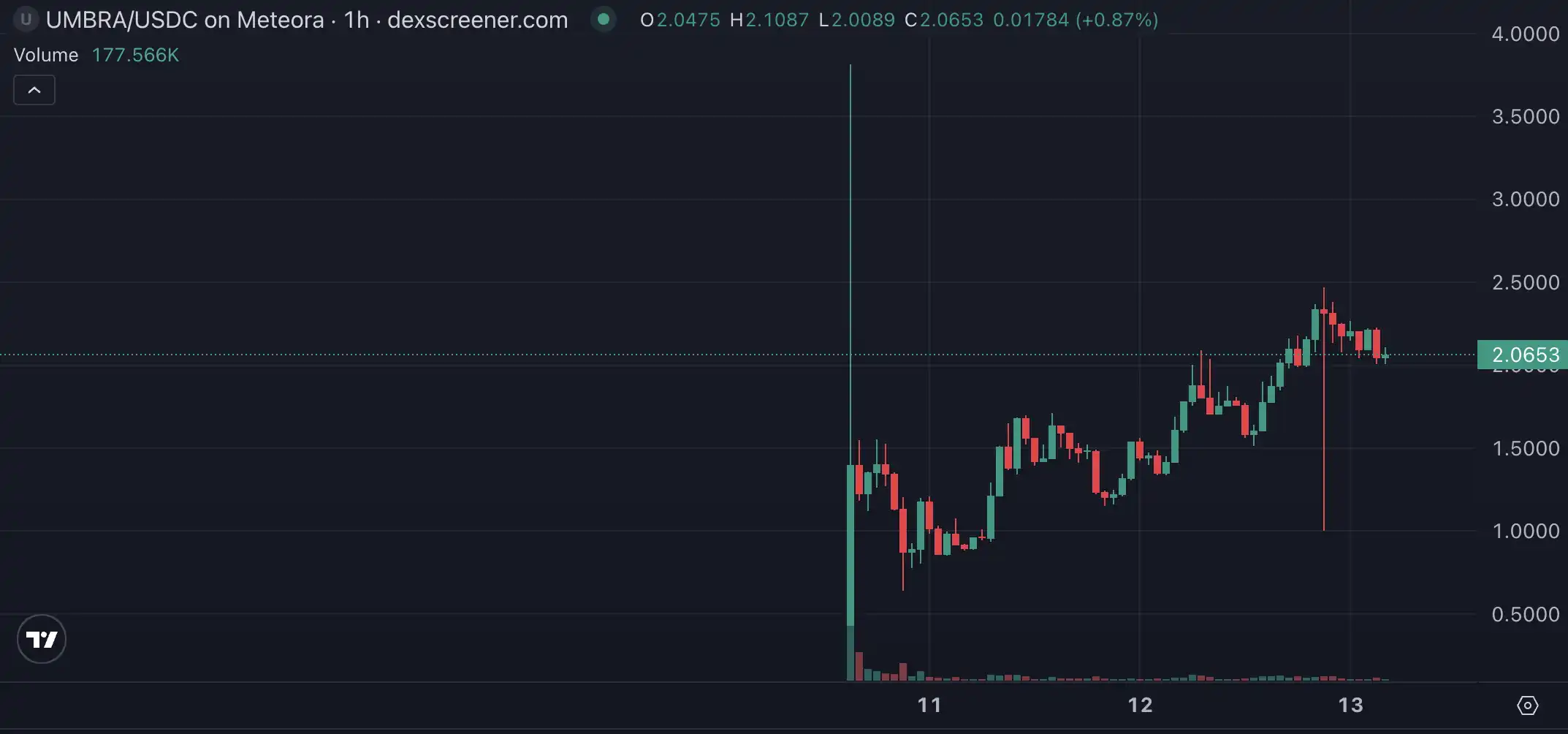
On October 12th, MetaDao, the Solana blockchain launchpad, launched its latest ICO round: AVICI, LOYAL, ZKSOL, and PAYSTREAM. Just a week prior, while the BSC blockchain was caught up in a meme coin frenzy, MetaDAO's popularity within the Solana ecosystem continued to climb. Its platform token, META, saw its value more than triple during the National Day holiday, becoming one of Solana's most prominent assets. Its ICO project, UMBRA, launched on October 6th, soared from a pre-sale price of $0.30 to $2.10, achieving a 700% return.
This series of data not only reflects MetaDAO’s strong ability to generate revenue as an on-chain fundraising engine, but also indicates that the speculative enthusiasm for the Solana ecosystem is returning in full force. MetaDAO may become the core narrative of the Solana ecosystem in the next stage.
From “Voting” to “Betting”: MetaDAO’s Market-Based Governance Experiment
MetaDAO operates in a completely different way from previous launchpads or ICO platforms. Its logic is simple: let the market determine the fate of the project.
When a project raises funds on MetaDAO, all USDC raised doesn't go directly into the team's accounts. Instead, it goes into an on-chain treasury governed by the market. If a team wishes to use funds, issue additional tokens, modify parameters, or even adjust product direction, they must submit a proposal. The approval of a proposal is determined not by voting but by transactions—this is MetaDAO's core governance mechanism, Futarchy.
This mechanism is similar to a prediction market, where investors aren't "voting" but "betting." If they believe a proposal will increase token value, they buy into the "Approve" market; if they believe it's harmful, they buy into the "Reject" market. Ultimately, market price itself becomes the basis for judgment—the party with the higher value wins, and the proposal is implemented. This design completely breaks away from the "most votes, most decisions" structure of governance and directly ties every decision to token value.
This mechanism has two significant advantages.
First, it prevents project owners from "rugging." In the traditional ICO model, once a project successfully raises funds, investors have virtually no leverage, and funds could be misappropriated or disappear at any time. In MetaDAO, all USDC raised is held in an on-chain vault, and any spending or token minting is subject to market verification. If the project team leaves or the market value falls below the stated funds, anyone can initiate a proposal to redeem the funds. Governance no longer relies on "trusting the team" but on "trusting the mechanism."
Secondly, incentives are tied to long-term value. MetaDAO's ICO model utilizes a highly volatile and transparent issuance method. Investors receive tokens proportional to their investment, while the founding team's earnings are locked into a "performance package" tied to price performance. The team unlocks corresponding incentives every time the token price reaches 2x, 4x, 8x, 16x, and 32x. All unlocks are subject to an 18-month lock-up period and a three-month time-weighted average price verification.
This means that the team can only cash in on returns when the project continues to grow and the token truly gains market recognition. This "delayed gratification" structure redefines the boundary between short-term speculation and long-term development.
What projects are worth paying attention to?
@UmbraPrivacy
UMBRA is Solana's privacy protocol, built on ArciumHQ. Its goal isn't simply to enable "private transactions," but rather to provide a compliant, auditable privacy infrastructure for the entire on-chain financial system. By building an auditable, anonymous transfer system, UMBRA enables transactions to be verified on-chain without exposing any critical details, enabling the coexistence of privacy and trust. UMBRA's governance is fully decentralized—fundraising, tokens, and the treasury are all controlled by the community. The team and early backers have allocated a total of 13.5 million tokens, which will be gradually unlocked after an 18-month lockup period, with returns linked to token performance.
@AviciMoney
Avici is a crypto neobank built on Solana, aiming to create a global internet banking system that is user-hosted and trustless. Users can open a stablecoin Visa card in minutes, spend directly with crypto assets, and deposit funds through a virtual account. Avici also plans to launch an on-chain credit score, replacing traditional credit reporting with zero-knowledge proofs, allowing users to obtain fairer credit services while protecting their privacy. The platform currently boasts over $1 million in spending, a 70% retention rate, and over 9,000 users. Avici will launch an ICO on MetaDAO on October 14th, issuing an Ownership Coin.
@loyal_hq
Loyal is a decentralized intelligent inference protocol built on Solana and MagicBlock infrastructure, aiming to rebuild a private and open-source intelligent network. It allows users to securely call AI models and conduct private conversations on-chain. The user's wallet generates a PDA (Program Derived Address), which both records conversations and serves as a payment settlement node. AI inference fees are automatically distributed to computing nodes, developers, and the protocol itself, creating a fully decentralized incentive loop. The project will launch an ICO on MetaDAO on October 18th, with a total supply of 10 million tokens and a minimum fundraising amount of $500,000. 28% of the team's tokens will be locked for 18 months and unlocked in batches based on price multiples (2x, 4x, 8x, 16x, and 32x).
@ZKLSOL
ZKLSOL is the first protocol on Solana to combine privacy protection with yield generation. Traditional mixers require long periods of locked funds to enhance anonymity, but this means assets sit idle. ZKLSOL, on the other hand, relies on liquidity staking, earning interest on deposited SOL, allowing users to earn income while waiting for privacy mixing. ZKLSOL's yield model has a clear flywheel logic: users deposit SOL → generate ZKLSOL → generate yield from staking → pay a small fee upon withdrawal and transfer → fees and yield are combined into a reward pool, driving up APY, attracting more depositors, and further enhancing anonymity and fund security. The project will launch its ICO on MetaDAO on October 19th, with all funds raised going toward security audits, expanding LPs, and implementing regulatory compliance.
@Paystreamlabs
Paystream is a DeFi lending protocol that combines peer-to-peer matching and liquidity aggregation, aiming to maximize the efficiency of on-chain capital utilization. It achieves efficient capital circulation and maximized returns through a two-tiered structure: a P2P matching engine and a smart liquidity pool (LLP). At its core, Paystream's matching engine directly matches lenders and borrowers, ensuring the best interest rate for both parties. When the market temporarily lacks a match, the system automatically routes idle funds to the underlying yield pool, allowing the funds to continue generating returns. Protocol revenue primarily comes from two sources: a share of the matching spread and lending interest; and fees collected from users when borrowing, making leveraged markets, or withdrawing funds. The project will launch its ICO on MetaDAO on October 23rd.
Summarize
The recent rise of MetaDAO bears resemblance to the once-popular Believe ecosystem. The former reshapes fundraising tools with its "anti-rug" ICO mechanism, while the latter ignites investor sentiment with its Launchpad platform. Together, these two initiatives have driven Solona's alignment with the ICM (Internet Capital Market) ecosystem, gradually transitioning from MEME to sustainable speculation. Against the backdrop of the emergence of hot sectors like privacy, payments, and AI, MetaDAO may be becoming a key pillar in Solana's ecosystem recovery.
Disclaimer: The articles reposted on this site are sourced from public platforms and are provided for informational purposes only. They do not necessarily reflect the views of MEXC. All rights remain with the original authors. If you believe any content infringes on third-party rights, please contact crypto.news@mexc.com for removal. MEXC makes no guarantees regarding the accuracy, completeness, or timeliness of the content and is not responsible for any actions taken based on the information provided. The content does not constitute financial, legal, or other professional advice, nor should it be considered a recommendation or endorsement by MEXC.