The events exposed a paradox in crypto’s design, according to 10x Research. The same mechanisms meant to keep liquidity flowing […] The post Crypto Markets Face a New Question: Should Trading Ever Pause? appeared first on Coindoo.The events exposed a paradox in crypto’s design, according to 10x Research. The same mechanisms meant to keep liquidity flowing […] The post Crypto Markets Face a New Question: Should Trading Ever Pause? appeared first on Coindoo.

Crypto Markets Face a New Question: Should Trading Ever Pause?

2025/10/15 21:20
3 min read

The events exposed a paradox in crypto’s design, according to 10x Research. The same mechanisms meant to keep liquidity flowing ended up accelerating the panic. Automated liquidation engines, opaque insurance funds, and uneven data reporting magnified the chaos instead of containing it. For the first time in years, major players are openly discussing whether the crypto ecosystem needs a fundamental redesign.

A Market Running Without Brakes

When traditional markets collapse too quickly, circuit breakers kick in to stop the bleeding. Stocks pause, traders breathe, and liquidity can recover. Crypto, however, has no such safety valve. It trades non-stop, with algorithms liquidating positions around the clock – often faster than traders can react.
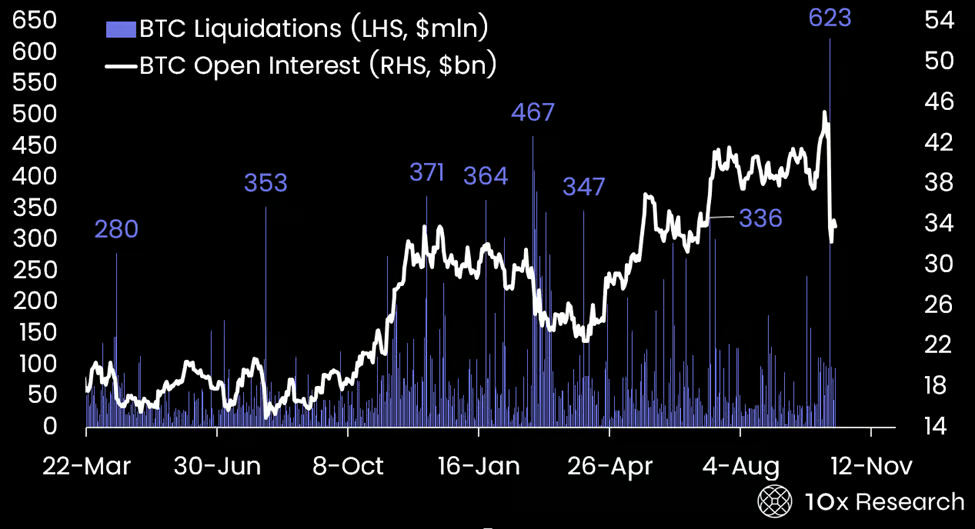
That 24/7 exposure is part of what gives digital assets their edge, but also what turns volatility into carnage. Many now wonder if it’s time for exchanges to borrow a page from Wall Street’s rulebook and install circuit breakers that automatically halt trading after extreme moves.

Learning From Old Scars

This isn’t the first time crypto has flirted with structural reform. The scars of May 2021 remain fresh, when Elon Musk’s remarks about Bitcoin’s environmental impact triggered one of the fastest unwinds in the asset’s history. Billions vanished in minutes, and regulators worldwide began asking how such collapses could happen without intervention.

READ MORE:

Bitcoin and Ethereum ETFs Recover Strongly as Rate-Cut Hopes Rise

In response, several exchanges quietly reworked their liquidation and reporting systems, but the recent crash showed that those adjustments were far from enough. Many analysts now warn that without coordinated safeguards, future meltdowns could make 2021 look modest in comparison.

The Risk of Doing Nothing

Introducing circuit breakers wouldn’t just slow the pace of market crashes – it could alter how volatility itself behaves. A pause in trading could give investors a window to reassess risk, but it might also interfere with crypto’s founding ethos of open, continuous trading. Detractors argue that centralized control undermines decentralization; proponents counter that without reform, the market will keep repeating the same destructive pattern.

In the end, the crypto industry faces a dilemma: either adapt with mechanisms that bring stability or continue living with the wild swings that have defined its past. Whether circuit breakers are the answer or not, one thing is clear – the discussion has moved from theory to urgency.


The information provided in this article is for educational purposes only and does not constitute financial, investment, or trading advice. Coindoo.com does not endorse or recommend any specific investment strategy or cryptocurrency. Always conduct your own research and consult with a licensed financial advisor before making any investment decisions.

The post Crypto Markets Face a New Question: Should Trading Ever Pause? appeared first on Coindoo.


Market Opportunity
Everscale Logo
Everscale Price(EVER)
$0.00426
$0.00426$0.00426
-0.69%
USD
Everscale (EVER) Live Price Chart
Disclaimer: The articles reposted on this site are sourced from public platforms and are provided for informational purposes only. They do not necessarily reflect the views of MEXC. All rights remain with the original authors. If you believe any content infringes on third-party rights, please contact service@support.mexc.com for removal. MEXC makes no guarantees regarding the accuracy, completeness, or timeliness of the content and is not responsible for any actions taken based on the information provided. The content does not constitute financial, legal, or other professional advice, nor should it be considered a recommendation or endorsement by MEXC.

You May Also Like

Lyn Alden: The Fed is Printing Money, What Will Happen to BTC?

Lyn Alden: The Fed is Printing Money, What Will Happen to BTC?

The post Lyn Alden: The Fed is Printing Money, What Will Happen to BTC? appeared on BitcoinEthereumNews.com. Lyn Alden’s Fed Monetary Policy and BTC Prediction
Share
BitcoinEthereumNews2026/02/09 06:52
Goldman Sachs Warns $80 Billion in Forced Selling Could Still Hit U.S. Stocks

Goldman Sachs Warns $80 Billion in Forced Selling Could Still Hit U.S. Stocks

Goldman Sachs is warning that the recent sell-off in U.S. equities may not be finished, even after last week’s sharp rebound, as systematic trend-following funds
Share
Ethnews2026/02/09 07:34
Franklin Templeton CEO Dismisses 50bps Rate Cut Ahead FOMC

Franklin Templeton CEO Dismisses 50bps Rate Cut Ahead FOMC

The post Franklin Templeton CEO Dismisses 50bps Rate Cut Ahead FOMC appeared on BitcoinEthereumNews.com. Franklin Templeton CEO Jenny Johnson has weighed in on whether the Federal Reserve should make a 25 basis points (bps) Fed rate cut or 50 bps cut. This comes ahead of the Fed decision today at today’s FOMC meeting, with the market pricing in a 25 bps cut. Bitcoin and the broader crypto market are currently trading flat ahead of the rate cut decision. Franklin Templeton CEO Weighs In On Potential FOMC Decision In a CNBC interview, Jenny Johnson said that she expects the Fed to make a 25 bps cut today instead of a 50 bps cut. She acknowledged the jobs data, which suggested that the labor market is weakening. However, she noted that this data is backward-looking, indicating that it doesn’t show the current state of the economy. She alluded to the wage growth, which she remarked is an indication of a robust labor market. She added that retail sales are up and that consumers are still spending, despite inflation being sticky at 3%, which makes a case for why the FOMC should opt against a 50-basis-point Fed rate cut. In line with this, the Franklin Templeton CEO said that she would go with a 25 bps rate cut if she were Jerome Powell. She remarked that the Fed still has the October and December FOMC meetings to make further cuts if the incoming data warrants it. Johnson also asserted that the data show a robust economy. However, she noted that there can’t be an argument for no Fed rate cut since Powell already signaled at Jackson Hole that they were likely to lower interest rates at this meeting due to concerns over a weakening labor market. Notably, her comment comes as experts argue for both sides on why the Fed should make a 25 bps cut or…
Share
BitcoinEthereumNews2025/09/18 00:36