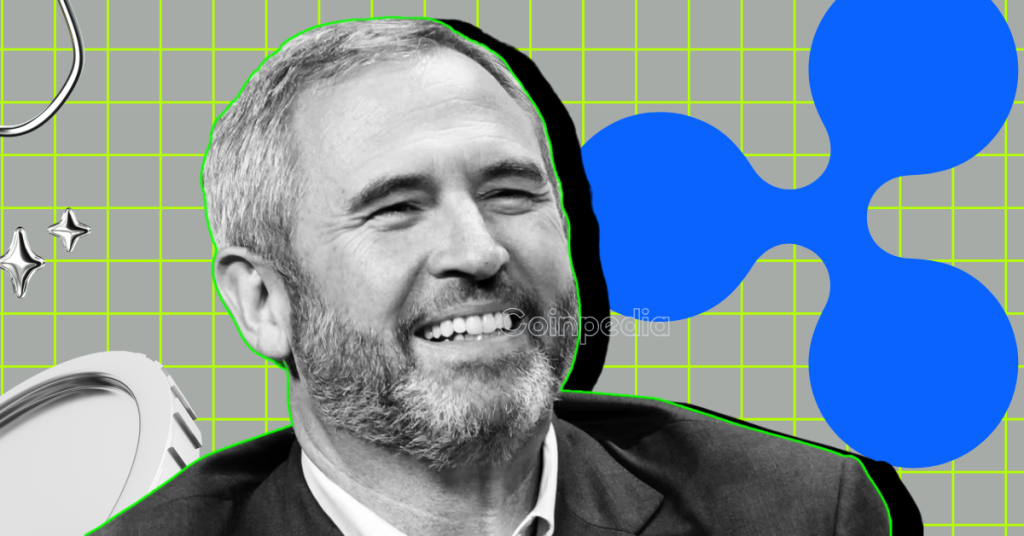
The post ‘Ripple Does Not Control XRP’, Says CEO Brad Garlinghouse at DC Fintech Week appeared first on Coinpedia Fintech News Ripple CEO Brad Garlinghouse addressed one of the biggest points of confusion in the crypto space during DC Fintech Week. He explained that many people still mix Ripple, the company, with XRP, the digital asset. Ripple is a private company backed by venture capital and operates its own business, while XRP is an open-source technology …The post ‘Ripple Does Not Control XRP’, Says CEO Brad Garlinghouse at DC Fintech Week appeared first on Coinpedia Fintech News Ripple CEO Brad Garlinghouse addressed one of the biggest points of confusion in the crypto space during DC Fintech Week. He explained that many people still mix Ripple, the company, with XRP, the digital asset. Ripple is a private company backed by venture capital and operates its own business, while XRP is an open-source technology …

‘Ripple Does Not Control XRP’, Says CEO Brad Garlinghouse at DC Fintech Week
2025/10/16 01:43
2 min read
For feedback or concerns regarding this content, please contact us at crypto.news@mexc.com
Ripple CEO Brad Garlinghouse Explains

The post ‘Ripple Does Not Control XRP’, Says CEO Brad Garlinghouse at DC Fintech Week appeared first on Coinpedia Fintech News

Ripple CEO Brad Garlinghouse addressed one of the biggest points of confusion in the crypto space during DC Fintech Week. He explained that many people still mix Ripple, the company, with XRP, the digital asset. Ripple is a private company backed by venture capital and operates its own business, while XRP is an open-source technology that exists independently of Ripple.

Garlinghouse said that the lawsuit against Ripple was largely about this distinction. Ripple builds financial products that use XRP, but XRP itself is not owned or controlled by Ripple. The token operates on a public blockchain that anyone can access and build on.

No CEO for XRP

Garlinghouse clarified that while Ripple has a CEO and a clear company structure, XRP does not. The XRP ecosystem is made up of many independent developers, companies, and contributors who are building on and around the XRP Ledger. This makes XRP more similar to decentralized open-source projects like Bitcoin or Ethereum, which also operate without a single authority.

“People say things like, ‘Well, XRP has a CEO.’ I’m like , who is it?” he said. “Ripple has a CEO. That’s me. But there are scores, if not hundreds, of other CEOs building around the XRP ecosystem.”

Decentralization Proven by Governance

The XRP Ledger’s governance model shows its independence. Changes or upgrades to the network require approval from a supermajority of participants. Ripple’s influence does not determine whether an amendment passes or fails. 

In some cases, proposals Ripple supported were rejected, while others it opposed were approved. This process shows that decision-making lies with the community, not with Ripple.

Need for Better Understanding

Garlinghouse says that the confusion around XRP’s ownership comes from a lack of understanding of how open-source networks work. He opened up about the need for better education about blockchain governance and the role of companies like Ripple.

Ripple continues to support the XRP ecosystem but does not control it. The company remains one participant among many in a wider decentralized network.


Market Opportunity
Notcoin Logo
Notcoin Price(NOT)
$0.0003884
$0.0003884$0.0003884
+0.93%
USD
Notcoin (NOT) Live Price Chart
Disclaimer: The articles reposted on this site are sourced from public platforms and are provided for informational purposes only. They do not necessarily reflect the views of MEXC. All rights remain with the original authors. If you believe any content infringes on third-party rights, please contact crypto.news@mexc.com for removal. MEXC makes no guarantees regarding the accuracy, completeness, or timeliness of the content and is not responsible for any actions taken based on the information provided. The content does not constitute financial, legal, or other professional advice, nor should it be considered a recommendation or endorsement by MEXC.

You May Also Like

Here’s How Consumers May Benefit From Lower Interest Rates

Here’s How Consumers May Benefit From Lower Interest Rates

The post Here’s How Consumers May Benefit From Lower Interest Rates appeared on BitcoinEthereumNews.com. Topline The Federal Reserve on Wednesday opted to ease interest rates for the first time in months, leading the way for potentially lower mortgage rates, bond yields and a likely boost to cryptocurrency over the coming weeks. Average long-term mortgage rates dropped to their lowest levels in months ahead of the central bank’s policy shift. Copyright{2018} The Associated Press. All rights reserved. Key Facts The central bank’s policymaking panel voted this week to lower interest rates, which have sat between 4.25% and 4.5% since December, to a new range of 4% and 4.25%. How Will Lower Interest Rates Impact Mortgage Rates? Mortgage rates tend to fall before and during a period of interest rate cuts: The average 30-year fixed-rate mortgage dropped to 6.35% from 6.5% last week, the lowest level since October 2024, mortgage buyer Freddie Mac reported. Borrowing costs on 15-year fixed-rate mortgages also dropped to 5.5% from 5.6% as they neared the year-ago rate of 5.27%. When the Federal Reserve lowered the funds rate to between 0% and 0.25% during the pandemic, 30-year mortgage rates hit record lows between 2.7% and 3% by the end of 2020, according to data published by Freddie Mac. Consumers who refinanced their mortgages in 2020 saved about $5.3 billion annually as rates dropped, according to the Consumer Financial Protection Bureau. Similarly, mortgage rates spiked around 7% as interest rates were hiked in 2022 and 2023, though mortgage rates appeared to react within weeks of the Fed opting to cut or raise rates. How Do Treasury Bonds Respond To Lower Interest Rates? Long-term Treasury yields are more directly influenced by interest rates, as lower rates tend to result in lower yields. When the Fed pushed rates to near zero during the pandemic, 10-year Treasury yields fell to an all-time low of 0.5%. As…
Share
BitcoinEthereumNews2025/09/18 05:59
Tunis–Carthage Airport Expansion Targets Capacity Surge

Tunis–Carthage Airport Expansion Targets Capacity Surge

Tunisia’s Tunis–Carthage airport expansion is set to transform the country’s aviation capacity as authorities plan a $1 billion investment to significantly increase
Share
Furtherafrica2026/03/10 13:00
Hoskinson to Attend Senate Roundtable on Crypto Regulation

Hoskinson to Attend Senate Roundtable on Crypto Regulation

The post Hoskinson to Attend Senate Roundtable on Crypto Regulation appeared on BitcoinEthereumNews.com. Hoskinson confirmed for Senate roundtable on U.S. crypto regulation and market structure. Key topics include SEC vs CFTC oversight split, DeFi regulation, and securities rules. Critics call the roundtable slow, citing Trump’s 2025 executive order as faster. Cardano founder Charles Hoskinson has confirmed that he will attend the Senate Banking Committee roundtable on crypto market structure legislation.  Hoskinson left a hint about his attendance on X while highlighting Journalist Eleanor Terrett’s latest post about the event. Crypto insiders will meet with government officials Terrett shared information gathered from some invitees to the event, noting that a group of leaders from several major cryptocurrency establishments would attend the event. According to Terrett, the group will meet with the Senate Banking Committee leadership in a roundtable to continue talks on market structure regulation. Meanwhile, Terrett noted that the meeting will be held on Thursday, September 18, following an industry review of the committee’s latest approach to distinguishing securities from commodities, DeFi treatment, and other key issues, which has lasted over one week.  Related: Senate Draft Bill Gains Experts’ Praise for Strongest Developer Protections in Crypto Law Notably, the upcoming roundtable between US legislators and crypto industry leaders is a continuation of the process of regularising cryptocurrency regulation in the United States. It is part of the Donald Trump administration’s efforts to provide clarity in the US cryptocurrency ecosystem, which many crypto supporters consider a necessity for the digital asset industry. Despite the ongoing process, some crypto users are unsatisfied with how the US government is handling the issue, particularly the level of bureaucracy involved in creating a lasting cryptocurrency regulatory framework. One such user criticized the process, describing it as a “masterclass in bureaucratic foot-dragging.” According to the critic, America is losing ground to nations already leading in blockchain innovation. He cited…
Share
BitcoinEthereumNews2025/09/18 06:37