On October 11th, the cryptocurrency market experienced its largest margin call in history, with a total liquidation of approximately $19 billion. During this extreme market test, multiple decentralized perpetual swap trading platforms (PerpDex) experienced outages, with Lighter being the most severely affected. The resulting losses in the liquidity provider pool (LLP) sparked widespread market discussion about the PerpDex platform. As a Web3 security company that has audited multiple Perp Dex platforms, including Surf Protocol and Tifo.trade, Beosin will use years of accumulated technology and on-chain data analysis experience to help everyone gain a deeper understanding of the cause of the Lighter outage in this article. Lighter Technology Framework Lighter stood out amid the PerpDex craze with its zero transaction fees, attracting numerous users to trade on its platform. Lighter is built on zkLight, a specialized ZK Rollup L2, to improve transaction performance and order book matching efficiency. Its core operating mechanism is illustrated below: Sorter: As the first stop for user interaction, it is responsible for receiving transaction instructions, sorting transactions, and packaging them into batches (batch data packets of transactions). The matching engine receives batches from the sequencer and strictly adheres to the "price-first, time-first" matching logic. Each successful match prepares data for generating a zero-knowledge proof, ensuring that anyone can verify the fairness of the matching process afterward, preventing manipulation. Prover: Generates the matching engine's operations into a concise ZK-SNARK proof for subsequent verification of the correctness of matching execution and state transitions. Mainnet Contract: Responsible for verifying the zero-knowledge proof submitted by the prover. Once verified, the state root is updated, and the transaction result is finally confirmed on Ethereum. In addition to the above features, Lighter provides users with a vault feature, allowing them to deposit funds into the Lighter Liquidity Pool (LLP). This liquidity pool serves as a liquidity provider, price generator, and risk management platform. LLP participants share in platform profits and counterparty losses, while also assuming some of the risk in the event of a user's margin call, forming a risk buffer mechanism in conjunction with Lighter's liquidation system. Lighter downtime review On October 11, 2025, the crypto market saw record-breaking contract liquidations. During this extreme market situation, Lighter experienced a multi-hour service outage, preventing users from operating their positions and resulting in a loss of approximately 5.35% in LLP. Beosin analyzed on-chain data during the main time period of this incident (00:17-05:08 Beijing time on October 11, 2025) and found that Lighter lost 3 batches starting from Batch #55661 and resumed batch production at 00:17 (00:23 Lighter issued an announcement stating that users' orders could not be processed or executed). Before the outage, the Lighter platform normally processed approximately 4,005 transactions per minute. Starting at 00:17, the transaction volume surged. Batch #55665 contained 560 blocks and processed 196,913 transactions. On average, approximately 65,638 transactions were processed per minute, which is about 16 times the normal volume. The following is a statistical chart of the number of transactions processed at each batch submission time point from 00:17 to 05:08 on October 11: Produced by Beosin Statistics At 04:56 on October 11th, Batch #55743 reached its maximum transaction count, completing 639,370 transactions in 2 minutes, 79.8 times the average per-minute transaction rate. By analyzing Lighter's data from this incident, we found that Lighter's batch can accommodate up to 1,600 blocks, each of which can accommodate up to 500 transactions. The theoretical maximum number of transactions per batch is 800,000, but the actual maximum number of transactions processed was 639,370. The above are transactions successfully processed by the Lighter platform. However, many users failed to adjust their positions due to transaction submission failures (downtime), resulting in data not being recorded on the chain. From a technical architecture perspective, this downtime and the resulting LLP losses are primarily due to two reasons: 1. In addition to issues with accessing the front-end page and submitting orders, Lighter's ZK Rollup relies on a single sequencer for transaction sorting and packaging. Although ZK Proof is used for result verification, the centralization of the sequencer creates a single point of failure risk. During periods of price drops, the sequencer and database are unable to handle the sudden load, resulting in database index corruption and transaction blockage, directly leading to disconnection between the matching engine and the client. 2. When transaction volume surges, the coordinated processing capabilities of the proof generation nodes and the database become a bottleneck in the ZK-SNARK proof generation and submission process. In extreme market conditions, a simultaneous surge in trade matching and clearing operations simultaneously initiates requests to the ZK proof generation nodes. The platform may not have implemented resource reservation mechanisms for high-priority operations like clearing. This creates resource competition between regular transactions and clearing proof generation requests, further exacerbating system response delays and preventing the clearing process from executing promptly, exacerbating user losses. On an operational level, Lighter CEO Vladimir Novakovski responded, "Lighter had originally planned to upgrade its database over the weekend of the recent crash to accommodate increased trading demand." This incident suggests this "incorrect upgrade window" stems from the team's inadequate preparation for market risks. During the platform's rapid expansion, they failed to complete timely infrastructure upgrades, ultimately leading to systemic failures during the extreme market conditions. This incident reveals a core challenge facing PerpDex: how to maintain normal platform operations during extreme market conditions. Regarding smart contract security, PerpDex project teams should conduct comprehensive and professional contract security audits. Beosin has previously provided security audit services for PerpDex projects such as Surf Protocol and Tifo.trade. These audits cover the security of smart contract code, the correctness of business implementation logic (such as leveraged trading, liquidation, and liquidity pool management), contract code gas optimization, and the discovery and remediation of potential vulnerabilities. Beosin has successfully helped project teams resolve multiple medium- and high-risk vulnerabilities.On October 11th, the cryptocurrency market experienced its largest margin call in history, with a total liquidation of approximately $19 billion. During this extreme market test, multiple decentralized perpetual swap trading platforms (PerpDex) experienced outages, with Lighter being the most severely affected. The resulting losses in the liquidity provider pool (LLP) sparked widespread market discussion about the PerpDex platform. As a Web3 security company that has audited multiple Perp Dex platforms, including Surf Protocol and Tifo.trade, Beosin will use years of accumulated technology and on-chain data analysis experience to help everyone gain a deeper understanding of the cause of the Lighter outage in this article. Lighter Technology Framework Lighter stood out amid the PerpDex craze with its zero transaction fees, attracting numerous users to trade on its platform. Lighter is built on zkLight, a specialized ZK Rollup L2, to improve transaction performance and order book matching efficiency. Its core operating mechanism is illustrated below: Sorter: As the first stop for user interaction, it is responsible for receiving transaction instructions, sorting transactions, and packaging them into batches (batch data packets of transactions). The matching engine receives batches from the sequencer and strictly adheres to the "price-first, time-first" matching logic. Each successful match prepares data for generating a zero-knowledge proof, ensuring that anyone can verify the fairness of the matching process afterward, preventing manipulation. Prover: Generates the matching engine's operations into a concise ZK-SNARK proof for subsequent verification of the correctness of matching execution and state transitions. Mainnet Contract: Responsible for verifying the zero-knowledge proof submitted by the prover. Once verified, the state root is updated, and the transaction result is finally confirmed on Ethereum. In addition to the above features, Lighter provides users with a vault feature, allowing them to deposit funds into the Lighter Liquidity Pool (LLP). This liquidity pool serves as a liquidity provider, price generator, and risk management platform. LLP participants share in platform profits and counterparty losses, while also assuming some of the risk in the event of a user's margin call, forming a risk buffer mechanism in conjunction with Lighter's liquidation system. Lighter downtime review On October 11, 2025, the crypto market saw record-breaking contract liquidations. During this extreme market situation, Lighter experienced a multi-hour service outage, preventing users from operating their positions and resulting in a loss of approximately 5.35% in LLP. Beosin analyzed on-chain data during the main time period of this incident (00:17-05:08 Beijing time on October 11, 2025) and found that Lighter lost 3 batches starting from Batch #55661 and resumed batch production at 00:17 (00:23 Lighter issued an announcement stating that users' orders could not be processed or executed). Before the outage, the Lighter platform normally processed approximately 4,005 transactions per minute. Starting at 00:17, the transaction volume surged. Batch #55665 contained 560 blocks and processed 196,913 transactions. On average, approximately 65,638 transactions were processed per minute, which is about 16 times the normal volume. The following is a statistical chart of the number of transactions processed at each batch submission time point from 00:17 to 05:08 on October 11: Produced by Beosin Statistics At 04:56 on October 11th, Batch #55743 reached its maximum transaction count, completing 639,370 transactions in 2 minutes, 79.8 times the average per-minute transaction rate. By analyzing Lighter's data from this incident, we found that Lighter's batch can accommodate up to 1,600 blocks, each of which can accommodate up to 500 transactions. The theoretical maximum number of transactions per batch is 800,000, but the actual maximum number of transactions processed was 639,370. The above are transactions successfully processed by the Lighter platform. However, many users failed to adjust their positions due to transaction submission failures (downtime), resulting in data not being recorded on the chain. From a technical architecture perspective, this downtime and the resulting LLP losses are primarily due to two reasons: 1. In addition to issues with accessing the front-end page and submitting orders, Lighter's ZK Rollup relies on a single sequencer for transaction sorting and packaging. Although ZK Proof is used for result verification, the centralization of the sequencer creates a single point of failure risk. During periods of price drops, the sequencer and database are unable to handle the sudden load, resulting in database index corruption and transaction blockage, directly leading to disconnection between the matching engine and the client. 2. When transaction volume surges, the coordinated processing capabilities of the proof generation nodes and the database become a bottleneck in the ZK-SNARK proof generation and submission process. In extreme market conditions, a simultaneous surge in trade matching and clearing operations simultaneously initiates requests to the ZK proof generation nodes. The platform may not have implemented resource reservation mechanisms for high-priority operations like clearing. This creates resource competition between regular transactions and clearing proof generation requests, further exacerbating system response delays and preventing the clearing process from executing promptly, exacerbating user losses. On an operational level, Lighter CEO Vladimir Novakovski responded, "Lighter had originally planned to upgrade its database over the weekend of the recent crash to accommodate increased trading demand." This incident suggests this "incorrect upgrade window" stems from the team's inadequate preparation for market risks. During the platform's rapid expansion, they failed to complete timely infrastructure upgrades, ultimately leading to systemic failures during the extreme market conditions. This incident reveals a core challenge facing PerpDex: how to maintain normal platform operations during extreme market conditions. Regarding smart contract security, PerpDex project teams should conduct comprehensive and professional contract security audits. Beosin has previously provided security audit services for PerpDex projects such as Surf Protocol and Tifo.trade. These audits cover the security of smart contract code, the correctness of business implementation logic (such as leveraged trading, liquidation, and liquidity pool management), contract code gas optimization, and the discovery and remediation of potential vulnerabilities. Beosin has successfully helped project teams resolve multiple medium- and high-risk vulnerabilities.

On the night of the 19 billion liquidation, why did Lighter "shut down"?

2025/10/21 07:00
5 min read
For feedback or concerns regarding this content, please contact us at crypto.news@mexc.com

On October 11th, the cryptocurrency market experienced its largest margin call in history, with a total liquidation of approximately $19 billion. During this extreme market test, multiple decentralized perpetual swap trading platforms (PerpDex) experienced outages, with Lighter being the most severely affected. The resulting losses in the liquidity provider pool (LLP) sparked widespread market discussion about the PerpDex platform.

As a Web3 security company that has audited multiple Perp Dex platforms, including Surf Protocol and Tifo.trade, Beosin will use years of accumulated technology and on-chain data analysis experience to help everyone gain a deeper understanding of the cause of the Lighter outage in this article.
Lighter Technology Framework

Lighter stood out amid the PerpDex craze with its zero transaction fees, attracting numerous users to trade on its platform. Lighter is built on zkLight, a specialized ZK Rollup L2, to improve transaction performance and order book matching efficiency. Its core operating mechanism is illustrated below:
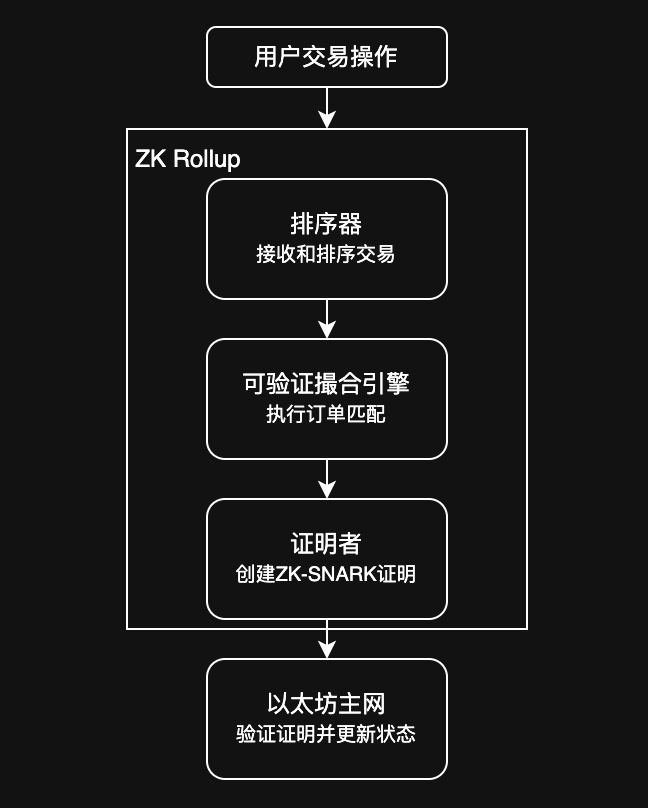
Sorter: As the first stop for user interaction, it is responsible for receiving transaction instructions, sorting transactions, and packaging them into batches (batch data packets of transactions).

The matching engine receives batches from the sequencer and strictly adheres to the "price-first, time-first" matching logic. Each successful match prepares data for generating a zero-knowledge proof, ensuring that anyone can verify the fairness of the matching process afterward, preventing manipulation.

Prover: Generates the matching engine's operations into a concise ZK-SNARK proof for subsequent verification of the correctness of matching execution and state transitions.

Mainnet Contract: Responsible for verifying the zero-knowledge proof submitted by the prover. Once verified, the state root is updated, and the transaction result is finally confirmed on Ethereum.

In addition to the above features, Lighter provides users with a vault feature, allowing them to deposit funds into the Lighter Liquidity Pool (LLP). This liquidity pool serves as a liquidity provider, price generator, and risk management platform. LLP participants share in platform profits and counterparty losses, while also assuming some of the risk in the event of a user's margin call, forming a risk buffer mechanism in conjunction with Lighter's liquidation system.

Lighter downtime review

On October 11, 2025, the crypto market saw record-breaking contract liquidations. During this extreme market situation, Lighter experienced a multi-hour service outage, preventing users from operating their positions and resulting in a loss of approximately 5.35% in LLP.

Beosin analyzed on-chain data during the main time period of this incident (00:17-05:08 Beijing time on October 11, 2025) and found that Lighter lost 3 batches starting from Batch #55661 and resumed batch production at 00:17 (00:23 Lighter issued an announcement stating that users' orders could not be processed or executed).

Before the outage, the Lighter platform normally processed approximately 4,005 transactions per minute. Starting at 00:17, the transaction volume surged. Batch #55665 contained 560 blocks and processed 196,913 transactions. On average, approximately 65,638 transactions were processed per minute, which is about 16 times the normal volume.

The following is a statistical chart of the number of transactions processed at each batch submission time point from 00:17 to 05:08 on October 11:
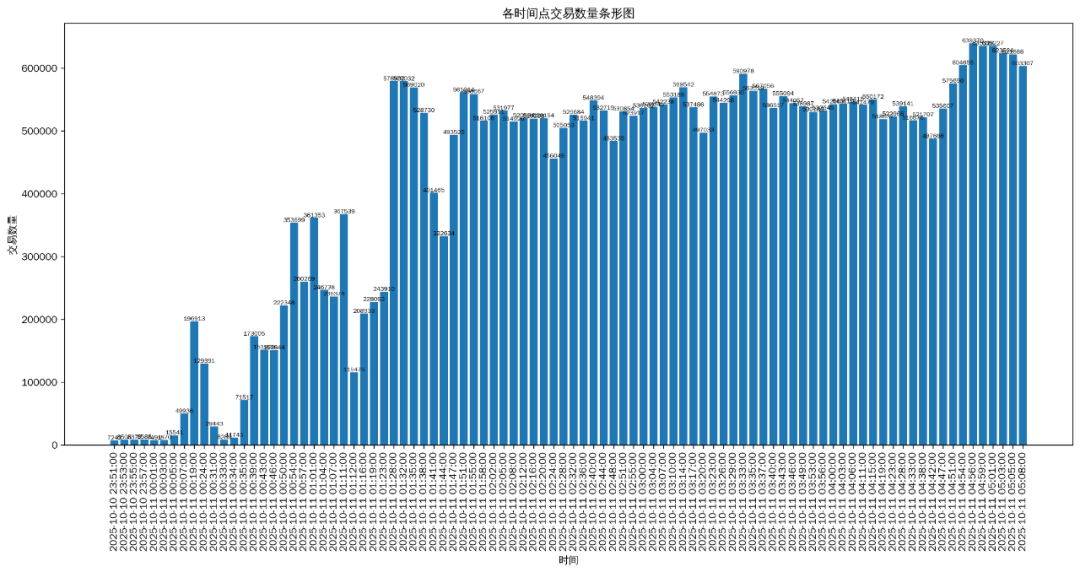
 Produced by Beosin Statistics

At 04:56 on October 11th, Batch #55743 reached its maximum transaction count, completing 639,370 transactions in 2 minutes, 79.8 times the average per-minute transaction rate. By analyzing Lighter's data from this incident, we found that Lighter's batch can accommodate up to 1,600 blocks, each of which can accommodate up to 500 transactions. The theoretical maximum number of transactions per batch is 800,000, but the actual maximum number of transactions processed was 639,370.

The above are transactions successfully processed by the Lighter platform. However, many users failed to adjust their positions due to transaction submission failures (downtime), resulting in data not being recorded on the chain. From a technical architecture perspective, this downtime and the resulting LLP losses are primarily due to two reasons:

1. In addition to issues with accessing the front-end page and submitting orders, Lighter's ZK Rollup relies on a single sequencer for transaction sorting and packaging. Although ZK Proof is used for result verification, the centralization of the sequencer creates a single point of failure risk. During periods of price drops, the sequencer and database are unable to handle the sudden load, resulting in database index corruption and transaction blockage, directly leading to disconnection between the matching engine and the client.

2. When transaction volume surges, the coordinated processing capabilities of the proof generation nodes and the database become a bottleneck in the ZK-SNARK proof generation and submission process. In extreme market conditions, a simultaneous surge in trade matching and clearing operations simultaneously initiates requests to the ZK proof generation nodes. The platform may not have implemented resource reservation mechanisms for high-priority operations like clearing. This creates resource competition between regular transactions and clearing proof generation requests, further exacerbating system response delays and preventing the clearing process from executing promptly, exacerbating user losses.

On an operational level, Lighter CEO Vladimir Novakovski responded, "Lighter had originally planned to upgrade its database over the weekend of the recent crash to accommodate increased trading demand." This incident suggests this "incorrect upgrade window" stems from the team's inadequate preparation for market risks. During the platform's rapid expansion, they failed to complete timely infrastructure upgrades, ultimately leading to systemic failures during the extreme market conditions.

This incident reveals a core challenge facing PerpDex: how to maintain normal platform operations during extreme market conditions. Regarding smart contract security, PerpDex project teams should conduct comprehensive and professional contract security audits. Beosin has previously provided security audit services for PerpDex projects such as Surf Protocol and Tifo.trade. These audits cover the security of smart contract code, the correctness of business implementation logic (such as leveraged trading, liquidation, and liquidity pool management), contract code gas optimization, and the discovery and remediation of potential vulnerabilities. Beosin has successfully helped project teams resolve multiple medium- and high-risk vulnerabilities.


Market Opportunity
Perpetual Protocol Logo
Perpetual Protocol Price(PERP)
$0.03674
$0.03674$0.03674
-11.74%
USD
Perpetual Protocol (PERP) Live Price Chart
Disclaimer: The articles reposted on this site are sourced from public platforms and are provided for informational purposes only. They do not necessarily reflect the views of MEXC. All rights remain with the original authors. If you believe any content infringes on third-party rights, please contact crypto.news@mexc.com for removal. MEXC makes no guarantees regarding the accuracy, completeness, or timeliness of the content and is not responsible for any actions taken based on the information provided. The content does not constitute financial, legal, or other professional advice, nor should it be considered a recommendation or endorsement by MEXC.

You May Also Like

Time Traveler to XRP Investor: Once It Starts, There Is No Stopping This Perfect Catalyst

Time Traveler to XRP Investor: Once It Starts, There Is No Stopping This Perfect Catalyst

Time Traveler (@Traveler2236), a well-known crypto commentator and enthusiast, has shared a detailed projection for XRP’s price progression in 2026. His forecast
Share
Timestabloid2026/03/11 21:31
The path to clarity: BIR’s new audit framework

The path to clarity: BIR’s new audit framework

The first quarter of 2026 has been anything but quiet for taxpayers. Along with the preparations for filing income tax returns, the Bureau of Internal Revenue’s
Share
Bworldonline2026/03/11 20:30
PYUSD Token Burn: Unpacking the Astonishing 600 Million Vanish

PYUSD Token Burn: Unpacking the Astonishing 600 Million Vanish

BitcoinWorld PYUSD Token Burn: Unpacking the Astonishing 600 Million Vanish The cryptocurrency world is abuzz with a significant event: a massive PYUSD token burn involving 600 million units of the stablecoin. This astonishing development, first reported by Whale Alert, saw a substantial portion of PYUSD removed from circulation from an unknown wallet. Such an event naturally sparks curiosity and raises questions about its implications for the stablecoin’s stability and future trajectory. What does it mean when such a large sum simply vanishes? What Exactly is a PYUSD Token Burn? Before diving into the specifics of this event, it is crucial to understand what a token burn entails. In simple terms, a token burn is the permanent removal of cryptocurrency tokens from circulation. This is achieved by sending tokens to an unspendable wallet address, often referred to as a “burner” address, where they can never be retrieved or used again. This process effectively reduces the total supply of the cryptocurrency. Why Burn Tokens? Token burns are often executed for several reasons: To reduce supply and potentially increase scarcity, which could lead to an increase in value if demand remains constant. To stabilize a cryptocurrency’s price, particularly for stablecoins. As part of a deflationary mechanism or to implement specific tokenomics strategies. To signal commitment to the project’s long-term health and value. The 600 Million PYUSD Token Burn: What Happened? Whale Alert, a well-known blockchain tracker, recently flagged a colossal transaction: 600 million PYUSD being transferred to an unknown wallet, which was subsequently identified as a burn address. The details surrounding the origin and specific intent behind this particular burn remain somewhat mysterious. However, the outcome is clear: these 600 million PYUSD tokens are now permanently out of circulation. This scale of a PYUSD token burn is not an everyday occurrence. It represents a substantial reduction in the overall supply of the stablecoin. While the exact reasoning from the entity initiating the burn is not public, such large-scale actions are typically strategic, aimed at influencing market dynamics or fulfilling predefined tokenomic policies. Why Does This PYUSD Token Burn Matter for the Stablecoin? A burn of this magnitude carries significant weight, especially for a stablecoin like PYUSD. Stablecoins are designed to maintain a stable value, often pegged to a fiat currency like the US dollar. Reducing the supply can have several implications: Scarcity and Value: By decreasing the total available supply, the burn could theoretically enhance the scarcity of PYUSD. For a stablecoin, this often means reinforcing its peg rather than driving up its price above the peg. Peg Stability: A controlled burn can be a mechanism to help maintain the stablecoin’s peg to its underlying asset. If the stablecoin’s market price deviates below its peg, reducing supply can help bring it back into line. Market Confidence: Large, well-communicated burns can sometimes boost investor confidence, signaling that the issuers are actively managing the token’s supply to ensure its stability and health. However, an ‘unknown wallet’ aspect adds a layer of intrigue. What Are the Potential Impacts of Such a Large PYUSD Token Burn? The immediate impact of the 600 million PYUSD token burn is a reduction in the total circulating supply. This action, while seemingly straightforward, can ripple through the broader cryptocurrency ecosystem. For PYUSD holders and potential investors, understanding these potential impacts is key. One primary effect is on the supply-demand equilibrium. With fewer tokens available, if demand for PYUSD remains consistent or grows, the stablecoin’s peg could be strengthened. Moreover, such a substantial burn might also be part of a larger strategy to comply with regulatory requirements or to adjust the stablecoin’s backing reserves. It is important to consider the transparency surrounding such events. While the act of burning is verifiable on the blockchain, the ‘unknown wallet’ aspect of this particular burn leaves room for speculation about its origins and ultimate goals. Transparency in such large-scale operations often builds greater trust within the community. In conclusion, the recent 600 million PYUSD token burn is a remarkable event that underscores the dynamic nature of the stablecoin market. While the exact motivations behind this specific burn from an unknown wallet remain to be fully clarified, its immediate effect is a significant reduction in PYUSD’s circulating supply. This move has the potential to influence the stablecoin’s scarcity, strengthen its peg, and shape market perceptions, ultimately contributing to the ongoing evolution of the digital asset landscape. Frequently Asked Questions About the PYUSD Token Burn Here are some common questions regarding token burns and the recent PYUSD event: Q1: What is a cryptocurrency token burn? A1: A token burn is the process of permanently removing cryptocurrency tokens from circulation by sending them to an unspendable wallet address. This reduces the total supply of the token. Q2: Why do projects conduct token burns? A2: Projects burn tokens for various reasons, including reducing supply to potentially increase scarcity, maintaining a stable price (especially for stablecoins), implementing deflationary tokenomics, or signaling commitment to the project’s long-term health. Q3: How does a PYUSD token burn affect its value? A3: For a stablecoin like PYUSD, a token burn is typically used to help maintain its peg to the US dollar by adjusting supply. While it reduces scarcity, its primary goal is usually to reinforce stability rather than to increase its price above the peg. Q4: Is the 600 million PYUSD burn a positive or negative event? A4: Generally, a controlled token burn is considered a positive mechanism for managing supply and potentially strengthening a stablecoin’s peg. The specific details, like the ‘unknown wallet’ in this case, might raise questions about transparency, but the act of burning itself is a common strategy. Q5: How can I verify a token burn? A5: Token burns are recorded on the blockchain. You can typically verify a burn by looking up the transaction on a blockchain explorer, where you will see tokens sent to a known burn address (an address with no private key, making the funds irretrievable). The world of stablecoins is constantly evolving, and events like this PYUSD token burn are crucial to understanding its dynamics. If you found this article insightful, please consider sharing it with your network on social media. Your shares help us bring important crypto news and analysis to a wider audience! To learn more about the latest crypto market trends, explore our article on key developments shaping stablecoin market stability. This post PYUSD Token Burn: Unpacking the Astonishing 600 Million Vanish first appeared on BitcoinWorld.
Share
Coinstats2025/09/18 01:40