Topline
The Senate for an eleventh time Monday rejected a GOP-backed measure to reopen the government, blocking the funding bill from moving forward—with no new supporters, indicating negotiations remain at a stalemate.
The government shutdown stretched on into a thirteenth day Monday.
AFP via Getty Images
Timeline
The bill, which needed 60 votes to pass, received 50 “yes” votes and 43 “no” votes as seven senators did not vote.
The bill failed in a 51-45 vote, with four senators abstaining from voting and the same three members of the Democratic caucus—Sen. Catherine Cortez Masto, D-Nev., Sen. John Fetterman, D-Pa., and Angus King, I-Maine—voting with Republicans to advance the bill, while Sen. Rand Paul, R-Ky., again voted with all other Democrats against it.
A federal judge blocked firings the Trump administration has carried out during the shutdown for at least two more weeks, granting a request for a restraining order filed by federal employee unions.
Office of Management and Budget Director Russell Vought said the Trump administration wants “to be very aggressive where we can be in shuttering bureaucracy, not just the funding,” during an appearance on “The Charlie Kirk Show” broadcast from the White House, adding he wants to close the Consumer Financial Protection Bureau within “the next two, three months,” alleging overburdensome regulations on financial institutions.
Treasury Secretary Scott Bessent said the shutdown could cost the federal government $15 billion in output daily, warning it was beginning to “cut into muscle” of the U.S. government, he said while speaking at CNBC’s Invest in America Forum, calling on Democrats to “break away” and vote with Republicans to reopen the government.
The Senate voted 49-45 in favor of a Republican-backed bill to reopen the government, which needed 60 votes to clear the filibuster.
The White House budget office said in a post on X it will “continue the RIFs [reductions in force], and wait,” blaming “the Democrats’ intransigence” for the shutdown.
The Office of Management and Budget sent layoff notices to about 4,200 government workers Friday, with the steepest cuts hitting the Treasury Department and Department of Health and Human Services, though it rescinded some hours after announcing them, including hundreds at the Centers for Disease Control and Prevention, Reuters reported Monday, citing an unnamed source familiar with the issue.
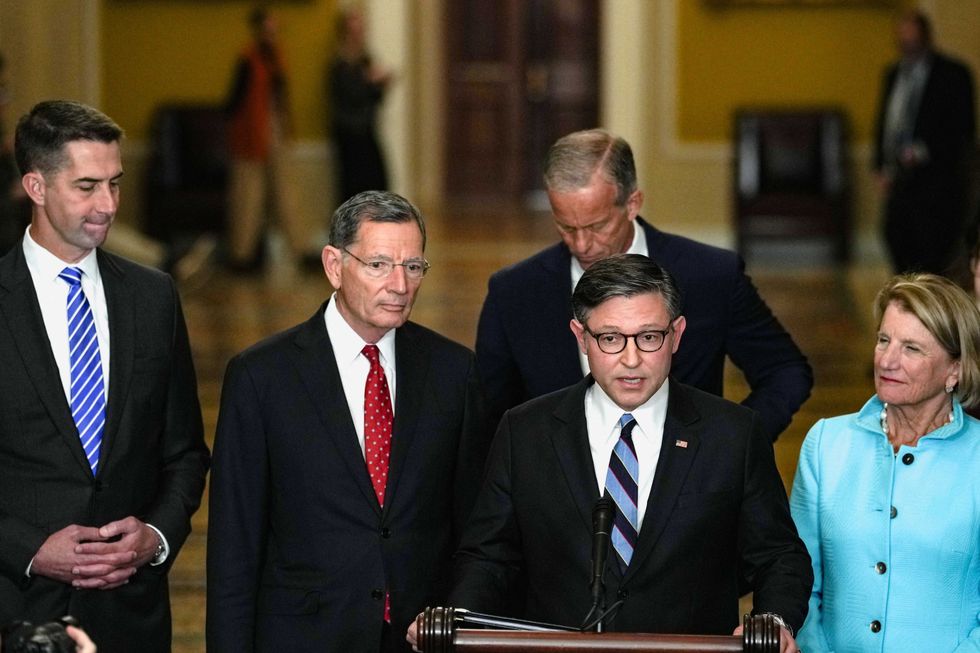
House Speaker Mike Johnson, R-La., in a press conference raised the alarm of the shutdown approaching record territory, warning that the country was “barreling toward one of the longest shutdowns in American history.”
Kalshi’s forecast for the shutdown based on betting on its predictions market rose above 37 days, before falling slightly to 35.2—which would make it the longest government shutdown in history, breaking the record set during the first Trump administration in 2019 when a shutdown lasted 35 days.
The predictions market was offering 68% odds the shutdown will last more than 30 days and a 51% chance it will last more than 35.
Consumer sentiment was virtually unchanged from last month, dipping from 55.1 to 55, according to the University of Michigan, which reported that consumer surveys indicate the shutdown hasn’t impacted consumers’ views of the economy so far, while inflation and labor market prospects remain top concerns.
Kalshi forecasted a 28-day shutdown, with a 59% chance of it lasting more than 25 days, 50% odds it will last more than 30 days and 33% for more than 35 days. The shutdown will last at least until Tuesday, when the Senate is scheduled to vote next on legislation to reopen the government.
Federal workers received partial paychecks, only for the days they worked before the shutdown began Oct. 1, what will be their final compensation as long as the shutdown continues.
President Donald Trump said “we’ll be making cuts that will be permanent, and we’re only gonna cut Democrat programs,” in his latest threat to force Democrats to vote in favor of the Republican spending plan to reopen the government.
The Senate rejected the GOP-backed bill for a seventh time, in a 54-45 vote, short of the 60 needed to break filibuster, with no new Democratic votes supporting the legislation.
The Senate voted 54-45 for the Republican spending plan, failing to reach the 60-vote threshold needed to pass, and 52-47 against a Democratic proposal.
Johnson told reporters “I hope that the furloughed workers receive back pay, of course,” but acknowledged “there are some legal analysts who are saying that that may not be appropriate or necessary, in terms of the law requiring that back pay be provided.”
Johnson said he’s spoken to Trump about the issue, and the president agrees “he doesn’t want people to go without pay.”
Trump said “in four or five days” there will be “substantial” job cuts and “a lot of those jobs will never come back” if the shutdown continues, adding “we have a lot of things that we’re going to eliminate.”
Federal workers might not receive back pay for days they have been furloughed, White House budget chief Russ Vought said in a memo, arguing a 2019 law that mandated back pay is invalid and that Congress must appropriate funds specifically for that purpose in order for employees to be paid, multiple outlets reported.
Democrats have contested the memo, with Sen. Patty Murray, D-Wash., calling it “another baseless attempt to try and scare” federal workers.
Republicans rejected a Democratic-backed measure that would have kept the government open and also funded subsidies for the Affordable Care Act that are set to expire at the end of the year, after a vote of 50-45 largely along party lines.
A second “clean” funding bill pushed by Republicans, which would have kept the government open until at least Nov. 21 under current spending levels, also failed after a 52-42 vote—falling short of the 60-vote threshold to overcome the filibuster in the Senate.
Speaking at Monday’s press briefing, White House press secretary Karoline Leavitt blamed Democrats for the shutdown and the firings the Trump administration has threatened to enact as pressure on the opposition party.
When asked if the administration has started firing government employees, Leavitt said the Office of Management and Budget is “continuing to work with agencies on who unfortunately is going to have to be laid off if this shutdown continues.”
The Senate rejected a GOP-backed bill to avert a shutdown until at least Nov. 21 in a 54-44 vote—failing to reach the 60 votes required to advance—and also voted down the Democratic proposal.
Earlier Friday, Senate Majority Leader John Thune, R-S.D., and Johnson told reporters they wouldn’t negotiate with Democrats on their demands to extend tax credits in the Affordable Care Act in exchange for their votes to break the 60-vote filibuster threshold.
The September labor market report was put on hold as the Bureau of Labor Statistics is closed due to the shutdown.
Vought announced $2.1 billion in federal funding for two major Chicago infrastructure projects—extension of the Red line and modernization of the Red and Purple lines—was “put on hold to ensure funding is not flowing via race-based contracting.”
It’s the latest move by the White House targeting federal funding in a Democratic-led state as it seeks to pressure Senate Democrats to vote alongside Republicans for a new federal funding plan that would lift the shutdown.
Thune told reporters senators would not vote over the weekend on a funding plan to avert a shutdown, meaning it would likely last until at least Monday.
Trump doubled down on threats to punish Democrats for withholding their votes on legislation to avert a shutdown, announcing he would meet with Vought “to determine which of the many Democrat Agencies, most of which are a political SCAM, he recommends to be cut, and whether or not those cuts will be temporary or permanent,” he wrote on Truth Social.
Vought said the Office of Management and Budget was canceling $8 billion in Biden-era energy projects “to fuel the Left’s climate agenda” in states won by Kamala Harris in the 2024 presidential election, including Colorado, California, New Jersey and New York, though it’s unclear what projects specifically will be affected.
Vought also warned in a call with House Republicans on Wednesday other infrastructure projects in New York, home to Congress’ top Democratic leaders, are under review and said the government could begin permanent layoffs due to the shutdown in a matter of days, Politico reported, citing four anonymous sources.
The administration also halted $18 billion in funding for two major New York City infrastructure projects—the Hudson Tunnel and Second Avenue Subway—to “ensure funding is not flowing based on unconstitutional DEI principles,” Vought said, with the Department of Transportation warning a review of the funding could take longer due to the shutdown.
Meanwhile, the Trump administration has preserved some of its key priorities during the shutdown, including construction of a White House ballroom, an unnamed administration official told ABC News, claiming the project is not funded by congressional appropriations, while offices that handle tariffs and immigration enforcement will retain more staffing than in previous shutdowns, according to Politico analysis of internal government documents.
Contra
Vice President JD Vance rejected the notion the Trump administration was purposely maneuvering funding to punish Democrats, telling reporters during a White House briefing Wednesday “we’re not targeting federal agencies based on politics.” Though House Speaker Mike Johnson, R-La., contradicting Vance, said Wednesday during a press conference “the longer this goes on, the more pain will be inflicted” and told radio host Moon Griffon the shutdown could “benefit” Republicans by allowing them to make additional cuts to the federal workforce.
Why Did The Government Shut Down?
The Senate on Sept. 30 failed to approve Republican-backed legislation known as a “continuing resolution” that would stave off a shutdown by allowing the government to operate under its existing budget through Nov. 21. The Republican-backed measure was rejected in a 55-45 vote, which fell short of the 60-vote threshold needed to pass the Senate, with three members of the Democratic caucus voting alongside Republicans, marking the second time in a matter of weeks the plan has failed in the Senate. The House already passed the GOP-backed proposal in a 217-212 vote, but it needs the support of at least seven Democrats to move through the Senate. The major factor dividing Republicans and Democrats is Democrats’ demand for an extension of federal tax credits under the Affordable Care Act set to expire at the end of the year. Republicans have accused Democrats of forcing a shutdown and alleged they want undocumented immigrants to have access to public healthcare benefits (though they’re not legally allowed to).
What Is Closed During A Government Shutdown?
The Congressional Budget Office said 750,000 workers could be furloughed daily in a shutdown, with their compensation totaling $400 million, in a letter last week to Sen. Joni Ernst, R-Iowa. Several agencies have said they will furlough more than half their workers, including the Environmental Protection Agency (89%), the Education Department (87%) and Commerce (81%), according to The New York Times. Key economic data collection activities from the Labor Department are also be suspended, meaning Friday’s Bureau of Labor Statistics report on nonfarm payroll growth was not released, while its weekly report on jobless claims released each Thursday and potentially the next consumer price index report scheduled for Oct. 15 could also be paused. Some federal agencies, such as the federal housing administration, a division of the Department of Housing and Urban Development, would stop processing new loans, and routine inspections by the Food and Drug Administration and EPA would be curtailed or stopped. Some contracts and grants, including those from the National Institutes of Health to fund research at outside organizations will freeze. In the previous shutdown, some air traffic controllers and Transportation Security Administration officials stopped showing up for work after weeks without pay, causing flight delays at major airports.
What Stays Open During A Government Shutdown?
Mandatory programs, such as Social Security, Medicare and Medicaid, veterans’ disability and pension payments and federal student loans will continue making payments. Food assistance programs, including SNAP and the federal program to assist women, infants and children, are also exempt, “subject to the availability of funding,” according to the U.S. Department of Agriculture contingency plan. Other programs funded by fees, rather than annual congressional appropriations, will operate normally, including the U.S. Postal Service and passport and visa processing. Essential employees, including active military personnel and air traffic controllers, are required to continue working. Some activities related to public health, including monitoring for disease outbreaks and foodborne illness, are also exempt from the shutdown. National parks will remain open, but most National Park Service staff will be furloughed, with the exception of personnel performing “activities necessary to protect life and property” and those required by law, such as law enforcement and emergency response, and protection of federal lands and property within the National Park System, according to Interior Department Guidance. The Smithsonian Institution said its museums and National Zoo will remain open through at least Oct. 6 using funding from the previous year. The Internal Revenue Service will also continue operating normally for the first five days of the government shutdown using previously allocated funding from the Inflation Reduction Act.
What Have Democratic Leaders Said After The Shutdown Went Into Effect?
In a post on X, Senate Minority Leader Chuck Schumer, D-N.Y., wrote: “IT’S MIDNIGHT. That means the Republican shutdown has just begun because they wouldn’t protect Americans’ health care. We’re going to keep fighting for the American people.” Schumer also issued a joint statement with House Minority Leader Hakeem Jeffries, D-N.Y., which read: “After months of making life harder and more expensive, Donald Trump and Republicans have now shut down the federal government because they do not want to protect the healthcare of the American people…Over the last few days, President Trump’s behavior has become more erratic and unhinged. Instead of negotiating a bipartisan agreement in good faith, he is obsessively posting crazed deepfake videos.” Rep. Jamie Raskin, D-Md., tweeted: “MAGA’s government shutdown was totally avoidable, and I will keep fighting hard to get government back open.” Rep. Jasmine Crocket, D-Texas., wrote: “Make no mistake: Republicans control the House, the Senate, and the White House. This is THEIR shutdown. They had every tool to govern and chose chaos instead.”
What Have Republican Leaders Said After The Shutdown Began?
In an X post, Johnson, wrote: Democrats have officially voted to CLOSE the government. Results: Moms and kids now lose WIC nutrition. Veterans lose health care and suicide prevention programs. FEMA has shortfalls during hurricane season. Soldiers and TSA agents go UNPAID. The only question now: How long will Chuck Schumer let this pain go on — for his own selfish reasons?” The White House’s official website now displays a government shutdown clock and a running chyron which says: “Democrats Have Shut Down the Government.” Trump hasn’t posted anything since the shutdown began, but earlier on Tuesday night, he shared another altered video mocking Jeffries by overlaying a mustache and sombrero over his face, similar to an AI generated deepfake he posted on Monday night.
What Else Has Trump Said About A Government Shutdown?
Trump told Politico “I don’t worry about that” when asked if he fears Americans will blame Republicans for a shutdown. Calling Democrats “deranged,” Trump claimed they “want to destroy healthcare in America by giving it to millions and millions of illegal aliens,” referring to Democrats’ proposal to undo provisions of Trump’s signature policy bill passed earlier this year that would block some noncitizens from public health benefits, according to Politico. Most undocumented immigrants are not eligible to enroll in federally funded healthcare programs, including Medicaid and Medicare, or purchase coverage through Affordable Care Act marketplaces. Trump also posted an AI-generated video showing House Minority Leader Hakeem Jeffries, D-N.Y, with a sombrero and a mustache standing next to Senate Majority Leader Chuck Schumer, D-N.Y., as he claims Democrats want to give healthcare to “all these illegal aliens . . . so they can vote for us,” prompting Jeffries to call the video “disgusting” and Schumer to accuse Republicans of throwing “tantrums.” Trump has also repeatedly brought up gender-affirming healthcare in discussing the government shutdown—telling reporters last week “if it has to shut down, it’ll have to shut down,” alleging Democrats “want to have transgender for everybody,” calling them “crazy.” It’s unclear what he’s referring to. Politico notes some Trump allies argue that an extension of federal tax credits in the Affordable Care Act, which Democrats insist on, continues taxpayer support for gender-affirming healthcare, since five states require insurance to cover some services.
How Have Republicans Threatened To Blame Democrats For A Shutdown?
Trump threatened Democrats that the federal government could “do things during the shutdown that are irreversible . . . medically and other ways, including benefits, we can cut large numbers of people,” warning the GOP was prepared to blame Democrats for the permanent reductions and predicting a shutdown is “probably likely” but not “inevitable.” The Office of Management and Budget also instructed federal agencies to formulate plans for mass layoffs in a shutdown by identifying programs whose discretionary funding expire on Oct. 1, along with those that don’t align with Trump’s agenda. The move was widely viewed as a way to exact maximum pain on Democrats if they refuse to agree to Republicans’ proposal to avert a shutdown by setting the stage to blame them for staffing reductions. Schumer called the threat to fire federal workers if the government shuts down “an attempt at intimidation” in a statement.
Tangent
Democrats could benefit politically from forcing a shutdown, according to political experts, who have noted it’s one of the few tools they have to counter Republicans, who control all three branches of government, since the GOP needs at least seven Democratic votes to move the legislation through the Senate. It’s a risky move as shutdowns are generally unpopular with voters.
Key Background
In recent previous shutdown negotiations, a small coalition of right-wing Republicans have threatened to withhold their votes if the new spending plan doesn’t adhere to their demands, while Democrats have typically been averse to shutdowns. Democrats, polling at their lowest level in history, according to Gallup, have a unique opportunity to use the shutdown negotiations as a show of resistance to the Trump administration, and potentially pave a way for the party to rebuild its image ahead of next year’s midterm elections.
Surprising Fact
The last time the government shut down, during Trump’s first term in December 2018, it was the longest shutdown on record, lasting 35 days. At the center of the dispute was Trump’s demand for more border wall funding, which he eventually abandoned to allow the government to reopen.
Big Number
$1 billion. That’s how much disruptions in air and rail travel and national parks and museum closures could cost the economy during a shutdown, according to tourism officials.
Further Reading
Trump Calls Off Meeting With Democrats: Blasts ‘Ridiculous Demands’ (Forbes)
White House Budget Office Threatens Mass Firings If Government Shutdown Happens (Forbes)
Democrats Could Benefit From A Government Shutdown—Here’s Why (Forbes)
Government Shutdown Would Cost U.S. Travel Economy $1 Billion Per Week, Say Industry Officials—Here’s What To Expect (Forbes)
Source: https://www.forbes.com/sites/saradorn/2025/10/20/government-shutdown-funding-bill-fails-11th-vote/