The head of the U.S. Office of the Comptroller of the Currency (OCC), Jonathan Gould, has rejected fears that stablecoins could trigger a sudden banking crisis, describing the risk of a deposit run as overstated and unlikely to occur without warning. Speaking at the American Bankers Association (ABA) Annual Convention in Charlotte on October 19, Gould told attendees that any large movement of deposits linked to stablecoins “would not happen in unnoticed fashion” and “would not happen overnight.” His comments come amid growing friction between federal regulators and traditional banking groups over the rise of stablecoins, digital tokens pegged to fiat currencies such as the U.S. dollar. The market has expanded sharply this year, rising from $205 billion in January to over $307 billion, according to DeFiLlama. Tether’s USDT controls roughly 59% of the market, followed by Circle’s USDC.Source: DeFiLlama The rapid expansion has intensified calls from the banking industry for tighter oversight. What “Loophole” in the GENIUS Act does the Banking Lobby Warn of? In August, the American Bankers Association and over 50 state banking groups urged Congress to close what they called “loopholes” in the GENIUS Act, the new federal stablecoin law signed in July by President Donald Trump. The groups warned that the law allows stablecoin issuers to indirectly pay yield through affiliates, which they claim could lead to massive deposit outflows from the banking system. In a joint letter, the Bank Policy Institute, Consumer Bankers Association, Independent Community Bankers of America, and Financial Services Forum said yield-bearing stablecoins could drain as much as $6.6 trillion from traditional banks, citing estimates from the U.S. Treasury. They argued that such outflows could push up interest rates, reduce loan availability, and raise borrowing costs for households and businesses. “Payment stablecoins should not pay interest the way highly regulated and supervised banks do,” the letter stated, emphasizing that stablecoin issuers do not lend or invest in securities to generate returns.Source: BPI OCC’s Gould Downplays Crisis Fears, Urges Smaller Banks to See Stablecoins as Opportunity, Not Threat However, Jonathan Gould dismissed the idea of an imminent threat, noting that stablecoin adoption could instead benefit smaller banks by providing new ways to compete in digital payments.Jonathan Gould Source: American Bankers Association He said the OCC closely monitors such activity and would act swiftly if necessary. “If there were to be a material flight from the banking system, I would be taking action,” Gould said, adding that highly placed officials and trade associations would also step in. He urged community banks to view stablecoins as a competitive tool, not a threat, suggesting they could help smaller institutions challenge the dominance of Wall Street giants in the payments market. He also added that the OCC is working on rulemakings tied to the GENIUS Act and is “very conscious of the statutory deadlines that Congress has given us.” “Payment stablecoin connectivity might be a possibility for community banks to break some of the dominance that exists right now among the very largest banks in the payment system in America,” Gould said, pledging to ensure there are “safe and sound” ways for banks to participate. Stablecoins Face Crossfire: Banks Warn, Regulators Reassure, Adoption Grows The OCC’s stance contrasts sharply with the warnings issued by major banking associations and foreign regulators. Earlier this month, the European Systemic Risk Board, chaired by European Central Bank President Christine Lagarde, cautioned that multi-issuer stablecoin models could destabilize the EU’s financial system, while the Bank of England announced plans for temporary caps on stablecoin holdings to protect credit availability. In the U.S., the debate has also drawn strong responses from crypto platforms. Coinbase recently published a detailed rebuttal to claims that stablecoins threaten financial stability, calling the “deposit erosion” narrative a myth designed to defend banks’ $187 billion annual payment processing revenues. The exchange argued that stablecoin usage actually strengthens the U.S. dollar’s global role and found “no meaningful correlation” between stablecoin adoption and deposit flight from community banks over the past five years. Meanwhile, Standard Chartered has warned that over $1 trillion could flow out of emerging-market banks into stablecoins by 2028 as adoption accelerates globally, accounting for up to 10% of the U.S. money supply. The bank said stablecoins are increasingly serving as dollar-based savings tools in countries facing high inflation and weak local currencies. Despite the ongoing debate, stablecoin integration into mainstream finance is accelerating. Coinbase, Circle, Ripple, and Paxos are all seeking federal banking charters to issue or manage stablecoins under OCC supervision. Japanese giant Sony also joined that list this month, applying to establish “Connectia Trust,” a U.S. national crypto bank that would issue a dollar-pegged token under OCC regulation.Source: OCC While banks continue to warn of risks, Treasury Secretary Scott Bessent has taken a more optimistic stance, saying digital dollars could expand access to U.S. currency worldwide and boost demand for TreasuriesThe head of the U.S. Office of the Comptroller of the Currency (OCC), Jonathan Gould, has rejected fears that stablecoins could trigger a sudden banking crisis, describing the risk of a deposit run as overstated and unlikely to occur without warning. Speaking at the American Bankers Association (ABA) Annual Convention in Charlotte on October 19, Gould told attendees that any large movement of deposits linked to stablecoins “would not happen in unnoticed fashion” and “would not happen overnight.” His comments come amid growing friction between federal regulators and traditional banking groups over the rise of stablecoins, digital tokens pegged to fiat currencies such as the U.S. dollar. The market has expanded sharply this year, rising from $205 billion in January to over $307 billion, according to DeFiLlama. Tether’s USDT controls roughly 59% of the market, followed by Circle’s USDC.Source: DeFiLlama The rapid expansion has intensified calls from the banking industry for tighter oversight. What “Loophole” in the GENIUS Act does the Banking Lobby Warn of? In August, the American Bankers Association and over 50 state banking groups urged Congress to close what they called “loopholes” in the GENIUS Act, the new federal stablecoin law signed in July by President Donald Trump. The groups warned that the law allows stablecoin issuers to indirectly pay yield through affiliates, which they claim could lead to massive deposit outflows from the banking system. In a joint letter, the Bank Policy Institute, Consumer Bankers Association, Independent Community Bankers of America, and Financial Services Forum said yield-bearing stablecoins could drain as much as $6.6 trillion from traditional banks, citing estimates from the U.S. Treasury. They argued that such outflows could push up interest rates, reduce loan availability, and raise borrowing costs for households and businesses. “Payment stablecoins should not pay interest the way highly regulated and supervised banks do,” the letter stated, emphasizing that stablecoin issuers do not lend or invest in securities to generate returns.Source: BPI OCC’s Gould Downplays Crisis Fears, Urges Smaller Banks to See Stablecoins as Opportunity, Not Threat However, Jonathan Gould dismissed the idea of an imminent threat, noting that stablecoin adoption could instead benefit smaller banks by providing new ways to compete in digital payments.Jonathan Gould Source: American Bankers Association He said the OCC closely monitors such activity and would act swiftly if necessary. “If there were to be a material flight from the banking system, I would be taking action,” Gould said, adding that highly placed officials and trade associations would also step in. He urged community banks to view stablecoins as a competitive tool, not a threat, suggesting they could help smaller institutions challenge the dominance of Wall Street giants in the payments market. He also added that the OCC is working on rulemakings tied to the GENIUS Act and is “very conscious of the statutory deadlines that Congress has given us.” “Payment stablecoin connectivity might be a possibility for community banks to break some of the dominance that exists right now among the very largest banks in the payment system in America,” Gould said, pledging to ensure there are “safe and sound” ways for banks to participate. Stablecoins Face Crossfire: Banks Warn, Regulators Reassure, Adoption Grows The OCC’s stance contrasts sharply with the warnings issued by major banking associations and foreign regulators. Earlier this month, the European Systemic Risk Board, chaired by European Central Bank President Christine Lagarde, cautioned that multi-issuer stablecoin models could destabilize the EU’s financial system, while the Bank of England announced plans for temporary caps on stablecoin holdings to protect credit availability. In the U.S., the debate has also drawn strong responses from crypto platforms. Coinbase recently published a detailed rebuttal to claims that stablecoins threaten financial stability, calling the “deposit erosion” narrative a myth designed to defend banks’ $187 billion annual payment processing revenues. The exchange argued that stablecoin usage actually strengthens the U.S. dollar’s global role and found “no meaningful correlation” between stablecoin adoption and deposit flight from community banks over the past five years. Meanwhile, Standard Chartered has warned that over $1 trillion could flow out of emerging-market banks into stablecoins by 2028 as adoption accelerates globally, accounting for up to 10% of the U.S. money supply. The bank said stablecoins are increasingly serving as dollar-based savings tools in countries facing high inflation and weak local currencies. Despite the ongoing debate, stablecoin integration into mainstream finance is accelerating. Coinbase, Circle, Ripple, and Paxos are all seeking federal banking charters to issue or manage stablecoins under OCC supervision. Japanese giant Sony also joined that list this month, applying to establish “Connectia Trust,” a U.S. national crypto bank that would issue a dollar-pegged token under OCC regulation.Source: OCC While banks continue to warn of risks, Treasury Secretary Scott Bessent has taken a more optimistic stance, saying digital dollars could expand access to U.S. currency worldwide and boost demand for Treasuries

Top U.S. Regulator Dismisses Stablecoin ‘Bank Run’ Threat as Market Soars Past $300B

2025/10/22 03:17
5 min read
For feedback or concerns regarding this content, please contact us at crypto.news@mexc.com

The head of the U.S. Office of the Comptroller of the Currency (OCC), Jonathan Gould, has rejected fears that stablecoins could trigger a sudden banking crisis, describing the risk of a deposit run as overstated and unlikely to occur without warning.

Speaking at the American Bankers Association (ABA) Annual Convention in Charlotte on October 19, Gould told attendees that any large movement of deposits linked to stablecoins “would not happen in unnoticed fashion” and “would not happen overnight.”

His comments come amid growing friction between federal regulators and traditional banking groups over the rise of stablecoins, digital tokens pegged to fiat currencies such as the U.S. dollar.

The market has expanded sharply this year, rising from $205 billion in January to over $307 billion, according to DeFiLlama. Tether’s USDT controls roughly 59% of the market, followed by Circle’s USDC.
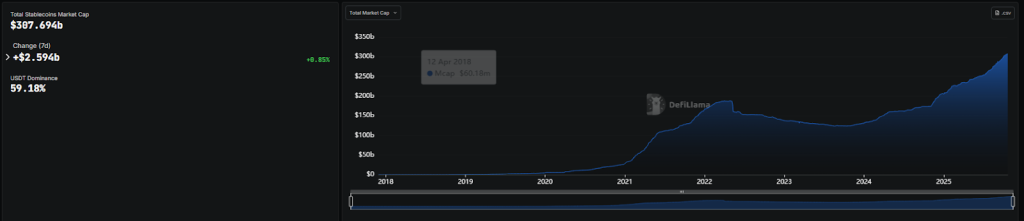
Source: DeFiLlama

The rapid expansion has intensified calls from the banking industry for tighter oversight.

What “Loophole” in the GENIUS Act does the Banking Lobby Warn of?

In August, the American Bankers Association and over 50 state banking groups urged Congress to close what they called “loopholes” in the GENIUS Act, the new federal stablecoin law signed in July by President Donald Trump.

The groups warned that the law allows stablecoin issuers to indirectly pay yield through affiliates, which they claim could lead to massive deposit outflows from the banking system.

In a joint letter, the Bank Policy Institute, Consumer Bankers Association, Independent Community Bankers of America, and Financial Services Forum said yield-bearing stablecoins could drain as much as $6.6 trillion from traditional banks, citing estimates from the U.S. Treasury.

They argued that such outflows could push up interest rates, reduce loan availability, and raise borrowing costs for households and businesses.

“Payment stablecoins should not pay interest the way highly regulated and supervised banks do,” the letter stated, emphasizing that stablecoin issuers do not lend or invest in securities to generate returns.

Source: BPI

OCC’s Gould Downplays Crisis Fears, Urges Smaller Banks to See Stablecoins as Opportunity, Not Threat

However, Jonathan Gould dismissed the idea of an imminent threat, noting that stablecoin adoption could instead benefit smaller banks by providing new ways to compete in digital payments.

Jonathan Gould Source: American Bankers Association

He said the OCC closely monitors such activity and would act swiftly if necessary. “If there were to be a material flight from the banking system, I would be taking action,” Gould said, adding that highly placed officials and trade associations would also step in.

He urged community banks to view stablecoins as a competitive tool, not a threat, suggesting they could help smaller institutions challenge the dominance of Wall Street giants in the payments market.

He also added that the OCC is working on rulemakings tied to the GENIUS Act and is “very conscious of the statutory deadlines that Congress has given us.”

“Payment stablecoin connectivity might be a possibility for community banks to break some of the dominance that exists right now among the very largest banks in the payment system in America,” Gould said, pledging to ensure there are “safe and sound” ways for banks to participate.

Stablecoins Face Crossfire: Banks Warn, Regulators Reassure, Adoption Grows

The OCC’s stance contrasts sharply with the warnings issued by major banking associations and foreign regulators.

Earlier this month, the European Systemic Risk Board, chaired by European Central Bank President Christine Lagarde, cautioned that multi-issuer stablecoin models could destabilize the EU’s financial system, while the Bank of England announced plans for temporary caps on stablecoin holdings to protect credit availability.

In the U.S., the debate has also drawn strong responses from crypto platforms. Coinbase recently published a detailed rebuttal to claims that stablecoins threaten financial stability, calling the “deposit erosion” narrative a myth designed to defend banks’ $187 billion annual payment processing revenues.

The exchange argued that stablecoin usage actually strengthens the U.S. dollar’s global role and found “no meaningful correlation” between stablecoin adoption and deposit flight from community banks over the past five years.

Meanwhile, Standard Chartered has warned that over $1 trillion could flow out of emerging-market banks into stablecoins by 2028 as adoption accelerates globally, accounting for up to 10% of the U.S. money supply.

The bank said stablecoins are increasingly serving as dollar-based savings tools in countries facing high inflation and weak local currencies.

Despite the ongoing debate, stablecoin integration into mainstream finance is accelerating. Coinbase, Circle, Ripple, and Paxos are all seeking federal banking charters to issue or manage stablecoins under OCC supervision.

Japanese giant Sony also joined that list this month, applying to establish “Connectia Trust,” a U.S. national crypto bank that would issue a dollar-pegged token under OCC regulation.

Source: OCC

While banks continue to warn of risks, Treasury Secretary Scott Bessent has taken a more optimistic stance, saying digital dollars could expand access to U.S. currency worldwide and boost demand for Treasuries.


Market Opportunity
TOP Network Logo
TOP Network Price(TOP)
$0.00007
$0.00007$0.00007
0.00%
USD
TOP Network (TOP) Live Price Chart
Disclaimer: The articles reposted on this site are sourced from public platforms and are provided for informational purposes only. They do not necessarily reflect the views of MEXC. All rights remain with the original authors. If you believe any content infringes on third-party rights, please contact crypto.news@mexc.com for removal. MEXC makes no guarantees regarding the accuracy, completeness, or timeliness of the content and is not responsible for any actions taken based on the information provided. The content does not constitute financial, legal, or other professional advice, nor should it be considered a recommendation or endorsement by MEXC.

You May Also Like

Wormhole launches reserve tying protocol revenue to token

Wormhole launches reserve tying protocol revenue to token

The post Wormhole launches reserve tying protocol revenue to token appeared on BitcoinEthereumNews.com. Wormhole is changing how its W token works by creating a new reserve designed to hold value for the long term. Announced on Wednesday, the Wormhole Reserve will collect onchain and offchain revenues and other value generated across the protocol and its applications (including Portal) and accumulate them into W, locking the tokens within the reserve. The reserve is part of a broader update called W 2.0. Other changes include a 4% targeted base yield for tokenholders who stake and take part in governance. While staking rewards will vary, Wormhole said active users of ecosystem apps can earn boosted yields through features like Portal Earn. The team stressed that no new tokens are being minted; rewards come from existing supply and protocol revenues, keeping the cap fixed at 10 billion. Wormhole is also overhauling its token release schedule. Instead of releasing large amounts of W at once under the old “cliff” model, the network will shift to steady, bi-weekly unlocks starting October 3, 2025. The aim is to avoid sharp periods of selling pressure and create a more predictable environment for investors. Lockups for some groups, including validators and investors, will extend an additional six months, until October 2028. Core contributor tokens remain under longer contractual time locks. Wormhole launched in 2020 as a cross-chain bridge and now connects more than 40 blockchains. The W token powers governance and staking, with a capped supply of 10 billion. By redirecting fees and revenues into the new reserve, Wormhole is betting that its token can maintain value as demand for moving assets and data between chains grows. This is a developing story. This article was generated with the assistance of AI and reviewed by editor Jeffrey Albus before publication. Get the news in your inbox. Explore Blockworks newsletters: Source: https://blockworks.co/news/wormhole-launches-reserve
Share
BitcoinEthereumNews2025/09/18 01:55
White House adviser: Cryptocurrency bill is "very close" to passage

White House adviser: Cryptocurrency bill is "very close" to passage

PANews reported on June 18 that according to Jinshi, a US White House adviser said that the cryptocurrency bill is "very close" to passage, which will create demand for the
Share
PANews2025/06/18 23:52
Nasdaq Elliott Wave: End of correction?

Nasdaq Elliott Wave: End of correction?

The post Nasdaq Elliott Wave: End of correction? appeared on BitcoinEthereumNews.com. Executive summary Trend bias: Wave ii rally. Key support level: 24,629 – 24
Share
BitcoinEthereumNews2026/03/11 07:31




