Author: arndxt Compiled by AididiaoJP, Foresight News 2025 is a turning point in the economic cycle. The market is caught in a paradox. Beneath the surface calm of soft landing optimism, the global economy is quietly fracturing, unfolding along the lines of trade policy, credit expansion and technological overextension. The next dislocation in the global economy will not arise from a single failure—neither from tariffs nor from AI debt—but from feedback loops between policies, leverage, and beliefs. We are witnessing the late stages of a supercycle, in which technology underpins growth, fiscal populism replaces trade liberalism, and trust in currency is slowly eroding. The boom is not over yet, but it has begun to break. This week's fluctuations are small but significant. The Volatility Index experienced its biggest surge since April as concerns about US-China tariffs reignited, before retreating before the weekend following President Trump's confirmation that the proposed 100% import tariffs would be "unsustainable." Equity markets breathed a sigh of relief; the S&P 500 stabilized. However, this relief was superficial; the deeper narrative was one of exhausted policy tools and overstretched optimism. The illusion of stability The July US-EU trade agreement was intended to anchor a fragile system. Yet it is now unravelling amidst the climate regulation controversy and US protectionism. Washington’s demand for US companies to be exempted from ESG and carbon disclosure rules highlights a growing ideological divide: decarbonisation in Europe versus deregulation in the US. Meanwhile, new Chinese restrictions on rare earth exports, including a ban on magnets containing trace amounts of the metal from China, exposed strategic vulnerabilities in global supply chains. The US responded by threatening to impose a 100% tariff on Chinese imports, a political gesture with global consequences. Although the threat was later withdrawn, it served as a reminder to markets that trade has become weaponized finance, leveraging domestic sentiment rather than economic rationality. The World Trade Organization’s warning of a sharp slowdown in goods trade by 2026 reflects a reality: companies are no longer investing in supply chains with confidence but with contingency plans. AI Super Cycle Meanwhile, in the AI economy, a second narrative is unfolding that is more subtle but potentially more consequential. We are crossing from productive expansion to speculative finance, where "supplier financing is surging and coverage is thinning." Hyperscale companies are now leveraging their balance sheets faster than their revenues can justify, a classic sign of late-cycle exuberance. This is nothing new. Of the 21 major investment booms since 1790, 18 have ended in collapse, usually when the quality of financing deteriorated. Today's AI capital spending frenzy resembles the telecom bubble of the late 1990s: real infrastructure gains entangled with credit-fueled speculation. Special purpose vehicles, vendor financing, and structured debt—the tools that once inflated mortgage-backed securities—are making a comeback, this time disguised as "computing power" and "GPU liquidity." The irony? The AI boom is productive, just unevenly distributed. Microsoft financed its expansion with traditional bonds, a sign of confidence. CoreWeave, through a special purpose vehicle, a sign of stress. Both are expanding, but one is building enduring capabilities; the other is building fragility. Fluctuating symptoms The surge in the VIX reflects deeper market unease: policy uncertainty, concentrated equity leadership, and credit stress beneath a veneer of booming valuations. When the Fed now signals rate cuts amid slowing growth, it's not stimulus, it's risk management. The two-year Treasury yield, which has fallen to its lowest level since 2022, tells us that investors are pricing in a deflation of confidence, not just interest rates. Markets may still cheer every dovish turn, but every rate cut undermines the illusion that growth is self-sustaining. General: Trade, Technology and Trust The connecting thread between tariff politics and the excitement over AI is trust, or more precisely, the erosion of trust. The government no longer trusts its trading partners. Investors no longer trust policy consistency. Companies no longer trust demand signals, so they overbuild. Gold's breakout above $4,000 isn't so much about inflation as it is about the erosion of faith in the fiat currency system, in globalization, and in institutional coordination. It's a hedge, not against price inflation, but against policy entropy. The Road Ahead We are entering a “fractured boom”: a period of nominal growth and market highs juxtaposed with structural vulnerabilities: AI investments will drive GDP in the same way that railroads did in the 19th century. Trade protectionism stimulates local production while draining global liquidity. Financial volatility oscillates between euphoria and policy panic. At this stage, risks are cumulative. Every tariff rollback, every capital spending announcement, every rate cut prolongs the cycle but compresses its eventual collapse. The question is not whether the AI or trade bubble will burst, but how intertwined the two have become when they do.Author: arndxt Compiled by AididiaoJP, Foresight News 2025 is a turning point in the economic cycle. The market is caught in a paradox. Beneath the surface calm of soft landing optimism, the global economy is quietly fracturing, unfolding along the lines of trade policy, credit expansion and technological overextension. The next dislocation in the global economy will not arise from a single failure—neither from tariffs nor from AI debt—but from feedback loops between policies, leverage, and beliefs. We are witnessing the late stages of a supercycle, in which technology underpins growth, fiscal populism replaces trade liberalism, and trust in currency is slowly eroding. The boom is not over yet, but it has begun to break. This week's fluctuations are small but significant. The Volatility Index experienced its biggest surge since April as concerns about US-China tariffs reignited, before retreating before the weekend following President Trump's confirmation that the proposed 100% import tariffs would be "unsustainable." Equity markets breathed a sigh of relief; the S&P 500 stabilized. However, this relief was superficial; the deeper narrative was one of exhausted policy tools and overstretched optimism. The illusion of stability The July US-EU trade agreement was intended to anchor a fragile system. Yet it is now unravelling amidst the climate regulation controversy and US protectionism. Washington’s demand for US companies to be exempted from ESG and carbon disclosure rules highlights a growing ideological divide: decarbonisation in Europe versus deregulation in the US. Meanwhile, new Chinese restrictions on rare earth exports, including a ban on magnets containing trace amounts of the metal from China, exposed strategic vulnerabilities in global supply chains. The US responded by threatening to impose a 100% tariff on Chinese imports, a political gesture with global consequences. Although the threat was later withdrawn, it served as a reminder to markets that trade has become weaponized finance, leveraging domestic sentiment rather than economic rationality. The World Trade Organization’s warning of a sharp slowdown in goods trade by 2026 reflects a reality: companies are no longer investing in supply chains with confidence but with contingency plans. AI Super Cycle Meanwhile, in the AI economy, a second narrative is unfolding that is more subtle but potentially more consequential. We are crossing from productive expansion to speculative finance, where "supplier financing is surging and coverage is thinning." Hyperscale companies are now leveraging their balance sheets faster than their revenues can justify, a classic sign of late-cycle exuberance. This is nothing new. Of the 21 major investment booms since 1790, 18 have ended in collapse, usually when the quality of financing deteriorated. Today's AI capital spending frenzy resembles the telecom bubble of the late 1990s: real infrastructure gains entangled with credit-fueled speculation. Special purpose vehicles, vendor financing, and structured debt—the tools that once inflated mortgage-backed securities—are making a comeback, this time disguised as "computing power" and "GPU liquidity." The irony? The AI boom is productive, just unevenly distributed. Microsoft financed its expansion with traditional bonds, a sign of confidence. CoreWeave, through a special purpose vehicle, a sign of stress. Both are expanding, but one is building enduring capabilities; the other is building fragility. Fluctuating symptoms The surge in the VIX reflects deeper market unease: policy uncertainty, concentrated equity leadership, and credit stress beneath a veneer of booming valuations. When the Fed now signals rate cuts amid slowing growth, it's not stimulus, it's risk management. The two-year Treasury yield, which has fallen to its lowest level since 2022, tells us that investors are pricing in a deflation of confidence, not just interest rates. Markets may still cheer every dovish turn, but every rate cut undermines the illusion that growth is self-sustaining. General: Trade, Technology and Trust The connecting thread between tariff politics and the excitement over AI is trust, or more precisely, the erosion of trust. The government no longer trusts its trading partners. Investors no longer trust policy consistency. Companies no longer trust demand signals, so they overbuild. Gold's breakout above $4,000 isn't so much about inflation as it is about the erosion of faith in the fiat currency system, in globalization, and in institutional coordination. It's a hedge, not against price inflation, but against policy entropy. The Road Ahead We are entering a “fractured boom”: a period of nominal growth and market highs juxtaposed with structural vulnerabilities: AI investments will drive GDP in the same way that railroads did in the 19th century. Trade protectionism stimulates local production while draining global liquidity. Financial volatility oscillates between euphoria and policy panic. At this stage, risks are cumulative. Every tariff rollback, every capital spending announcement, every rate cut prolongs the cycle but compresses its eventual collapse. The question is not whether the AI or trade bubble will burst, but how intertwined the two have become when they do.


Macro Dilemma: Trade War, AI Bubble, and Political Rifts

2025/10/22 09:00
4 min read
For feedback or concerns regarding this content, please contact us at crypto.news@mexc.com

Author: arndxt

Compiled by AididiaoJP, Foresight News

2025 is a turning point in the economic cycle.

The market is caught in a paradox.

Beneath the surface calm of soft landing optimism, the global economy is quietly fracturing, unfolding along the lines of trade policy, credit expansion and technological overextension.

The next dislocation in the global economy will not arise from a single failure—neither from tariffs nor from AI debt—but from feedback loops between policies, leverage, and beliefs.

We are witnessing the late stages of a supercycle, in which technology underpins growth, fiscal populism replaces trade liberalism, and trust in currency is slowly eroding.

The boom is not over yet, but it has begun to break.

This week's fluctuations are small but significant.

The Volatility Index experienced its biggest surge since April as concerns about US-China tariffs reignited, before retreating before the weekend following President Trump's confirmation that the proposed 100% import tariffs would be "unsustainable." Equity markets breathed a sigh of relief; the S&P 500 stabilized. However, this relief was superficial; the deeper narrative was one of exhausted policy tools and overstretched optimism.

The illusion of stability

The July US-EU trade agreement was intended to anchor a fragile system.

Yet it is now unravelling amidst the climate regulation controversy and US protectionism. Washington’s demand for US companies to be exempted from ESG and carbon disclosure rules highlights a growing ideological divide: decarbonisation in Europe versus deregulation in the US.

Meanwhile, new Chinese restrictions on rare earth exports, including a ban on magnets containing trace amounts of the metal from China, exposed strategic vulnerabilities in global supply chains. The US responded by threatening to impose a 100% tariff on Chinese imports, a political gesture with global consequences. Although the threat was later withdrawn, it served as a reminder to markets that trade has become weaponized finance, leveraging domestic sentiment rather than economic rationality.

The World Trade Organization’s warning of a sharp slowdown in goods trade by 2026 reflects a reality: companies are no longer investing in supply chains with confidence but with contingency plans.

AI Super Cycle

Meanwhile, in the AI economy, a second narrative is unfolding that is more subtle but potentially more consequential.

We are crossing from productive expansion to speculative finance, where "supplier financing is surging and coverage is thinning." Hyperscale companies are now leveraging their balance sheets faster than their revenues can justify, a classic sign of late-cycle exuberance.

This is nothing new. Of the 21 major investment booms since 1790, 18 have ended in collapse, usually when the quality of financing deteriorated. Today's AI capital spending frenzy resembles the telecom bubble of the late 1990s: real infrastructure gains entangled with credit-fueled speculation. Special purpose vehicles, vendor financing, and structured debt—the tools that once inflated mortgage-backed securities—are making a comeback, this time disguised as "computing power" and "GPU liquidity."

The irony? The AI boom is productive, just unevenly distributed. Microsoft financed its expansion with traditional bonds, a sign of confidence. CoreWeave, through a special purpose vehicle, a sign of stress. Both are expanding, but one is building enduring capabilities; the other is building fragility.

Fluctuating symptoms

The surge in the VIX reflects deeper market unease: policy uncertainty, concentrated equity leadership, and credit stress beneath a veneer of booming valuations.

When the Fed now signals rate cuts amid slowing growth, it's not stimulus, it's risk management. The two-year Treasury yield, which has fallen to its lowest level since 2022, tells us that investors are pricing in a deflation of confidence, not just interest rates. Markets may still cheer every dovish turn, but every rate cut undermines the illusion that growth is self-sustaining.

General: Trade, Technology and Trust

The connecting thread between tariff politics and the excitement over AI is trust, or more precisely, the erosion of trust.

The government no longer trusts its trading partners.

Investors no longer trust policy consistency.

Companies no longer trust demand signals, so they overbuild.

Gold's breakout above $4,000 isn't so much about inflation as it is about the erosion of faith in the fiat currency system, in globalization, and in institutional coordination. It's a hedge, not against price inflation, but against policy entropy.

The Road Ahead

We are entering a “fractured boom”: a period of nominal growth and market highs juxtaposed with structural vulnerabilities:

AI investments will drive GDP in the same way that railroads did in the 19th century.

Trade protectionism stimulates local production while draining global liquidity.

Financial volatility oscillates between euphoria and policy panic.

At this stage, risks are cumulative.

Every tariff rollback, every capital spending announcement, every rate cut prolongs the cycle but compresses its eventual collapse. The question is not whether the AI or trade bubble will burst, but how intertwined the two have become when they do.

Disclaimer: The articles reposted on this site are sourced from public platforms and are provided for informational purposes only. They do not necessarily reflect the views of MEXC. All rights remain with the original authors. If you believe any content infringes on third-party rights, please contact crypto.news@mexc.com for removal. MEXC makes no guarantees regarding the accuracy, completeness, or timeliness of the content and is not responsible for any actions taken based on the information provided. The content does not constitute financial, legal, or other professional advice, nor should it be considered a recommendation or endorsement by MEXC.

You May Also Like

[Finterest] How do you start saving with Pag-IBIG’s MP2 program?

[Finterest] How do you start saving with Pag-IBIG’s MP2 program?

MP2 may be right for you if you have a conservative risk appetite and an investment horizon of at least 5 years
Share
Rappler2026/03/12 13:05
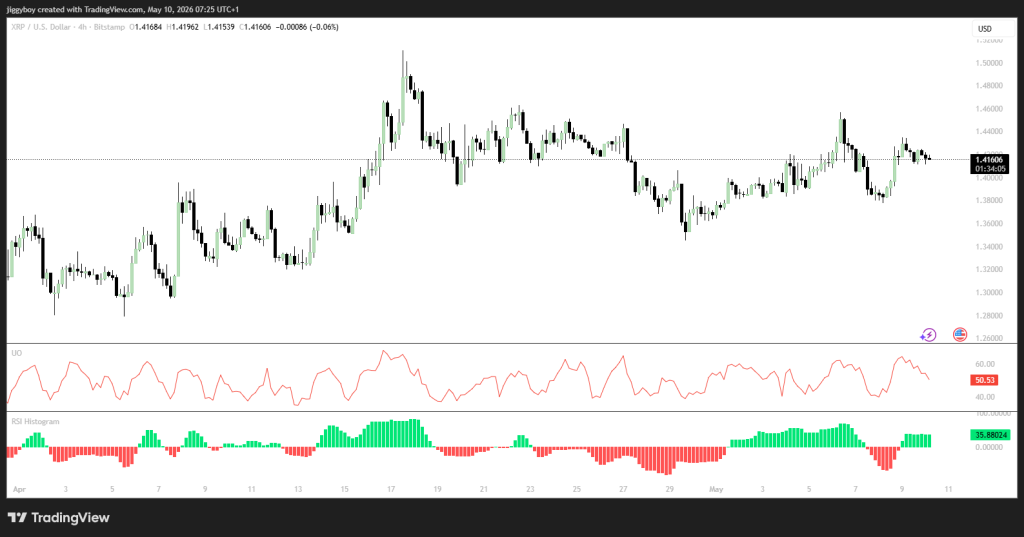
XRP steadies near $1.38 as Bollinger squeeze hints at breakout before CPI

XRP steadies near $1.38 as Bollinger squeeze hints at breakout before CPI

Markets Share Share this article
Copy linkX (Twitter)LinkedInFacebookEmail
XRP steadies near $1.38 as Bollinger squeeze
Share
Coindesk2026/03/12 13:15
Google's AP2 protocol has been released. Does encrypted AI still have a chance?

Google's AP2 protocol has been released. Does encrypted AI still have a chance?

Following the MCP and A2A protocols, the AI Agent market has seen another blockbuster arrival: the Agent Payments Protocol (AP2), developed by Google. This will clearly further enhance AI Agents' autonomous multi-tasking capabilities, but the unfortunate reality is that it has little to do with web3AI. Let's take a closer look: What problem does AP2 solve? Simply put, the MCP protocol is like a universal hook, enabling AI agents to connect to various external tools and data sources; A2A is a team collaboration communication protocol that allows multiple AI agents to cooperate with each other to complete complex tasks; AP2 completes the last piece of the puzzle - payment capability. In other words, MCP opens up connectivity, A2A promotes collaboration efficiency, and AP2 achieves value exchange. The arrival of AP2 truly injects "soul" into the autonomous collaboration and task execution of Multi-Agents. Imagine AI Agents connecting Qunar, Meituan, and Didi to complete the booking of flights, hotels, and car rentals, but then getting stuck at the point of "self-payment." What's the point of all that multitasking? So, remember this: AP2 is an extension of MCP+A2A, solving the last mile problem of AI Agent automated execution. What are the technical highlights of AP2? The core innovation of AP2 is the Mandates mechanism, which is divided into real-time authorization mode and delegated authorization mode. Real-time authorization is easy to understand. The AI Agent finds the product and shows it to you. The operation can only be performed after the user signs. Delegated authorization requires the user to set rules in advance, such as only buying the iPhone 17 when the price drops to 5,000. The AI Agent monitors the trigger conditions and executes automatically. The implementation logic is cryptographically signed using Verifiable Credentials (VCs). Users can set complex commission conditions, including price ranges, time limits, and payment method priorities, forming a tamper-proof digital contract. Once signed, the AI Agent executes according to the conditions, with VCs ensuring auditability and security at every step. Of particular note is the "A2A x402" extension, a technical component developed by Google specifically for crypto payments, developed in collaboration with Coinbase and the Ethereum Foundation. This extension enables AI Agents to seamlessly process stablecoins, ETH, and other blockchain assets, supporting native payment scenarios within the Web3 ecosystem. What kind of imagination space can AP2 bring? After analyzing the technical principles, do you think that's it? Yes, in fact, the AP2 is boring when it is disassembled alone. Its real charm lies in connecting and opening up the "MCP+A2A+AP2" technology stack, completely opening up the complete link of AI Agent's autonomous analysis+execution+payment. From now on, AI Agents can open up many application scenarios. For example, AI Agents for stock investment and financial management can help us monitor the market 24/7 and conduct independent transactions. Enterprise procurement AI Agents can automatically replenish and renew without human intervention. AP2's complementary payment capabilities will further expand the penetration of the Agent-to-Agent economy into more scenarios. Google obviously understands that after the technical framework is established, the ecological implementation must be relied upon, so it has brought in more than 60 partners to develop it, almost covering the entire payment and business ecosystem. Interestingly, it also involves major Crypto players such as Ethereum, Coinbase, MetaMask, and Sui. Combined with the current trend of currency and stock integration, the imagination space has been doubled. Is web3 AI really dead? Not entirely. Google's AP2 looks complete, but it only achieves technical compatibility with Crypto payments. It can only be regarded as an extension of the traditional authorization framework and belongs to the category of automated execution. There is a "paradigm" difference between it and the autonomous asset management pursued by pure Crypto native solutions. The Crypto-native solutions under exploration are taking the "decentralized custody + on-chain verification" route, including AI Agent autonomous asset management, AI Agent autonomous transactions (DeFAI), AI Agent digital identity and on-chain reputation system (ERC-8004...), AI Agent on-chain governance DAO framework, AI Agent NPC and digital avatars, and many other interesting and fun directions. Ultimately, once users get used to AI Agent payments in traditional fields, their acceptance of AI Agents autonomously owning digital assets will also increase. And for those scenarios that AP2 cannot reach, such as anonymous transactions, censorship-resistant payments, and decentralized asset management, there will always be a time for crypto-native solutions to show their strength? The two are more likely to be complementary rather than competitive, but to be honest, the key technological advancements behind AI Agents currently all come from web2AI, and web3AI still needs to keep up the good work!
Share
PANews2025/09/18 07:00