

Türkiye Tops $200 Billion as MENA Crypto Markets Redefine Adoption in 2025
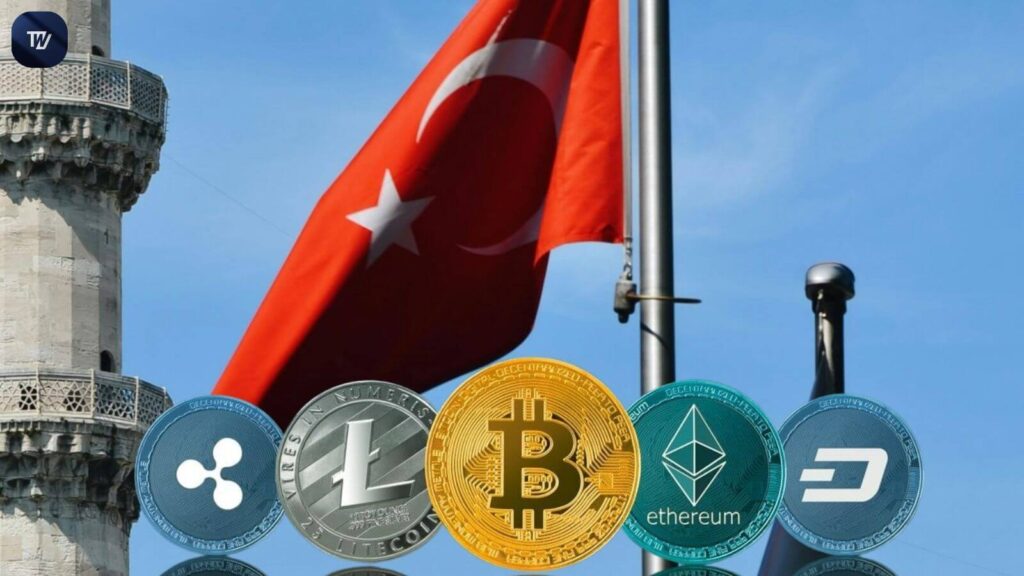
- Türkiye leads MENA’s crypto scene with $200B in yearly transactions despite economic strain.
- Israel’s crypto activity jumped 60% after national turmoil, showing its use as a crisis hedge.
- Iran and the UAE highlight contrasting paths, one adapting under sanctions, the other thriving under regulation.
Chainalysis’s 2025 Geography of Crypto Report shows the Middle East and North Africa (MENA) as one of the most dynamic crypto regions, with transaction volumes topping $60 billion in December 2024.
Türkiye remains the region’s heavyweight, handling nearly $200 billion in annual crypto activity, almost four times that of the UAE. Despite the Turkish lira’s persistent devaluation and inflation above 60%, crypto inflows reached $878 billion by mid-2025, a figure unmatched across regional markets.
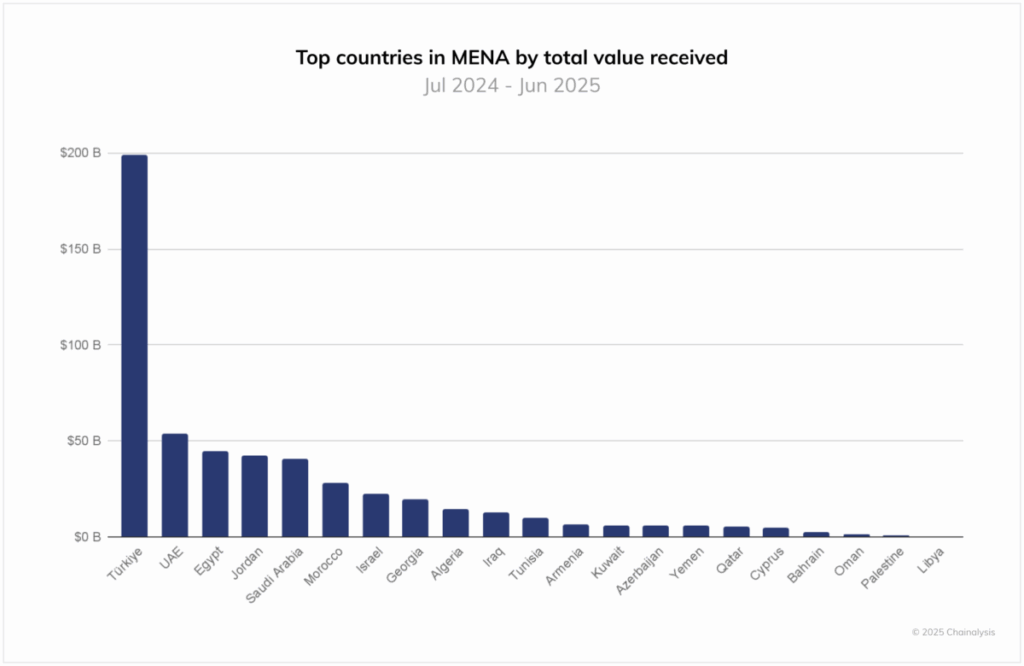 Source: Chainalysis
Economists note that this growth is largely speculative. As Türkiye’s economy struggles, investors have turned to digital assets as both a hedge and a form of escape from financial uncertainty. However, retail participation has fallen sharply, signaling affordability concerns.
Data reveal that transactions from small traders under $10,000 contracted by up to 2.3%, while institutional flows remained resilient. This divide reflects a tightening regulatory environment introduced in 2024, enforcing stricter Know-Your-Customer (KYC) rules and curbing margin products.
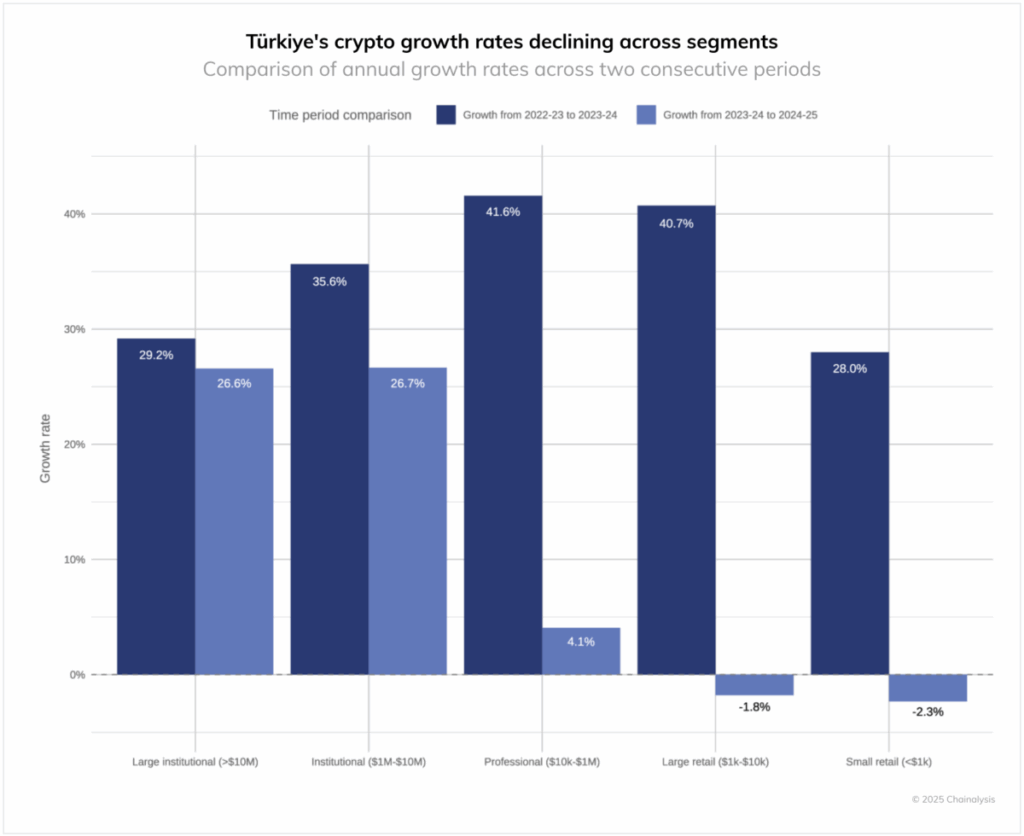 Source: Chainalysis
Interestingly, a late-2024 trading shift saw altcoin volumes jump from $50 million to $240 million, surpassing stablecoins. This shows a speculative pivot as traders chase higher returns despite greater risk exposure, a trend that could threaten smaller investors already under pressure from inflation and policy restrictions.
Israel’s Crisis-Driven Crypto Uptick
In Israel, cryptocurrency has become a lifeline during turmoil. Following the October 7, 2023, attacks, monthly crypto volumes surged by an average of $0.66 billion above expectations, a 60% rise from normal levels. Instead of declining after the crisis, this elevated activity persisted through 2024 and 2025, suggesting a structural shift in financial behavior.
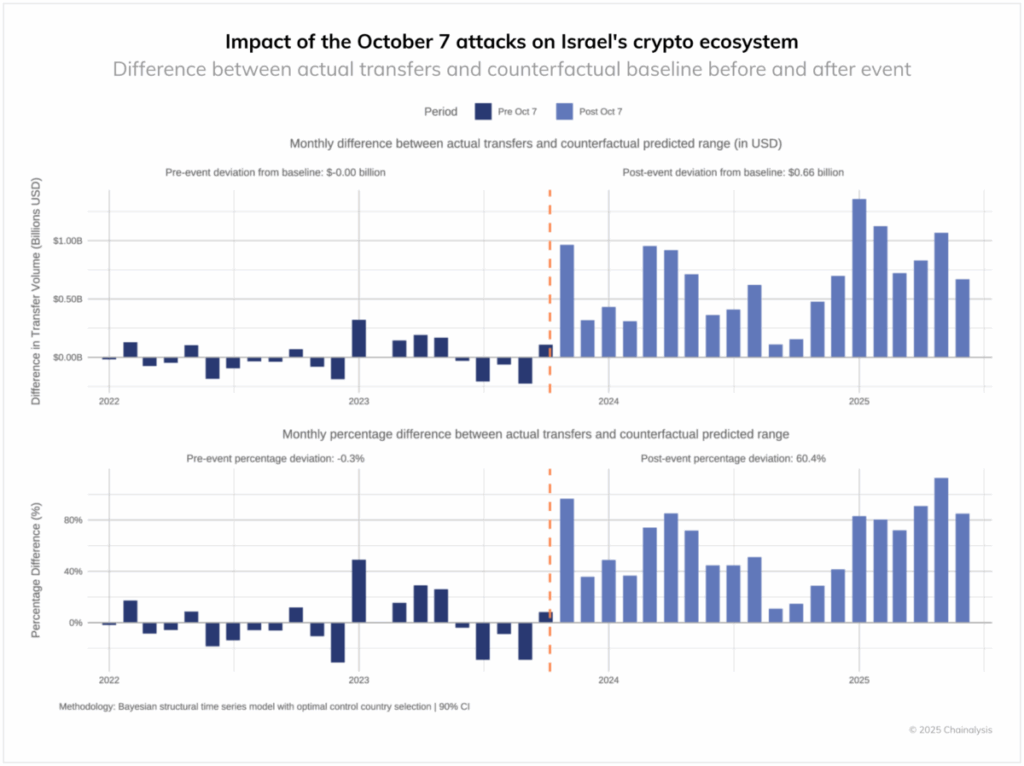 Source: Chainalysis
Smaller transfers under $10,000 saw the sharpest increases, indicating that ordinary citizens were the main drivers of this surge. Retail crypto use rose nearly sixfold from early 2022 levels, reflecting a population seeking stability amid uncertainty.
This mirrors adoption patterns seen in Ukraine and Iran, where people used digital assets for preservation during conflict and sanctions.
Iran and UAE: Opposite Paths to Growth
Iran’s crypto sector continues to grow despite heavy sanctions and limited access to global financial systems. By mid-2025, Iranian services processed 11.8% more volume than the year before, even after a $90 million hack on its leading exchange, Nobitex.
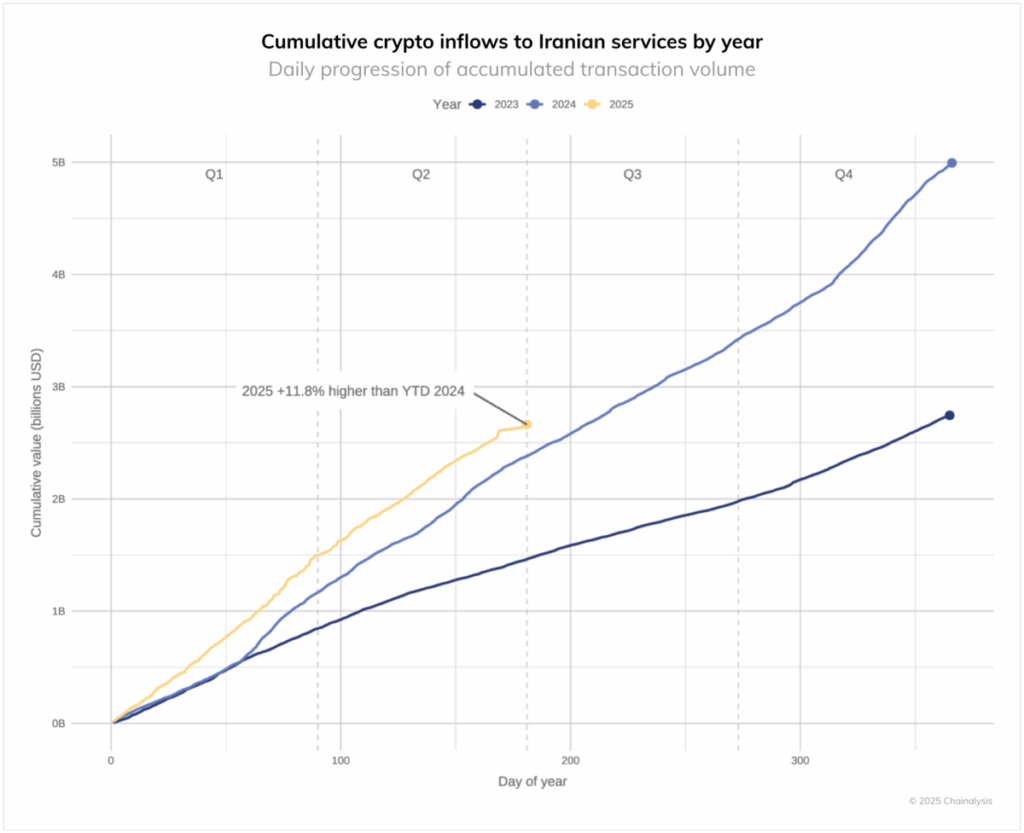 Source: Chainalysis
The platform still commands over 54% of national inflows, reflecting strong local reliance on domestic platforms. Yet, Iran’s increasing isolation is evident, average transactional links to global exchanges have more than doubled since 2021, from 1.6 to 4.1 “hops.”
Conversely, the UAE stands as a regional model of regulated stability. Its crypto economy handled $56 billion in 2025, growing 33% year-over-year. Institutional trading dominates, but retail and merchant transactions, up nearly 80%, show expanding real-world adoption.
Also Read: MetaMask Leads $400M Push to Stop Global Crypto Phishing: Report


You May Also Like

Bitcoin treasury sell-off accelerates as Riot, Bhutan, and public companies exit positions

68% of global BTC miners came from the U.S., Russia, and China, Q1 2026




