The Hong Kong Monetary Authority (HKMA), with analytical support from Deloitte, has released its e-HKD Pilot Programme Phase 2 Report, offering a look into how central bank digital currencies (CBDCs) and other digital money forms could reshape the city’s financial ecosystem. The report shows a pivotal transition — from physical cash to digital money powered by distributed ledger technology (DLT) — and outlines how Hong Kong is positioning itself as a global leader in digital finance, tokenisation, and next-generation payments infrastructure. Expanding the Digital Money Landscape According to the HKMA report, the digital money landscape is evolving into two main categories: public money and private money. Public money includes central bank digital currencies like the e-HKD, while private money encompasses tokenised deposits and regulated stablecoins. These innovations are building the foundation for tokenisation in Hong Kong, enabling faster, more transparent, and programmable transactions that connect traditional finance with the emerging Web3 ecosystem. The HKMA has been researching the e-HKD since 2017, conducting pilot studies and technical experiments to explore its potential in both wholesale and retail settings. With Phase 2, the focus broadened to include comparisons between the e-HKD and private forms of digital money, evaluating their usability, scalability, and commercial viability. Key Themes and Findings The Phase 2 pilots, conducted with 11 industry partners across the banking, payments, and technology sectors, explored three central themes: Settlement of Tokenised Assets: Pilots tested the use of a hypothetical e-HKD for atomic settlement of tokenised assets such as money market funds and bonds. Results showed that DLT-based settlement could shorten cycles from T+2 to T+0, improving liquidity and reducing counterparty risk. However, banks indicated that tokenised deposits might offer similar efficiency with fewer infrastructure changes. Programmability: The report examined the potential of programmable payments using smart contracts and purpose-bound money (PBM). Pilot use cases included green reward vouchers, escrow-based prepayments, and supply chain financing. While programmability enhances automation and transparency, the HKMA found that commercial adoption models remain limited, with no clear business case for large-scale rollout. Offline Payments; Offline e-HKD pilots explored Super SIM and NFC-based payments that operate without internet connectivity. Given Hong Kong’s robust digital infrastructure and existing offline payment systems, the HKMA concluded that an offline e-HKD would likely add limited incremental benefit at present. The Road Ahead The HKMA, supported by Deloitte’s analysis, will prioritise wholesale use cases for the e-HKD, particularly in the settlement of tokenised assets and interbank transactions. The central bank will continue to assess retail applications while laying the policy, legal, and technical groundwork to ensure readiness by 2026. As the global race toward digital money intensifies, Hong Kong’s collaborative approach — combining public oversight with private innovation — positions it at the forefront of financial transformation. The e-HKD initiative reflects not just the city’s commitment to technological advancement, but also its strategic role in shaping the next era of money — connected, efficient, and inclusiveThe Hong Kong Monetary Authority (HKMA), with analytical support from Deloitte, has released its e-HKD Pilot Programme Phase 2 Report, offering a look into how central bank digital currencies (CBDCs) and other digital money forms could reshape the city’s financial ecosystem. The report shows a pivotal transition — from physical cash to digital money powered by distributed ledger technology (DLT) — and outlines how Hong Kong is positioning itself as a global leader in digital finance, tokenisation, and next-generation payments infrastructure. Expanding the Digital Money Landscape According to the HKMA report, the digital money landscape is evolving into two main categories: public money and private money. Public money includes central bank digital currencies like the e-HKD, while private money encompasses tokenised deposits and regulated stablecoins. These innovations are building the foundation for tokenisation in Hong Kong, enabling faster, more transparent, and programmable transactions that connect traditional finance with the emerging Web3 ecosystem. The HKMA has been researching the e-HKD since 2017, conducting pilot studies and technical experiments to explore its potential in both wholesale and retail settings. With Phase 2, the focus broadened to include comparisons between the e-HKD and private forms of digital money, evaluating their usability, scalability, and commercial viability. Key Themes and Findings The Phase 2 pilots, conducted with 11 industry partners across the banking, payments, and technology sectors, explored three central themes: Settlement of Tokenised Assets: Pilots tested the use of a hypothetical e-HKD for atomic settlement of tokenised assets such as money market funds and bonds. Results showed that DLT-based settlement could shorten cycles from T+2 to T+0, improving liquidity and reducing counterparty risk. However, banks indicated that tokenised deposits might offer similar efficiency with fewer infrastructure changes. Programmability: The report examined the potential of programmable payments using smart contracts and purpose-bound money (PBM). Pilot use cases included green reward vouchers, escrow-based prepayments, and supply chain financing. While programmability enhances automation and transparency, the HKMA found that commercial adoption models remain limited, with no clear business case for large-scale rollout. Offline Payments; Offline e-HKD pilots explored Super SIM and NFC-based payments that operate without internet connectivity. Given Hong Kong’s robust digital infrastructure and existing offline payment systems, the HKMA concluded that an offline e-HKD would likely add limited incremental benefit at present. The Road Ahead The HKMA, supported by Deloitte’s analysis, will prioritise wholesale use cases for the e-HKD, particularly in the settlement of tokenised assets and interbank transactions. The central bank will continue to assess retail applications while laying the policy, legal, and technical groundwork to ensure readiness by 2026. As the global race toward digital money intensifies, Hong Kong’s collaborative approach — combining public oversight with private innovation — positions it at the forefront of financial transformation. The e-HKD initiative reflects not just the city’s commitment to technological advancement, but also its strategic role in shaping the next era of money — connected, efficient, and inclusive

Hong Kong Advances Digital Money Strategy as HKMA’s e-HKD Pilot Programme Enters Phase Two

2025/11/01 01:21
3 min read
For feedback or concerns regarding this content, please contact us at crypto.news@mexc.com

The Hong Kong Monetary Authority (HKMA), with analytical support from Deloitte, has released its e-HKD Pilot Programme Phase 2 Report, offering a look into how central bank digital currencies (CBDCs) and other digital money forms could reshape the city’s financial ecosystem.

The report shows a pivotal transition — from physical cash to digital money powered by distributed ledger technology (DLT) — and outlines how Hong Kong is positioning itself as a global leader in digital finance, tokenisation, and next-generation payments infrastructure.

Expanding the Digital Money Landscape

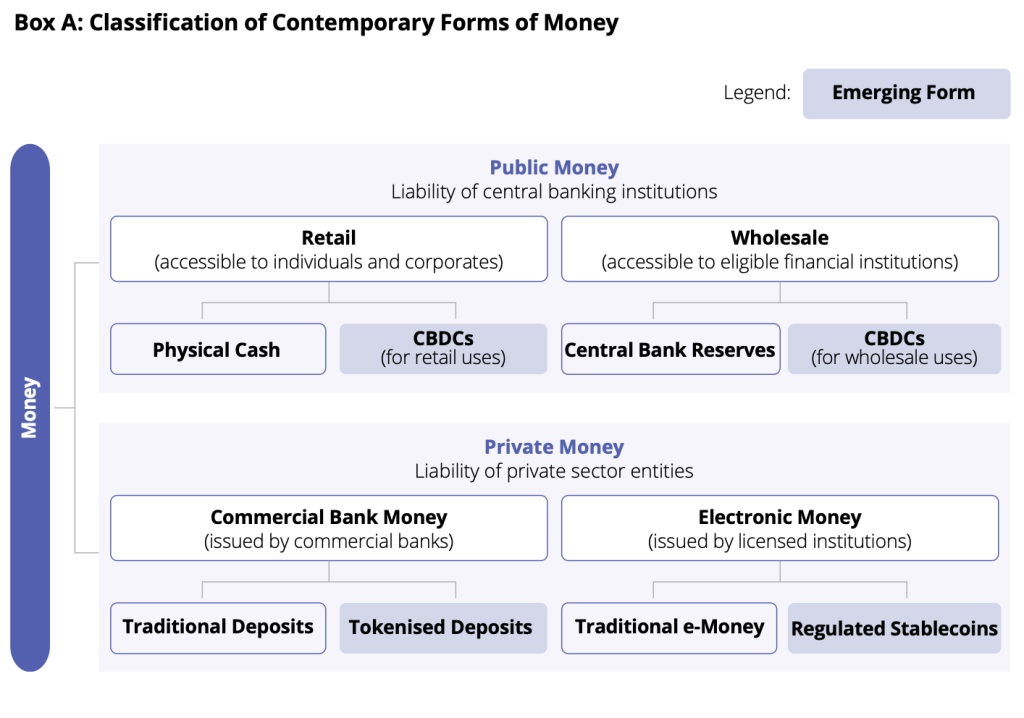
According to the HKMA report, the digital money landscape is evolving into two main categories: public money and private money. Public money includes central bank digital currencies like the e-HKD, while private money encompasses tokenised deposits and regulated stablecoins.

These innovations are building the foundation for tokenisation in Hong Kong, enabling faster, more transparent, and programmable transactions that connect traditional finance with the emerging Web3 ecosystem.

The HKMA has been researching the e-HKD since 2017, conducting pilot studies and technical experiments to explore its potential in both wholesale and retail settings.

With Phase 2, the focus broadened to include comparisons between the e-HKD and private forms of digital money, evaluating their usability, scalability, and commercial viability.

Key Themes and Findings

The Phase 2 pilots, conducted with 11 industry partners across the banking, payments, and technology sectors, explored three central themes:

Settlement of Tokenised Assets: Pilots tested the use of a hypothetical e-HKD for atomic settlement of tokenised assets such as money market funds and bonds.

Results showed that DLT-based settlement could shorten cycles from T+2 to T+0, improving liquidity and reducing counterparty risk. However, banks indicated that tokenised deposits might offer similar efficiency with fewer infrastructure changes.

Programmability: The report examined the potential of programmable payments using smart contracts and purpose-bound money (PBM). Pilot use cases included green reward vouchers, escrow-based prepayments, and supply chain financing.

While programmability enhances automation and transparency, the HKMA found that commercial adoption models remain limited, with no clear business case for large-scale rollout.

Offline Payments; Offline e-HKD pilots explored Super SIM and NFC-based payments that operate without internet connectivity. Given Hong Kong’s robust digital infrastructure and existing offline payment systems, the HKMA concluded that an offline e-HKD would likely add limited incremental benefit at present.

    The Road Ahead

    The HKMA, supported by Deloitte’s analysis, will prioritise wholesale use cases for the e-HKD, particularly in the settlement of tokenised assets and interbank transactions.

    The central bank will continue to assess retail applications while laying the policy, legal, and technical groundwork to ensure readiness by 2026.
    As the global race toward digital money intensifies, Hong Kong’s collaborative approach — combining public oversight with private innovation — positions it at the forefront of financial transformation. The e-HKD initiative reflects not just the city’s commitment to technological advancement, but also its strategic role in shaping the next era of money — connected, efficient, and inclusive.


    Disclaimer: The articles reposted on this site are sourced from public platforms and are provided for informational purposes only. They do not necessarily reflect the views of MEXC. All rights remain with the original authors. If you believe any content infringes on third-party rights, please contact crypto.news@mexc.com for removal. MEXC makes no guarantees regarding the accuracy, completeness, or timeliness of the content and is not responsible for any actions taken based on the information provided. The content does not constitute financial, legal, or other professional advice, nor should it be considered a recommendation or endorsement by MEXC.

    You May Also Like

    ‘Groundbreaking’: Barry Silbert Reacts to Approval of ETF with XRP Exposure

    ‘Groundbreaking’: Barry Silbert Reacts to Approval of ETF with XRP Exposure

    The post ‘Groundbreaking’: Barry Silbert Reacts to Approval of ETF with XRP Exposure appeared on BitcoinEthereumNews.com. A “combo” ETF  Crypto ETF trailblazer  Digital Currency Group founder Barry Silbert has reacted to the approval of the Grayscale Digital Large Cap Fund  (GDLC), the very first multi-crypto exchange-traded fund (ETF), describing it as “groundbreaking.”  “Grayscale continues to be the first mover, driving new product innovations that bridge tradfi and digital assets,” Silbert said while commenting on the news.  Peter Mintzberg, chief executive officer at Graysacle, claims that the team behind the world’s leading cryptocurrency asset manager is working “expeditiously” in order to bring the product to the market.  A “combo” ETF  The ETF in question offers exposure to Bitcoin (BTC), Ethereum (ETH), as well as several other major altcoins, including the Ripple-linked XRP token, Solana (SOL), and Cardano (ADA). XRP, for instance, has a 5.2% share of the fund, making it the third-largest constituent.  The fund initially debuted as a private placement for accredited investors back in early 2018, and its shares later became available on over-the-counter (OTC) markets.  In early July, the SEC approved the conversion of GDLC into an ETF, but it was then abruptly halted for a “review” shortly after this.  As of Sept. 17, the fund currently has a total of $915.6 million in assets.  Crypto ETF trailblazer  It is worth noting that Grayscale is usually credited with kickstarting the cryptocurrency ETF craze by winning its court case against the SEC.  The SEC ended up approving Bitcoin ETFs in early 2024 and then followed up with Ethereum ETFs.  Grayscale’s flagship GBTC currently boasts more than $20.5 billion in net assets, according to data provided by SoSoValue.  Source: https://u.today/groundbreaking-barry-silbert-reacts-to-approval-of-etf-with-xrp-exposure
    Share
    BitcoinEthereumNews2025/09/19 03:39
    ArtGis Finance Partners with MetaXR to Expand its DeFi Offerings in the Metaverse

    ArtGis Finance Partners with MetaXR to Expand its DeFi Offerings in the Metaverse

    By using this collaboration, ArtGis utilizes MetaXR’s infrastructure to widen access to its assets and enable its customers to interact with the metaverse.
    Share
    Blockchainreporter2025/09/18 00:07
    SEC Signals Crypto Markets Shift as Tokenized Equity Framework Debate Intensifies

    SEC Signals Crypto Markets Shift as Tokenized Equity Framework Debate Intensifies

    The post SEC Signals Crypto Markets Shift as Tokenized Equity Framework Debate Intensifies appeared on BitcoinEthereumNews.com. U.S. regulators are weighing how
    Share
    BitcoinEthereumNews2026/03/15 04:43