The post Don't panic over tech, AI stocks selloff, analysts dismiss fears appeared on BitcoinEthereumNews.com. There was a clear change in mood across world markets on Wednesday as tech stocks experienced sharp declines from record highs, and some stretched valuations.    Until this week, traders had been happy to overlook warnings, rising prices and doubts about whether the most popular companies had justified the surge in their share prices. Now, the drop has forced investors to reflect on whether the gains had gone too far and too fast. However, even with some large names losing billions in value in a matter of hours, most heavyweight fund managers insisted this was not a full-blown crisis moment, but more of a short wobble after a long winning streak. Experts still favor AI and tech stocks Shares across Asia were sold down for the second day in a row and indices in Seoul and Tokyo were roughly 5% below earlier highs logged only on Tuesday morning. Nasdaq futures were also weaker, even after the US benchmark had already fallen 2% the day before. The names taking the biggest hit were the same stocks that had ridden the boom on the way up. Nvidia, which only a year or two ago was little known outside specialist circles, has since become the most valuable company on the planet due to the AI rush. The company slid nearly 4% on Tuesday, and was around 7% below last month’s top. Palantir, another strong favourite during the boom, fell almost 8% on the day and then slipped a further 3% in after-hours trade. Some managers blamed timing, with the year-end window in sight, there is little incentive to let paper gains reverse if the market begins to swing the wrong way. One investor in Hong Kong said this was more about locking in profits than abandoning AI. Another in Sydney said he was… The post Don't panic over tech, AI stocks selloff, analysts dismiss fears appeared on BitcoinEthereumNews.com. There was a clear change in mood across world markets on Wednesday as tech stocks experienced sharp declines from record highs, and some stretched valuations.    Until this week, traders had been happy to overlook warnings, rising prices and doubts about whether the most popular companies had justified the surge in their share prices. Now, the drop has forced investors to reflect on whether the gains had gone too far and too fast. However, even with some large names losing billions in value in a matter of hours, most heavyweight fund managers insisted this was not a full-blown crisis moment, but more of a short wobble after a long winning streak. Experts still favor AI and tech stocks Shares across Asia were sold down for the second day in a row and indices in Seoul and Tokyo were roughly 5% below earlier highs logged only on Tuesday morning. Nasdaq futures were also weaker, even after the US benchmark had already fallen 2% the day before. The names taking the biggest hit were the same stocks that had ridden the boom on the way up. Nvidia, which only a year or two ago was little known outside specialist circles, has since become the most valuable company on the planet due to the AI rush. The company slid nearly 4% on Tuesday, and was around 7% below last month’s top. Palantir, another strong favourite during the boom, fell almost 8% on the day and then slipped a further 3% in after-hours trade. Some managers blamed timing, with the year-end window in sight, there is little incentive to let paper gains reverse if the market begins to swing the wrong way. One investor in Hong Kong said this was more about locking in profits than abandoning AI. Another in Sydney said he was…

Don't panic over tech, AI stocks selloff, analysts dismiss fears

There was a clear change in mood across world markets on Wednesday as tech stocks experienced sharp declines from record highs, and some stretched valuations.   

Until this week, traders had been happy to overlook warnings, rising prices and doubts about whether the most popular companies had justified the surge in their share prices. Now, the drop has forced investors to reflect on whether the gains had gone too far and too fast.

However, even with some large names losing billions in value in a matter of hours, most heavyweight fund managers insisted this was not a full-blown crisis moment, but more of a short wobble after a long winning streak.

Experts still favor AI and tech stocks

Shares across Asia were sold down for the second day in a row and indices in Seoul and Tokyo were roughly 5% below earlier highs logged only on Tuesday morning. Nasdaq futures were also weaker, even after the US benchmark had already fallen 2% the day before.

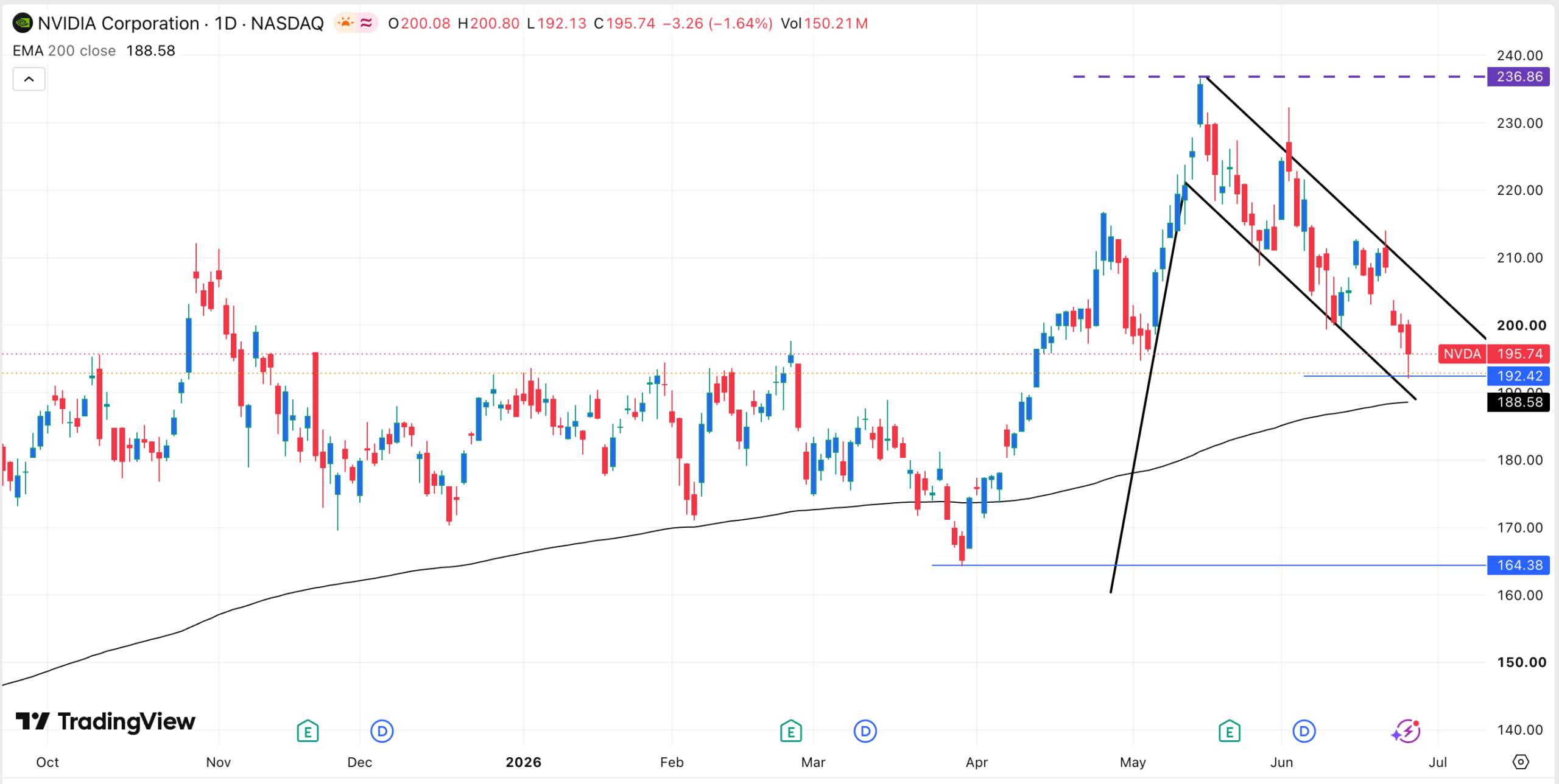
The names taking the biggest hit were the same stocks that had ridden the boom on the way up. Nvidia, which only a year or two ago was little known outside specialist circles, has since become the most valuable company on the planet due to the AI rush. The company slid nearly 4% on Tuesday, and was around 7% below last month’s top.

Palantir, another strong favourite during the boom, fell almost 8% on the day and then slipped a further 3% in after-hours trade.

Some managers blamed timing, with the year-end window in sight, there is little incentive to let paper gains reverse if the market begins to swing the wrong way. One investor in Hong Kong said this was more about locking in profits than abandoning AI.

Another in Sydney said he was not afraid to step in and buy while others were rushing for the exits, though he admitted he could be wrong.

There was also a warning from South Korea’s exchange on the chipmaker SK Hynix. The statement was routine, but because the firm had already tripled in twelve months, the caution was enough to spark a two-day drop of about 6%.

The market had already been wrestling with a long list of worries in recent weeks: high borrowing costs, stubborn prices in the shops, and trade disputes. However, US markets still climbed by more than 50% from April before the latest fall, showing how strong the momentum behind AI names had become.

Sentiment in Europe softened as well as tech was the weakest part of the main European index, and the German DAX also dipped. The Dutch AEX, where ASML, a key supplier to Nvidia, trades, also slipped.

Some top Wall Street bosses, including the chiefs of Morgan Stanley and Goldman Sachs, have wondered aloud whether stock prices can remain at these heights without further proof of sustained profits. One economist in Europe said conditions in general still looked favourable, but acknowledged valuations had become severe, leaving almost no space for mistakes.

Among the names moving before the US opening bell were AMD and Super Micro Computer, both down more than 4%, while some of the older tech giants held steadier. Meta even managed a small gain.

Chinese markets bucked the trend slightly, lifting in response to news that Beijing would suspend part of its tariffs on US goods for a year.

Safe haven assets firmed as gold rose by almost 1% to sit near $3,963 an ounce and government bonds were also steady, holding yields near 4.09% on US ten-year paper.

Bitcoin, which has swung wildly for months, briefly dipped below $100,000 before bouncing back above that level. Even after the turbulence, no major investor said the AI boom was dead.

If you’re reading this, you’re already ahead. Stay there with our newsletter.

Source: https://www.cryptopolitan.com/tech-stocks-falter-but-no-cause-for-panic/

Market Opportunity
Threshold Logo
Threshold Price(T)
$0.010059
$0.010059$0.010059
+2.39%
USD
Threshold (T) Live Price Chart
Disclaimer: The articles reposted on this site are sourced from public platforms and are provided for informational purposes only. They do not necessarily reflect the views of MEXC. All rights remain with the original authors. If you believe any content infringes on third-party rights, please contact service@support.mexc.com for removal. MEXC makes no guarantees regarding the accuracy, completeness, or timeliness of the content and is not responsible for any actions taken based on the information provided. The content does not constitute financial, legal, or other professional advice, nor should it be considered a recommendation or endorsement by MEXC.

You May Also Like

Strive Finalizes Semler Deal, Expands Its Corporate Bitcoin Treasury

Strive Finalizes Semler Deal, Expands Its Corporate Bitcoin Treasury

Strive had finalized its acquisition of Semler scientific after securing the approval of shareholders earlier in the week. The final deal brought both firms’ Bitcoin
Share
Tronweekly2026/01/17 12:30
Why 2026 Is The Year That Caribbean Mixology Will Finally Get Its Time In The Sun

Why 2026 Is The Year That Caribbean Mixology Will Finally Get Its Time In The Sun

The post Why 2026 Is The Year That Caribbean Mixology Will Finally Get Its Time In The Sun appeared on BitcoinEthereumNews.com. San Juan, Puerto Rico’s La Factoría
Share
BitcoinEthereumNews2026/01/17 12:24
EUR/CHF slides as Euro struggles post-inflation data

EUR/CHF slides as Euro struggles post-inflation data

The post EUR/CHF slides as Euro struggles post-inflation data appeared on BitcoinEthereumNews.com. EUR/CHF weakens for a second straight session as the euro struggles to recover post-Eurozone inflation data. Eurozone core inflation steady at 2.3%, headline CPI eases to 2.0% in August. SNB maintains a flexible policy outlook ahead of its September 25 decision, with no immediate need for easing. The Euro (EUR) trades under pressure against the Swiss Franc (CHF) on Wednesday, with EUR/CHF extending losses for the second straight session as the common currency struggles to gain traction following Eurozone inflation data. At the time of writing, the cross is trading around 0.9320 during the American session. The latest inflation data from Eurostat showed that Eurozone price growth remained broadly stable in August, reinforcing the European Central Bank’s (ECB) cautious stance on monetary policy. The Core Harmonized Index of Consumer Prices (HICP), which excludes volatile items such as food and energy, rose 2.3% YoY, in line with both forecasts and the previous month’s reading. On a monthly basis, core inflation increased by 0.3%, unchanged from July, highlighting persistent underlying price pressures in the bloc. Meanwhile, headline inflation eased to 2.0% YoY in August, down from 2.1% in July and slightly below expectations. On a monthly basis, prices rose just 0.1%, missing forecasts for a 0.2% increase and decelerating from July’s 0.2% rise. The inflation release follows last week’s ECB policy decision, where the central bank kept all three key interest rates unchanged and signaled that policy is likely at its terminal level. While officials acknowledged progress in bringing inflation down, they reiterated a cautious, data-dependent approach going forward, emphasizing the need to maintain restrictive conditions for an extended period to ensure price stability. On the Swiss side, disinflation appears to be deepening. The Producer and Import Price Index dropped 0.6% in August, marking a sharp 1.8% annual decline. Broader inflation remains…
Share
BitcoinEthereumNews2025/09/18 03:08