The post Trump’s Tariffs At Supreme Court Today: What To Know appeared on BitcoinEthereumNews.com. Topline The Supreme Court will hear oral arguments Wednesday on the legality of President Donald Trump’s sweeping “Liberation Day” tariffs, a landmark case that could upend the Trump administration’s signature economic policy, carry millions of dollars in ramifications for businesses and foreign countries and further expand Trump’s executive authority. The Supreme Court will hear oral arguments Wednesday over whether President Donald Trump’s IEEPA tariffs can stand. NurPhoto via Getty Images Key Facts Justices will hear arguments in two cases that challenge Trump’s tariffs, including both the “Liberation Day” tariffs the president imposed on nearly all foreign countries, and the separate tariffs Trump imposed on imports from Canada, Mexico and China due to the trafficking of fentanyl. Trump has imposed his sweeping tariffs under the International Emergency Economic Powers Act (IEEPA), a law that broadly allows presidents to impose economic sanctions during national emergencies. The small businesses and Democratic-led states behind the lawsuits have argued Trump cannot impose his tariffs under IEEPA, arguing the law does not allow the president to impose tariffs and that there’s no national emergency to justify the tariffs even if it did. The Supreme Court will now decide whether the IEEPA-based tariffs can stand, after two lower courts ruled against Trump and said the president does not have authority under IEEPA to impose the tariffs. The case carries huge implications for businesses, who stand to receive refunds on tariffs they’ve already paid if the IEEPA tariffs are struck down, as well as get at least a short-term reprieve from paying tariffs on their imports, and for the Trump administration, which has framed the case as posing an existential threat to the U.S. economy. What To Watch For Justices will hear oral arguments Wednesday, though it’s unclear when their final ruling on the tariffs’ legality will come… The post Trump’s Tariffs At Supreme Court Today: What To Know appeared on BitcoinEthereumNews.com. Topline The Supreme Court will hear oral arguments Wednesday on the legality of President Donald Trump’s sweeping “Liberation Day” tariffs, a landmark case that could upend the Trump administration’s signature economic policy, carry millions of dollars in ramifications for businesses and foreign countries and further expand Trump’s executive authority. The Supreme Court will hear oral arguments Wednesday over whether President Donald Trump’s IEEPA tariffs can stand. NurPhoto via Getty Images Key Facts Justices will hear arguments in two cases that challenge Trump’s tariffs, including both the “Liberation Day” tariffs the president imposed on nearly all foreign countries, and the separate tariffs Trump imposed on imports from Canada, Mexico and China due to the trafficking of fentanyl. Trump has imposed his sweeping tariffs under the International Emergency Economic Powers Act (IEEPA), a law that broadly allows presidents to impose economic sanctions during national emergencies. The small businesses and Democratic-led states behind the lawsuits have argued Trump cannot impose his tariffs under IEEPA, arguing the law does not allow the president to impose tariffs and that there’s no national emergency to justify the tariffs even if it did. The Supreme Court will now decide whether the IEEPA-based tariffs can stand, after two lower courts ruled against Trump and said the president does not have authority under IEEPA to impose the tariffs. The case carries huge implications for businesses, who stand to receive refunds on tariffs they’ve already paid if the IEEPA tariffs are struck down, as well as get at least a short-term reprieve from paying tariffs on their imports, and for the Trump administration, which has framed the case as posing an existential threat to the U.S. economy. What To Watch For Justices will hear oral arguments Wednesday, though it’s unclear when their final ruling on the tariffs’ legality will come…

Trump’s Tariffs At Supreme Court Today: What To Know

Topline

The Supreme Court will hear oral arguments Wednesday on the legality of President Donald Trump’s sweeping “Liberation Day” tariffs, a landmark case that could upend the Trump administration’s signature economic policy, carry millions of dollars in ramifications for businesses and foreign countries and further expand Trump’s executive authority.

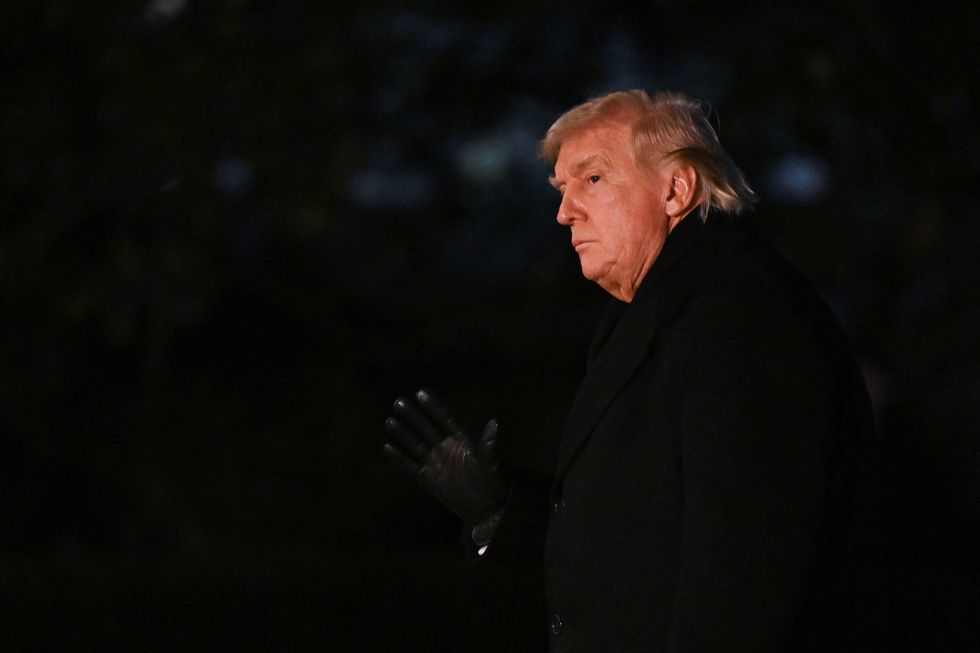
The Supreme Court will hear oral arguments Wednesday over whether President Donald Trump’s IEEPA tariffs can stand.

NurPhoto via Getty Images

Key Facts

Justices will hear arguments in two cases that challenge Trump’s tariffs, including both the “Liberation Day” tariffs the president imposed on nearly all foreign countries, and the separate tariffs Trump imposed on imports from Canada, Mexico and China due to the trafficking of fentanyl.

Trump has imposed his sweeping tariffs under the International Emergency Economic Powers Act (IEEPA), a law that broadly allows presidents to impose economic sanctions during national emergencies.

The small businesses and Democratic-led states behind the lawsuits have argued Trump cannot impose his tariffs under IEEPA, arguing the law does not allow the president to impose tariffs and that there’s no national emergency to justify the tariffs even if it did.

The Supreme Court will now decide whether the IEEPA-based tariffs can stand, after two lower courts ruled against Trump and said the president does not have authority under IEEPA to impose the tariffs.

The case carries huge implications for businesses, who stand to receive refunds on tariffs they’ve already paid if the IEEPA tariffs are struck down, as well as get at least a short-term reprieve from paying tariffs on their imports, and for the Trump administration, which has framed the case as posing an existential threat to the U.S. economy.

What To Watch For

Justices will hear oral arguments Wednesday, though it’s unclear when their final ruling on the tariffs’ legality will come out. The Supreme Court typically takes at least a few months to deliberate on cases it hears before issuing a final ruling, but the justices’ willingness to take up the tariff dispute so quickly has raised speculation they could try to rule faster in this case. A decision will come out by June 2026 at the latest, when the court’s term comes to an end.

What Has The Trump Administration Said About The Case?

Trump and his officials have issued dire warnings about the possibility of the Supreme Court overturning the IEEPA tariffs. “I think our country will be immeasurably hurt,” Trump told “60 Minutes” when asked about the possibility the Supreme Court could invalidate his tariffs. “I think our economy will go to hell.” The president has backed down from a previous suggestion that he would attend the oral arguments in person, underscoring how important he believes the case is for his signature economic policy, though Treasury Secretary Scott Bessent is still expected to be present at the Supreme Court on Wednesday. “I am there to emphasize that this is an economic emergency,” Bessent told Fox News on Tuesday about his decision to attend the arguments. “National security is economic security. Economic security is national security. As the Treasury secretary of the United States, I’m in charge of maintaining both.”

What Happens If The Tariffs Get Overturned?

It’s broadly expected the Trump administration will try to impose new tariffs using other laws if the IEEPA ones get struck down, with Bessent telling Reuters this week that businesses and foreign governments “should assume that [the tariffs are] here to stay.” Other legal statutes give presidents more explicit authority to impose tariffs, which Trump has already used to impose tariffs on specific sectors like automobile and steel, but also have more restrictions or take more time to implement. That makes it unclear how long it could take the Trump administration to replace its IEEPA tariffs, and whether any industries now covered by tariffs could be spared in the future, like certain consumer goods. If the Supreme Court rules the IEEPA tariffs are invalid because Trump never had the authority to impose them, businesses that have already paid tariffs under IEEPA are also expected to be entitled to refunds of the tariffs they’ve paid, though trade experts have told Forbes it’s still unclear how any refund process would play out.

Key Background

Trump imposed tariffs on imports from Canada, Mexico and China after taking office before expanding his tariffs in April, announcing “Liberation Day” duties on most imports from nearly all foreign countries. The “Liberation Day” tariffs took full effect in August, after the Trump administration paused the worst of them shortly after they were first rolled out in April and roiled the stock market. The Trump administration has continued to make tariffs the centerpiece of its economic policy despite widespread concerns from economists that the duties will harm the economy and raise prices for consumers, with the federal government raising approximately $195 billion through tariffs during fiscal year 2025, which ended Sept. 30. Small businesses have argued the increased costs from the tariffs pose an existential threat to their ability to operate, bringing lawsuits shortly after Trump first rolled out his tariffs in April. The lawsuits made their way to the Supreme Court after the Court of International Trade and Federal Circuit both ruled against the Trump administration, with justices announcing in September they would make the ultimate decision on the tariffs’ fate.

Further Reading

ForbesSupreme Court Could Overturn Trump’s Tariffs: Target, Samsung, Walmart Would Be Among Biggest WinnersForbesSupreme Court Will Decide Fate Of Trump’s Tariffs—Here’s What Happens If They’re Overturned

Source: https://www.forbes.com/sites/alisondurkee/2025/11/05/supreme-court-will-hear-trump-tariff-case-today-heres-what-to-know/

Market Opportunity
OFFICIAL TRUMP Logo
OFFICIAL TRUMP Price(TRUMP)
$5.357
$5.357$5.357
-1.39%
USD
OFFICIAL TRUMP (TRUMP) Live Price Chart
Disclaimer: The articles reposted on this site are sourced from public platforms and are provided for informational purposes only. They do not necessarily reflect the views of MEXC. All rights remain with the original authors. If you believe any content infringes on third-party rights, please contact service@support.mexc.com for removal. MEXC makes no guarantees regarding the accuracy, completeness, or timeliness of the content and is not responsible for any actions taken based on the information provided. The content does not constitute financial, legal, or other professional advice, nor should it be considered a recommendation or endorsement by MEXC.

You May Also Like

The Channel Factories We’ve Been Waiting For

The Channel Factories We’ve Been Waiting For

The post The Channel Factories We’ve Been Waiting For appeared on BitcoinEthereumNews.com. Visions of future technology are often prescient about the broad strokes while flubbing the details. The tablets in “2001: A Space Odyssey” do indeed look like iPads, but you never see the astronauts paying for subscriptions or wasting hours on Candy Crush.  Channel factories are one vision that arose early in the history of the Lightning Network to address some challenges that Lightning has faced from the beginning. Despite having grown to become Bitcoin’s most successful layer-2 scaling solution, with instant and low-fee payments, Lightning’s scale is limited by its reliance on payment channels. Although Lightning shifts most transactions off-chain, each payment channel still requires an on-chain transaction to open and (usually) another to close. As adoption grows, pressure on the blockchain grows with it. The need for a more scalable approach to managing channels is clear. Channel factories were supposed to meet this need, but where are they? In 2025, subnetworks are emerging that revive the impetus of channel factories with some new details that vastly increase their potential. They are natively interoperable with Lightning and achieve greater scale by allowing a group of participants to open a shared multisig UTXO and create multiple bilateral channels, which reduces the number of on-chain transactions and improves capital efficiency. Achieving greater scale by reducing complexity, Ark and Spark perform the same function as traditional channel factories with new designs and additional capabilities based on shared UTXOs.  Channel Factories 101 Channel factories have been around since the inception of Lightning. A factory is a multiparty contract where multiple users (not just two, as in a Dryja-Poon channel) cooperatively lock funds in a single multisig UTXO. They can open, close and update channels off-chain without updating the blockchain for each operation. Only when participants leave or the factory dissolves is an on-chain transaction…
Share
BitcoinEthereumNews2025/09/18 00:09
Market data: ICP rose 4.54% intraday, while GLM fell 5.44% intraday.

Market data: ICP rose 4.54% intraday, while GLM fell 5.44% intraday.

PANews reported on January 16th that, according to OKX market data, the top gainers of the day are: ICP at $4.494, up 4.54%; CHZ at $0.0579, up 4.19%; CRV at $0
Share
PANews2026/01/16 10:00
Iran Crypto Volume Hits $7.78B as IRGC Controls Half of Market

Iran Crypto Volume Hits $7.78B as IRGC Controls Half of Market

The post Iran Crypto Volume Hits $7.78B as IRGC Controls Half of Market appeared on BitcoinEthereumNews.com. Darius Baruo Jan 15, 2026 15:54 Chainalysis data
Share
BitcoinEthereumNews2026/01/16 10:16