

Tokenization Platform Libeara Partners GFX to Drive Pan-African Financial Inclusion
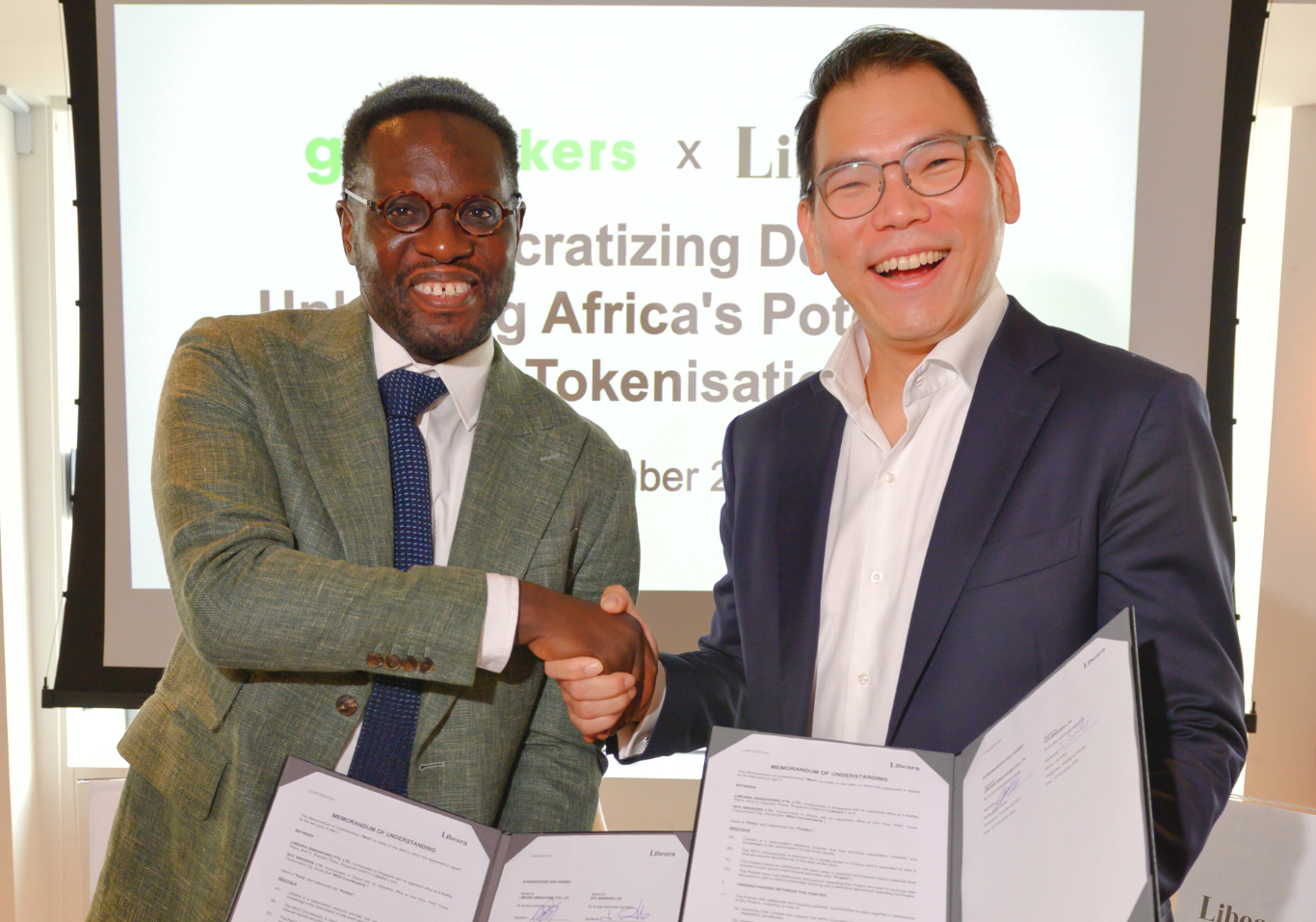
In a landmark move for financial innovation, Ghana-based brokerage firm GFX announced today that it has entered into a strategic partnership with Libeara, a tokenization platform backed by Standard Chartered Ventures, to explore the tokenisation of government-issued financial instruments, with the aim of providing inclusive access to regulated financial instruments across Africa.
The partnership, unveiled Thursday at the Singapore FinTech Festival, marks a significant milestone in the growing pace of innovation in African financial markets.
For many ordinary Africans, investing directly in their own country’s development through government bonds or other state-backed financial instruments remains a challenge, primarily due to prohibitively high minimum investment amounts, which reserve such investments for institutional investors and the wealthy, leaving the broader public sidelined from such opportunities which would otherwise promote personal savings, stability and wealth creation.
The reasons behind the high minimum investment amounts are multifaceted and rooted in the realities of not just Africa’s markets, but many emerging public debt markets globally. One of the key considerations is the need to weigh the high administrative cost of managing a large number of smaller investors against the more pragmatic “institutional-first" approach, which allows governments to raise substantial capital more efficiently, but require much higher minimum investment amounts.
Representing government bonds as digital tokens on a blockchain allows tokenization to deliver efficiency in how these assets can be traded and managed. The use of smart contracts to automate settlement and compliance workflows drastically reduces reconciliation time, counterparty risk, and operational costs. The resulting cost savings make lower minimum investments viable which in turn opens access to retail investors.
"On a continent where the majority of savings remain outside the traditional financial system, our mission is to create a new bridge: one where anyone with a smartphone and five dollars in their pocket can invest in their nation's future with dignity," said Joe Anka, CEO of GFX.
Assets will be tokenized using Libeara’s tokenisation platform; the same digital infrastructure supports over $1 billion in regulated on-chain real world assets today.
“Libeara is bringing the real-world assets on-chain one step at a time, in a safe and compliant manner, and we are proud to make headway into the African continent through this initiative,” said Aaron Gwak, founder and CEO of Libeara.
“This partnership highlights the importance of tokenization serving real-world needs – enabling financial inclusion in underserved markets. We believe that access to stable, high-quality financial instruments should not be the privilege of the few – but a fundamental right for all, so that everyday Africans can own a piece of their nation’s economic future,” he added.
The Bank of Ghana is making strides in ensuring safe, regulated innovation in digital assets with its forthcoming Virtual Asset Services Providers (VASP) Bill, which will establish the regulatory framework to allow this novel application of blockchain technology to regulated real-world assets to scale securely and in compliance with the existing local laws. The Bank of Ghana will oversee the new framework with the Securities and Exchange Commission of Ghana to ensure investor protection and the continuous innovation of the Ghanaian financial services sector.
In the interim, the Bank of Ghana’s regulatory sandbox provides a controlled environment for innovators to test digital asset and blockchain-based financial solutions under real market conditions, but within a framework of regulatory supervision and risk mitigation before the VASP Bill regime takes effect.
You May Also Like

XRP Begins Era as Commodity Under US Laws, Stuart Alderoty Reacts

UK lawmakers urge ‘immediate moratorium’ on crypto political donations
Copy linkX (Twitter)LinkedInFacebookEmail


